Knowing what factors affect your credit journey is important to build a good credit score. Your credit score is a three-digit numerical representation of repayment behaviour and credit management and ranges from 300 to 900. A higher score increases your chances of getting approved for loans and credit cards on favourable terms.
Whether you have a high or low credit score, there are certain factors that influence it. If not managed properly, these factors can lead to an increase or decrease in your score.
Read on to learn more about the top factors affecting credit scores, and get answers to common questions like whether closing a card or paying only the minimum due can hurt your score.
| Factors affecting your CIBIL score include payment history, credit utilisation, credit age, credit mix, and recent enquiries. Regularly checking your score, paying bills on time, maintaining low credit usage, and avoiding frequent credit applications can help improve your CIBIL score. |


Top Factors Affecting Credit Score
Understanding the factors affecting your credit score is essential to maintaining or improving it. Certain factors can be pinpointed and are common for every credit bureau; however, based on the bureau, these factors can differ in weightage from which the score is calculated.
Some bureaus also prefer different factors, with a smaller percentage of total weightage.
Here are the key components that most credit bureaus, including CIBIL, consider when calculating your score:
Payment History (35%)
It is your ability to pay bills and EMIs on time, and that has the biggest impact on your credit score. Even one missed payment can hurt your credit score significantly. Keeping a good history of repayments can help improve your credit score rapidly over time.
Credit Utilisation Ratio (30%)|
The CUR refers to how much of your credit you use. It is ideal to keep it below 30% of the total credit limit. For example, if your credit limit is ₹1 lakh, the ideal usage should be below ₹30,000.
A high utilisation rate signals credit dependency, which can adversely affect your credit score.
Credit History Length (15%)
|A long credit history with consistent payments builds trust. Older accounts positively influence your credit profile. Hence, it is best not to close your older accounts, even if they are inactive.
Credit Mix (10%)
Having a balanced mix of secured (e.g., home loan) and unsecured (e.g., credit card) credit shows that you can manage different types of debt responsibly.
Recent Credit Inquiries (10%)
Each time you apply for a new credit product, a hard inquiry is made, which may temporarily lower your score. This can also occur if you have applied for a credit limit increase.
These are the primary factors influencing credit scores for most individuals. Managing them well leads to better lending terms and faster approvals.

Can Checking CIBIL Score Affect CIBIL Score?
Many people worry that checking their own score could lower it. In simple words, checking your CIBIL score will not lower your overall CIBIL score.
There are two types of credit enquiries:
- Soft Enquiries: This is a type of enquiry sent when you check your own score. This does not impact your credit score. The most common example is using online tools or applications to check your CIBIL score.
- Hard Enquiries: This type of enquiry arises when a lender checks your score during a loan or credit card application. Too many hard enquiries in a short time can reduce your score temporarily, as it could be interpreted as a sign of financial struggle. The most common example is new loan applications or credit reports.
Checking your score regularly is a healthy financial habit and does not negatively affect your credit score. However, if it were credit reports, it could lower your credit score. You can use online platforms like Buddy Loan to check your credit score using soft enquiries for free.
|
Does Paying Minimum Due on a Credit Card Affect CIBIL Score? Paying only the minimum due on your credit card helps you avoid late fees, but it does not protect your credit score in the long run. Even though your payment may not be considered “late”, the remaining balance accumulates interest, increasing your credit utilisation. High utilisation over time can lower your score. To maintain a healthy score, pay your full statement balance in its due time. |
Credit Card Rejection & Its Effect on CIBIL Score
A credit card rejection does not affect your CIBIL score, but the enquiry made during the application process can affect your credit score. Each time you apply for a credit card, the issuer checks your credit report, resulting in a hard inquiry. Multiple hard enquiries in a short period can signal risk to lenders and may slightly reduce your score.
So, it’s wise to apply only for credit cards you are most likely to be approved for, based on your profile. Your credit profile helps shortlist suitable offers, which you can then apply for directly as intended.
Closing a Credit Card and Its Effect on Credit Score
Closing a credit card can indirectly have a negative effect on your credit score, especially if it is an older account or has a high credit limit.
This is because:
- It reduces your total available credit, increasing your credit utilisation ratio, especially if you have a new, active credit card.
- It shortens your average credit history length, which is a key scoring factor. Having an old credit card can demonstrate a longer credit history.
So, while closing a credit card indirectly affects your credit score, it can have a direct influence on your credit report. If you’re not paying annual fees or facing security concerns, keeping old credit cards open can help support a stronger credit profile.
Tips to Improve Your Credit Score
As we have covered the factors affecting credit scores, it is important to know how to improve your credit score. Here are some tips on how to improve your credit score:
Pay your bills on time
Late payments hurt your score the most. Always pay EMIs and credit card bills before the due date.
Keep your credit card usage low
Try to use less than 30% of your credit limit to show good credit management. In case you need more credit card usage, request a credit limit increase.
Avoid too many loan or credit card applications
Each application is a hard inquiry, which can lower your score. Too many hard enquiries can be interpreted as financial stress.
Keep old credit cards open
A long credit history improves your score and presents you as a person with higher experience dealing with credit, so avoid closing your oldest accounts.
Use different types of credit
A mix of credit cards, loans, and EMIs shows you can handle various credit responsibly.
Check your credit report periodically
Look for errors or unfamiliar entries and raise a dispute if needed.
Clear outstanding dues
Repaying overdue amounts can help recover and boost your credit score over time.
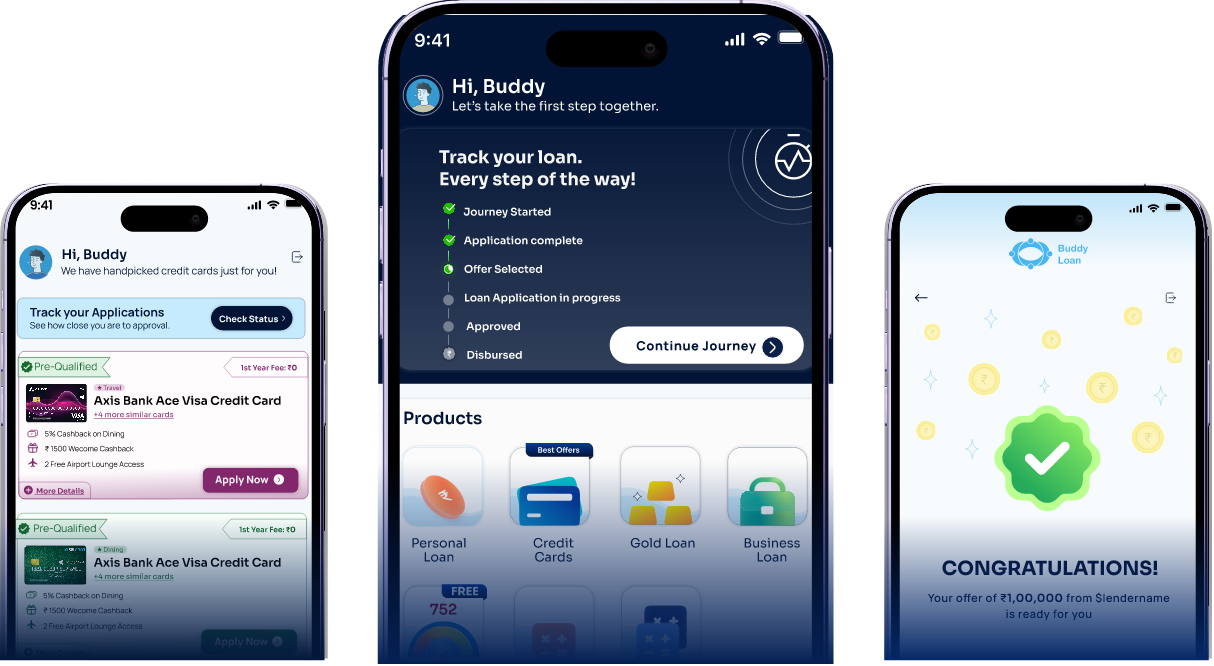
Download the Buddy Loan App Now!
One solution to each of your financial needs at your fingertip.

Scan to download now