

A Personal Loan Balance Transfer allows you to move your existing personal loan from one lender to another. People usually choose this option when another lender offers a lower interest rate, better repayment terms, or lower charges.
In a balance transfer, the outstanding principal amount of your current personal loan is transferred to the new lender. If your existing loan has a high interest rate, transferring the balance may help reduce your interest cost and make repayment easier.
Before transferring the loan, compare the interest rate, processing fee, foreclosure charges, remaining tenure, and other costs to understand whether the transfer will actually save you money.


Personal Loan Balance Transfer Interest Rate, Fees & Charges
A new lender may offer a lower interest rate than your current lender when you apply for a personal loan balance transfer.
However, the final interest rate depends on factors such as your outstanding loan amount, remaining tenure, credit score, income, and overall credit profile.
Here are the main interest rates, fees, and charges for a personal loan balance transfer:
| Particulars | Details |
| Interest Rate | 9.99%* p.a. onwards |
| Processing Fees | Starting from 2% of the loan amount |
| Loan Tenure | Up to 5 years |
| Pre-closure Charges | 2% to 5% |
| Penalty Charges | 2% of the outstanding loan amount |
Note: Interest rates can change and may vary based on your credit history and creditworthiness.
Top Banks Offering Personal Loan Balance Transfer
Several banks offer personal loans that can be considered when transferring an existing loan balance. The interest rate and repayment period differ from one bank to another.
| Bank | Interest Rate (p.a.) | Repayment Tenure |
| HDFC Bank | 9.99% onwards | 12 to 60 months |
| IndusInd Bank | 10.49% onwards | 12 to 72 months |
| Axis Bank | 9.99% onwards | Up to 60 months |
| State Bank of India | 10% onwards | Up to 72 months |
| Bank of Baroda | 10.15% onwards | Up to 84 months |
| Indian Overseas Bank | 10.25% onwards | Up to 60 months |
Note: Final interest rates and processing fees vary based on individual credit scores (CIBIL), monthly income, and loan tenure as set by each respective lender’s Key Fact Statement (KFS). All processing fees listed are subject to 18% GST extra unless explicitly stated as inclusive by the lender.
Features & Benefits of Personal Loan Balance Transfer
A personal loan balance transfer may help you reduce your borrowing cost and manage your existing loan better.
Here are some of its main features and benefits:
- Lower Interest Rate: You may be able to transfer your existing personal loan to a lender offering a lower interest rate. This can reduce the total interest you pay over the remaining loan tenure.
- Lower Fees and Charges: Moving to a lender with lower fees and charges may help reduce the overall cost of managing the loan.
- Flexible Repayment Terms: A new lender may offer repayment terms that better match your current income and financial situation.
- Single Repayment Source: If a balance transfer helps you combine multiple debts into one loan, you may only need to manage one repayment instead of several.
- Easier Loan Management: Managing one loan with suitable terms can make it easier to track your EMI, repayment dates, and outstanding balance.
Personal Loan Balance Transfer Eligibility
Before you transfer your personal loan to another bank or lender, check whether you meet the eligibility requirements.
The basic eligibility criteria include:
- Residential Status: Indian Resident
- Minimum Age: 21 years
- Maximum Age: 60 years
- Employment: Salaried individuals, employees of public and private sector companies, government employees, self-employed professionals, and non-professionals are eligible.
- Credit Score: Usually 750 and above
A steady income, good credit score, and regular repayment history can improve your chances of qualifying for a personal loan balance transfer.
Documents Required for Personal Loan Balance Transfer
Keeping the required documents ready can make the personal loan balance transfer process easier.
The documents may differ depending on whether you are a salaried individual or self-employed.
Documents for Salaried Individuals
- Identity Proof: Aadhaar Card, Passport, Voter ID, or Driver’s Licence.
- Address Proof: Recent utility bills, rental agreement, or Aadhaar Card.
- Income Proof: Salary slips, bank statements, and Form 16.
- Employment Proof: Offer letter, employment certificate, or appointment letter.
- Photographs: Passport-size photographs.
Documents for Self-Employed Individuals
- Identity Proof: Aadhaar Card, Passport, Voter ID, or Driver’s License.
- Address Proof: Recent utility bills, rental agreement, or Aadhaar Card.
- Income Proof: Income Tax Returns, balance sheets, and Profit and Loss Statements.
- Business Proof: Business registration documents and GST Certificate.
- Photographs: Passport-size photographs.
How Personal Loan Balance Transfer Can Help You Save Money
A personal loan balance transfer may help reduce the total cost of your existing loan if the new lender offers better terms.
Here are some ways it may help you save:
- Lower Interest Rate: Moving your loan to a lender offering a lower rate can reduce the interest you pay.
- Lower Fees and Charges: Choosing a lender with lower loan-related charges may reduce your total repayment cost.
- Overall Savings: A lower interest rate and lower charges together may reduce the overall cost of your loan.
Before transferring the loan, compare the total savings with the processing fee, foreclosure charge, and other transfer-related costs.
Steps to Transfer a Personal Loan
Transferring your personal loan involves comparing lenders, checking the costs, and completing the new lender’s application process.
Follow these basic steps:
- Compare personal loan balance transfer offers from different lenders.
- Check the interest rate, processing fee, repayment tenure, foreclosure charges, and other terms.
- Keep your identity proof, income proof, employment or business documents, and existing loan details ready.
- Complete the new lender’s application process and submit all required documents.
How Personal Loan Balance Transfer Can Help Reduce Debt
A Personal loan balance transfer can also make it easier to manage your existing debt.
Here is how:
- Debt Consolidation: Multiple debts may be combined into one loan, making repayments easier to manage.
- Possibly Lower Interest Cost: Moving to a lower interest rate can reduce the total cost of your debt.
- Single Repayment: Managing one repayment instead of several can make it easier to keep track of your financial commitments.
How To Apply For Balance Transfer From Buddy Loan
Steps To Apply For a Personal Loan with Buddy Loan
- Step 1: Visit buddyloan.com or download and install the Buddy Loan app on Android or iOS.
- Step 2: Open the Personal Loan Application Page. Enter your mobile number and verify it using the OTP received.
- Step 3: Enter the loan amount you need and your personal email address. Then choose the Personal Loan option.
- Step 4: Select your employment type — Salaried, Self-Employed, or Student — and choose your salary mode as bank or cash.
- Step 5: Enter your work details, including your company name, years of service, and designation.
- Step 6: Enter your personal details, including your full name, PAN, address, date of birth, and gender.
- Step 7: Enter your communication address and income details, and then click the Submit button.
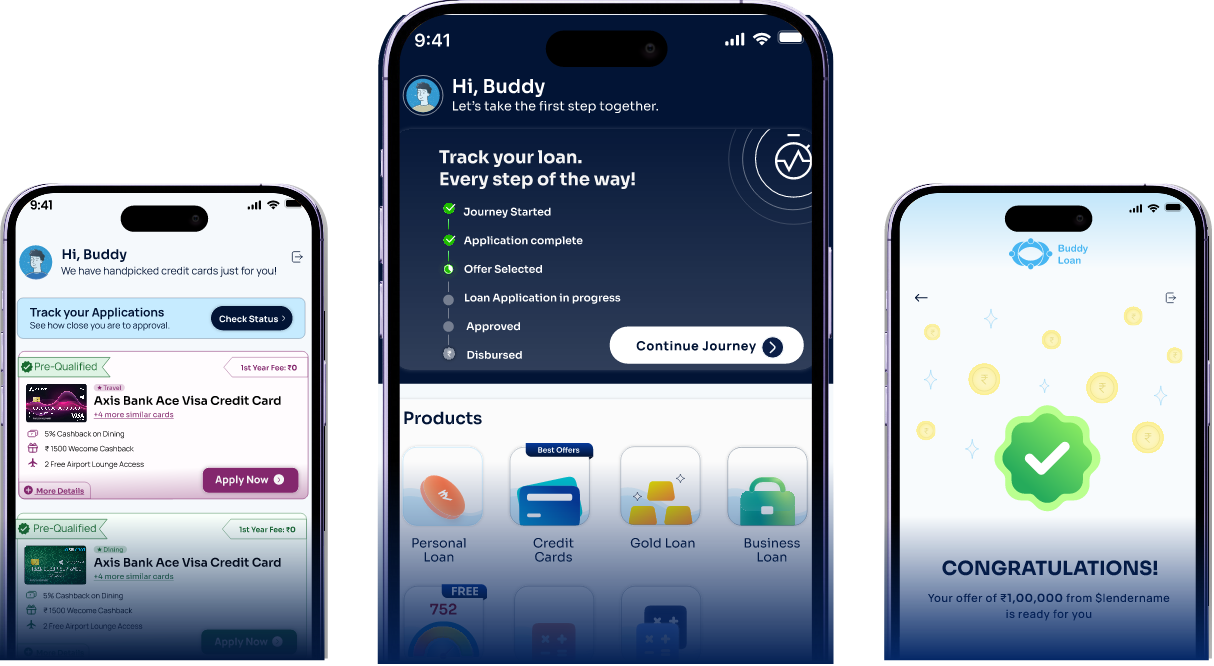
Download the Buddy Loan App Now!
One solution to each of your financial needs at your fingertip.

Scan to download now

