An urgent loan without a CIBIL score is a credit option for applicants who need funds quickly but do not yet have enough reported borrowing history to generate a numerical score. It may suit first-time borrowers, newly employed individuals and others with an NH or NA credit status. Instead of relying only on CIBIL, lenders may assess income, employment, bank-account activity, existing obligations, collateral or information from another credit bureau. Approval is never automatic. It depends on the lending partner’s eligibility rules, documentation, verification and assessment of the applicant’s ability to repay.
Can You Get an Urent Loan Without a CIBIL Score?Yes, selected banks, NBFCs and other regulated lenders may consider an urgent loan application from someone without a CIBIL score. The lender may evaluate salary or business income, employment stability, bank statements, existing obligations, collateral or a co-applicant. It may also check another credit bureau. However, no CIBIL score does not mean no assessment, and approval, pricing, loan amount and disbursal depend on the lender’s policies. |


What Does No CIBIL Score Mean?
A CIBIL score is a three-digit summary of the credit information recorded in an individual’s CIBIL report. A person may not receive a numerical score when there is insufficient eligible credit information.
- New-to-credit: A new-to-credit or NTC applicant has little or no previous experience with formal loans and credit cards. This is common among young professionals, first-time borrowers, and people who have previously relied on savings or debit cards.
- NH or No History: An NH status may appear when there is insufficient credit history to calculate a score. According to TransUnion CIBIL, this can also occur when there has been no recent credit activity or when the person only holds add-on cards without individual credit exposure.
- NA or Not Available: An NA status generally means a numerical score is unavailable because the available information does not meet the scoring requirements.
NH or NA is not the same as a bad score. It indicates that the bureau lacks sufficient eligible information, whereas a poor credit history can contain late payments, defaults, settlements, or write-offs.
No CIBIL Score vs Low CIBIL Score vs Poor Credit History
These terms describe different credit situations. Understanding the difference helps applicants select appropriate borrowing options and avoid assuming that a missing score, a low score, and adverse repayment records are interchangeable.
| Factor | No CIBIL score | Low CIBIL score | Poor credit history |
|---|---|---|---|
| Meaning | Insufficient eligible credit information to generate a score | A numerical score exists but is below the lender’s preferred level | The credit report contains adverse repayment behaviour |
| Common causes | No previous credit, limited history, prolonged inactivity or only add-on cards | Late payments, high credit utilisation, several recent enquiries or limited history | Defaults, repeated overdue payments, settlements or write-offs |
| Eligibility impact | Selected lenders may use income and alternative assessments | Approval may involve greater scrutiny or less favourable terms | Unsecured-loan approval can be considerably more difficult |
| Possible solution | Begin with affordable, bureau-reported credit and pay on time | Clear overdue amounts, lower utilisation and avoid unnecessary applications | Resolve defaults, correct reporting errors and rebuild repayment history |
| Possible alternatives | Salary advance, secured loan, co-applicant or eligible small loan | Smaller amount, secured loan or eligible co-applicant | Secured borrowing may be more accessible, subject to lender assessment |
Who Can Apply for an Urgent Loan Without a CIBIL Score?
People with insufficient credit history may apply where a lender accepts new-to-credit profiles. Eligibility varies considerably, and applicants must still demonstrate identity, repayment capacity and compliance with the lender’s product conditions.
- First-time borrowers: Individuals who have never held a formal loan or primary credit card may be considered using income, banking and employment information.
- Salaried employees: Regular salary credits, stable employment and manageable existing obligations may support an application even when a numerical score is unavailable.
- Self-employed applicants: Business owners and professionals may establish repayment capacity through ITRs, bank statements, GST returns, financial statements and business records.
- Freelancers: Independent professionals may use contracts, invoices, tax returns and regular client credits as income evidence.
- Gig workers: Platform payout statements and consistent bank credits may help establish income, although acceptance depends on the lender.
Common Reasons for Taking an Urgent Loan
An urgent loan can provide temporary support when an essential expense cannot reasonably wait. Borrowing should address a genuine short-term requirement and should be considered only after checking affordability and less expensive alternatives.
- Medical expenses: Hospital deposits, medicines, diagnostic tests or urgent treatment not fully covered by insurance.
- Essential repairs: Necessary home, vehicle or work-equipment repairs that cannot be postponed safely.
- Education fees: Time-sensitive course, examination or admission payments after considering education-focused financing.
- Emergency travel: Unplanned travel arising from a medical or family emergency.
- Temporary cash-flow gaps: Essential rent, utility or household expenses during a genuine income delay.
Urgent Loan Options Without a CIBIL Score
The most appropriate product depends on income, available security, employment and the required amount. Applicants should compare the APR, net disbursal, repayment schedule and asset risk before choosing an option.
| Loan option | How eligibility may be assessed | Collateral | Important consideration |
|---|---|---|---|
| Small personal loan | Income, employment, bank statements and other bureau data | Usually no | Initial amount may be limited and costs may be higher |
| Salary advance | Salary, employer relationship or expected salary credit | Usually no | Availability depends on the employer or provider |
| Pre-approved offer | Existing bank relationship and internal transaction history | Usually no | The offer must already be available and remains subject to conditions |
| Secured loan | Value and eligibility of gold, FD, securities or other accepted assets | Yes | Default can place the pledged asset at risk |
| Co-applicant loan | Combined income and credit profiles | Usually no | Both applicants may share repayment responsibility |
| Regulated P2P loan | Platform and participating lender assessment | Product-specific | Use only an RBI-regulated NBFC-P2P platform and review all charges |
Urgent Loan Without CIBIL Score Overview
Urgent loans without a CIBIL score provide immediate financial relief to those with no credit history or low scores. Lenders prioritize current financial health and repayment capacity over past borrowing behavior, using digital-first evaluation methods.
| Feature | Details |
|---|---|
| Loan Amount | ₹500 to ₹10 Lakhs |
| Tenure | 2 months to 84 months (varies by lender) |
| Collateral | Not required for personal loans; optional (gold/FD) for better rates |
| Income Proof | Mandatory (salary slips, bank statements, or GST returns) |
| Credit Assessment | Alternative data (UPI history, bank patterns, AI-based profiling) |
| Processing | 100% digital and paperless |
| Disbursal | Instant to within 48 hours |
| Approval Conditions | Verifiable income, stable employment, and identity verification |
Eligibility Criteria for an Urgent Loan Without CIBIL Score
Eligibility for these loans focuses on the applicant’s current ability to service debt. While traditional credit scores are sidelined, lenders enforce criteria regarding age, monthly earnings, and employment status to mitigate their financial risk.
| Parameter | Requirement |
|---|---|
| Age | 18 to 60 years |
| Income | Minimum ₹8,000 to ₹15,000 net monthly |
| Employment | Salaried employees, self-employed, or students (selected apps) |
| Banking Activity | Active bank account with 3–6 months of transaction history |
| Existing Obligations | Debt-to-income (DTI) ratio typically below 40% |
| Serviceable Location | Must reside in a lender-supported city or region |
| Documentation | Valid mobile number linked to Aadhaar and PAN card |
Documents Required for an Urgent Loan Without CIBIL Score
Document requirements depend on the applicant’s occupation and the loan type. Clear and consistent records help the lender verify identity, address, income and repayment ability even when a numerical CIBIL score is unavailable.
| Category | Possible documents |
|---|---|
| Identity | PAN, Aadhaar, passport, voter ID or driving licence |
| Address | Aadhaar, passport, utility bill, driving licence or another accepted document |
| Income | Salary slips, salary certificate, ITRs or financial statements |
| Employment | Employee ID, appointment letter or employment certificate |
| Banking | Recent bank statements, account details and cancelled cheque where requested |
| Business | GST returns, Udyam registration, trade licence, registration certificate or invoices |
| Freelance or gig work | Contracts, invoices, platform statements and corresponding bank credits |
| Collateral | FD receipt, gold-related verification, security holding statement or applicable asset documents |
How Do Lenders Evaluate Applicants Without a CIBIL Score?
When a score is unavailable, lenders may use other reliable indicators to estimate whether the applicant can repay. The method, data sources and qualifying thresholds vary by provider and should involve appropriate consent.
- Income consistency: Regular salary, client or business credits indicate whether the applicant has a dependable cash flow.
- Employment stability: Time with the current employer, total work experience and employer profile may influence the assessment.
- Bank activity: Statements can show average balances, spending commitments, returned payments and the stability of income credits.
- Existing EMIs: Current loan deductions and card obligations help determine how much income remains available for a new EMI.
- Repayment capacity: The lender compares verified income and recurring commitments with the proposed repayment.
- Business performance: For self-employed applicants, turnover, revenue trends, business vintage and financial records may be reviewed.
- Other bureau checks: A lender may check another credit bureau even if it does not rely exclusively on CIBIL.
- Application accuracy: Mismatched personal, employment, bank or income information can delay verification or result in rejection.
Is a Bank Statement Enough to Get a Loan Without CIBIL?A bank statement is important, but it is usually not sufficient on its own. It can demonstrate salary or business credits, average balances, spending commitments, existing EMI deductions and failed payments. The lender may still require PAN and accepted KYC documents, salary slips, employment proof, ITRs, business records or information from another credit bureau. The required statement period and supporting records depend on the applicant’s occupation, requested amount and the lending partner’s underwriting policy. |
Can You Get an Urgent Loan Without CIBIL and Income Proof?
Getting an unsecured loan without both a credit score and verifiable income is difficult because the lender has limited evidence of repayment capacity. PAN and Aadhaar alone normally do not establish eligibility. Applicants may need to consider alternatives that provide the lender with another form of assurance.
- Secured loan: Eligible gold, an FD or another accepted asset can support the application, although the asset is at risk after default.
- Salary advance: An employer or eligible provider may offer an advance based on employment and expected salary.
- Co-applicant: An eligible earning co-applicant may strengthen the application, where permitted.
- Pre-approved offer: An existing bank may make an offer based on the customer’s internal account history.
Urgent Loan Without CIBIL for Salaried Employees
A salaried applicant can use regular income and employment records to compensate partly for the absence of a numerical score. Lenders generally compare the proposed EMI with take-home salary and existing monthly commitments.
| Factor | Description | Supporting Documents |
|---|---|---|
| Salary Inflow | Verifies regular, verifiable monthly credits into your account. | Last 3-6 months’ bank statements. |
| Current Earnings | Demonstrates your actual take-home pay and tax deductions. | Latest 2-3 months’ salary slips. |
| Employment Stability | Confirms your current role, tenure, and professional standing. | Employee ID card or formal confirmation letter. |
| Repayment Capacity | Evaluates disposable income after meeting current liabilities. | Digital transaction history and PAN/Aadhaar. |
Urgent Loan Without CIBIL for Self-Employed Applicants
Self-employed applicants may need to provide a broader set of records because business income can fluctuate. Strong documentation helps the lender distinguish sustainable revenue from occasional account credits.
- Income Tax Returns: ITRs provide a formal record of declared income and tax compliance.
- GST returns: Where applicable, GST filings can help demonstrate turnover and continuing business activity.
- Business bank statements: Recent statements show customer receipts, operating expenses, existing deductions and cash-flow consistency.
- Registration documents: Udyam registration, incorporation records, professional registrations or trade licences can establish the business’s identity.
- Revenue consistency: Stable or improving receipts may strengthen the application, while unexplained volatility may require clarification.
- Business vintage: An established operating history generally provides more evidence than a newly started business.
- Financial statements: Profit-and-loss accounts and balance sheets may be requested for larger amounts or formal business structures.
- Existing obligations: Business loans, overdrafts and personal EMIs are considered when estimating disposable cash flow.
Urgent Loan Without CIBIL for Freelancers and Gig Workers
Freelancers and gig workers may qualify where the provider accepts variable income. Instead of a conventional salary slip, they can use consistent, independently verifiable records connecting completed work with bank credits.
| Income source | Relevant evidence |
|---|---|
| Freelance projects | Client contracts, invoices and corresponding bank credits |
| Retainer assignments | Retainer agreement and recurring monthly receipts |
| Consulting work | Engagement letter, professional invoices and ITR |
| Platform-based work | Platform-generated earnings or payout statements |
| Delivery or mobility work | Weekly or monthly platform payout records |
| Multiple clients | Consolidated invoices and bank statements |
| Foreign client income | Contracts, invoices and accepted remittance records |
| Tax-declared earnings | ITR and applicable tax computation |
Urgent Loan Without CIBIL for Students
Students commonly have no CIBIL Score because they have not previously used formal credit. However, the absence of a score does not remove the need to establish how the loan will be repaid.
- Income requirements: Students with regular part-time earnings or stipends may be considered only where the lender accepts that income type.
- Co-applicant: A parent or guardian with adequate income may be required, especially for education-focused borrowing.
- Education loan: A formal education loan may be more suitable for tuition, accommodation and other substantial academic costs.
- Student-focused products: Certain providers may offer small products with separate eligibility conditions, but availability should not be assumed.
- Unsecured-loan limitations: Students without independent income may face smaller limits, fewer eligible offers or rejection.
Borrowing for discretionary consumption should be avoided when there is no reliable repayment source.
Also Read: Quick Personal Loan
Interest Rates & Charges on Urgent Loans Without CIBIL
Applicants should evaluate the complete cost rather than relying on the advertised interest rate. Rates and fees differ across lenders and profiles, so the applicable Key Facts Statement and loan agreement take priority over general examples.
| Cost | What to review |
|---|---|
| Interest rate | Typically 12.99% to 39% p.a. based on the lender’s risk assessment. |
| APR | Annual Percentage Rate usually ranges between 18% and 36% p.a. |
| Processing fee | Ranges from 0.25% to 8% of the sanctioned loan amount. |
| GST | 18% GST is applicable on processing fees and other service charges. |
| Penal charges | Charges for non-compliance such as delayed repayment |
| Bounce fee | Amount charged for a failed cheque, NACH or auto-debit |
| Prepayment charge | Often 0% for specific fintech products or after a certain lock-in period. |
| Foreclosure charge | Typically up to 5% + GST on the outstanding principal amount. |
| Convenience or platform fee | Any additional fee disclosed for the service |
| Net disbursal | Amount actually credited after permitted upfront deductions |
Note: RBI-regulated digital lenders must provide a Key Facts Statement and disclose the APR. RBI also states that default-related penalties must be treated as penal charges rather than being added as penal interest to the loan rate.
Urgent Loan EMI Calculator
An EMI calculator estimates the monthly instalment, total interest and overall repayment based on the principal, annual interest rate and tenure. It helps applicants compare offers and determine whether the repayment will remain manageable.
- Enter the loan amount: Add the amount you plan to borrow.
- Provide the interest rate: Enter the annual interest rate offered by the lender.
- Select the tenure: Choose the repayment period in months or years.
- Review the estimated EMI: Check the approximate amount payable each month.
- Check the total interest: Review the estimated interest charged over the complete tenure.
- Review the total repayment: Compare the principal with the combined principal and interest amount.
- Try different combinations: Adjust the amount or tenure to find a more manageable EMI.
- Account for other expenses: Ensure that the EMI remains affordable after rent, food, travel and existing debt payments.
The calculator provides an estimate. Processing fees, taxes, late-payment charges and other costs may not be included.
How to Apply for an Urgent Loan Without CIBIL Online
A digital application can reduce paperwork, but it does not bypass underwriting. Applicants should verify the lender, compare complete costs, and read the agreement before authorising disbursal or an automatic repayment mandate.
- Step 1:Visit buddyloan.com or download & install the Buddy Loan app (Android or iOS).
- Step 2:Open the personal loan application page. Provide the mobile number and enter the received OTP.
- Step 3:Specify the desired loan amount & personal email. Next, choose the Personal Loan option
- Step 4:Choose the employment type (Salaried, Self-Employed, or Student) and the salary mode (bank or cash).
- Step 5: Enter your work details (Including company name, years of service, and Designation)
- Step 6: Enter your personal details (Including Full Name, PAN, address, DOB & Gender)
- Step 7:Provide your communication address and income details and click the ‘Submit’ button.
Note: Buddy Loan facilitates the application and offer-matching journey. The lending partner determines eligibility, approval, rate, amount, tenure, fees, and disbursal time.
How Quickly Can an Urgent Loan Be Disbursed?Disbursal may occur on the same day for an eligible applicant with complete documents, but no common timeline applies to every loan. Processing depends on successful KYC, accurate information, bank-account verification, income assessment, lender working hours and any manual review. A document mismatch, unclear bank credit or additional verification can delay the decision. Funds are transferred only after the lending partner approves the application, the borrower accepts the agreement and all required formalities are completed. |
Can an Urgent Loan Help Build Your CIBIL Score?
A loan can help establish a credit record only when the lender reports the account to a credit bureau. The effect develops over time and depends heavily on repayment behaviour rather than merely taking the loan.
- Confirm bureau reporting: Check whether the regulated lender reports repayment information to CIBIL or another bureau.
- Pay every EMI on time: Consistent, on-time repayment can contribute positively to the borrower’s credit history.
- Avoid missed payments: Late or unpaid instalments may damage a newly established profile and make future borrowing more difficult.
- Limit applications: Several formal applications over a short period can create multiple hard enquiries.
- Check account closure: After repayment, obtain a closure letter or NOC and later verify that the report reflects the correct status.
- Raise disputes where necessary: If incorrect information remains after the normal reporting period, follow the bureau’s dispute process.
How to Improve Approval Chances Without a CIBIL Score
Applicants can improve their profile by giving the lender clearer evidence of financial stability. These measures may strengthen an application, but none guarantees that a loan will be sanctioned.
- Maintain regular and identifiable income credits.
- Request only the amount genuinely required and affordable.
- Keep existing EMIs and card balances manageable.
- Provide complete, current and readable documents.
- Ensure the name, address, employer and income information match across records.
- Maintain sufficient account balance and avoid failed auto-debits.
- Provide a longer bank statement when income varies from month to month.
- Avoid submitting several credit applications simultaneously.
- Correct inaccurate accounts or personal information in the credit report.
- Consider an eligible co-applicant where the lender permits one.
- Consider secured credit if the asset risk and total cost are acceptable.
What to Do If You Are Not Eligible for an Urgent Loan
A rejection should lead to reassessment rather than repeated applications. Safer alternatives may provide the required support without creating several enquiries or unaffordable repayments.
- Request a smaller and more manageable amount.
- Ask the employer whether a salary advance is available.
- Consider a regulated loan against an FD or eligible gold.
- Apply with an eligible co-applicant where the product permits it.
- Check the credit report for incorrectly reported accounts or overdue balances.
- Build three to six months of consistent income records before applying again.
- Reduce high card balances and other outstanding obligations.
- Use an FD-backed credit card responsibly to begin building history when immediate cash is not required.
- Seek temporary family assistance for a genuine emergency where appropriate.
- Avoid informal lenders or applications that conceal the lender, APR or recovery process.
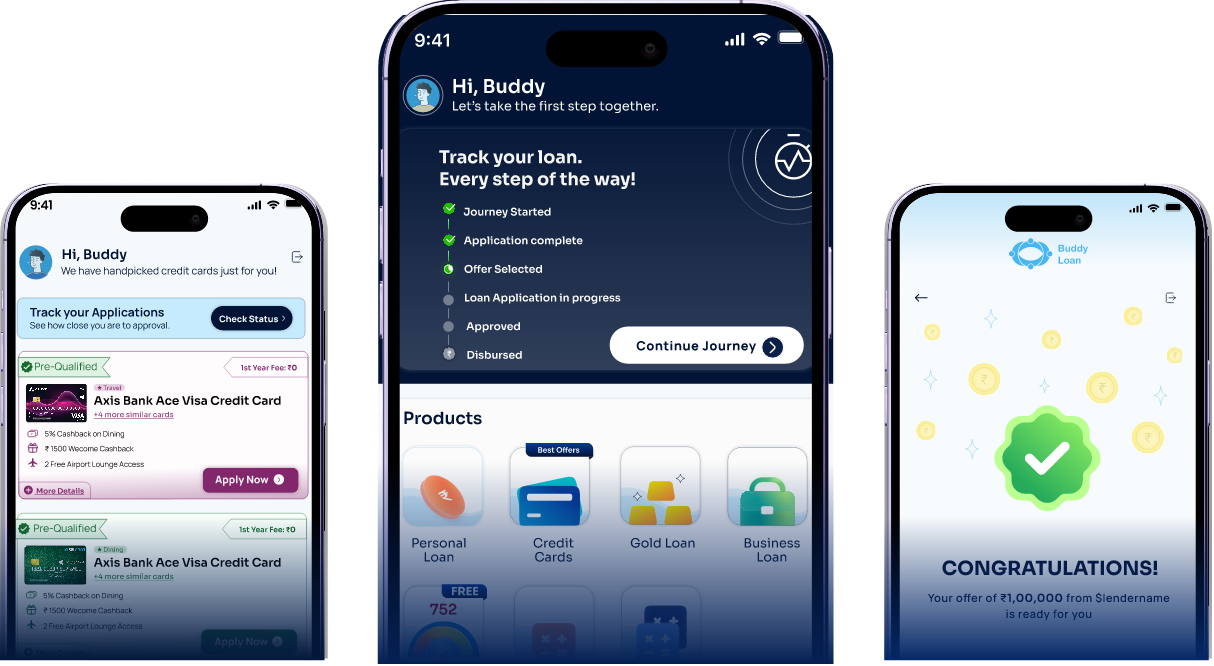
Download the Buddy Loan App Now!
One solution to each of your financial needs at your fingertip.

Scan to download now