An unsecured credit card is the most common type of credit card that offers a revolving line of credit without requiring any security deposit, Fixed Deposit, or collateral. Banks and financial institutions issue these cards based on the applicant’s credit score, income stability, repayment history, and overall financial profile. Unlike secured credit cards, unsecured cards involve a higher risk for the lender because there is no asset backing the credit limit. These cards are ideal for individuals with an established credit history and regular income who want financial flexibility, rewards, cashback, travel benefits, and convenient access to short-term credit.


How Does an Unsecured Credit Card Work?
An unsecured credit card works as a revolving credit facility where the bank allows you to spend up to a pre-approved limit without taking any collateral.
- The bank reviews your credit score, income, employment status, and repayment history.
- Based on your profile, the issuer assigns a credit limit.
- You can use the card for shopping, bill payments, travel bookings, online purchases, and EMI transactions.
- At the end of every billing cycle, the bank generates a statement.
- You can pay the full amount due, the minimum amount due, or any amount between the two.
- Paying the full bill before the due date helps you avoid interest.
- Any unpaid balance attracts interest charges.
- As you repay the outstanding amount, your available credit limit is restored.
| Example: If your unsecured credit card has a limit of ₹1,00,000 and you spend ₹25,000, your available limit becomes ₹75,000. Once you repay ₹25,000, your full credit limit becomes available again. |
Who Should Apply for an Unsecured Credit Card?
An unsecured credit card is best suited for individuals who already have a stable financial profile and can manage credit responsibly.
- Salaried individuals with regular monthly income
- Self-employed professionals with stable business income
- People with a good CIBIL score
- Existing credit card or loan users with a timely repayment history
- Individuals looking for cashback, rewards, and travel benefits
- Frequent online shoppers
- People who want higher credit limits
- Users who do not want to lock funds in a Fixed Deposit
Also Read: Credit Cards without Annual Fee
Benefits of an Unsecured Credit Card
Unsecured credit cards are popular because they provide easy access to credit without requiring an upfront deposit.
- No security deposit or collateral required
- Higher credit limits based on income and credit profile
- Rewards, cashback, air miles, and shopping benefits
- Airport lounge access on selected cards
- Fuel surcharge waivers
- EMI conversion facility
- Interest-free credit period if bills are paid on time
- Useful during emergencies
- Helps build and maintain credit history
- Wider range of card options across lifestyle, travel, shopping, fuel, and premium categories
How an Unsecured Credit Card Helps Build a Credit Score
An unsecured credit card can help improve your CIBIL score when used responsibly.
- Timely bill payments create a strong repayment record.
- Banks report card usage and payment behavior to credit bureaus.
- Keeping credit utilization below 30% improves creditworthiness.
- Long-term responsible usage builds credit history.
- Maintaining an unsecured card adds diversity to your credit profile.
- Avoiding missed payments helps protect your credit score.
- Regular repayment shows lenders that you can manage credit without collateral.
| Example: If your credit limit is ₹1,00,000, try to keep monthly spending below ₹30,000 to maintain a healthy credit utilization ratio. |
Also Read: Loans on Credit Cards
Top Unsecured Credit Cards in India
Unsecured credit cards in India provide a range of benefits, from travel perks and lifestyle rewards to significant cashback on online spending, all without requiring a fixed deposit as collateral.
| Credit Card | Key Benefits | Best For |
| Axis ACE | 2% cashback on utility bills (via Google Pay) and 1.5% on all other spends. | Utility & General Cashback |
| SBI SimplyCLICK | 10X reward points on partner brands and 5X on other online shopping. | Online Shopping Rewards |
| Flipkart Axis Bank | 5% cashback on Flipkart and 1.5% cashback across other platforms. | E-commerce (Flipkart) |
| HDFC Bank Millennia | 5% cashback on top merchants like Amazon and Myntra; includes lounge access. | Lifestyle & Shopping |
| Airtel Axis Bank | 25% cashback on Airtel recharges and 10% on utility payments. | Bill Payments & Recharges |
| Standard Chartered EaseMyTrip | Flat-rate discounts on flight/hotel bookings and free domestic lounge access. | Frequent Travelers |
| HDFC Regalia Gold | Premium rewards on travel and dining; complimentary Club Vistara membership. | Travel & Luxury Dining |
| IDFC FIRST Wealth | 10X rewards, 1.5% forex markup, and BOGO movie ticket offers. | Premium Rewards & Forex |
| SBI Cashback | 5% cashback on online spends across almost all merchant categories. | Universal Online Cashback |
| Amazon Pay ICICI | 5% back on Amazon for Prime members and 1% on all other spends. | Amazon Loyalists |
Additional Top Unsecured Cards by Bank
Beyond the specific cards mentioned above, several other Indian banks offer top-tier unsecured credit card options tailored for different needs:
- YES Bank: The YES Bank PaisaSave (currently free for a limited time) offers a significant 6% cashback on all travel and dining expenses.
- IndusInd Bank: The IndusInd Bank Platinum Aura is a versatile reward-centric card offering up to 4X points on select spending categories and flexible redemption.
- Federal Bank: The Federal Bank Scapia card is a standout for travelers, offering unlimited domestic airport lounge access and zero forex markup fees.
- AU Small Finance Bank: The Ixigo AU Credit Card provides up to 10% off on travel via the Ixigo platform and zero forex markup charges.
- BOBCARD (Bank of Baroda): The BOBCARD Eterna offers 15 reward points per ₹100 spent on online shopping, travel, and dining, plus unlimited domestic lounge access.
- HSBC Bank: The HSBC Visa Platinum is a lifetime-free card that rewards heavy spenders with 5X rewards once an annual milestone of ₹4 Lakh is reached.
Choosing the right unsecured card depends on aligning your lifestyle and spending patterns with the specific rewards or cashback categories offered by the issuer. Unlike secured cards, these options typically require a good credit score (often 750 or above) and proof of stable income for approval.
Also Read: Best Travel Credit Card
Unsecured Credit Card Eligibility Criteria
Eligibility requirements vary by bank, but most issuers follow common approval standards.
- The applicants must be between 21 and 65 years of age.
- A good credit score, usually 750 or above, is preferred.
- Applicant must have a stable source of income.
- Salaried and self-employed individuals can apply.
- Indian residency is usually required.
- The applicant should have a valid PAN and address proof.
- An existing relationship with the bank may improve approval chances.
- A clean repayment history increases eligibility.
Documents Required to Apply for an Unsecured Credit Card
Banks require documents to verify your identity, address, income, and repayment ability.
| Document Category | Accepted Documents |
| Identity Proof | PAN Card, Aadhaar Card, Passport, Voter ID |
| Address Proof | Aadhaar Card, Utility Bill, Passport, Ration Card |
| Income Proof for Salaried Applicants | Salary slips, Form 16, bank statements |
| Income Proof for Self-Employed Applicants | ITR, bank statements, business proof |
| Photograph | Passport-size photograph |
| Employment Proof | Employee ID or offer letter, if required |
How to Apply for an Unsecured Credit Card
The application process for unsecured credit cards is simple and can often be completed online.
- Check your credit score and income eligibility.
- Compare cards based on rewards, fees, cashback, and benefits.
- Select a card that matches your spending pattern.
- Visit the bank’s website, app, or nearest branch.
- Fill in personal, employment, and income details.
- Upload or submit the required documents.
- Complete KYC verification.
- Wait for the bank’s credit assessment.
- Once approved, receive and activate your credit card.
Also Read: Best Cashback Credit Cards
Unsecured Credit Card vs Secured Credit Card
Both unsecured and secured credit cards offer credit access, but they differ in approval requirements, collateral, and user suitability.
| Feature | Unsecured Credit Card | Secured Credit Card |
| Security Deposit | Not required | Required |
| Collateral | No collateral | Fixed Deposit or cash deposit |
| Approval Basis | Credit score, income, repayment history | Deposit-backed approval |
| Credit Limit | Based on income and creditworthiness | Usually, 80% to 100% of the FD value |
| Income Proof | Usually required | Often not required |
| Best For | Users with good credit history | Beginners or credit rebuilders |
| Rewards | Usually better | Limited to moderate |
| Risk to Bank | Higher | Lower |
| Upgrade Need | Already regular credit | Can upgrade to an unsecured card later |
How to Use an Unsecured Credit Card Responsibly
Responsible usage helps you enjoy benefits without falling into debt.
- Pay the full outstanding amount before the due date.
- Avoid paying only the minimum amount due.
- Keep credit utilization below 30%.
- Track your monthly spending.
- Use the card for planned expenses only.
- Set payment reminders or auto-debit.
- Avoid unnecessary EMI conversions.
- Do not withdraw cash unless it is an emergency.
- Review your monthly statement for errors.
- Avoid applying for too many cards at once.
Also Read: Top 5 Lifetime Free Credit Cards
Common Mistakes to Avoid with an Unsecured Credit Card
Poor usage can lead to debt, high interest, and damage to your credit score.
- Missing payment due dates
- Paying only the minimum due every month
- Maxing out the credit limit
- Using the card as extra income
- Making frequent cash withdrawals
- Ignoring billing statements
- Applying for multiple cards in a short period
- Spending only to earn rewards
- Not checking fees and charges
- Closing old cards without considering the impact on credit history
When Can You Upgrade Your Credit Card?
Credit card upgrades are offered when your financial profile improves or when you demonstrate responsible usage.
- After consistent on-time payments
- When your credit score improves
- When your income increases
- After maintaining low credit utilization
- When the bank offers a pre-approved upgrade
- After building a long-term relationship with the issuer
- When your current card no longer matches your lifestyle needs
Common Upgrade Options
- From a secured credit card to an unsecured credit card
- From an entry-level card to a cashback card
- From a basic card to a travel or lifestyle card
- From a regular card to a premium or super-premium card
Also Read: Credit Cards to Improve Credit Score
Pros and Cons of an Unsecured Credit Card
Here are the key pros and cons of an unsecured credit card to help you understand its benefits, costs, and risks before applying.
| Pros | Cons |
| No deposit or collateral required | Requires a good credit score |
| Higher credit limits | Approval is stricter |
| Better rewards and cashback | High interest if dues are unpaid |
| Useful for emergencies | Risk of overspending |
| Builds credit history | Late payments damage a credit score |
| Wider card options | Income proof is usually required |
| Travel and lifestyle benefits | Annual fees may apply |
Is an Unsecured Credit Card Right for You?
An unsecured credit card may be suitable if you have a stable income and can manage repayments responsibly.
- You have a good credit score.
- You want a card without locking money in an FD.
- You need higher credit limits.
- You want cashback, rewards, or travel benefits.
- You can pay the full bill every month.
- You already have a good repayment history.
- You want to build a stronger credit profile.
It may not be ideal if you have no credit history, a poor credit score, unstable income, or difficulty controlling spending. In such cases, a secured credit card may be a better starting point.
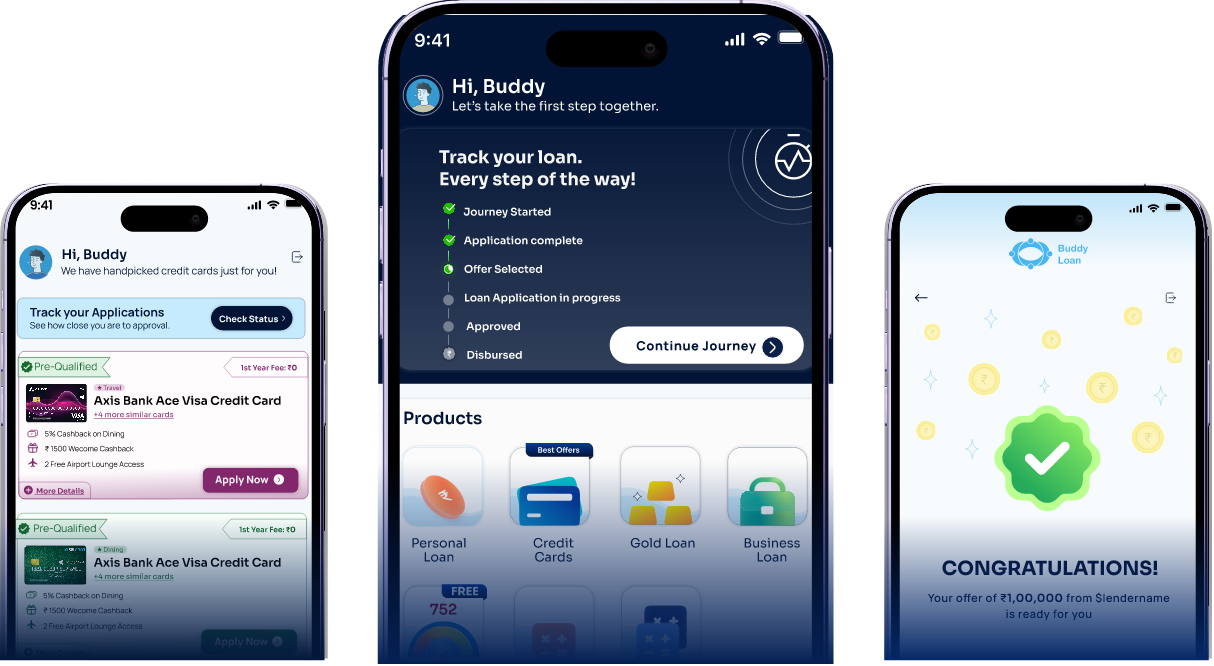
Download the Buddy Loan App Now!
One solution to each of your financial needs at your fingertip.

Scan to download now