College expenses do not stop at tuition fees. Students often need money for hostel fees, semester dues, laptops, books, college events, industrial visits, certification courses, internships, projects, or short-term living costs. When these expenses are urgent or smaller in value, a full education loan may feel too slow or too formal for the situation. This is where a loan for college students can help. It is a personal loan for educational purposes rather than a traditional education loan.
Eligible borrowers can use it flexibly for college-related expenses, with some lenders offering personal loans starting from around 9.99% p.a. and repayment tenures that may extend from a few months to 5 years or more, depending on the lender, income, credit score, and documents.


Understanding Loans for College Students
A loan for college students can work as an unsecured personal loan, a secured education loan, or a loan against assets. The right option depends on the expense, loan amount, repayment ability, and whether the student has an earning co-applicant.
| Loan Detail | Typical Range or Requirement |
|---|---|
| Loan Type | Personal loan |
| Loan Amount | ₹15,000 to ₹35 lakh or more |
| Interest Rate | From 9.99% to 11.99% p.a. |
| Tenure | 12 months to 5 years |
| Collateral | Not needed for many personal loans |
| Secured Option | Property, FD, investments, or guarantor |
| Co-Applicant | Parent, guardian, or earning family member |
| Fund Usage | Fees, hostel, laptop, trips, projects, courses |
| Documents | PAN, Aadhaar, bank statement, income proof |
| Disbursal | Direct bank transfer after approval |
Types of Loans Available For College Students
College students can explore different loan options depending on the amount needed, urgency, income source, and whether a co-applicant is available. Some options work better for small expenses, while others suit full course funding.
- Personal Loan for Students: This is usually an unsecured loan used for education-related expenses. It can help with hostel fees, semester dues, laptop purchase, projects, events, trips, internships, or skill courses. If the student has no income, a parent or guardian may need to apply.
- Education Loan: This suits students who need funding for a recognised course, college fee, or higher studies. It may cover tuition, hostel, books, travel, and other approved costs. Banks may ask for a co-applicant, admission proof, and collateral for higher loan amounts.
- Loan Against Fixed Deposit: A student or family member can borrow against an existing fixed deposit. This may offer lower interest than an unsecured loan, while the FD continues to remain with the bank.
- Loan Against Securities or Investments: Some lenders allow loans against mutual funds, shares, bonds, or insurance policies. This can help families raise funds without selling investments immediately.
- Gold Loan: A gold loan can support urgent college expenses when the family is comfortable pledging gold. Approval may be quicker, but repayment discipline is important.
Before applying, students should compare interest rates, processing fees, EMIs, tenures, collateral requirements, and total repayment costs.
Also Read: Laptop Loan | Mobile Loan
College Student Loan Interest Rates & Charges
A bank education loan usually gives structured course funding, while an NBFC or digital lender may offer a personal loan for flexible college expenses.
Top Banks Offering Loans for College Students
Banks usually do not offer a separate personal loan only for college expenses. Instead, they offer education loans for recognised courses, colleges, and universities. These are better suited for tuition fees, hostel fees, books, equipment, and full-course funding.
Here is a list of India’s top banks and their education loan details:
| Bank | Loan Type | Interest Rate | Loan Amount | Key Charge or Note |
|---|---|---|---|---|
| SBI | Student, Scholar, Skill Loan | From 6.90% to 9.90% p.a. | Scheme-based | Girl student concession available |
| HDFC Bank | Education Loan | From 10.50% p.a. | Need-based | Nil processing fee up to ₹7.5 lakh |
| ICICI Bank | Education Loan | 9.00% to 13.00% p.a. | Course-based | Secured select loans from 8.50% |
| Axis Bank | Education Loan | MCLR-linked calculator range: 8% to 16% | From ₹50,000 | No early closure charge |
| PNB | Education Loan | From 8.35% p.a. | Scheme-based | CGFSEL and collateral-linked options |
| Bank of Baroda | Education Loan | From 6.85% p.a. | Up to ₹5 crore | Premier institute options available |
| Canara Bank | Vidya Turant, IBA Loan | From 6.85% p.a. | Up to ₹50 lakh under category | Collateral-free under Vidya Turant |
| Union Bank of India | Union Education Loan | From 8.50% p.a. | Scheme-based | Rates vary by category and profile |
| Bank of India | Star Education Loan | 9.60% to 9.80% p.a. | Course-based | No processing charge for standard scheme |
| Central Bank of India | Cent Education Loan | From 7.00% p.a. | Up to ₹200 lakh | Institution-category linked rates |
NBFC Student Loan Providers for College Students
NBFCs and digital lending platforms are more relevant for flexible college expenses. A student, fresher, intern, parent, or earning co-applicant may use these loans for hostel fees, laptops, skill courses, college events, trips, projects, or short-term support.
Here is a list of top NBFCs in India that provide student loans for college students:
| NBFC or Platform | Interest Rate | Loan Amount | Tenure |
|---|---|---|---|
| Buddy Loan | From 11.99% p.a. | ₹10,000 to ₹15 lakh | 12 months to 5 years |
| KreditBee | 12% to 28.5% p.a. | ₹6,000 to ₹10 lakh | 6 to 60 months |
| Tata Capital | From 10.99% p.a. | Up to ₹35 lakh | Flexible tenure |
| Bajaj Finance | 10% to 30% p.a. | ₹40,000 to ₹55 lakh | 12 to 108 months |
| Moneyview | From 14% p.a. | ₹5,000 to ₹10 lakh | 3 to 60 months |
| Fibe | From 18% p.a. | Up to ₹10 lakh | 6 to 36 months |
| SMFG India Credit | From 13% p.a. | Up to ₹30 lakh | 12 to 60 months |
| Poonawalla Fincorp | From 9.99% p.a. | Up to ₹50 lakh | 12 to 84 months |
| L&T Finance | From 10.50% p.a. | Up to ₹30 lakh | 12 to 72 months |
| InCred | APR 14% to 48% | Up to ₹15 lakh | Profile-based |
Note: Interest rates, loan amount, tenure, and charges can change based on credit score, income, employment type, co-applicant profile, lender policy, and documentation. Always check the Key Fact Statement before accepting any loan offer.
Loan Amount and Repayment Structure
The loan amount depends on the expense, borrower profile, and lender policy. For regular college needs, students or co-applicants may choose smaller personal loans and repay through fixed monthly EMIs.
Use an EMI calculator for easier understanding of how your repayment works.
Here is a sample calculation of your EMI based on different tenures:
| Loan Amount | 12 Months EMI | 24 Months EMI | 36 Months EMI | 60 Months EMI |
|---|---|---|---|---|
| ₹50,000 | ₹4,442 | ₹2,353 | ₹1,660 | ₹1,112 |
| ₹1,00,000 | ₹8,884 | ₹4,707 | ₹3,321 | ₹2,224 |
| ₹3,00,000 | ₹26,653 | ₹14,121 | ₹9,963 | ₹6,672 |
| ₹5,00,000 | ₹44,422 | ₹23,534 | ₹16,605 | ₹11,120 |
Note: EMI examples are calculated at 11.99% p.a. Actual EMI may change after processing fees, insurance, taxes, tenure, and lender-specific charges.
Benefits of Student Loans for College Students
A loan for college students can help manage planned and urgent education-related expenses without disturbing regular family cash flow. It works well when the student needs quick support for college life, not just tuition fees.
- Flexible usage: Use the loan for hostel fees, semester dues, books, laptop, projects, internships, college events, trips, or skill courses.
- Quick access: Personal loans and digital student loan options may offer faster processing than traditional education loans.
- No collateral: Many personal loans do not require property, gold, or fixed deposits from eligible borrowers.
- EMI repayment: Fixed monthly EMIs make repayment easier to plan.
- Co-applicant support: Parents or guardians can help students who do not have regular income.
- Useful during transition: Freshers, interns, or final-year students can use funds to manage living costs until income starts.
Eligibility Criteria for Student Loans for Engineers
Engineering and technical students can apply for different loan types based on the expense. For a personal loan for students, lenders mainly check income, credit score, and repayment capacity. For an education loan, course approval and admission details matter more.
| Eligibility Point | Requirement |
|---|---|
| Applicant Type | Student, parent, guardian, or earning co-applicant |
| Residency | Indian resident |
| Age | Usually 21 to 60 years for personal loan applicants |
| Income | Stable income from applicant or co-applicant |
| Credit Profile | A good credit score improves approval chances |
| Course Type | B.Tech, BE, diploma, M.Tech, technical, online, or upskilling courses |
| Admission Proof | College ID, admission letter, fee note, or course invoice |
Students in engineering, technology, IT, data science, design tools, coding bootcamps, and other technical upskilling programmes may use a loan for course fees, devices, software, lab tools, or project expenses, subject to lender policy.
Government Education Loan SchemesGovernment-backed education loan schemes are useful for full-course funding, especially when students need formal education loans through banks. These schemes are different from small personal loans for college expenses.
|
Instant Student Loan For College Students Without Collateral
An instant student loan without collateral can help college students manage urgent costs without pledging property, gold, fixed deposits, or investments. These loans usually work as unsecured personal loans.
- Useful for hostel fees, semester dues, laptop purchase, events, trips, internships, and skill courses.
- Approval depends on income, credit score, documents, and repayment capacity.
- A parent or guardian may apply if the student has no income.
- The loan amount is usually credited to the borrower’s bank account after approval.
- Borrowers should compare EMI, interest rate, processing fee, and foreclosure terms before accepting.
Steps to Apply for a Student Loan
Students or co-applicants can apply online for a personal loan or education loan depending on the need. Always check the final loan offer before accepting it.
- Decide the exact amount needed for college expenses.
- Check the EMI for your preferred tenure.
- Compare personal loan and education loan options.
- Fill in the student loan application online.
- Add co-applicant details if the student has no income.
- Upload KYC, bank statement, income proof, and college-related documents.
- Review the interest rate, fees, EMI, and repayment terms.
- Accept the offer after successful verification.
Documents Required for a Student Loan
Documents help lenders verify identity, income, course details, and repayment ability. Keep clear digital copies ready before starting a student loan application or personal loan application.
- Identity proof: PAN card, Aadhaar card, passport, voter ID, or driving licence.
- Address proof: Aadhaar card, passport, voter ID, utility bill, or rental agreement.
- Income proof: Salary slips, ITR, Form 16, business income proof, or co-applicant income documents.
- Bank statements: Latest 3 to 6 months of bank statements, depending on lender policy.
- Student proof: College ID card, admission letter, fee structure, course invoice, or bonafide certificate.
- Expense proof: Hostel receipt, semester fee notice, laptop quotation, project estimate, coaching invoice, or skill course bill.
- Co-applicant documents: KYC, income proof, bank statements, photographs, and employment or business proof.
Some lenders may ask for fewer documents for small personal loans, while education loans may need more course-related proof. Always check the final document list before applying.
Factors Affecting Loan Approval
Lenders approve a college student loan only after checking repayment comfort and document accuracy. A strong application can improve approval chances.
- Income: Stable income from the applicant or co-applicant helps.
- Credit Score: A better score can support faster approval and better rates.
- Existing EMIs: Too many active loans may reduce eligibility.
- Documents: Clear PAN, Aadhaar, bank statement, and income proof matter.
- Loan Amount: A reasonable amount improves repayment comfort.
- Purpose: College ID, fee notice, invoice, or course proof can support the application.
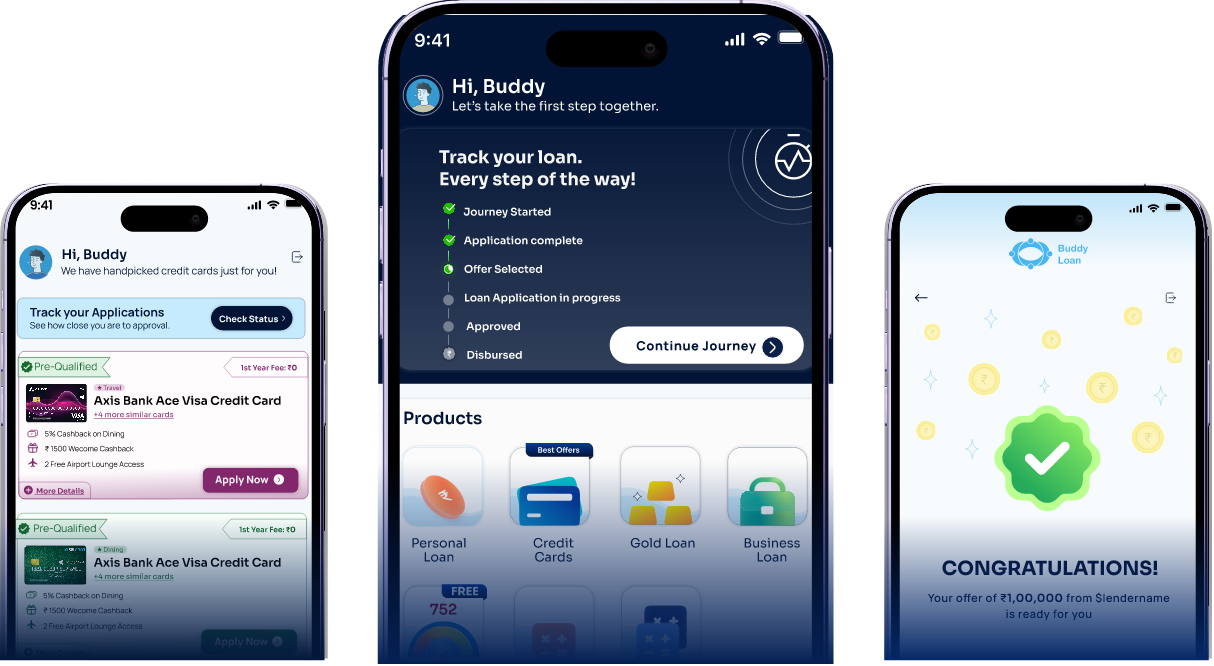
Download the Buddy Loan App Now!
One solution to each of your financial needs at your fingertip.

Scan to download now