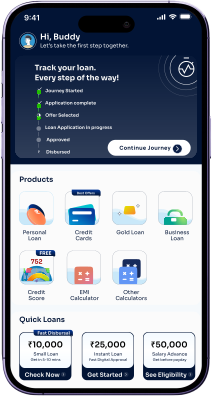
A new employee could get a loan, but approval is not truly guaranteed. A personal loan is often a practical option for new employees because it does not require collateral and is made specifically for these use cases. However, lenders check salary, employer profile, credit score, bank statements, job stability, existing EMIs and repayment capacity.
Some banks prefer a few months of salary history. Meanwhile, NBFCs and digital lending platforms may consider applicants with shorter employment histories. However, they may offer a smaller loan amount or charge a higher interest rate.
| Quick answer: A new employee can apply for a personal loan with valid KYC documents, income proof, salary credit and sufficient repayment capacity. However, the approved amount and interest rate will depend on the lender’s risk assessment. |


Personal Loan vs Secured Loan for New Employees
A personal loan does not require collateral and allows flexible use of funds. In contrast, a secured loan requires an asset such as gold, a fixed deposit, securities or property.
Here is a simple comparison for better understanding:
| Loan Type | Collateral Needed | Suitable For | Limitation |
|---|---|---|---|
| Personal loan | No | Emergency cash needs | Interest rate depends on the applicant’s profile |
| Gold loan | Yes | People who own gold | The lender may auction the gold after default |
| Loan against fixed deposit | Yes | Fixed deposit holders | The fixed deposit remains blocked |
| Loan against securities | Yes | Investors | Market value can affect the loan limit |
| Salary advance | Usually no | Short-term cash gaps | The available amount may be limited |
Therefore, a personal loan is often easier for new employees who need funds without pledging an asset.
Since many new employees may not have suitable assets to pledge, personal loans often work better for medical costs, relocation expenses, rent deposits or family emergencies.
Best Personal Loan Options for New Employees
Here is a list of top 10 banks and NBFCs in India, that gives personal loan for new employees:
| Lender | Indicative Interest Rate |
|---|---|
| Axis Bank | Starting from 9.99% pa |
| HDFC Bank | 9.99% to 24% pa |
| IDFC FIRST Bank | Starting from 9.99% pa |
| IndusInd Bank | Starting from 10.49% pa |
| Kotak Mahindra Bank | Starting from 10.99% pa |
| Bajaj Finance | 10% to 30% pa |
| L&T Finance | Starting from 10.50% pa |
| Tata Capital | 10.99% to 29.99% pa |
| Moneyview | Starting from 14% pa |
| Fibe | Starting from 18% pa |
Disclaimer: Rates are indicative as of July 2026 and may change. New employees may not receive the lowest advertised interest rate. Final terms depend on salary, employer profile, credit score, bank statement, loan amount, tenure and lender policy.
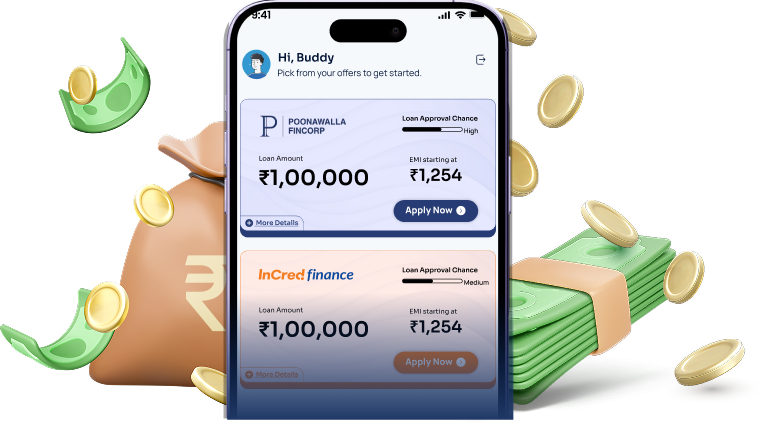
Loan For Probation Employees
Probation employees can apply for a personal loan once regular salary credits begin. However, the lender may check current-job tenure, total experience, employer profile, credit score and existing EMIs before approving the application. In some cases, it goes unnoticed until salary slips from the previous months are asked to be submitted, which marks them as new to the profession.
The following institutions may be worth checking at different stages of probation:
| Institution | Best Time to Check |
|---|---|
| Fibe | After salary credit |
| Moneyview | After salary credit |
| IDFC FIRST Bank | After salary credit |
| Bajaj Finance | After salary credit |
| KreditBee | After 2 months |
| Axis Bank | After 3 salaries |
| ABCD by Aditya Birla Capital | After 3 months |
| Tata Capital | After 6 months |
| Hero FinCorp | After 6 months |
| SMFG India Credit | After 6 months |
Start with an eligibility check instead of applying to several lenders at once. Multiple full applications can create several credit enquiries and reduce the chances of approval.
Loans On Offer Letter
Getting a personal loan only on an offer letter, in all its honesty, is unlikely. The document confirms a future job, salary and joining date, but it does not prove that employment has started or that the applicant will complete probation. Most lenders prefer one or more salary credits, recent salary slips and a bank statement before approving an unsecured loan. Therefore, applicants should treat the offer letter as supporting employment proof, not as a replacement for income proof.
How to Improve the Chances of Approval
- Complete the joining process:
Submit the appointment letter, joining confirmation, employee ID and official work email. - Wait for the first salary credit:
Even one salary credit provides stronger income evidence than an offer letter alone. - Provide previous income records:
Recent salary slips, bank statements, Form 16 or ITR may help applicants who moved directly from another job. - Use the salary account bank:
Once salary credits begin, the bank may offer a personal loan, pre-approved facility or salary-account overdraft based on eligibility. - Check existing pre-approved offers:
A bank with an established repayment or account history may already have an offer available. - Request a smaller amount:
A practical loan amount and affordable EMI may reduce the lender’s risk. - Reduce existing debt:
Clearing card dues or small EMIs can improve repayment capacity. - Ask the employer for support:
A joining bonus, relocation reimbursement or salary advance may cover immediate expenses without a new personal loan.
Alternatively, you can also apply for secured personal loans.
Loan Before First Salary
This is the case where you are newly employed and want funds to navigate the first month; you look for a personal loan.
A loan before the first salary may be available only in limited situations. Similar to the case of loans on offer letters, if the applicant has no salary credit and no previous credit history, most lenders may reject the application or, in some cases, offer a smaller loan amount.
What Can You Do Before Receiving the First Salary?
- Employer advance:
Ask HR about a salary advance or employee emergency loan. - Relocation benefits:
Claim eligible travel, accommodation or moving expenses. - Joining bonus:
Check whether it can be paid before the regular salary date. - Pre-approved offer:
Check your existing bank account or credit card for available offers. - Previous salary records:
Job switchers can provide old salary slips, bank statements and Form 16. - Smaller loan amount:
Request only the amount required for essential expenses. - Existing credit card:
Use card EMI only after checking the total repayment cost. - Wait for salary credit:
The first salary provides stronger income proof and may improve eligibility.
Salary Advance For Freshers
An employer, salary account bank or digital lending platform may offer a salary advance. It is normally a short-term facility and provides a smaller amount than a personal loan. Therefore, it may help freshers cover rent, food, travel, relocation costs or urgent bills before the next salary arrives.
| Option | Best For | Risk |
|---|---|---|
| Salary advance | Small cash gap before payday | The next salary may reduce sharply |
| Personal loan | Larger emergency expenses | A regular EMI commitment begins |
| Credit card EMI | Existing credit card users | Unpaid dues can become expensive |
| Secured loan | People who own suitable assets | Default can put the asset at risk |
Meanwhile, a personal loan may provide a higher amount and a longer repayment tenure. Applicants should compare the APR, processing fees, EMI and repayment date before choosing either option.
Emergency Loan For Freshers
Freshers with at least one salary credit and an existing credit score may have more options than applicants with no salary or credit history. The lender may still approve a smaller amount until the applicant builds a longer employment record.
Emergency Loan Options Freshers Can Compare
| Lender | Loan Range | Starting Rate | Tenure |
|---|---|---|---|
| Moneyview | ₹5,000 to ₹10 lakh | 14% p.a. | 3 to 60 months |
| Fibe | Up to ₹10 lakh | 18% p.a. | 6 to 36 months |
| Bajaj Finance | Profile-based | 10% p.a. | Offer-based |
| Tata Capital | ₹50,000 to ₹35 lakh | 10.99% p.a. | 12 to 72 months |
Eligibility note: Published minimum rates are not guaranteed. New employees may receive a higher rate or smaller amount because of their limited salary history.
How Much Can a Small Emergency Loan Cost?
If the lender deducts a 2% processing fee plus GST before disbursal, the applicant may receive only about ₹48,820 in the bank account. Therefore, freshers should check the net disbursal amount instead of looking only at the sanctioned amount.
A much more practical approach is to use an online EMI calculator, to know exactly what you pay for
Before accepting an emergency loan, compare the APR, net disbursal, EMI, processing fee, bounce charge and total repayment. Also confirm that the lender is a bank or RBI-regulated NBFC and review the Key Facts Statement. Avoid applying through several apps on the same day. Multiple credit enquiries can weaken the application, while several small loans can create an EMI burden soon after the first salary begins.
Eligibility Criteria For New Employees
- Applicant’s age and city
- Monthly salary
- Salary credits in the bank account
- Employer type and profile
- Duration in the current job
- Total work experience
- Credit score or available credit history
- Existing EMIs and credit card dues
- Bank statement behaviour
- KYC and address stability
- Consistency across submitted documents
Documents Required For New Employee Personal Loan
- Identity and KYC Documents: PAN card, Aadhaar card, passport, voter ID, driving licence
- Address Proof: Aadhaar card, passport, voter ID, driving licence, recent utility bill, registered rent agreement
- Income Proof: Latest two or three salary slips, bank statements showing salary credits, Form 16 (when requested), and income tax return (when applicable).
- Employment Proof: Employee ID card, Appointment letter, Joining letter, Employment confirmation letter, Offer letter for supporting verification, Official work email address, Employer contact details.
- Bank and Repayment Documents: Bank statements for the latest three to six months, cancelled cheques, bank account details for loan disbursal, e-NACH or auto-debit mandate, Statements of existing loans, when requested
- Application Documents: Completed personal loan application form, recent passport-size photograph, self-attested copies of submitted documents and digital consent for KYC and credit checks.
Important: An offer letter, PAN card or employee ID alone is generally not enough for a personal loan. The lender will usually require proof of active employment, regular income and repayment capacity. Applicants without salary slips can submit an appointment letter, joining confirmation, previous salary records and bank statements. However, the lender may still wait for the first salary credit before approving the loan.
How Much Loan Can New Employees Get?
Factors That Decide the Loan Amount
- Monthly income: A higher and regular net salary can support a larger EMI.
- Existing EMIs: Current loan and credit card payments reduce the income available for a new EMI.
- Credit score: A strong score and timely repayment history can improve the eligible amount.
- Employment history: Longer service with the current employer generally shows greater income stability.
- Employer profile: Employment with an established company may improve lender confidence.
- Bank statement: Regular salary credits, sufficient balances and fewer payment returns strengthen the application.
- Loan tenure: A longer tenure lowers the EMI but increases the total interest cost.
- Age and location: These factors may affect the lender’s eligibility limits and minimum-income conditions.
Methods Lenders Use to Calculate Eligibility
- FOIR assessment: The lender compares existing obligations and the proposed EMI with the applicant’s monthly income.
- EMI-capacity calculation: The lender estimates the affordable loan amount using income, existing EMIs, interest rate and tenure.
- Credit bureau assessment: The lender reviews credit accounts, repayment history, overdue amounts and recent enquiries.
- Bank-statement analysis: The lender checks salary regularity, account balances, spending patterns and payment failures.
- Employment risk assessment: The lender considers the employer, job role, probation status and length of service.
- Internal scorecard: Banks and NBFCs combine the applicant’s financial and employment details to assign a risk level.
- Existing-customer assessment: A lender may use account activity and past repayment behaviour to generate a pre-approved limit.
Applying for a realistic amount can improve approval chances. A higher salary does not guarantee a larger loan when existing obligations or repayment risk remains high.
How Lenders Verify New Employees
How To Improve Approval Chances As A New Employee
- Apply after receiving the first salary credit whenever possible.
- Maintain a clean bank statement.
- Request a realistic loan amount.
- Avoid submitting several applications at the same time.
- Keep credit card utilisation low.
- Submit complete and accurate documents.
- Choose an affordable EMI and repayment tenure.
- Apply through official lender or marketplace channels.
- Compare offers from banks and NBFCs.
When A New Employee Should Avoid Taking A Loan
A new employee should avoid taking a loan when the expense is non-essential, the EMI will affect rent or food expenses, the job remains uncertain or the salary has not started. Applicants should also step back when a lender hides charges, does not disclose the APR or asks for an upfront payment to a personal bank account.
As an alternative to the manual loan hunt, you can also use Buddy Loan’s online lending platform for finding the best personal loan tailored for your preferences at the best rates in the market.
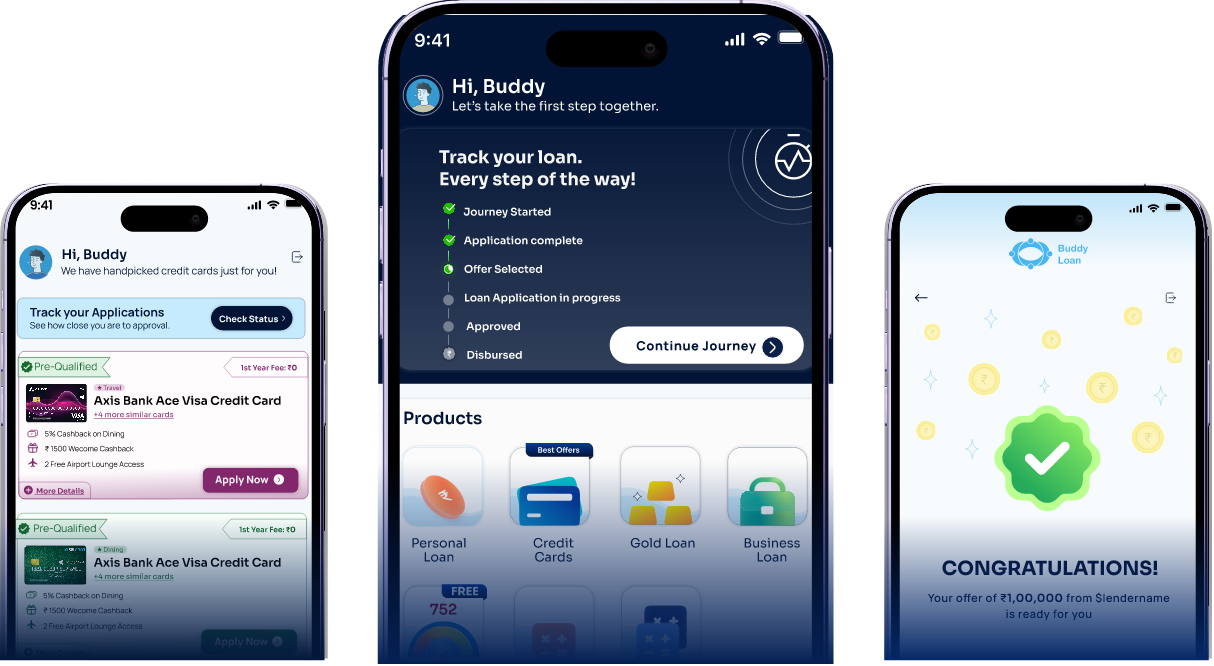
Download the Buddy Loan App Now!
One solution to each of your financial needs at your fingertip.

Scan to download now