Graduate trainees could qualify for a personal loan when they receive a regular salary or stipend in a bank account. However, approval depends on income proof, employment status, credit history, existing debt and lender policy.


Best Personal Loan Options for Graduate Trainees
Banks and NBFCs do not usually offer a separate loan only for graduates. Graduate trainees, management trainees and paid interns normally apply under regular salaried personal loan schemes. A trainee may receive a higher rate or smaller amount because of limited work experience, probation, stipend income or no previous credit history.
The following rates are the officially disclosed rates of top banks and NBFCs that provide personal loans for graduate trainees:
Top 10 Banks for Graduate Trainee Personal Loans
| Bank | Best Published Rate |
|---|---|
| Punjab National Bank | From 9.40% p.a. |
| HDFC Bank | From 9.99% p.a. |
| Axis Bank | From 9.99% p.a. |
| IDFC FIRST Bank | From 9.99% p.a. |
| State Bank of India | From 10.05% p.a. |
| IndusInd Bank | From 10.49% p.a. |
| Federal Bank | From 10.49% p.a. |
| ICICI Bank | From 10.60% p.a. |
| Bank of India | From 10.85% p.a. |
| Kotak Mahindra Bank | From 10.99% p.a. |
Top 10 NBFCs for Graduate Trainee Personal Loans
| NBFC | Best Published Rate |
|---|---|
| Poonawalla Fincorp | From 9.99% p.a. |
| Bajaj Finance | From 10.00% p.a. |
| InCred Finance | From 10.00% p.a. |
| Aditya Birla Finance | From 10.00% p.a. |
| L&T Finance | From 10.50% p.a. |
| Tata Capital | From 10.99% p.a. |
| Piramal Finance | From 12.14% p.a. |
| SMFG India Credit | From 13.00% p.a. |
| Muthoot Finance | From 15.00% p.a. |
| Hero FinCorp | From 18.00% p.a. |
Important: Rates are indicative as of July 2026 and can change. The lowest rate generally applies to applicants with stable salary income, a strong credit score, low existing debt and sufficient work experience.
A graduate trainee should not select a lender only because it advertises the lowest rate. Compare the APR, processing fee, net disbursal, EMI, foreclosure charges and total repayment through the Key Facts Statement.
Loan For Engineering Interns
- Laptop or workstation: Engineering software, coding tools, simulations and design work may require a higher-performance computer.
- Final-year project: Students may need electronic components, sensors, circuit boards, fabrication, testing or 3D printing.
- Software and cloud tools: Certain projects require licensed design software, cloud computing, storage or specialised development tools.
- Technical certifications: Students may pay for CAD, cloud, data science, cybersecurity, programming or industrial certification courses.
- Entrance and competitive exams: Funds may cover GATE, GRE, postgraduate entrance tests, application fees and preparation material.
- Internship relocation: An intern may need money for travel, temporary accommodation, broking and a rental deposit.
- Industrial training: Site-based roles may require safety shoes, helmets, tools, uniforms or daily transport.
- Placement expenses: Students may spend on interview travel, formal clothing, aptitude tests and document verification.
- Internet and power backup: Remote internships and coding assignments may require reliable broadband, mobile data or backup power.
- Expenses before the first stipend: Interns may need short-term support for food, travel and rent until the first payment arrives.
Also Read: Loan for Engineers
Which Loan Option Fits the Expense?
An engineering student loan generally covers approved academic expenses through an education loan. In contrast, an intern loan or personal loan may cover relocation, project materials, certification, travel or urgent living costs.
| Expense | Suitable Option |
|---|---|
| Tuition and hostel fees | Education loan |
| Laptop for the course | Education loan or EMI |
| Project and certification costs | Small personal loan |
| Internship relocation | Intern loan or advance |
| Pre-stipend living expenses | Employer or family support |
Paid engineering interns may apply after regular stipend credits begin. However, unpaid students usually need an education-loan co-borrower, an existing pre-approved offer or another verifiable source of repayment.
Therefore, first-time applicants should request only the amount required for the emergency. A smaller loan that fits the trainee income may have a stronger case than a large application.

Loan For MBA Interns
Common loan needs of MBA students and interns include the following:
- Tuition and academic fees: Students may need funds for semester fees, examination charges, library fees or other approved institutional costs.
- Laptop and study tools: MBA coursework may require a laptop, licensed software, databases, case-study platforms or online learning tools.
- Professional certifications: Students may pay for finance, analytics, project management, marketing or industry-specific certification programmes.
- Summer internship relocation: An intern may need funds for travel, temporary accommodation, broking and a rental deposit in another city.
- Daily internship expenses: Local transport, meals, mobile data and formal workplace clothing can increase monthly costs.
- Placement preparation: Expenses may include interview travel, aptitude test subscriptions, resume services and professional clothing.
- Exchange programmes and study tours: Eligible students may need funds for programme fees, travel and accommodation.
- Expenses before the first stipend: Some interns need short-term support for rent, food and commuting before the company processes the first payment.
- Pre-joining expenses: Students with a pre-placement offer may need funds for relocation, a new rental deposit or essential work equipment.
- Medical or family emergencies: An unexpected expense may require funding that the regular education budget does not cover.
Also Read: Loan for MBA Graduates
Which Loan Solution Fits the Need?
An MBA student loan generally refers to an education loan used for approved academic expenses. In contrast, a summer internship loan or personal loan may cover relocation, rent deposits, travel and other immediate personal costs.
Paid MBA interns may have better personal-loan eligibility after regular stipend credits begin. Moreover, a pre-placement offer or confirmed joining letter may strengthen the application, although lenders can still request current income proof and bank statements.
| Financial Need | Suitable Solution |
|---|---|
| Tuition and institutional fees | Education loan |
| Hostel and approved course costs | Education loan |
| Laptop required for the course | Education loan or EMI |
| Professional certification | Skill loan or small personal loan |
| Internship relocation | Summer internship loan or advance |
| Rent deposit | Personal loan or family support |
| Expenses before stipend | Employer advance |
| Placement expenses | Small personal loan |
| Pre-joining relocation | Joining advance or personal loan |
| Medical emergency | Personal loan or insurance |
Before borrowing, interns should ask the employer whether it provides travel reimbursement, accommodation, relocation support or a stipend advance. These options may reduce the amount that needs to be borrowed.
Students without stipend income should usually explore an education loan, co-borrower-supported option, employer support or family assistance before applying for an unsecured personal loan.
Loan For Medical Interns
Medical interns may need funds during a compulsory rotatory medical internship because stipend amounts, credit dates and living costs differ across hospitals and medical colleges. The National Medical Commission publishes college-wise stipend information. However, lenders assess the stipend actually credited to the applicant’s bank account rather than relying only on the amount stated by the institution.
Common loan needs of medical students and interns include the following:
- Medical instruments: Interns may need a stethoscope, diagnostic tools, scrubs, protective footwear and other hospital essentials.
- Books and digital resources: Expenses may include reference books, question banks, medical applications and online learning subscriptions.
- Postgraduate entrance preparation: Interns may spend on NEET-PG or INI-CET applications, coaching, mock tests and study material.
- Hostel or rental expenses: A posting away from home may require rent, hostel fees, broking or a security deposit.
- Daily hospital travel: Rotations across departments or hospitals can increase fuel, public transport and meal expenses.
- Delayed stipend payments: Interns may need temporary funds when the institution does not credit the stipend on the expected date.
- Medical registration costs: Applicants may need funds for registration, certificates, document verification and related professional fees.
- Conferences and workshops: Medical events may involve registration fees, travel and accommodation.
- Postgraduate admission: An intern selected for further study may need funds for admission fees, relocation and initial course expenses.
- Personal or family emergencies: An unexpected medical or family expense may require immediate financial support.
Also Read: Personal Loan for Doctors
Which Loan Solution Fits the Need?
An education loan may cover approved academic expenses such as fees, hostel costs, books, equipment, instruments and a laptop. However, exam coaching, rental deposits, daily travel and family expenses may fall outside the approved education-loan structure.
Before taking a healthcare intern loan, applicants should ask the hospital or college about stipend advances, accommodation, travel support and reimbursement policies. These options may reduce the amount that needs to be borrowed.
| Financial Need | Suitable Solution |
|---|---|
| College or hostel fees | Education loan |
| Books and instruments | Education loan or EMI |
| Laptop or tablet | Education loan or EMI |
| PG admission expenses | Education loan |
| Entrance exam preparation | Small personal loan |
| Internship relocation | Personal loan or advance |
| Rent deposit | Personal loan or family support |
| Delayed stipend | Institutional advance |
| Conference or workshop | Professional loan or savings |
| Medical emergency | Insurance or personal loan |
Medical interns with regular stipend credits may apply for a personal loan by submitting bank statements, stipend proof, an internship certificate, hospital or college ID, PAN and address proof. However, lenders may offer a smaller amount when the stipend is low, irregular or close to ending.
Future earning potential as a doctor does not replace present repayment capacity. Therefore, the proposed EMI should fit comfortably within the current stipend after rent, food, transport and essential expenses.
Loan on Stipend Income
- A fixed monthly stipend creates clearer income proof than variable payments.
- Three to six months of bank credits can show income consistency.
- A longer training contract can improve the assessment.
- A reputed employer or institution may reduce employment-risk concerns.
- Cash stipend payments make verification and approval harder.
- Existing EMIs may sharply reduce the affordable loan amount.
Loan on an Offer Letter or Internship Letter
An offer letter or internship letter can support the application, but it rarely proves repayment capacity by itself. An offer letter shows expected income, while a bank statement shows actual income.
Most lenders could still request joining confirmation, an employee or institution ID, work-email verification and at least one salary or stipend credit. Moreover, traditional lenders often ask for two or three salary slips and recent salary-account statements.
- Complete the joining process before applying.
- Wait for the first income credit when possible.
- Submit previous salary records after a job switch.
- Check an existing bank for pre-approved offers.
- Request a smaller and practical amount.
- Ask the employer about a joining or salary advance.
Graduate Trainee vs. Intern vs. Management Trainee
Lenders focus less on the designation and more on the employment contract, income pattern and expected continuity. Therefore, two applicants with the same stipend can receive different decisions.
| Profile Type | Income Type | Main Lender Concern |
|---|---|---|
| Graduate trainee | Salary or stipend | Role stability |
| Engineering intern | Stipend or project pay | Income regularity |
| MBA intern | Internship stipend | Short contract |
| Medical intern | Institutional stipend | Documented credits |
| Management trainee | Salary or stipend | Post-training employment |
For example, a management trainee on company payroll can appear stronger than an intern completing a two-month academic project. Likewise, a medical intern with monthly bank credits can have better eligibility than an intern receiving cash payments.
Personal vs. Salary Advance vs. Secured Loan
A personal loan offers flexible use without collateral. Meanwhile, a salary advance cost less for a small gap. A secured loan can improve access when income proof remains weak, but default can put the pledged asset at risk.
Here is a quick comparison:
| Option | Best For | Limitation |
|---|---|---|
| Personal loan | Urgent expenses | Income checks |
| Salary advance | Short cash gap | Limited amount |
| Gold loan | Weak income proof | Asset risk |
| Credit card EMI | Existing cardholders | High cost |
| Family support | Brief emergency | Limited access |
Eligibility Criteria for Graduate Trainee Personal Loan
Here is a quick checklist for the eligibility criteria for a personal loan for graduate trainees.
- The applicant must meet the lender’s minimum and maximum age limits.
- The salary or stipend must meet the lender’s income threshold.
- The bank statement should show regular income credits.
- The employer or institution should support verification.
- The training period should provide reasonable income continuity.
- The credit report should show timely repayment, when available.
- Existing EMIs should leave enough income for a new instalment.
- The applicant must live in a serviceable city or location.
- KYC details must match bank and employment records.
- The proposed EMI must fit the applicant’s monthly cash flow.
Documents Required for Graduate Trainee Loan
No matter the loan type, there are certain documents that are an essential part of a loan application. These are the documents required:
- PAN card
- Aadhaar or another accepted address proof
- Recent bank statements
- Salary slips or stipend proof
- Appointment or internship letter
- Offer letter, when applicable
- Employee, college or hospital ID
- Joining confirmation
- Official work email or employer details
- Passport-size photograph, when requested
- Cancelled cheque or disbursal-account proof
- Existing loan statements, when requested
How Much Loan Can a Graduate Trainee Get?
Graduate trainees and interns apply under regular personal loan schemes. The approved amount may be lower than the published limit because of probation, stipend income, short work history or limited credit history.
| Lender | Loan Range |
|---|---|
| HDFC Bank | ₹25,000 to ₹50 lakh |
| ICICI Bank | ₹50,000 to ₹50 lakh |
| Axis Bank | ₹50,000 to ₹50 lakh |
| IDFC FIRST Bank | Up to ₹15 lakh |
| IndusInd Bank | ₹30,000 to ₹50 lakh |
| Kotak Mahindra Bank | ₹50,000 to ₹1 crore |
| SBI | Up to ₹50 lakh |
| Bajaj Finance | ₹40,000 to ₹55 lakh |
| Tata Capital | ₹40,000 to ₹35 lakh |
| Poonawalla Fincorp | ₹1 lakh to ₹50 lakh |
| L&T Finance | ₹50,000 to ₹30 lakh |
| Aditya Birla Finance | Up to ₹50 lakh |
| SMFG India Credit | Up to ₹30 lakh |
| Hero FinCorp | ₹50,000 to ₹5 lakh |
| Federal Bank | Up to ₹5 lakh digitally |
How Lenders Calculate the Amount
- FOIR: They compare existing EMIs and the proposed EMI with net income.
- Income multiplier: They may cap the loan at a multiple of monthly salary.
- Credit assessment: They review the score, repayment history and recent enquiries.
- Employment check: They assess probation, employer profile and income continuity.
- Bank analysis: They review salary credits, balances and payment failures.
Is it possible for trainees doing post-graduation with a monthly stipend to get an education loan?Yes, a postgraduate trainee may apply when the course qualifies under the lender’s education-loan scheme. However, the stipend alone does not decide approval.
Banks may request the admission letter, fee structure, academic records, KYC, income certificate and co-borrower documents. For example, Canara Bank states that a parent or guardian generally joins as co-borrower under its PM-Vidyalaxmi scheme.
|
How to Improve Your Chances of Loan Approval
Even if you are not the ideal candidate for the best rates of a loan, you can make sure you get approved using various methods:
| Weak Area | How to Improve |
|---|---|
| No salary slip | Show bank credits and letters. |
| Short work history | Wait for more credits |
| No credit history | Build small, responsible credit |
| Low repayment capacity | Request a smaller amount |
| Irregular income | Add stronger income proof |
- Wait for two or three income credits when possible.
- Maintain enough balance for existing payments.
- Avoid cheque, EMI and auto-debit returns.
- Keep credit card utilisation under control.
- Submit matching KYC and employment details.
- Avoid several full applications in a short period.
- Use official lender or trusted marketplace channels.
What to Do If Your Loan Application Is Rejected
- Do not submit several new applications immediately.
- Ask the lender for the reason when available.
- Check the credit report for incorrect accounts or overdue entries.
- Review salary credits and document mismatches.
- Reduce the requested loan amount.
- Wait for more stipend or salary credits.
- Clear small overdue balances before reapplying.
- Consider a suitable co-applicant or secured option.
Safe Borrowing Tips for Trainees Using Loan Apps
If it is your first time borrowing, it is best to keep certain things in mind for safer usage of your money:
- Confirm the name of the bank or RBI-registered NBFC providing the loan.
- Read the Key Facts Statement before accepting the offer.
- Compare the APR, not only the advertised interest rate.
- Check processing fees, penal charges and total repayment.
- Avoid apps that demand access to contacts, call logs, files or media.
- Allow camera, microphone or location access only when required for KYC.
- Never share an OTP, UPI PIN, password or screen-control access.
- Do not install loan APK files received through WhatsApp or Telegram.
- Keep the sanction letter, agreement and repayment receipts.
- Check the lender’s grievance officer and complaint process.
Conclusion
Graduate trainees, interns and management trainees may qualify for a personal loan when they can prove stable income and repayment capacity. Personal loans can support genuine emergencies because they do not require collateral. However, approval depends on the lender’s policy, salary or stipend trail, credit profile, employment duration and documents. Therefore, applicants should compare APR, charges, EMI, tenure and lender credibility before accepting an offer.
A personal loan can support graduate trainees during a genuine financial emergency, but it should not become a burden at the beginning of a career. Apply only after checking income stability, EMI affordability, loan terms and the repayment plan.
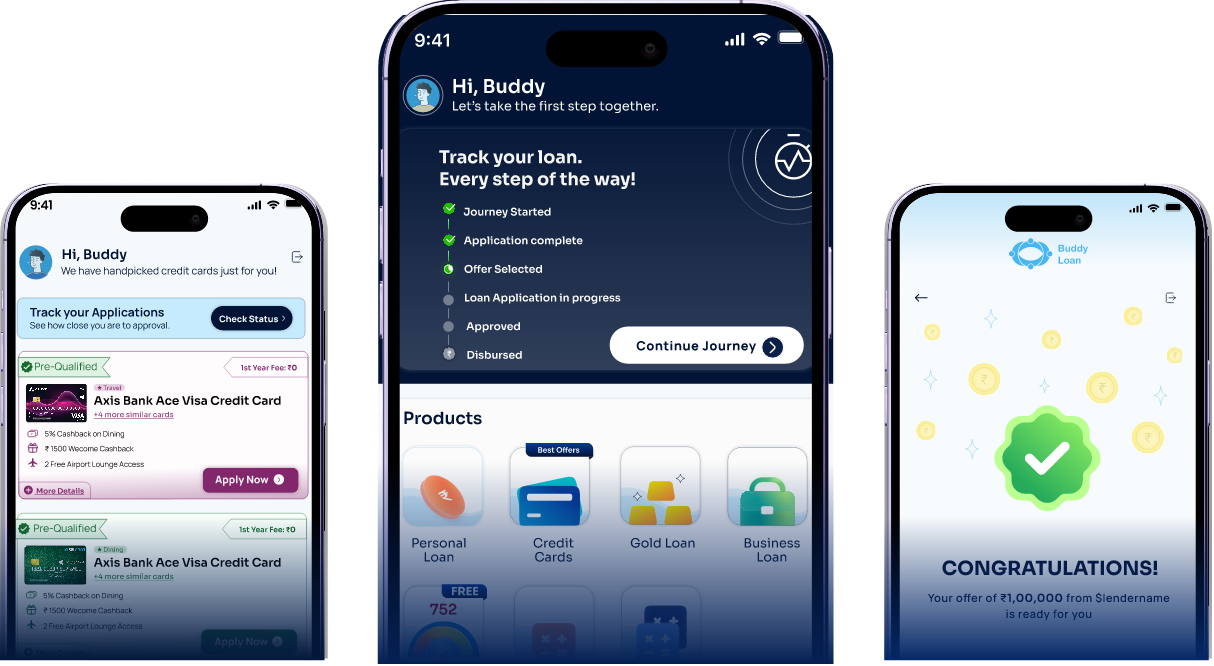
Download the Buddy Loan App Now!
One solution to each of your financial needs at your fingertip.

Scan to download now