Receiving your first salary is an important financial milestone. It gives you a regular income, helps you start saving and may also make you eligible for certain credit products. A loan after the first month’s salary may be possible, but approval is not automatic. One salary credit can prove that you earn an income. Still, lenders would want to know whether that income will continue regularly. They would check your salary amount, employer, probation status, documents, credit profile, existing obligations and repayment capacity.
Some lenders may consider applicants with one salary slip. Others may ask for two or three months of salary credits or a minimum period of work experience. Therefore, your options may be more limited immediately after joining a new job.


Can You Get a Loan After Your First Month’s Salary?
You could be able to apply for a loan after receiving your first salary. However, the lender will decide whether one month of income history is enough for approval.
Some banks, NBFCs and digital lenders may consider first-time salaried applicants, especially when the requested amount is small and the applicant has clear documents. Other lenders may require a longer employment record, multiple salary slips or bank statements showing regular salary credits.
Your approval may depend on:
- Your net monthly salary
- Your employer and employment type
- Your probation or confirmation status
- Your total work experience
- Your credit score or credit history
- Your existing loans and credit card dues
- The loan amount requested
- The lender’s internal eligibility policy
A smaller and realistic request may have a better chance than a large loan immediately after joining your first job.
Also Read: Loans for Salaried Employees
Why Lenders Are Careful With First Salary Applicants
Lenders want to know whether your salary will continue regularly, not just whether you received one salary. A single salary credit provides limited information about long-term income stability.
You may still be in your probation period. Your employer may not have confirmed your role yet. You may also have little or no credit history, which makes it difficult for the lender to understand how you manage repayments.
| Lender Concern | Why It Matters |
|---|---|
| Limited salary history | Regular income is not yet established |
| Probation period | Employment may not be confirmed |
| No credit history | Past repayment behaviour is unavailable |
| New employer | Job continuity is still uncertain |
| High loan request | The proposed EMI may be difficult to manage |
This caution does not mean every new employee will face rejection. It simply means the lender may conduct additional checks or offer a lower amount.
Loan With One Salary Slip
One salary slip may be enough for some lenders, but many lenders ask for additional proof. A salary slip shows your earnings and deductions for one month. It does not always confirm that the salary reached your bank account or that the employment will continue.
If you have only one salary slip, keep the following documents ready:
- First salary slip
- Bank statement showing the salary credit
- Offer letter or appointment letter
- Employee ID card, if available
- Official work email details, if requested
- PAN
- Aadhaar or another accepted address proof
- Active salary account details
The appointment letter can show your joining date, role and salary structure. The bank statement confirms that your employer credited the salary. Together, these documents can provide a clearer picture than one salary slip alone.
Minimum Salary Requirement for First-Time Borrowers
The minimum monthly income required for a personal loan generally starts between ₹10,000 and ₹30,000. However, earning the required salary does not guarantee approval. Lenders also check employment history, salary credits, credit profile, existing EMIs and repayment capacity.
Here is a list of top lenders and the minimum salary they ask for:
| Bank or NBFC | Minimum Monthly Income |
|---|---|
| IDFC FIRST Bank | ₹10,000 |
| Axis Bank | ₹15,000 for customers; ₹25,000 for others |
| ICICI Bank | ₹30,000 |
| Kotak Mahindra Bank | ₹25,000 for salary-account holders; ₹30,000 for others |
| Federal Bank | ₹25,000 |
| IndusInd Bank | ₹25,000 |
| Tata Capital | ₹15,000 |
| SMFG India Credit | ₹16,000; ₹25,000 in Delhi and Mumbai |
| Bajaj Finance | ₹25,001 onwards |
| Poonawalla Fincorp | ₹30,000 |
These figures show why one salary credit may not be enough for every lender. For example, an applicant may meet the ₹15,000 income requirement but still fall short of the required employment history or salary-slip record.
Note: Eligibility criteria can change and may differ by location, loan product, employer, credit score and existing obligations. Always check the lender’s latest terms before applying.
Loan for Freshers or New Employees
Freshers may qualify for a salary-based loan, but their options may be limited. Since they have little employment history, lenders may rely more heavily on salary credits, employer details, bank statements and credit information.
Approval may become easier when:
- Your salary enters a recognised and active bank account
- Your employer provides clear employment documents
- Your KYC details match across records
- You have no overdue credit payments
- You apply for a manageable amount
- The proposed EMI fits your net salary
Freshers should avoid requesting a very high amount immediately after joining their first job. A large loan creates a higher EMI and may appear difficult to manage with limited salary history.
Start with your actual requirement. Do not borrow the maximum amount simply because an app shows an eligible offer.
Also Read: Emergency Loans
Loan During the Probation Period
You may get a loan during probation, but some lenders may hesitate. Probation means your employer is still assessing your performance before confirming your position. As a result, the lender may view your income as less stable than the income of a confirmed employee.
If the loan is not urgent, waiting until you complete probation and receive a few salary credits may improve your chances. It can also help you understand your monthly expenses before adding an EMI.
Can You Get a Loan With No Credit History?
No credit history is not the same as bad credit history. A bad credit history may include missed EMIs, defaults or overdue credit card bills. No credit history simply means you have not used enough formal credit for a bureau to create a meaningful repayment record.
A credit score works like a repayment report card. If you are new to credit, the lender may not have enough history to judge you yet.
In this situation, a lender may:
- Offer a smaller loan amount
- Apply stricter income checks
- Request additional employment proof
- Offer a higher interest rate
- Decline the application under its internal policy
You can build credit gradually by paying all bills and EMIs on time. Use credit responsibly, keep credit card balances manageable and avoid submitting multiple applications together.
| Do not take an unnecessary loan only to create a credit score. Build credit when you have a genuine need and can repay comfortably. |
Interest Rates and Charges First-Time Borrowers Should Check
The interest rate on a salary-based loan can vary based on the lender, applicant profile, credit history, salary, loan amount and tenure. A first-time borrower may not always receive the lender’s lowest advertised rate. Also check the annual percentage rate, processing fee, GST, total repayment amount and charges that may apply during the loan.
| Cost to Check | Why It Matters |
|---|---|
| Interest rate | Shows the basic borrowing cost |
| APR | Shows the broader annual cost |
| Processing fee | May reduce the amount received |
| GST | May apply to processing and service fees |
| Late payment charge | Applies when an EMI is delayed |
| Bounce charge | May apply when auto-debit fails |
| Foreclosure fee | May apply when you close the loan early |
| Total repayment | Shows the complete amount payable |
Read the Key Fact Statement and loan agreement before accepting an offer. They should clearly show the lender, loan amount, tenure, APR, EMI, charges and repayment details.
Documents Needed to Apply After First Salary
The exact document list depends on the lender. However, salaried freshers should usually keep their identity, income and employment documents ready.
| Document | Purpose |
|---|---|
| PAN | Identity and credit verification |
| Aadhaar or address proof | KYC and address verification |
| First salary slip | Income proof |
| Salary-credit bank statement | Confirms actual salary receipt |
| Offer or appointment letter | Confirms employment terms |
| Employee ID | Supports employer verification |
| Photograph | May be needed for the application |
| Bank account details | Used for disbursal and repayment |
If you do not have multiple salary slips yet, your offer letter, salary-credit bank statement and employer details may support your application. However, the lender may still ask for additional documents or a longer salary record.
Also Read: Urgent Loan
How to Improve Your Chances of Loan Approval
You can improve your chances by strengthening your income proof, limiting the requested amount and choosing a lender whose requirements match your profile.
| Issue | What You Can Do |
|---|---|
| Only one salary slip | Add bank statement and appointment letter |
| No credit history | Build credit gradually and repay on time |
| Low repayment capacity | Apply for a smaller amount |
| Probation period | Wait for job confirmation if possible |
| High existing debt | Clear smaller dues before applying |
| Incomplete documents | Prepare clear and updated records |
| Repeated applications | Pause and check eligibility first |
Other practical steps include:
- Wait for two or three salary credits where possible
- Maintain regular employment
- Keep your salary account active
- Avoid failed payments and negative balances
- Pay existing bills and dues on time
- Check your credit report for errors
- Apply through official channels only
- Choose a lender that considers new salaried applicants
When It Is Better to Wait Before Taking a Loan
Getting approval does not always mean taking the loan is the right decision. Sometimes waiting can protect your monthly budget and improve your future eligibility.
Consider waiting when:
- The EMI will affect rent, food or travel expenses
- Your job is uncertain
- You are still adjusting to your new monthly budget
- Your salary after deductions is lower than expected
- The loan is for an avoidable lifestyle purchase
- You have no emergency savings
- The lender has not explained the charges clearly
- The app does not show the actual lender
- An agent is pressuring you to apply immediately
Sometimes the best loan decision is to wait until your income and savings become more stable. A few months can give you a better salary record, clearer budget and stronger application.
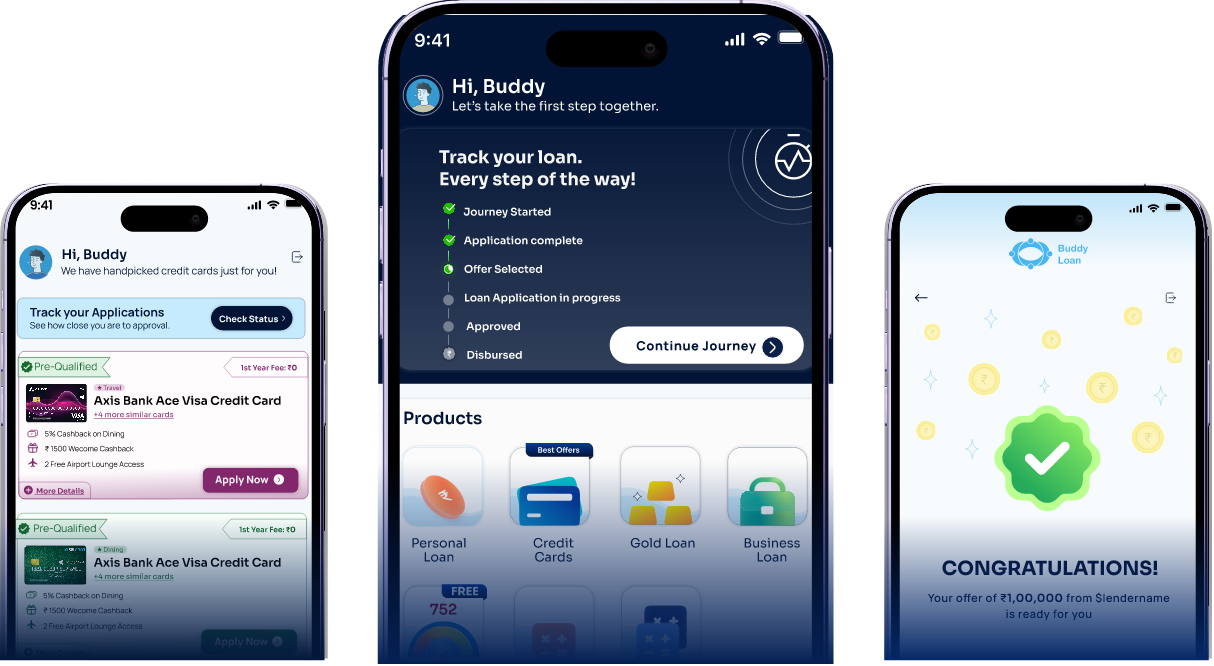
Download the Buddy Loan App Now!
One solution to each of your financial needs at your fingertip.

Scan to download now