A business loan overdraft (OD) account helps businesses access funds when cash flow becomes tight. It works like a flexible credit line linked to a current account or business account. Instead of taking a full loan amount at once, you get an approved overdraft limit and use money only when you need it. This makes a business loan overdraft account useful for working capital, vendor payments, rent, salary, inventory purchases, GST payments, and short-term business gaps.
You do not have to withdraw the full sanctioned amount. You can use part of the limit, repay it, and use it again during the approved period. Many business owners search for an OD account when they need flexible funding without applying for a fresh loan every time.


What is a Business Loan Overdraft Account?
A business loan overdraft account is a credit facility where a lender sanctions a borrowing limit for your business. You can withdraw funds from this limit when your account balance is low or when your business needs extra cash. The lender charges interest only on the amount you use, not on the full approved limit.
For example, if your overdraft limit is Rs. 10 lakh and you use only Rs. 2 lakh for 20 days, the interest on the overdraft applies only to Rs. 2 lakh for those 20 days. This makes it different from a regular business loan, where interest usually applies on the full disbursed amount from the beginning.
A business loan overdraft account can be secured or unsecured. A secured OD may need collateral such as property, fixed deposit, or other approved assets. An unsecured OD limit does not need collateral, but the lender checks business vintage, turnover, banking history, GST returns, credit score, and repayment capacity more closely.
Also Read: MSME Loans
Top Business Loan Overdraft Accounts in India
Business loan overdraft accounts are useful for short-term working capital, supplier payments, inventory purchase, and cash flow gaps. The table below compares leading banks and NBFCs that offer OD, working capital, flexi loans, or similar business credit facilities.
| Bank Name | Major Features and Interest Rates of OD Business Account |
|---|---|
| SBI | Working capital OD, cash credit, OD against deposits; secured options; interest linked to borrower profile and scheme. |
| HDFC Bank | Business loan and OD-style funding: up to Rs. 75 lakh; interest around 10.75% to 28% p.a.; processing fee up to 2%. |
| ICICI Bank | Insta OD up to Rs. 50 lakh; collateral-free; interest on used amount; rate generally starts around 13.25% p.a. |
| Axis Bank | Cash credit and overdraft for MSMEs; working capital support; interest around 15% to 19.25% p.a.; profile-based approval. |
| IDFC FIRST Bank | Collateral-free business loan up to Rs. 1 crore; interest from 12.99%; GST and current-account based funding up to Rs. 75 lakh. |
| Kotak Mahindra Bank | Business OD and working capital finance; secured and unsecured options; rate depends on business profile and collateral. |
| YES Bank | Smart Overdraft for MSMEs; Rs. 10 lakh to Rs. 2 crore limit; quick online offer; profile-based interest rate. |
| Bank of Baroda | MSME OD and working capital limits; secured and government-scheme linked options; rate linked to risk rating and MCLR/RLLR. |
| Punjab National Bank | MSME cash credit and OD facilities; working capital focus; rate depends on credit rating, security, and loan scheme. |
| Canara Bank | Business OD, cash credit, MSME working capital; secured funding available; rate linked to borrower category and bank policy. |
| Union Bank of India | MSME OD and working capital finance; secured and scheme-based options; interest linked to credit risk and collateral. |
| Federal Bank | Business OD and cash credit for traders, MSMEs, and firms; rate varies by limit, security, and account conduct. |
| IndusInd Bank | Business OD and working capital loans; flexible limit usage; interest and fees depend on business financials. |
| DBS Bank | SME working capital and business finance; digital banking support; OD pricing based on business profile and security. |
| AU Small Finance Bank | MSME working capital loans and OD-style funding; secured options; rate depends on turnover, property, and credit profile. |
| Bajaj Finance | Flexi business loan option: withdraw as needed; interest on used amount; rates usually profile-based. |
| Tata Capital | Hybrid term loan with flexi usage; interest starts around 12% p.a.; processing fee up to 3%. |
| Lendingkart | Unsecured business overdraft for MSMEs; digital process; working capital use; rates often start around 13.50% p.a. |
| NeoGrowth | Collateral-free MSME loans up to Rs. 75 lakh; flexible repayment; rates generally start around 15% p.a. |
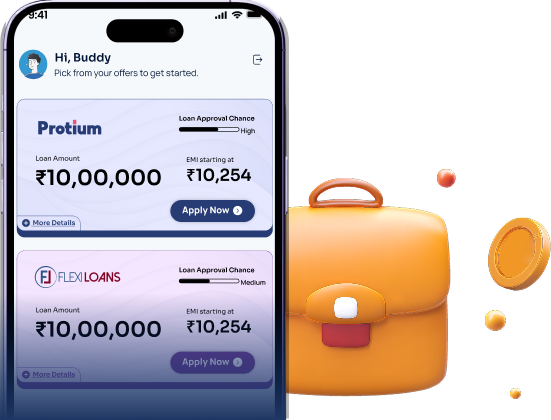
| FlexiLoans | Digital unsecured business loans and credit-line-style funding; quick approval; interest rate depends on business profile. |
How Does a Business Loan Overdraft Account Work?
A business loan overdraft account works as a pre-approved credit limit for your business. The lender gives you access to funds up to a fixed limit, and you can withdraw money only when your business needs it.
- Application submission: The business applies for an OD account by sharing basic business details, KYC documents, bank statements, GST returns, and financial records, as required by the lender.
- Business assessment: The lender checks turnover, cash flow, current account activity, credit score, repayment history, business vintage, and existing loan obligations.
- OD limit approval: Based on the assessment, the lender approves an overdraft limit. This becomes the maximum amount the business can use.
- Account linking: The approved OD limit is linked to a current account or a separate overdraft account, depending on the lender’s process.
- Flexible withdrawal: The business can withdraw funds within the approved limit whenever cash flow is short or working capital is needed.
- Interest on used amount: Interest on overdraft applies only to the amount used, not the full sanctioned limit.
- Daily interest calculation: Many lenders calculate interest based on daily utilisation, so the cost depends on how much you use and for how long.
- Repayment flexibility: The business can repay the used amount when customer payments, sales revenue, or receivables come in.
- Reusable limit: After repayment, the available OD limit increases again, and the business can reuse it during the approved facility period.
- Periodic review or renewal: The lender may review or renew the OD facility based on repayment behaviour, account conduct, turnover, and updated financials.
Also Read: Government Subsidy on Business Loans
Key Features of a Business Loan Overdraft Account
A business loan overdraft account gives businesses flexible access to funds for short-term cash flow needs. It works best when you use the limit carefully and repay the used amount as soon as cash comes in.
- Revolving credit facility: You get an approved overdraft limit and can use it multiple times during the facility period.
- Use funds as needed: You do not have to withdraw the full sanctioned amount. You can use only the amount required for your business expense.
- Interest on utilised amount: Interest on overdraft applies only to the amount you use, not the full approved limit.
- Flexible repayment: You can repay the used amount when your business cash flow improves, subject to lender terms.
- Useful for working capital: An OD account can help with supplier payments, inventory purchase, rent, salaries, GST payments, and other short-term business needs.
- Secured or unsecured options: Some lenders offer OD against collateral, while others may offer an unsecured OD limit based on turnover, bank statements, GST returns, and credit profile.
- Linked to business banking: A bank OD account is often linked to a current account, which makes fund usage and repayment easier to track.
- Periodic review or renewal: Lenders may review the OD limit from time to time based on account conduct, repayment behaviour, turnover, and financial performance.
- Better cost control than full loan usage: Since the business pays interest only on the amount used, the facility can be cost-efficient for short-term gaps.
- Not ideal for long-term funding: A business loan overdraft account should support temporary cash flow needs, not permanent capital shortage.

Business Loan Overdraft Account vs Regular Business Loan
A business loan overdraft account and a regular business loan both help businesses access funds. The difference lies in flexibility, interest calculation, repayment style, and purpose.
| Point of Difference | Business Loan Overdraft Account | Regular Business Loan |
|---|---|---|
| Disbursement | Approved as a limit that can be used when needed | Usually disbursed as a lump sum |
| Interest calculation | Interest applies only on the used amount | Interest usually applies on the full disbursed loan |
| Repayment style | Flexible repayment, subject to OD terms | Fixed EMI repayment |
| Best for | Cash flow gaps and working capital | Expansion, equipment, large purchases, or planned expenses |
| Tenure | Usually short-term and renewable | Fixed tenure, often from 12 months to several years |
| Cost control | Better if used carefully and repaid quickly | Predictable EMI, but less flexible |
Also Read: 5 Best Small Business Loans in India
Types of Business Overdraft Accounts
Not every OD account works the same way. Some overdraft facilities need collateral, while others depend mainly on business turnover, banking history, GST returns, and credit profile. The right option depends on how much funding you need, how quickly you need it, and whether you can offer security.
Secured Business OD Account
A secured business OD account requires collateral. The lender may accept property, fixed deposit, insurance policy, mutual fund units, or other approved assets as security. Since the lender has collateral, the overdraft loan interest rate may be lower than an unsecured OD limit.
This option can work well for businesses that own assets and need a higher overdraft limit. It may suit manufacturers, traders, distributors, and established MSMEs with steady operations.
- Requires collateral or approved security.
- May offer a higher OD limit for business use.
- May carry a lower interest rate than unsecured OD.
- Can involve more documentation and valuation checks.
- May put the pledged asset at risk if the business defaults.
Unsecured OD Limit
An unsecured OD limit does not require collateral. The lender approves it based on business performance, credit score, turnover, current account activity, GST returns, and repayment capacity. It is useful for business owners who need quick working capital but do not want to pledge assets.
This type of business loan overdraft account can suit MSMEs, traders, retailers, service providers, and self-employed professionals. Since the lender takes higher risk, the interest rate may be higher and the approved limit may be lower than a secured overdraft.
- Does not require property or asset security.
- Approval depends heavily on business cash flow and credit profile.
- Can help with short-term expenses such as inventory, salaries, rent, and supplier payments.
- May involve faster processing than secured OD.
- Usually carries a higher rate than secured overdraft facilities.
Current Account Overdraft
A current account overdraft is linked to the business current account. The lender reviews current account statements to understand inflows, outflows, average balance, cheque returns, and transaction discipline. Based on this review, the lender may approve a bank OD account for working capital use.
This facility works well for businesses that receive and make frequent payments. It helps manage temporary cash gaps when expenses arrive before customer collections.
- Linked to the business current account.
- Useful for daily working capital gaps.
- Approval may depend on current account turnover and account conduct.
- Helps businesses pay vendors, staff, rent, and utility bills on time.
- Weak banking behaviour can reduce approval chances or OD limit.
Also Read: Types of Business Loans in India
Dropline Overdraft
DOD in banking means Dropline Overdraft. It is an overdraft facility where the sanctioned limit reduces gradually over the tenure. For example, if the lender approves an overdraft limit of Rs. 10 lakh, the available limit may reduce every month or quarter as per the agreed schedule.
A dropline overdraft gives flexible fund usage, but it also encourages the borrower to reduce dependence on borrowed money over time. It can work well when a business needs temporary support and expects cash flow to improve gradually.
- The approved overdraft limit reduces over time.
- Interest applies only on the amount used.
- Can suit businesses with temporary working capital needs.
- Helps reduce outstanding borrowing gradually.
- May not suit businesses that need the same OD limit throughout the full tenure.
Overdraft Against Fixed Deposit
An overdraft against a fixed deposit allows a business owner to borrow against an existing FD without breaking it. The FD remains with the bank, and the borrower gets access to funds up to a certain percentage of the FD value.
This option can help when the business needs quick liquidity but does not want to lose FD interest or pay premature withdrawal charges.
- Uses an existing fixed deposit as security.
- Usually offers a lower interest rate than unsecured OD.
- Helps avoid premature FD closure.
- Approval can be quicker if the FD is with the same bank.
- The available OD limit depends on the FD value and bank policy.
Overdraft Against Property
An overdraft against property is a secured OD facility where the borrower pledges residential, commercial, or industrial property. This option may offer a larger overdraft limit because the lender has strong collateral support.
It can suit established businesses that need a higher working capital limit and can offer property as security. However, it requires property valuation, legal checks, and more documentation.
- Requires property as collateral.
- Can offer a higher overdraft limit than unsecured OD.
- May offer a lower rate due to collateral backing.
- Requires legal, technical, and valuation checks.
- Property may be at risk if the borrower defaults.
OD Limit for Business: How Lenders Decide It
The OD limit for business depends on the strength of the business and the lender’s policy. A high turnover does not always guarantee a high overdraft limit. Lenders also check cash flow quality, repayment behaviour, existing loans, industry risk, and bank statement health.
| Factor | Why It Matters |
|---|---|
| Business turnover | Shows the size of business operations and revenue flow. |
| Current account statement | Shows daily cash flow, average balance, cheque returns, and transaction behaviour. |
| GST returns | Help lenders verify sales and business consistency. |
| Credit score | Shows repayment behaviour and credit discipline. |
| Existing obligations | Help lenders understand whether the business can handle more debt. |
| Business vintage | Older businesses may show more stable operating history. |
| Collateral | Can help secure a higher overdraft limit in secured OD products. |
Interest on OD Business Accounts
Interest on overdraft is usually calculated on the amount you use and the number of days you use it. This is why an OD account can be cost-effective when used for short periods. But it can become expensive if the business keeps the limit utilised for a long time.
Here is a simple example. Assume your approved overdraft limit is Rs. 10 lakh. You use Rs. 3 lakh for 20 days at an overdraft loan interest rate of 15% p.a.
| Particular | Amount or Value |
|---|---|
| Approved overdraft limit | Rs. 10,00,000 |
| Amount used | Rs. 3,00,000 |
| Usage period | 20 days |
| Interest rate | 15% p.a. |
| Approximate interest | Rs. 2,466 |
The simple formula is:
Interest = Amount Used x Interest Rate x Days Used / 365
In this example, you do not pay interest on the unused Rs. 7 lakh. This is the main advantage of a business loan overdraft account. Still, lenders may charge processing fees, renewal fees, documentation charges, or other charges. Check the full cost before applying.
Also Read: Mudra Loan
Overdraft Loan Interest Rate
The overdraft loan interest rate can vary widely by lender, borrower profile, business type, collateral, and credit score. Secured overdrafts may come with lower rates. Unsecured overdrafts may cost more because the lender takes higher risk.
Some business loans from banks start around the low double-digit range, depending on the lender and borrower profile. For example, the attached IDFC FIRST Bank business loan document mentions business loan interest rates starting at 12.99%, loan amounts from Rs. 7 lakh to Rs. 1 crore, and tenures from 12 months to 48 months. While this is a business loan reference and not a universal OD rate, it gives a useful benchmark for comparing business credit products.
| Borrower Profile | Possible Impact on OD Rate |
|---|---|
| Strong turnover and clean banking | May improve approval chances and pricing |
| High credit score | May support better terms |
| Secured overdraft | May offer lower rate than unsecured OD |
| Unsecured OD limit | May carry higher rate due to higher lender risk |
| Frequent cheque bounce or irregular cash flow | May reduce approval chances or increase cost |
Business Overdraft Loan Eligibility
Overdraft loan eligibility depends on the lender’s policy and the borrower’s business profile. Most lenders prefer businesses with steady income, clean banking, and proper documentation. New businesses may find it harder to get a high OD limit unless they have strong collateral or business proof.
| Eligibility Factor | Typical Requirement |
|---|---|
| Applicant type | Sole proprietor, partnership firm, private limited company, LLP, trader, manufacturer, service provider, or self-employed professional |
| Business vintage | Usually 1 to 3 years or more, depending on lender |
| Turnover | Must support the requested OD limit |
| Credit score | A higher score improves approval chances |
| Banking history | Clean current account activity helps |
| GST returns | Useful for businesses registered under GST |
| Collateral | Needed for secured OD, not needed for unsecured OD limit |
Also Read: PMEGP Scheme Loan
Documents Required for Business OD Account
Documents may change by lender, business type, and loan amount. A small unsecured OD may need fewer documents than a secured overdraft against property. Keep your KYC, financial documents, and business proof ready before applying.
| Document Type | Examples | Purpose |
|---|---|---|
| KYC documents | PAN, Aadhaar, passport, voter ID, or driving licence | Identity and address verification |
| Business proof | GST certificate, Udyam registration, shop licence, partnership deed, company incorporation documents | Business verification |
| Bank statements | Current account statements for the last 6 to 12 months | Cash flow and banking behaviour check |
| Financial documents | ITR, balance sheet, profit and loss statement | Income and repayment capacity assessment |
| GST returns | GST filings, where applicable | Sales and turnover verification |
| Collateral documents | Property papers, FD receipt, or asset documents | Required for secured OD products |
When Should a Business Use an OD Account?
An OD account works best when the business has temporary cash flow gaps. It should support operations, not hide deeper financial stress. Use it when receivables are delayed, stock needs funding, or expenses come before customer payments.
- To pay suppliers before customer collections arrive
- To manage payroll during a short cash flow gap
- To buy inventory before a seasonal sales period
- To cover GST, rent, utilities, or operating expenses
- To manage short-term working capital without taking a full-term loan
- To handle urgent business expenses without disturbing long-term investments
Benefits of a Business Loan Overdraft Account
| Benefit | How It Helps |
|---|---|
| Flexible usage | You can withdraw funds as and when needed. |
| Interest on used amount | You pay interest only on the utilised amount. |
| Working capital support | It helps manage short-term cash flow gaps. |
| Reusable limit | You can repay and use the limit again, subject to terms. |
| No fixed EMI in many OD products | Cash flow stays more flexible compared to fixed EMI loans. |
| Useful for seasonal businesses | Businesses can draw funds during peak purchase cycles and repay after sales. |
Also Read: PSB Loans in 59 Minutes
Risks and Costs to Check
An overdraft gives convenience, but it is still borrowed money. A business should understand the cost before using the facility.
| Risk or Cost | What It Means | How to Manage It |
|---|---|---|
| High interest cost | Cost can rise if the OD stays used for long periods. | Use OD only for short-term gaps and repay quickly. |
| Renewal risk | The lender may reduce or not renew the limit. | Maintain clean banking and repayment discipline. |
| Processing and renewal fees | Some lenders charge fees apart from interest. | Check annual cost, not just interest rate. |
| Collateral risk | Secured OD can put pledged assets at risk. | Borrow within repayment capacity. |
| Overdependence | Regular use of the full OD limit may signal weak cash flow. | Track receivables, expenses, and profit margins. |
How to Apply for a Business Loan Overdraft Account
The application process may differ by lender, but most banks and NBFCs follow a similar flow. The attached IDFC FIRST Bank business loan document shows a simple loan application journey where the applicant applies, submits details, receives a representative call, and gets evaluated for eligibility. A business OD application also follows a similar credit assessment process.
- Check your funding need and decide the required OD limit.
- Compare secured and unsecured OD options.
- Check overdraft loan eligibility with banks, NBFCs, or digital lenders.
- Keep KYC, bank statements, GST returns, and business documents ready.
- Submit the application online or through a branch.
- Allow the lender to review turnover, banking, credit score, and repayment capacity.
- Review the approved overdraft limit, rate, fees, and renewal terms.
- Accept the offer only if the cost and limit fit your business cash flow.
Business Loan Overdraft Account for MSMEs
MSMEs often deal with delayed payments, seasonal demand, supplier credit cycles, and sudden inventory needs. A business loan overdraft account can give them short-term liquidity without forcing them to take a full term loan for every working capital gap.
For example, a trader may need funds to buy stock before the festive season. A manufacturer may need money for raw materials before customer payments arrive. A service business may need short-term support for salary or vendor payments. In such cases, an OD limit can offer useful flexibility.
However, MSMEs should track utilisation carefully. If the business uses the overdraft limit for too long, the interest cost may reduce profit. The best use of an OD account is short, planned, and linked to incoming cash flow.
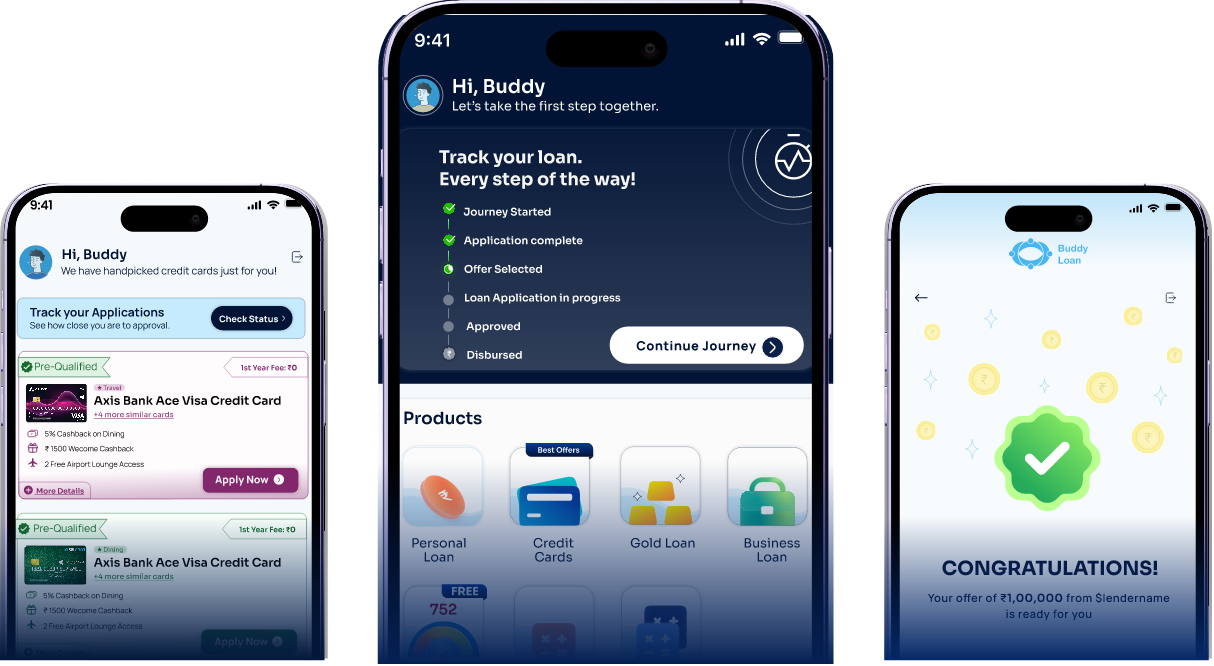
Download the Buddy Loan App Now!
One solution to each of your financial needs at your fingertip.

Scan to download now