In India’s 2026’s financial ecosystem, capital is the oxygen that keeps a business alive. Yet, for many Indian entrepreneurs, the challenge is choosing the right kind of business loan. In India, a business loan that works perfectly for a heavy manufacturing unit might suffocate a tech startup with high monthly EMIs.
Understanding the specific types of business loans available is critical because debt structure determines cash flow health. Whether you are looking for a Government Business Loan Scheme to subsidise your interest or a quick fintech injection for inventory, the market has segmented into highly specialised products.
Read on, as we break down the 5 essential business loan types in India and categorise them by utility so that we can help you identify if you need low interest, speed, or startup support.

The 5 Core Types of Business Loans
Let’s define the structural instruments available in the Indian market.
1. Term Loans (The Standard Expansion Tool)
This is the most traditional form of borrowing. You get a lump sum upfront and repay it over a fixed tenure with interest.
- Structure: Can be Short-term (1 year) to Long-term (5-10 years).
- Secured vs. Unsecured: Banks usually ask for collateral (property/assets) for large amounts, offering lower interest rates. NBFCs offer unsecured term loans but at a premium.
- Best Use: Capital expenditure (Capex)—building a new factory, opening a second branch, or major renovation.
2. Working Capital Loans (The Daily Fuel)
Profitable businesses often fail due to a lack of liquidity. Working capital loans bridge the gap between paying suppliers and receiving payments from clients.
- Cash Credit / Overdraft: Linked to your bank account. You only pay interest on the amount you withdraw, not the total limit sanctioned.
- Best Use: Paying salaries, restocking inventory, or managing seasonal dips in sales.
3. Equipment & Machinery Finance
This is an asset-backed loan where the machinery itself serves as the collateral.
- The Advantage: Since the loan is secured by the asset, interest rates are typically lower than unsecured loans. Lenders are more willing to fund this because they can liquidate the asset if you default.
- Best Use: Manufacturing units upgrading technology or logistics companies buying vehicles.
4. Invoice Discounting (The Cash-Flow Unlocker)
In the B2B world, payment cycles can stretch to 90 days. Invoice discounting allows you to sell your unpaid invoices to a lender for immediate cash (usually 80-90% of the value).
- In 2026, digital platforms have made this instant. The lender collects the full amount from your client later and pays you the balance minus a fee.
- Best Use: MSMEs stuck in long payment cycles with large corporate clients.
5. Government Business Loan Schemes
These are not products but ‘enablers’. The government intervenes to provide security or subsidies in the form of loans where banks hesitate for small businesses.
Mudra Yojana (PMMY): For micro-units (up to ₹10 Lakhs).
- CGTMSE: Provides guarantee cover for loans up to ₹5 Crores, encouraging banks to lend without asking you for collateral.
- Best Use: First-generation entrepreneurs and small businesses lacking physical assets for security.
Snapshot for Decision Making
Here is a simple tabular explanation for easier decision-making:
| Loan Type | Interest Rate | Collateral Needed? | Speed | Best For |
| Bank Term Loan | Low (9-14%) | Usually Yes | Slow (1-2 weeks) | Planned Expansion |
| Govt Schemes (Mudra) | Low/Med | No | Moderate | Micro Businesses |
| Fintech/Digital | High (16%+) | No | Fast (24-48 hrs) | Urgent Cash Flow |
| Invoice Discounting | Medium | No (Invoice is collateral) | Fast | B2B Vendors |
| Loan Against Property | Lowest (8-10%) | Yes | Moderate | Large Capital Needs |
Categorisation by Need: Which Loan Fits You?
Now that we know the instruments/loans, let’s map them to specific business scenarios in India.
1. Best for Low Interest Rates: Secured Term Loans & Govt Schemes
If your priority is keeping the cost of capital low, you must offer security.
- The Logic: Banks lend at 9-11% if you provide collateral (property/FD).
- The Alternative: If you don’t have assets, Government Business Loan Schemes like PMMY or Stand-Up India offer reduced rates or lower processing fees because the sovereign guarantee reduces the bank’s risk.
2. Best for Businesses That Can’t Qualify for Bank Loans: NBFCs
Traditional banks have rigid criteria (high credit score, 3 years profitability). If you don’t meet these:
- The Solution: Non-Banking Financial Companies (NBFCs) and digital lenders use ‘cash flow-based lending’. They look at your banking transactions and GST data rather than just the credit score.
- The Trade-off: You will pay a higher interest rate (16-24%) for this accessibility.
3. Best for Fast Funding: Digital Lending
When you need money in 48 hours to grab a bulk inventory deal:
- The Solution: Fintech apps like BuddyLoan offering Pre-approved Business Loans or Merchant Cash Advances (based on your POS machine swipes).
- Speed: Disbursal often happens in 24 hours with zero physical paperwork.
4. Best for Startups: Equity or Soft Loans
Startups are high-risk. Traditional debt (loans) is dangerous for pre-revenue companies.
- The Solution: Look for the Startup India Seed Fund Scheme or Soft Loans from SIDBI.
- Why: These loans often have a moratorium (you don’t pay EMI for the first 1-2 years) or convert to equity, giving the business time to stabilise.
5. Best for Bad Credit: Invoice Financing or Equipment Loans
If your CIBIL score is damaged, unsecured loans are impossible.
The Solution:
- Invoice Financing: The lender looks at your client’s creditworthiness, not yours. If you bill a Tata or Reliance company, you get funded even with a bad score.
- Equipment Loans: The loan is against the machine. If you default, they take the machine. Your credit score matters less here.
MSME & Government Schemes
These Indian government-backed initiatives for business loans serve as a critical financial equaliser, offering subsidised and collateral-free capital to ensure that lack of assets never hinders business potential.
MSME/SME Loans: The Growth Engine
In 2026, the definition of MSME funding has shifted towards Collateral-Free lending.
- CGTMSE (Credit Guarantee Fund Trust for Micro and Small Enterprises): This is the backbone of MSME lending. Lenders can give you up to ₹5 Crores without taking your house or shop as security. The trust pays the bank if you fail.
- Udyam Registration: To access any MSME / SME Loans, having a Udyam certificate is mandatory. It opens doors to priority sector lending and lower interest rates.
Government Business Loan Schemes: The Safety Net
- Pradhan Mantri Mudra Yojana (PMMY): Divided into Shishu (up to ₹50k), Kishore (₹50k-₹5L), and Tarun (₹5L-₹10L). Ideally suited for shopkeepers, traders, and small service providers.
- Stand-Up India: Specifically for SC/ST and Women entrepreneurs. It offers loans from ₹10 Lakhs to ₹1 Crore for setting up greenfield (new) enterprises.
Conclusion
Choosing the right type of business loan in India is a strategic decision, not just a financial one.
- If you are a Startup, protect your equity but look for government-backed soft loans.
- If you are an MSME, leverage your Udyam registration for collateral-free CGTMSE loans.
- If speed is your only metric, accept the higher cost of Fintech lending but have a repayment plan ready.
In 2026, money is a commodity. The competitive advantage lies in structuring your debt so that it fuels your growth rather than eating into your margins.
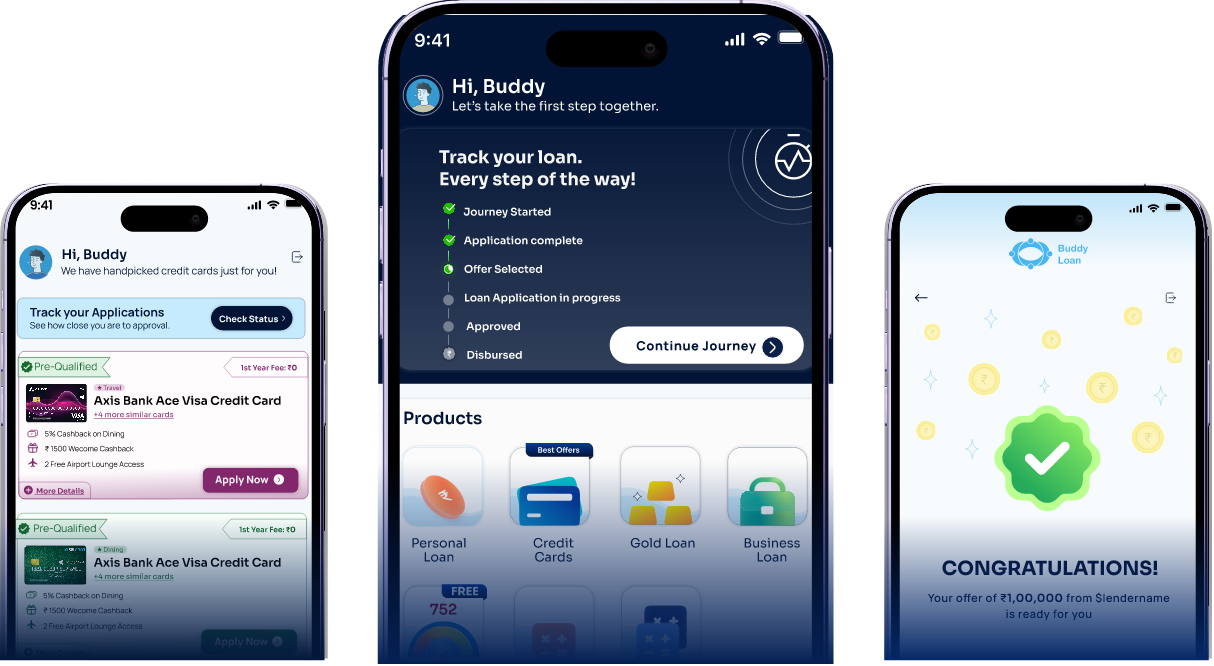
Download the Buddy Loan App Now!
One solution to each of your financial needs at your fingertip.

Scan to download now