SBI IFSC codes are unique eleven-digit alphanumeric identifiers assigned by the Reserve Bank of India (RBI) to every State Bank of India (SBI) branch participating in the electronic payment system. These codes are essential for electronically transferring funds between accounts, including NEFT and RTGS transfers.


IFSC Code
IFSC stands for Indian Financial System Code. It’s an 11-digit alphanumeric code assigned by the Reserve Bank of India (RBI) to every bank branch participating in the electronic payment system. This unique code ensures accurate routing of funds during transactions like NEFT and RTGS.
Structure of SBI IFSC Code
- The first four letters for all SBI branches are SBIN.
- The remaining six digits represent the specific branch code.
For example, the IFSC code for the SBI branch at 23, Himalaya House, Kasturba Gandhi Marg, New Delhi 110001, is SBIN0005943. Here, 0005943 is the branch code.
Ways to Find SBI IFSC Code
There are a few ways to find your SBI IFSC code:
- Check your chequebook: The IFSC code is usually printed on the top left corner of your SBI cheque.
- SBI website: Use the SBI branch locator on their website. You can search by branch name, state, district, or PIN code.
- Third-party websites: Several websites provide IFSC code lookup tools, including for SBI branches.
Steps to Find SBI IFSC Code
To locate the IFSC code of SBI bank branches through the SBI website, follow these steps:
- Step 1. Go to the official website of SBI Bank.
- Step 2. At the bottom of the homepage, find the quick access menu for various services and click on ‘Branch Locator / ATM Locator’.
- Step 3. On the new page, you can search for a specific branch using State, District, Branch Code, Branch Name, or PIN Code.
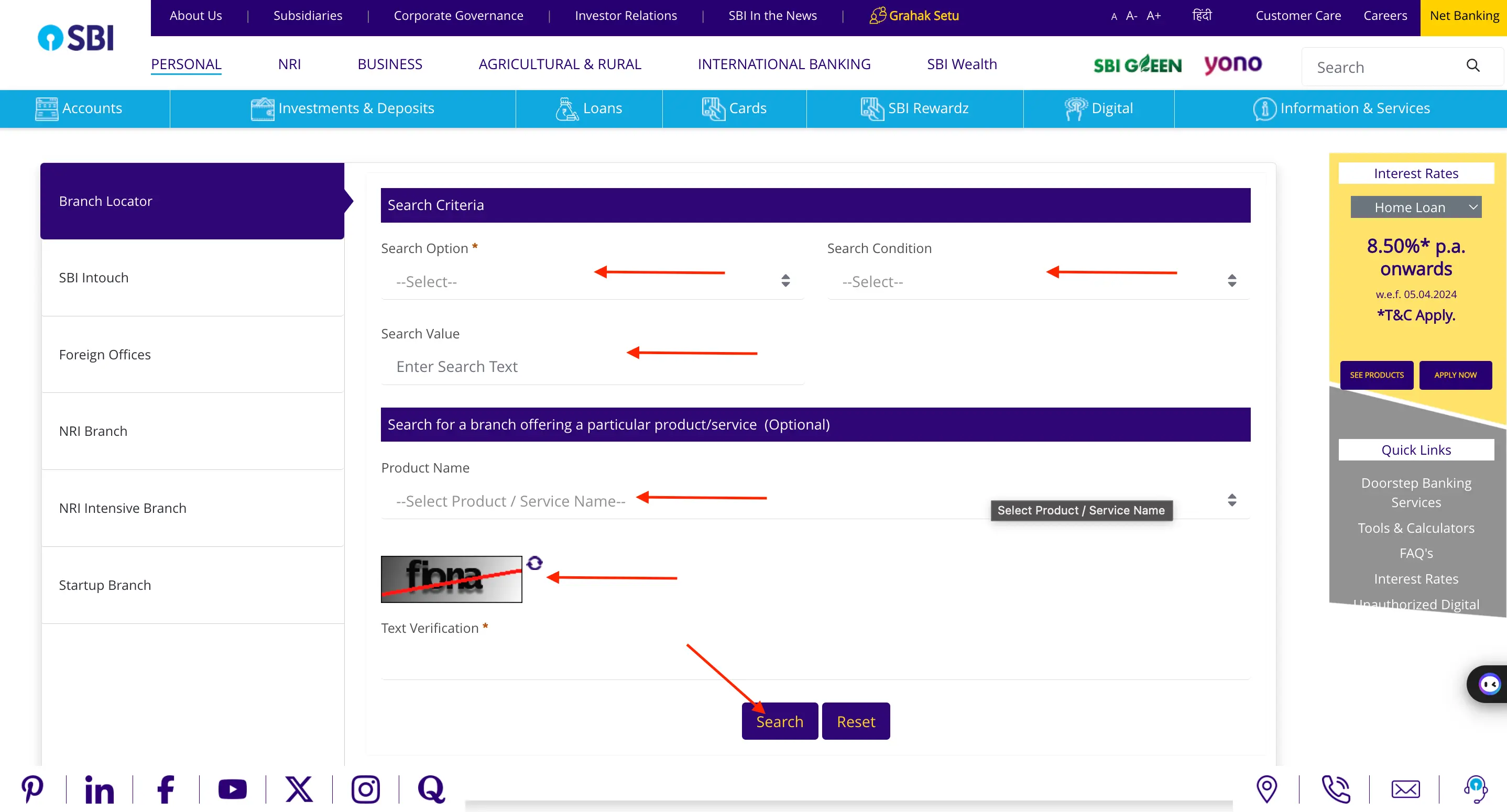
- Step 4. Enter the search value to find matching records.
- Step 5. Once the matching results are displayed, select the right branch.
- Step 6. All information about the branch, including the IFSC Code, will be shown.
Eligibility Requirements for Opening SBI Account
To open an account with SBI, you need to meet the following criteria:
- You must be an Indian citizen
- You must be at least 18 years old
- Minor accounts can be opened under the guardianship of a parent
- Valid government-approved identity proof is necessary

Documents Required For SBI Account Opening
The following documents are needed when applying for an account with SBI:
- Proof of identity – Aadhaar Card, Passport, Driving license, Voter’s ID card,
- Proof of address – Aadhaar Card, Passport, Driving license, Voter’s ID card,
- Form 16 (if PAN card is not available)
- Recent passport-size photographs
- PAN Card
Steps to Open SBI Account
To open a savings account with the State Bank of India, the process is simple and convenient. You can open an SBI account either online or offline.
Offline SBI Account Opening
- Step 1. Visit the nearest SBI branch.
- Step 2. Obtain the account opening form from the bank executive.
- Step 3. Fill out the form with accurate details including name, address, signature or thumb impression, and other required credentials. If you don’t have a PAN number, you will need to fill out the second part of the form.
- Step 4. If you wish to activate internet banking, fill out a separate form for access.
- Step 5. After completing the application process, an initial deposit is required based on the type of account you choose.
- Step 6. Once the bank verifies the application, you will receive a welcome kit containing a Debit/Credit card, PIN for the card, passbook, pay-in slips, chequebook, internet banking details, and a guidebook on operating the account.
Online SBI Account Opening
- Step 1. Visit the State Bank of India’s official website.
- Step 2. Choose the type of account you prefer.
- Step 3. Fill out the online application form with details such as name, address, date of birth, and other necessary information.
- Step 4. Submit the form along with proof of identity documents such as PAN Card, Aadhar Card, Voter ID, or Driving License.
- Step 5. The bank will verify the submitted details and communicate its decision on approval or rejection. Upon approval, the account will be ready for use.
Importance of IFSC Code
The IFSC Code is crucial for online money transfers, particularly in India where NEFT, IMPS & RTGS are the major money transfer systems. All three systems require the IFSC Code of the recipient’s bank branch to ensure accurate crediting of funds to the correct bank account at the correct branch.
Additionally, the IFSC Code offers the following benefits in banking:
- Ensures accurate transfer of funds to the correct branch and account, as it is unique to every bank and branch.
- Facilitates faster and easier money transfers between bank accounts.
- Minimizes the risk of fraud when using the IFSC Code.
- Enables direct transfer between sender and receiver with notifications from both parties during Internet transactions.
- Simplifies the verification process for banks during settlement.
- Encourages paperless cash transactions, promoting electronic, environmentally sustainable banking. Transactions based on IFSC codes are now simple, easy, and paperless.
You can also check other loan schemes offered by SBI using the links provided below:
You can also check other loan schemes offered by SBI using the links provided below:
Download the Buddy Loan App Now!
One solution to each of your financial needs at your fingertip.

Scan to download now