Gold comes in various forms, each with its unique properties and uses. From pure 24-karat gold to alloyed gold, the purity and composition of gold determine its color, durability, and value. Investors and jewelry makers choose different types of gold based on their specific needs and preferences.
Types of Gold Color – Identify the Differences

Gold comes in various forms, including yellow, white, rose, and green. Yellow gold is the classic alloy, while white and rose gold are created by mixing gold with other metals. Pure 24-karat gold is the most valuable but also the softest. The diverse gold types cater to different aesthetic and practical preferences.
Yellow Gold
- Composition: Typically 10-14 karat, with the remainder being copper and/or silver.
- Color: Ranges from a rich, deep yellow to a paler, lighter yellow depending on the gold purity and alloy composition.
- Characteristics: Durable and long-lasting. The alloy metals make it harder and more resistant to scratches and dents compared to pure 24-karat gold.
Uses: Widely used in jewelry like rings, necklaces, and watches due to its classic appearance and affordability.
Yellow gold is the most popular and traditional choice for gold jewelry, with a timeless, elegant look that complements a wide range of skin tones.
White Gold
- Composition: An alloy made by mixing pure gold with white metals like palladium, nickel, or silver.
- Color: Ranges from a light, silvery white to a slightly yellowish-white hue.
- Characteristics: More durable and scratch-resistant than yellow gold. Often coated with rhodium for a brighter, whiter appearance.
Uses: Popular for engagement rings, wedding bands, and fashion jewelry where a sleek, modern look is desired.
Rose Gold
- Composition: An alloy made by mixing pure gold with copper.
- Color: Has a warm, pinkish-reddish hue.
- Characteristics: Slightly more durable than yellow gold due to the copper content. Has a softer, more romantic appearance.
Uses: Increasingly popular for jewelry, especially engagement rings and fashion accessories, offering a unique and elegant alternative to traditional yellow or white gold.
Green Gold:
- Composition: An alloy made by mixing pure gold with silver and sometimes other metals like zinc.
- Colour: Has a greenish-yellow hue.
- Characteristics: Rarer and more expensive than other gold types. Often used for specialized or custom jewelry.
Uses: Mainly found in high-end, niche jewelry pieces where a distinctive green-gold color is desired.
The different gold colors offer a range of aesthetic options, allowing people to choose the one that best suits their style and preferences.

Different Karats of Gold
Gold is measured in karats (k) to indicate its purity and gold composition. The different karats of gold refer to the amount of pure gold present in the alloy. Here’s a breakdown of the most common gold karats and their characteristics:
24 Karat (24K) Gold:
- Composition:9% pure gold
- Appearance: Brightest, deepest yellow color
- Characteristics: Extremely soft and malleable, not very durable
Uses: Primarily for investment, high-end jewelry, and artisanal crafts
18 Karat (18K) Gold:
- Composition: 75% pure gold, alloyed with other metals
- Appearance: Rich, yellow color
- Characteristics: Moderately durable, less malleable than 24K
Uses: Widely used in fine jewelry, such as engagement rings, necklaces, and bracelets
14 Karat (14K) Gold:
- Composition: 3% pure gold, alloyed with other metals
- Appearance: Slightly paler yellow color
- Characteristics: More durable and less expensive than higher-karat gold
Uses: Common in everyday jewelry, such as rings, earrings, and pendants
10 Karat (10K) Gold:
- Composition:7% pure gold, higher percentage of alloy metals
- Appearance: Pale yellow color
- Characteristics: Most durable and affordable of the common gold karats
Uses: Often used in more affordable jewelry, such as costume jewelry and children’s jewelry
The higher the karat, the more pure gold is present in the alloy, resulting in a richer, more vibrant yellow color. However, higher-karat gold is also softer and more prone to scratches and dents. Lower karat gold, such as 10K and 14K, is more durable and suitable for everyday wear, while higher karats are often reserved for special occasions or investment purposes.
Gold as an Asset and Investment
Gold is a valuable asset to own, offering various financial products like gold loans, loans against gold, and loans against Sovereign Gold Bonds (SGBs). From an investment perspective, you can choose from Sovereign Gold Bonds, Gold ETFs, Physical Gold, Digital Gold, Gold Mutual Funds, and other Gold Saving Schemes.

Types of Gold Jewellery
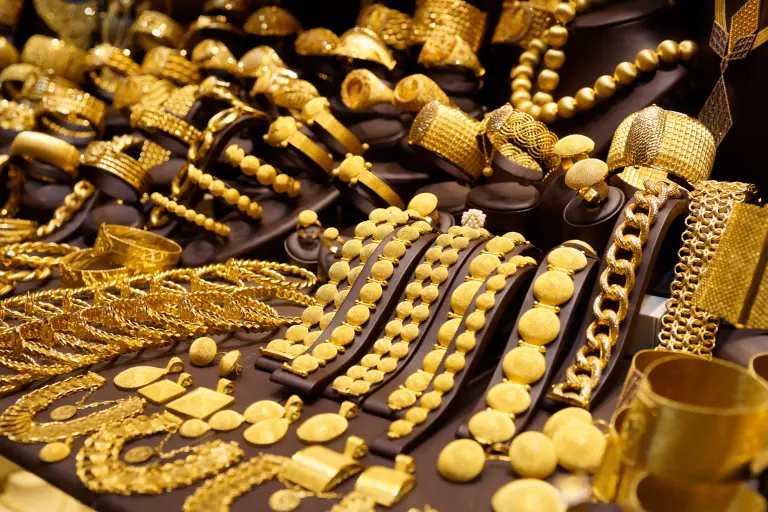
While different pieces of gold jewelry may appear similar on the surface, they can vary significantly in quality and cost, depending on the manufacturing process.
- Gold Plated: Gold-plated jewelry is typically the lowest-cost option. It is made of a base metal, such as brass or copper, covered in a thin layer of gold (0.05% gold or less). Over time, the gold layer on gold-plated jewelry may fade or tarnish.
- Gold-Filled: Higher-quality gold-filled jewelry is made from a base metal, like jeweler’s brass, with a solid layer of gold mechanically bonded to the base. This type of jewelry contains nearly 100 times more gold than gold-plated jewelry, and the gold won’t rub off due to the bonding process.
- Gold Vermeil: Vermeil refers to gold-plated jewelry made from a sterling silver base. This jewelry type is higher quality and more durable than regular gold-plated jewelry, similar to gold-filled jewelry. True vermeil contains at least 2.5 microns of gold. One of the main differences between gold vermeil and gold-filled jewelry lies in their manufacturing processes. Gold vermeil is created using an electroplating process, while gold-filled jewelry is made through a pressure and heat bonding process.
- Solid Gold: Solid gold is a piece of jewelry made entirely of gold with no base metal. It comes in various karats, with higher-karat jewelry corresponding to higher quality, purity, and cost.
Also Read: Why Is Gold Loan Better Than Any Other Loan
Conclusion
Gold comes in various types and colors, each with unique traits for jewelry use.
Yellow gold is classic and durable, white gold offers a sleek modern look, and rose gold’s pink hue adds a romantic touch. The best gold depends on style, budget, and purpose. Some mix types for unique designs. If you’re wondering Will the Gold Rate Decrease in Upcoming Days or Will Gold Rates Fall in 2025 in India, it’s key to know the Top 10 Reasons to Invest in Gold. Also, explore Why Gold Prices Are Increasing in India and the Top 10 Benefits of Buying Digital Gold for secure investments.
Need a Personal Loan for Financial needs then Apply For Loan Online for lowest interest rates
Expand your Business or for startup get Business Loan with quick approval

Download the Buddy Loan App Now!
One solution to each of your financial needs at your fingertip.

Scan to download now


Frequently Asked Questions
Q. What is the difference between yellow gold, white gold, and rose gold?
A. Yellow gold is an alloy of pure gold mixed with copper and silver, giving it a warm, golden hue.
Q. Is white gold an alloy of gold mixed with white metals like palladium, nickel, or rhodium, giving it a silvery-white appearance?
A. Rose gold is an alloy of gold mixed with copper, resulting in a pinkish-reddish color.
Q. Which type of gold is the most valuable?
A. Pure 24-karat gold is the most valuable, containing 99.9% pure gold. However, it is also the softest and least durable. Lower karat golds like 14k and 18k, which are alloyed with other metals, are more commonly used in jewelry due to their increased durability and affordability.
Q. Which gold type is the most durable?
A. White gold and rose gold are generally more durable than pure 24k yellow gold, as the added alloy metals make them harder and more scratch-resistant. 14k and 18k yellow gold are also more durable than 24k due to the added alloy metals.
Q. Which gold type is the most affordable?
A. 10k gold, which contains the least amount of pure gold, is the most affordable option for gold jewelry. 14k and 18k gold are also more affordable than 24k pure gold.
Q. Which gold type is the most popular for engagement rings?
A. White gold and yellow gold are the most popular choices for engagement rings, as they provide a classic, timeless look. Rose gold has also gained popularity in recent years, offering a unique and romantic alternative.