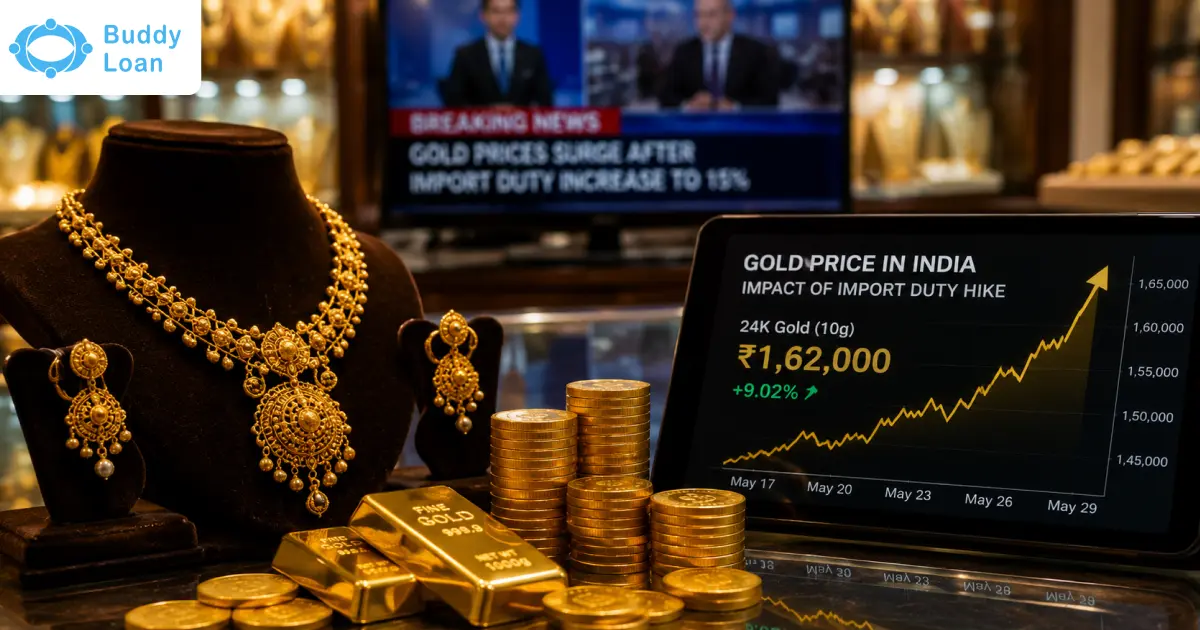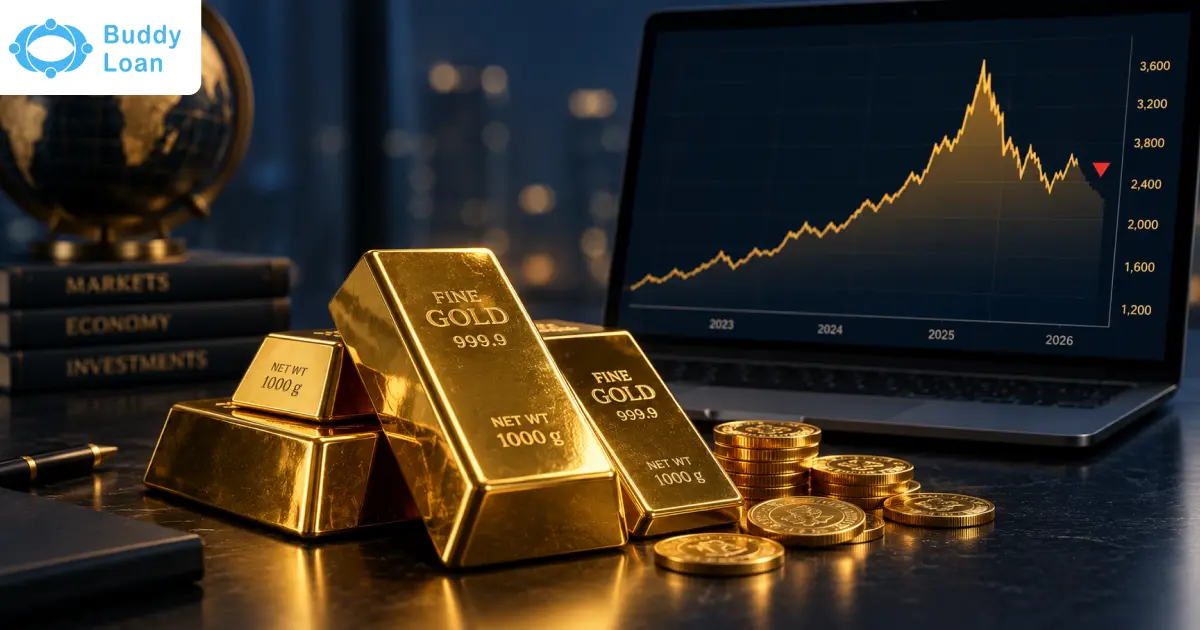
In late 2026, gold price has shown volatility once again, and short-term selling pressures will return after a strong run earlier in the year. The rate hike of September by the Federal Reserve of the US, the increased treasury yields, a stronger dollar, and intermittent profit booking have caused corrections to be even more likely. Nonetheless, the outlook is not uniformly negative.
Goldman Sachs expects that gold will reach $4,900 per ounce by the end of 2026, while, according to J.P. Morgan, the average value can reach approximately $6,000 per ounce towards the end of this year. The main question remains: Do we see the beginning of a deeper trend caused by current weakness?
Will Gold Price Fall Further in 2026?
It is too indefinite to give a short answer. However, the long answer is heavily dependent on various factors: There may be several headwinds for gold in the future, including rising interest rates, high treasury yields, a strong dollar, and decreasing geopolitical threats. However, lower investment interest in the precious metal could push down its value. Despite this, the current forecasts for gold do not put it in an extended bear market phase.
The yellow metal has recovered well from recent news, and predictions of institutional investors for the year 2026 still remain encouraging. The demand from central banks and the existing threats from various sectors make it easier for gold to hold its ground.
Why Is Gold Price Falling?
The recent weakness in gold price reflects a mix of tighter monetary policy and normal selling after earlier gains. These factors can continue to influence prices in the near term.
1. Higher US Interest Rates
The Federal Reserve raised its policy rate by 25 basis points in September. Higher rates increase the appeal of interest-bearing assets such as bonds, which can reduce demand for non-yielding gold.
2. Rising Treasury Yields and Stronger Dollar
Higher bond yields increase the opportunity cost of holding gold. A stronger US dollar can also make dollar-priced bullion more expensive for buyers using other currencies.
3. Profit Booking
Gold recorded substantial gains earlier in 2026. After a strong rally, traders often lock in profits, which can produce sharp but temporary price corrections.
4. Reduced Safe-Haven Demand
If geopolitical tensions (especially mid-eastern conflicts) ease materially, some investors could reduce defensive positions in gold. However, renewed political or economic uncertainty could quickly reverse that effect.
Gold Price Forecast for the Rest of 2026
Major institutions still see meaningful upside for gold, but they also recognise the risk of another correction. Their outlook broadly points to two possible zones: a stronger recovery towards roughly ₹1.50–₹1.85 lakh per 10 grams, or a weaker scenario closer to ₹1.20–₹1.35 lakh per 10 grams. The path between these levels will largely depend on US interest rates, inflation, the dollar, geopolitical risk, and central bank demand.
How High Could Gold Go?
The more bullish institutional views leave room for gold to move towards roughly ₹1.50–₹1.85 lakh per 10 grams if supportive conditions return.
- Central banks continue adding gold to diversify their reserves.
- The Fed stops raising rates or signals lower rates ahead.
- US Treasury yields fall, reducing the appeal of interest-bearing assets.
- The US dollar weakens, making gold cheaper for buyers using other currencies.
- Geopolitical or fiscal uncertainty increases safe-haven demand.
- ETF and private-investor demand strengthen again.
How Low Could Gold Fall?
A weaker scenario could pull gold towards roughly ₹1.20–₹1.35 lakh per 10 grams if tighter financial conditions continue. This is a downside scenario rather than a fixed institutional price target.
- The Fed continues raising rates or keeps them high for longer.
- Real bond yields rise, increasing the opportunity cost of holding gold.
- The US dollar strengthens further.
- Investor and ETF demand weakens.
- Central bank purchases slow materially.
- Geopolitical tensions ease, and investors move back towards riskier assets.
How Interest Rates, the Dollar, and Inflation Work Together
Gold does not react to one factor in isolation. A stronger dollar usually puts pressure on gold because bullion is priced in dollars. Higher interest rates can also hurt gold by making bonds more attractive.
Inflation creates a more complicated relationship. Rising fuel prices, for example, can push inflation higher. If markets expect the Fed to respond with higher rates, bond yields and the dollar can rise first, which can push gold lower. But if inflation stays high while confidence in currencies or government finances weakens, demand for gold as a store of value can increase.
What Would Decide Which Direction Gold Takes?
- If higher inflation leads mainly to higher rates, yields, and a stronger dollar, gold could remain under pressure.
- If inflation rises while rate expectations ease, gold could benefit.
- If geopolitical risk increases sharply, safe-haven buying can outweigh the negative effect of high rates.
- If central-bank demand remains strong, it can provide support even during short-term corrections.
This is why gold can fall even when inflation is high or rise even when the dollar remains relatively firm. The final direction depends on which force is strongest at that point in time.
Can MCX Gold Fall Further in India?
MCX Gold still faces near-term downside risk. Nuvama Professional Clients Group described the setup as sideways to bearish on September 17, while keeping its broader trend assessment positive.
| MCX Gold Level | Significance |
| ₹155,000 | Key resistance: a sustained close above this level would weaken the intermediate bearish setup. |
| ₹148,000 | First important support |
| ₹144,000 | Near-term downside target if support breaks |
| ₹140,000 | Lower end of the deeper support zone |
Nuvama cited ₹151,900 as the prevailing level in its September 17 outlook, with ₹144,000 as its downside target. A break below ₹148,000 could deepen the correction, while a sustained move above ₹155,000 would improve the technical picture. Indian gold can also diverge from international prices because movements in USD/INR directly affect domestic gold prices.
What Could Push Gold Prices Lower?
There are several variables in the case of gold price:
- Further Fed tightening: Additional rate hikes would keep borrowing costs and the opportunity cost of holding non-yielding gold elevated.
- Higher real yields: Rising inflation-adjusted bond yields can make government securities more attractive relative to gold.
- Stronger US dollar: Dollar appreciation can make gold more expensive for buyers using other currencies and reduce demand.
- ETF and investor outflows: A reversal from recent ETF inflows could add selling pressure as investors move toward bonds, cash, or other assets.
- Slower central-bank buying: Central banks remain important buyers, so a sharp slowdown would remove part of the structural support for prices.
- Geopolitical easing: Reduced conflict or policy uncertainty could lower demand for gold as a safe-haven asset.
- Derivatives-driven selling: Falling prices can force options dealers to unwind hedges, which can amplify short-term declines.
What Could Support a Gold Price Recovery?
Gold still has several strong sources of support even after recent corrections.
- Central bank buying remains high. Goldman Sachs expects purchases to average about 50 tonnes per month in 2026, compared with roughly 17 tonnes per month before 2022.
- China remains an important buyer. The People’s Bank of China purchased 20 tonnes in August, while Chinese gold ETFs added another 11 tonnes.
- Geopolitical and fiscal uncertainty can increase demand for gold as a defensive asset.
- Lower expectations for future rate hikes would reduce pressure from bond yields.
- Gold still represents a relatively small share of private investment portfolios, leaving room for additional demand.
Strong official-sector demand is one reason a short-term gold price drop does not automatically signal a longer bearish cycle.
Is This a Gold Price Correction or a Trend Reversal?
The current signals look mixed, but they still fit a correction scenario more closely than a confirmed long-term reversal.
| Correction Signals | Bearish Reversal Signals |
| Central banks continue buying. | Central-bank demand drops sharply. |
| Important support levels hold. | Support levels repeatedly break. |
| Rate-hike pressure starts easing | Fed keeps tightening for longer. |
| Goldman Sachs and J.P. Morgan keep higher late-2026 targets. | Major forecasts are cut significantly. |
| Investors return during price dips. | Persistent ETF and investor outflows |
Gold can still fall further from current levels. However, continued central-bank buying, recent ETF demand, and institutional forecasts above current spot prices mean there is not yet clear evidence of a prolonged bearish reversal.
Conclusion: Will Gold Price Decrease Further in 2026?
Gold prices can fall further during 2026 if interest rates, treasury yields, and the US dollar remain strong. MCX Gold also faces near-term downside risk if important support levels fail.
At the same time, Goldman Sachs still targets $4,900 per ounce by year-end, while J.P. Morgan sees gold pushing towards $6,000. Central bank purchases and continued demand from China also provide support. The more realistic outlook is therefore continued volatility, with further corrections possible alongside periods of recovery.