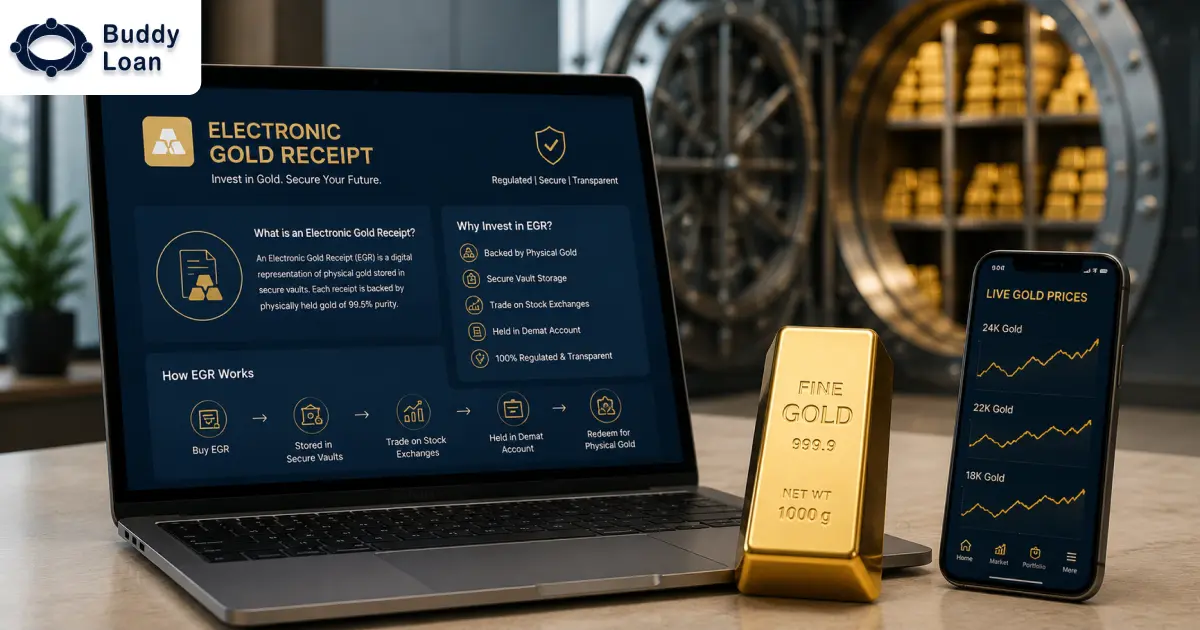
Electronic Gold Receipts, or EGRs, are a new gold investment option in India for investors who want to own gold in electronic form without storing physical gold at home. EGRs represent physical gold stored in regulated vaults. Investors can trade them on stock exchanges like shares. This makes gold investment more transparent, accessible, and easier to manage through a demat account.
Investors who want exposure to gold without jewellery-making charges, purity doubts, and storage concerns should understand EGRs. Read on to learn more about EGR, the interest rates, the payout, and other details related to it.


What are Electronic Gold Receipts?
Electronic Gold Receipts are exchange-traded securities that give investors ownership of physical gold. When investors buy an EGR, they do not buy jewellery or a gold coin directly. They buy an electronic receipt backed by actual gold stored in SEBI-accredited or approved vaults.
Investors hold EGRs in a demat account and trade them on exchanges like shares. They can also convert EGRs into physical gold, subject to exchange, vault, quantity, and delivery rules. NSE describes EGRs as digital assets backed by physical gold and tradable like stocks and bonds. Gold ETFs work differently. They are fund units that mainly track domestic gold prices.
- Compared to physical gold: EGRs avoid home storage, purity doubts, and jewellery making charges.
- Compared to Gold ETFs: EGRs are closer to direct gold ownership, while Gold ETFs are fund units used for gold price exposure.
- Compared to digital gold: EGRs are exchange-traded and held in demat form under a regulated market structure.
- For new investors: EGRs make gold investment look more like stock trading.
- For experienced investors: EGRs offer exchange pricing, demat settlement, and possible physical conversion.
Also Read: Gold Deposit Scheme
Are EGRs Really a New Gold Investment Option in India
Gold has always been a trusted asset in Indian households. But traditional gold investment has its own problems. Jewellery includes making charges. Physical gold needs safe storage. Purity can be difficult to verify. Selling physical gold may also involve deductions or negotiation.
Electronic Gold Receipts try to solve some of these problems by bringing gold ownership into a regulated market format. They allow investors to buy gold electronically, hold it in demat form, and trade it through the exchange system.
- Exchange-traded: EGRs can be bought and sold on stock exchanges.
- Demat holding: Investors can hold EGRs in their demat account.
- Backed by physical gold: The receipt represents gold stored in approved vaults.
- Transparent pricing: Exchange trading can help improve price discovery.
- No jewellery making charges: Investors are buying gold exposure, not ornaments.
How Electronic Gold Receipts Work
The EGR process begins when an investor deposits physical gold with an approved vault manager. The vault manager checks the gold for purity and quality. After verification, the system creates an Electronic Gold Receipt. Investors can then trade this EGR on the exchange.
For investors, the experience is similar to buying a stock or exchange-traded security. They need a demat and trading account with a broker that supports the EGR segment. Once purchased, the EGR is credited to the investor’s demat account.
| Stage | How It Works |
|---|---|
| Gold Deposit | Physical gold is deposited with an approved vault manager. |
| Quality Check | The gold is checked for purity and quality standards. |
| EGR Creation | An Electronic Gold Receipt is issued against the deposited gold. |
| Exchange Trading | The EGR can be bought or sold on the exchange. |
| Demat Holding | The investor holds the EGR in demat form. |
| Physical Conversion | Eligible EGRs may be converted into physical gold, subject to rules. |
Also Read: Gold Monetization Scheme
Key Features of EGRs
EGRs combine the familiarity of gold with the convenience of exchange-based investing. EGRs make gold ownership cleaner, more transparent, and easier to trade.
- Demat-based gold ownership: Investors hold EGRs electronically in a demat account.
- Regulated framework: EGRs operate through approved exchanges, depositories, and vault managers.
- Small denominations: Investors may be able to buy gold in smaller units, depending on exchange offerings.
- Purity assurance: The underlying gold must meet defined quality standards.
- Exchange liquidity: Investors can trade EGRs during market hours, subject to available buyers and sellers.
- Physical gold backing: Each EGR represents underlying physical gold stored in vaults.
How to Buy Electronic Gold Receipts
Buying Electronic Gold Receipts is similar to buying other exchange-traded instruments. However, investors should first check whether their broker supports EGR trading.
- Open a demat and trading account with a SEBI-registered broker.
- Complete KYC using PAN, Aadhaar, bank details, and other required documents.
- Check whether the broker has enabled the EGR or commodity segment.
- Search for available EGR symbols on the trading platform.
- Review the price, quantity, purity, and order details.
- Place a market order or limit order.
- After settlement, investors receive the EGR units in their demat account.
Investors should not assume that every broker will immediately support EGR trading. Since EGRs are still a new gold investment product in India, broker availability, liquidity, and platform access may improve gradually.
EGRs vs Physical Gold vs Gold ETFs
Electronic Gold Receipts are different from jewellery, coins, bars, and gold ETFs. Each option has a different purpose. Jewellery is mostly for personal use. Gold ETFs are market-linked investment products. Physical gold backs EGRs, and investors trade them as exchange-traded receipts.
| Factor | Electronic Gold Receipts | Physical Gold | Gold ETFs |
|---|---|---|---|
| Form | Demat-based receipt | Jewellery, coins, or bars | Mutual fund units traded on exchange |
| Gold Backing | Backed by physical gold in vaults | Held directly by buyer | Backed by portfolio gold exposure |
| Storage | No home storage needed | Buyer must store safely | No home storage needed |
| Making Charges | No jewellery making charges | May include making charges | No making charges |
| Trading | Exchange-traded | Sold through jewellers or dealers | Exchange-traded |
| Physical Delivery | May be possible, subject to rules | Already physical | Usually no direct physical delivery for retail investors |
| Best For | Investors wanting exchange-traded gold ownership | Personal use, gifting, jewellery needs | Portfolio gold exposure |
Also Read: Personal Loan to Buy Gold
Benefits of Electronic Gold Receipts
EGRs can be useful for investors who want gold exposure without the common issues linked to physical gold. The structure also supports more transparent gold trading in India.
- Convenience: Investors can buy, sell, and hold gold electronically.
- Transparency: Exchange trading can help investors see live prices and place orders clearly.
- Quality assurance: The underlying gold must meet exchange and vault standards.
- No storage worry: Investors do not need to keep gold at home or in a locker.
- Portfolio diversification: Investors can use EGRs as part of a gold allocation strategy.
- Potential liquidity: Since EGRs trade on exchanges, investors may get easier exit options as market participation grows.
Risks and Things to Check Before Investing in EGRs
EGRs are useful, but they are not risk-free. Like any gold investment, their price depends on the market price of gold. Investors should also understand trading costs, liquidity, taxation, and physical withdrawal rules before investing.
- Gold price risk: EGR prices can rise or fall with gold market movements.
- Liquidity risk: Since EGRs are new, trading volumes may take time to grow.
- Broker support: Not every trading platform may offer EGR access immediately.
- Charges: Brokerage, exchange charges, demat charges, vault charges, or withdrawal charges may apply.
- Physical withdrawal rules: Converting EGRs into physical gold may involve minimum quantity, location, charges, and documentation.
- Taxation: Investors should check the tax treatment with a tax advisor before investing or redeeming.
Who Should Consider EGRs?
Electronic Gold Receipts may suit investors who want to invest in gold but do not want to buy physical jewellery or store gold themselves. They may also work for people who already use demat and trading accounts.
- Investors who want gold exposure in demat form.
- People who want to avoid making charges on jewellery.
- Investors who prefer exchange-traded products.
- Users who want transparency in gold buying and selling.
- Long-term investors who want gold as part of portfolio diversification.

Who May Not Find EGRs Suitable?
EGRs may not suit everyone. Some investors may still prefer jewellery for personal use or gold ETFs for simple portfolio allocation.
- People buying gold mainly for weddings, gifting, or jewellery use.
- Investors who do not have a demat and trading account.
- Users who want direct cashback-style returns or fixed income.
- People who do not want to track exchange prices and market liquidity.
- Investors who need immediate physical gold in small jewellery form.
Final Thoughts
Electronic Gold Receipts are an important new gold investment option in India. They bring gold ownership closer to the stock market format, where investors can buy, sell, and hold gold electronically through regulated systems. For people who want gold exposure without jewellery making charges, storage concerns, or purity doubts, EGRs can be a practical option.
Still, investors should not rush in without understanding the product. Check broker availability, trading liquidity, charges, taxation, and physical withdrawal rules. EGRs can be useful, but like every investment, they work best when they match the investor’s goal, risk comfort, and holding period.
Download the Buddy Loan App Now!
One solution to each of your financial needs at your fingertip.

Scan to download now