In India, Other Backward Classes (OBC) is a category that receives various benefits, including reservations in government jobs, educational institutions, and competitive exams like UPSC. Within the OBC category, there is a distinction between the Creamy Layer and the Non-Creamy Layer (NCL), which determines who can avail of these benefits. This blog will explain what the OBC Non-Creamy Layer is, the eligibility criteria, the documents required, and how to apply both online and offline for the Non-Creamy Layer certificate.
Understanding The Non-Creamy Layer of OBC
The Non-Creamy Layer (NCL) of the OBC category refers to individuals whose family income falls below a specified limit. In contrast, the Creamy Layer consists of individuals who have a higher income and are thus excluded from the benefits reserved for OBCs. The Non-Creamy Layer is eligible for government reservations and concessions, while the Creamy Layer is not.
The term “creamy” refers to the upper layer or wealthier segment within the OBC community. The division into Creamy and Non-Creamy Layer was introduced to ensure that the economically weaker sections within OBCs receive the necessary support.

OBC Non-Creamy Layer Eligibility
To be classified under the Non-Creamy Layer, a family must meet the following criteria:
1. OBC categories are divided into Creamy Layer and Non-Creamy Layer based on parents’ income:
– Income above ₹8 lakhs: Creamy Layer.
– Income below ₹8 lakhs: Non-Creamy Layer.
2. Only those in the Non-Creamy Layer can apply for the OBC Non-Creamy Layer certificate.
3. If both parents, or one parent, work in Group C or D of the Central Government or Group II, III, IV of the Tamil Nadu State Government, their children are eligible for the Non-Creamy Layer certificate.
4. Individuals working in Group B of the Central Government or Group I of the Tamil Nadu State Government are eligible for the certificate.
5. If the husband works for the Central Government, the wife is eligible for the Non-Creamy Layer certificate if her parents do not have any income.
6. Castes under BC (Backward Class) and MBC (Most Backward Class), but not listed under OBC in the Central Government, cannot apply for this certificate.
7. Children of parents working in Group A services (like IPS, IAS, IFS) are not eligible for the Non-Creamy Layer certificate.
8. If the applicant’s parents work in Group B or C of the Central Government or Group I of the State Government, they are not eligible.
9. Parents with an annual income exceeding ₹8 lakhs are not eligible to apply for the OBC Non-Creamy Layer certificate.
Documents Required for OBC Non-Creamy Layer Certificate
To apply for the OBC Non-Creamy Layer certificate, you will need the following documents:
- Identity Proof: Aadhar Card, Voter ID, or PAN card.
- Address Proof: Ration card, utility bill, passport, or Aadhar card.
- Income Proof: Salary slips, income certificates, or income tax returns for the past three years.
- OBC Category Proof: Parent’s OBC certificate.
- Proof of Residence: Documents showing that your family has resided in a particular state for a certain number of years.
- Passport-sized photographs: Generally 2-3 recent photographs.
- Declaration/ Affidavit: Stating that your family falls under the OBC Non-Creamy Layer income bracket.
Apply for OBC Non-Creamy Layer Certificate
Applying for an OBC Non-Creamy Layer certificate can be done either online or offline, depending on the state. Below are the detailed steps for both methods:
Online Application Process
Step 1. Visit the Official Website:
Visit the state-specific official website or the National e-District Portal where the application form is available. For example, in Karnataka, you can visit the Seva Sindhu portal, while in Maharashtra, you can use the MahaOnline platform.
Step 2. Register or Log in:
Create an account or log in using your credentials. Complete the registration process by filling in your basic details and setting a password.
Step 3. Fill in the Application Form:
Look for the OBC Non-Creamy Layer Certificate section. Enter all the necessary information, including your personal details (name, address, etc.), family income, and OBC category.
Step 4. Upload Required Documents:
Upload scanned copies of the required documents, including income proof, address proof, and OBC category proof. Ensure that the files are in the correct format and meet the file size requirements.
Step 5. Pay the Application Fee:
Some states may charge a nominal fee for the application. Pay the fee using online payment methods such as UPI, credit/debit card, or net banking.
Step 6. Submit the Application:
Once the form is complete and documents are uploaded, review the application to ensure all details are correct. Submit the application.
Step 7. Receive Acknowledgment:
After submission, you will receive an acknowledgment receipt or application number, which can be used to track the status of your certificate.
Step 8. Download the Certificate:
Once your application is approved, you will receive a notification. You can download the OBC Non-Creamy Layer certificate from the portal.
Offline Application Process
Step 1. Visit the Local Tehsil or Block Office:
Go to your local Tehsil, Revenue, or Block Office where caste and income certificates are issued.
Step 2. Collect the Application Form:
Ask for the OBC Non-Creamy Layer certificate application form.
Step 3. Fill in the Application Form:
Complete the form with accurate information, including your personal details, family income, and OBC category.
Step 4. Attach Required Documents:
Attach photocopies of the required documents such as income proof, address proof, and category certificate. Make sure to carry the original documents for verification.
Step 5. Submit the Form:
Submit the completed form along with the documents to the designated official at the office.
Step 6. Verification Process:
Local authorities will verify your application and documents after submission. This process can take a few days to weeks, depending on the workload.
Step 7. Receive the Certificate:
Once verified, the certificate will be issued, and you can collect it from the office.
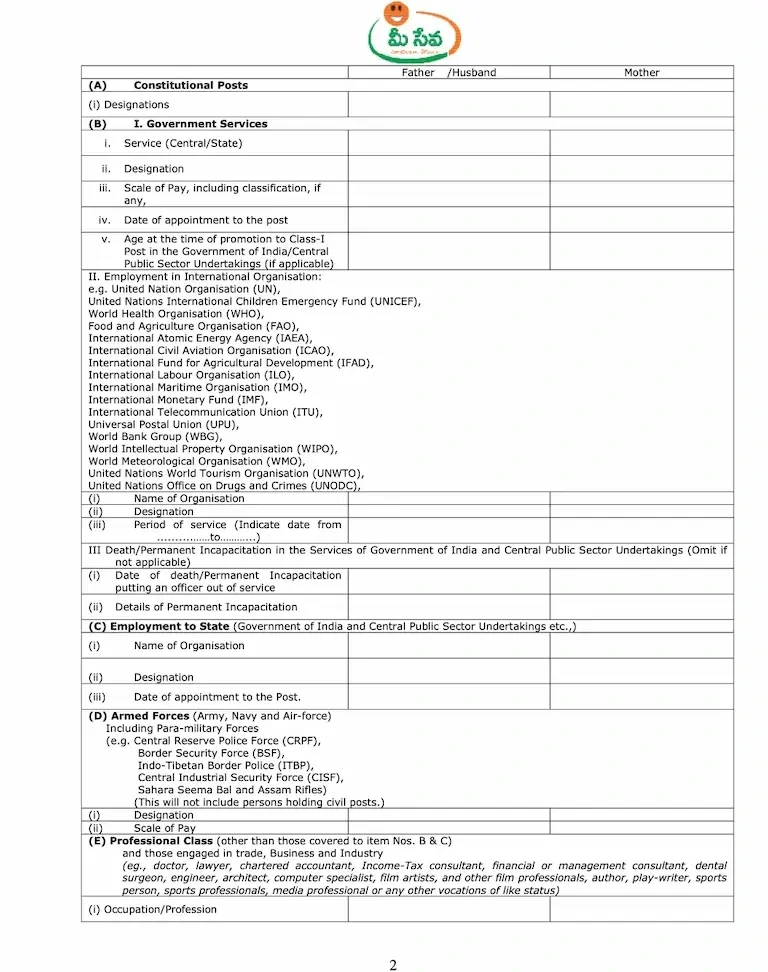
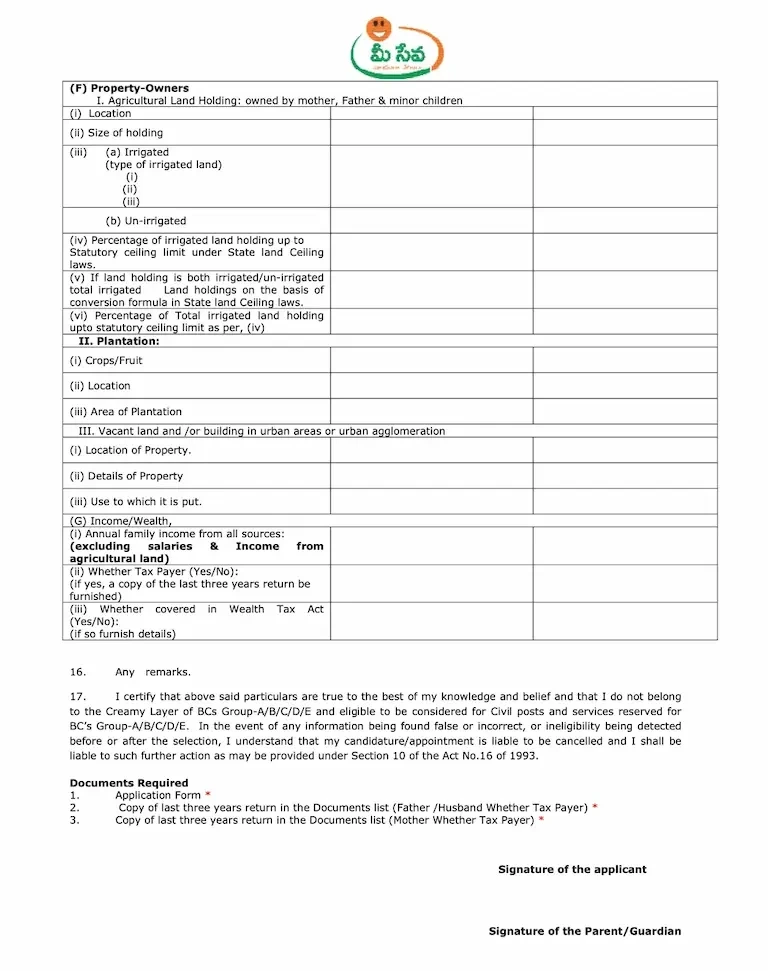
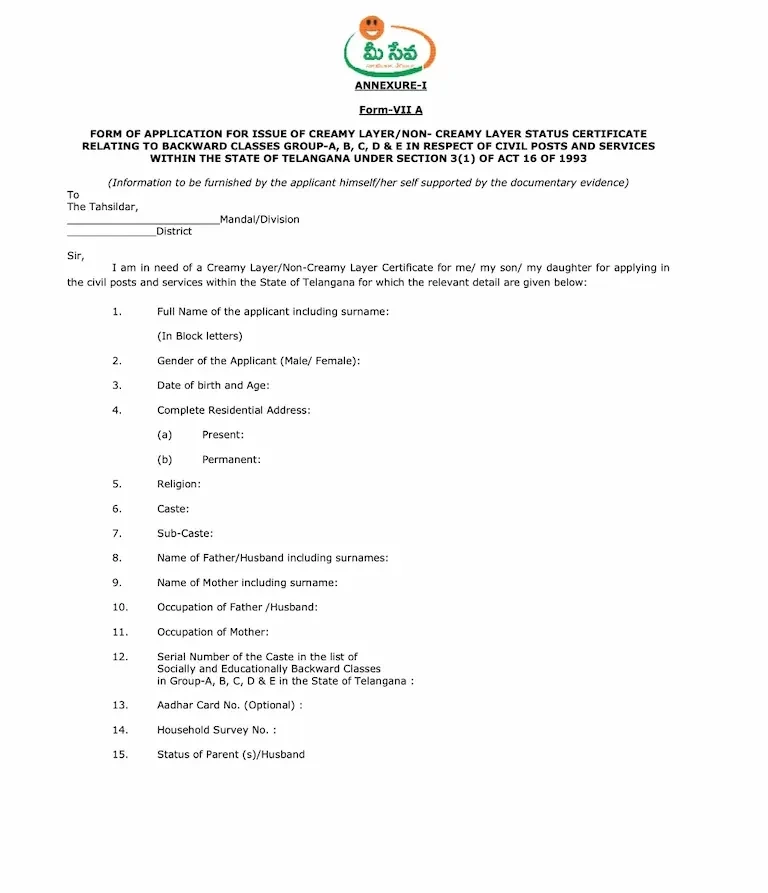
Screenshot Of The Application Form
The Non-Creamy Layer Certificate Application Form in the State of Telangana is provided below for reference:
1
3
Conclusion
The OBC Non-Creamy Layer certificate is an essential document that enables eligible individuals to access reservations in government jobs, educational institutions, and competitive exams like UPSC. Understanding the distinction between the creamy and non-creamy layers is crucial for OBC applicants, as it affects their eligibility for these benefits. By following the application process carefully and ensuring all required documents are in order, you can successfully apply for and receive the Non-Creamy Layer certificate.
Always check the current Non-Creamy Layer income limit and eligibility criteria as these are subject to change periodically based on government policies.
Download the Buddy Loan App Now!
One solution to each of your financial needs at your fingertip.

Scan to download now