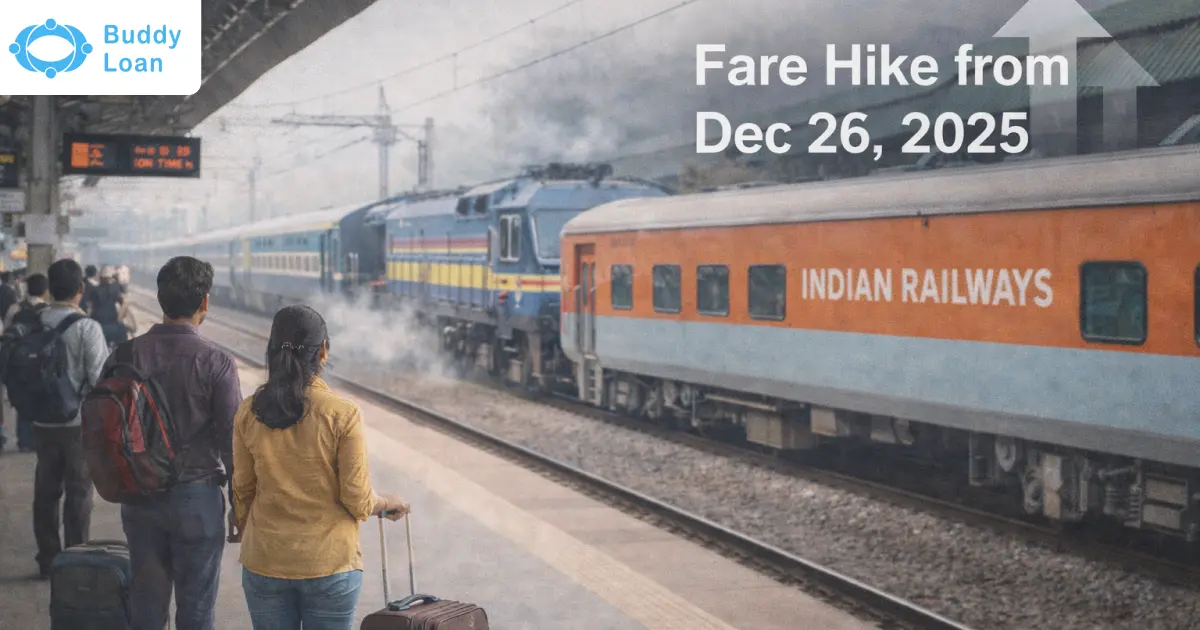
In a move aimed at striking a balance between affordability and financial sustainability, Indian Railways has implemented a fare revision effective from December 26, 2025. This is the second fare adjustment of the year, marking a significant change for travelers on long-distance trains. While short-distance and suburban passengers are protected from the increase, most premium and express services will see revised pricing.
This rationalised fare structure is expected to improve revenue generation for Indian Railways, ensuring better infrastructure, safety, and enhanced services in the long run.
Which Train Categories Are Impacted by the Fare Hike?
The fare revision applies to a wide range of long-distance and express services. Some of the impacted train types include:
- Premium Trains: Vande Bharat, Rajdhani, Tejas Rajdhani, Shatabdi, Duronto
- Express and Special Services: Humsafar, Amrit Bharat, Gatimaan, Mahamana, Antyodaya, Garib Rath, Jan Shatabdi, Yuva Express
- Regional and Rapid Rail: Namo Bharat Rapid Rail
- Ordinary Services (Non-suburban): Includes Second Class, Sleeper, and AC coaches
Suburban services and daily commuter trains have been exempted from the revision to protect the most frequent users.

New Railway Fare Structure: Distance-Based and Class-Wise Hike
The new fare structure has been designed to minimize the impact on essential travel while generating much-needed resources for railway operations.
1. Second Class Ordinary (Non-suburban)
- Journeys up to 215 km: No fare increase
- 216 km to 750 km: ₹5 increase
- 751 km to 1,250 km: ₹10 increase
- 1,251 km to 1,750 km: ₹15 increase
- 1,751 km to 2,250 km: ₹20 increase
This graded structure ensures that the fare burden is proportionate to the travel distance.
2. Sleeper and First Class Ordinary
- Hike of 1 paise per kilometre for non-suburban journeys
- Applied uniformly across the category
3. Mail and Express Trains
- Hike of 2 paise per kilometre
- Applies to all classes, Sleeper, First Class, AC Chair Car, and AC 3-tier, 2-tier, and 1st Class
For example, a 500 km trip in a Sleeper class Mail Express train would now cost approximately ₹10 more.
Also Read: Top 5 Government Apps
What Stays the Same? Fare Components That Are Not Affected
Despite the revision, several key components of the fare system remain unchanged to minimize disruption for regular users:
- Suburban Services: No increase in ticket prices
- Season Tickets: For both suburban and non-suburban sectors, remain unaffected
- Reservation Fees and Superfast Charges: No change
- GST Rates: Remain applicable as before
- Fare Rounding Rules: No change in rounding methodology
|
Booking Date Matters: Travel After Dec 26? You May Still Pay Old Fare The revised fares apply only to tickets booked on or after December 26, 2025. This means that passengers who booked tickets before this date will not be charged extra, even if their travel takes place afterward. It’s a key detail that ensures travelers are not penalized for prior bookings. |

Fare Hike Comparison Table: Before and After
Here’s a comparison of the old and new fares across different train categories, showing exactly how much more you’ll pay post-December 26, 2025.
| Train Category | Old Fare | Revised Fare (Post-Dec 26, 2025) | Hike |
| Suburban Local Trains | Unchanged | Unchanged | None |
| Season Tickets | Unchanged | Unchanged | None |
| Second Class (up to 215 km) | No Change | No Change | ₹0 |
| Second Class (216–750 km) | Base Fare | +₹5 | ₹5 |
| Second Class (751–1250 km) | Base Fare | +₹10 | ₹10 |
| Second Class (1251–1750 km) | Base Fare | +₹15 | ₹15 |
| Second Class (1751–2250 km) | Base Fare | +₹20 | ₹20 |
| Sleeper & First Class (Non-Suburban) | Base Fare | +1 paise/km | Varies |
| Mail/Express (AC & Non-AC) | Base Fare | +2 paise/km | Varies |
Why Indian Railways Increased Fares: Understanding the Rationale
Several strategic and economic factors drove the decision to revise fares:
- Rising operational costs such as fuel, salaries, and maintenance
- Modernisation and safety upgrades in progress
- Need for revenue generation to fund infrastructure and new services
- Balanced structure to protect low-income daily commuters while adjusting premium services
By ensuring that suburban and short-distance travelers are not impacted, the fare hike maintains equity while supporting national railway goals.
Also Read: Best Government Investment Schemes
How This Affects You as a Passenger
Whether you’re a daily commuter, an occasional traveler, or a premium train user, here’s how the latest railway fare hike will impact your ticket cost and travel experience.
If You’re a Daily Commuter:
- No change in fares for locals or suburban trains
- Season tickets remain the same
If You Travel Long-Distance Occasionally:
- Expect to pay ₹5–₹20 more depending on distance
- Mail/Express fares are slightly higher due to the 2 paise/km revision
If You’re Booking a Premium Train Ticket:
- Fare hike will vary based on class and route
- Look out for changes, especially in AC-tier bookings
Conclusion
The Indian Railway fare hike 2025 is a calculated, graded approach that supports operational efficiency without causing widespread disruption. For most daily commuters, there’s no immediate financial impact. Long-distance travelers and premium train passengers will experience marginal fare increases, typically in the ₹10–₹20 range, ensuring continued affordability while strengthening Indian Railways’ infrastructure and service quality.
Download the Buddy Loan App Now!
One solution to each of your financial needs at your fingertip.

Scan to download now