Understanding finance can be challenging, especially with terms like KYC. But don’t worry! This guide will help you grasp the meaning of KYC, its impact on your finances, and how to complete the verification process with ease.
The impact of KYC is significant. Whether you are opening a bank account, applying for a loan, or investing in financial products, you will encounter KYC requirements. In this blog, we will try to learn more about KYC, its full form, significance and every detail related to it.
KYC Full Form
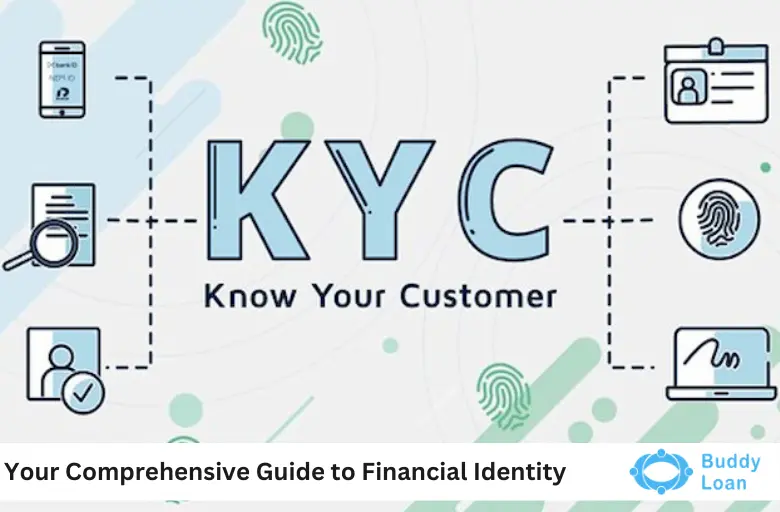
KYC stands for “Know Your Customer,” a global mandate requiring financial institutions to verify the identity and legitimacy of their clients.
This verification process works like a foundation of a secure financial ecosystem, safeguarding against fraud, money laundering, and other illicit activities.
KYC involves collecting and verifying personal information and documentation from customers, including government-issued IDs, proof of address, and additional details for enhanced due diligence in some cases.

Important of KYC Process
KYC is a critical tool for protecting financial institutions and preventing illegal activities. It plays a vital role, especially when non-individual customers engage in financial services like opening bank accounts, trading, or mutual fund investing.
- Banks have the right to verify the legal status of entities.
- Involves cross-checking the customer’s operating addresses.
- It includes verifying the identities of beneficial owners and authorized signatories.
- Requires verifying the nature of a customer’s employment and the business they conduct.
- It helps institutions assess your past financial history.
- With this information, institutions can perform more accurate risk assessments.
- Protects you from fraud and money laundering, as your identity is thoroughly verified.
- It also lowers the risk across lending portfolios, leading to higher profit margins.
Benefits of KYC
While upholding integrity and security are fundamental, KYC’s benefits extend beyond mitigating risks:
- Enhanced Security: Verified identities offer peace of mind, knowing your financial activities are shielded from unauthorised access and manipulations.
- Faster Loan Approvals: Banks and financial institutions are quicker to approve loans and credit applications for clients with verified KYC information.
- Streamlined Transactions: KYC verification expedites transactions, saving you time and frustration by eliminating the need for repeated identity checks.
- Access to Exclusive Products: Certain financial products and services, like wealth management or high-value investments, may only be available to clients who have completed KYC, opening doors to exciting investment opportunities.
Ways of KYC Verification Process
Explore the five primary methods for completing KYC verification:
1. Aadhaar OTP-based Online KYC
Complete your KYC verification online using Aadhaar OTP by following these steps:
- Visit the website of your bank or KYC Registration Agency.
- Select “KYC Verification.”
- Enter your Aadhaar card details.
- Authenticate via an OTP sent to your Aadhaar-registered mobile number.
- Fill out the application and upload the required documents. Once submitted, the UIDAI will verify and approve your KYC application.
2. Offline Paper-based KYC
If you prefer offline KYC verification, follow these steps at your local bank branch:
- Download the KYC form from the bank’s or KYC Registration Agency’s website.
- Fill in the form with your Aadhaar and PAN card details.
- Submit copies of KYC documents as proof of identity and address.
- Visit the bank, KYC Registration Agency, or an investment firm.
- Provide biometric information if requested. You’ll receive an application number to track your KYC status after submission.
3. Paperless Offline eKYC
This method ensures data security while verifying your identity without storing your Aadhaar number. Steps include:
- Log in to the official myAadhaar website with your Aadhaar number.
- Enter the CAPTCHA and authenticate via OTP.
- Select “Offline KYC” and create a 4-digit share code.
- Download the encrypted Zip file and share it using the 4-digit code. This enables organizations to verify your identity securely.
4. Central KYC (CKYC)
CKYC is a centralized repository for storing KYC documents, providing these advantages:
- No need to resubmit KYC documents for multiple verifications.
- Each individual receives a 14-digit number linked to their ID proof.
- All data is securely stored and changes are tracked.
- Documents are verified by the relevant authority.
5. Video KYC
Introduced during the pandemic, Video KYC offers a contactless verification process:
- Conducted via a video call with a trained agent.
- The customer presents an original identity document and shares details.
- The agent captures a photo during the call to complete the process.
KYC in Banking
For banks, KYC compliance is mandatory under national and international regulations. Banks use KYC information for:
- Opening new accounts
- Processing transactions
- Detecting and preventing fraud
- Complying with anti-money laundering (AML) and counter-terrorism financing (CFT) regulations
What is eKYC Full Form?
eKYC stands for “electronic Know Your Customer,” a faster and more convenient method of identity verification using digital technologies like Aadhaar authentication or video conferencing. This paperless approach simplifies the process and significantly reduces turnaround times, making it a popular choice for both institutions and clients.
KYC Verification Process Eligibility Criteria
Generally, anyone looking to open a bank account, apply for a loan, or use other financial services will need to undergo verification.
Remember, KYC isn’t just a regulatory checkbox; it’s a cornerstone of trust and transparency. By embracing the verification process, you’re not just complying with regulations, you’re actively contributing to a secure and stable financial environment for everyone.
Documents Required For KYC
To complete your Know Your Customer process, you’ll need to submit specific documents. These typically fall into two categories: proof of identity and proof of address.
1. Proof of Identity
To verify your identity, any of the following documents are generally accepted:
- Aadhaar card
- PAN card
- Valid Driving License
- Valid Voter ID card
- Valid Passport
- Photo ID issued by Central/State Government, Universities, Public Sector Undertakings, Public Financial Institutions, or Commercial Banks
2. Proof of Address
To verify your residence, you can submit one of the following documents:
- Aadhaar card
- PAN card
- Valid Driving License
- Valid Voter ID card
- Valid Passport
- Ration card
- Residential lease agreement
- Recent utility bills (e.g., gas or electricity bills from the past 3 months)
In some cases, a single document may serve as both proof of identity and address, so submitting additional documents might not be required.
Download the Buddy Loan App Now! One solution to each of your financial needs at your fingertip. Scan to download now