FD rates in 2025 have touched their highest levels in years, making this a golden opportunity for professionals, retirees and self-employed individuals to lock in guaranteed returns.
Fixed deposit has been a strong choice for anyone looking to safely invest their idle money for the past few decades. Nowadays, however, the trend towards fixed deposit schemes has been decreasing. However, September brings a lot of promises for the future.
With several of the best fixed deposits expiring on September 30, investors must act quickly. The question is, are you ready to secure these FD rates before they vanish? If you are, read on to learn which schemes are at the top so that you can choose the ones that give the best return.
Limited-Time FD Rates in September 2025
India’s banking sector is buzzing with special fixed deposit offers. Public, private and small finance banks are competing to attract depositors by rolling out higher FD rates for September 2025.
These schemes offer the security of guaranteed returns, paired with liquidity options that many investors prefer over riskier market instruments.

Top Banks That Offer The Highest Interest Rates
If you are looking for the best interest rates, Small Finance Banks (SFBs) are leading the pack.
Institutions like Slice, Suryodaya, Unity, Utkarsh and Jana SFB are offering FD rates up to 9% per annum for select tenures.
Highest FD Rates
| Bank | General Citizen | <pSenior Citizen |
| Ujjivan Small Finance Bank | 8.25% | 8.75% |
| Equitas Small Finance Bank | 8.20% | 8.70% |
| Utkarsh Small Finance Bank | 8.00% | 8.60% |
| Jana Small Finance Bank | 8.00% | 8.50% |
| Shriram Finance Transport Bank | 7.60% | 8.10% |
| Capital Small Finance Bank | 7.50% | 8.00% |
| Unity Small Finance Bank | 7.35% | 7.85% |
| Suryoday Small Finance Bank | 6.85% | 7.35% |
| AU Small Finance Bank | 6.75% | 7.25% |
Major banks have also joined the race recently. Indian Bank (IND SECURE and IND GREEN FDs), IDBI Bank (Utsav Callable FD) and SBI (Amrit Vrishti FD) currently offer between 6.6% and 7.45%, with flexible tenures ranging from 444 to 700 days.
FD Rates of all Major Banks
| Bank | General Citizen | Senior Citizen |
| Bandhan Bank | 7.25% | 7.75% |
| DCB Bank | 7.15% | 7.65% |
| Canara Bank | 6.90% | 7.40% |
| State Bank of India | 6.80% | 7.30% |
| IDBI Bank | 6.80% | 7.30% |
| Punjab National Bank | 6.75% | 7.25% |
| Bank of Baroda | 6.75% | 7.25% |
| Central Bank of India | 6.75% | 7.25% |
| Axis Bank | 6.70% | 7.20% |
| 400;”>ICICI Bank | 6.70% | 7.20% |
| <pHDFC Bank | 6.60% | 7.10% |
| IDFC First Bank | 6.50% | 7.00% |
| Union Bank of India | 6.30% | 6.80% |
| <p>Bank of India | 6.00% | 6.50% |

Eligibility, Deposit Amounts and Expiry
These schemes are available to Indian residents with valid KYC documentation. Minimum deposit requirements start from ₹1,000 in public sector banks to ₹5,000 in small finance banks. Here is a complete list of all the eligibility criteria:
- Resident Individuals: Most banks allow Indian citizens aged 18 and above to open FDs.
- Minors: Can open an FD jointly with a guardian.
- Senior Citizens: Eligible for higher interest rates than regular citizens.
- NRIs: Can open NRE (Non-Resident External) or NRO (Non-Resident Ordinary) FDs, depending on residency status.
- Firms, Companies, Trusts and HUFs: Many banks extend FD facilities to registered entities as well
The minimum amount varies by bank. Public sector banks like SBI or Indian Bank often start from ₹1,000, while private and small finance banks typically require ₹5,000-₹10,000. There is no strict capping for maximum funds in most cases, though very large deposits may require additional approvals.
Special Schemes: Some FDs may have unique deposit rules (e.g., Tax Saver FDs usually cap at ₹1.5 lakh per year).
| Importantly, all these higher FD rates expire on September 30, 2025. Delay and you may lose access to these premium returns. |
How to Apply For an FD
In 2025, if you want to start an FD account, there are a lot of methods that you can follow:
Applying Online via Net Banking or Mobile App
- Log in to your bank’s net banking portal or mobile app.
- Go to the Fixed Deposit/Term Deposit section.
- Choose the tenure, amount and payout option (monthly/quarterly/at maturity).
- Review the interest rate applicable to your chosen tenure.
- Confirm details and submit. The amount will be deducted from your linked account and you’ll receive a digital FD receipt.
Visiting the Bank Branch
- Visit your nearest branch with KYC documents (ID proof, address proof, PAN card, photos).
- Request the FD application form at the counter.
- Fill in details such as tenure, deposit amount, nominee and payout option.
- Submit the form with your deposit amount
Applying via Phone Banking
- Call the bank’s phone banking helpline.
- Authenticate yourself using your customer ID and security PIN.
- Request to create a new FD by specifying the amount and tenure.
- Confirm the details and authorise the debit from your account.
- A confirmation SMS/email with FD details will be sent to you.
Using Third-Party Fintech Platforms
- Download a trusted FD aggregator app or visit their website.
- Complete KYC verification within the app.
- Browse FD rates across different banks and select the scheme.
- Enter the deposit amount and tenure.
- Make payment via UPI, net banking or debit card. The FD receipt is usually emailed instantly
Through Relationship Managers (RM)
- Contact your bank’s relationship manager.
- Share the deposit amount, tenure and preferences.
- The RM fills in forms or initiates the FD online for you.
- Confirm the transaction details.
- Receive the FD certificate digitally or in hard copy.
FD Schemes vs Mutual Funds and PPF
Compared to PPF and debt mutual funds, FD rates as of September 2025 often provide better post-tax returns for short- term and medium-term goals.
Here is a simple comparison:
| Criteria | Fixed Deposits (FDs) | Mutual Funds | Public Provident Fund (PPF) |
| Returns | 6% – 9%
(locked at booking) | 8% – 12%
(market-linked, can vary) | 7.1%
(fixed by Govt., reviewed quarterly) |
| Risk Level | Very low
(capital guaranteed up to ₹5 lakh DICGC) | Moderate to high
(market risk) | Very low <(sovereign-backed) |
| Liquidity | Moderate
(penalty on premature withdrawal) | High
(redeem anytime, subject to exit load) | Very low
(15-year lock-in, partial after 5 years) |
| Tax Treatment | Interest taxable as per the slab, TDS applicable | Equity funds taxed (10% LTCG over ₹1L),
Debt funds are taxed per slab | Interest fully tax-free |
| Ideal For | Short-to-medium term goals, capital safety | Growth-oriented, higher risk appetite |
Mutual funds may outperform in the long run but involve market volatility.
Fixed deposits guarantee capital protection, liquidity and insurance coverage up to ₹5 lakh per account, making them especially attractive for conservative investors.
Easy Online Opening and Digital Offers
Most banks allow seamless FD opening online via mobile apps or internet banking. Some schemes even reward digital applicants with preferential FD rates or faster processing.
Planning ahead is crucial; using an EMI calculator can help balance savings, while a routine credit score check ensures smoother access to loans in the future.
For those considering diversification, even applying for a loan for parallel investments can be structured safely with the right financial planning.
Conclusion: Last Chance to Lock in Higher FD Rates
With FD rates in 2025 at multi-year highs and schemes expiring on September 30, this is a limited-time opportunity to boost your returns with the best fixed deposits.
If you are a salaried professional, a retiree safeguarding wealth or self-employed and seeking security or simply someone who wants to make some good returns via safe investment, now is the time to act. The best investors don’t just save, they seize the moment.
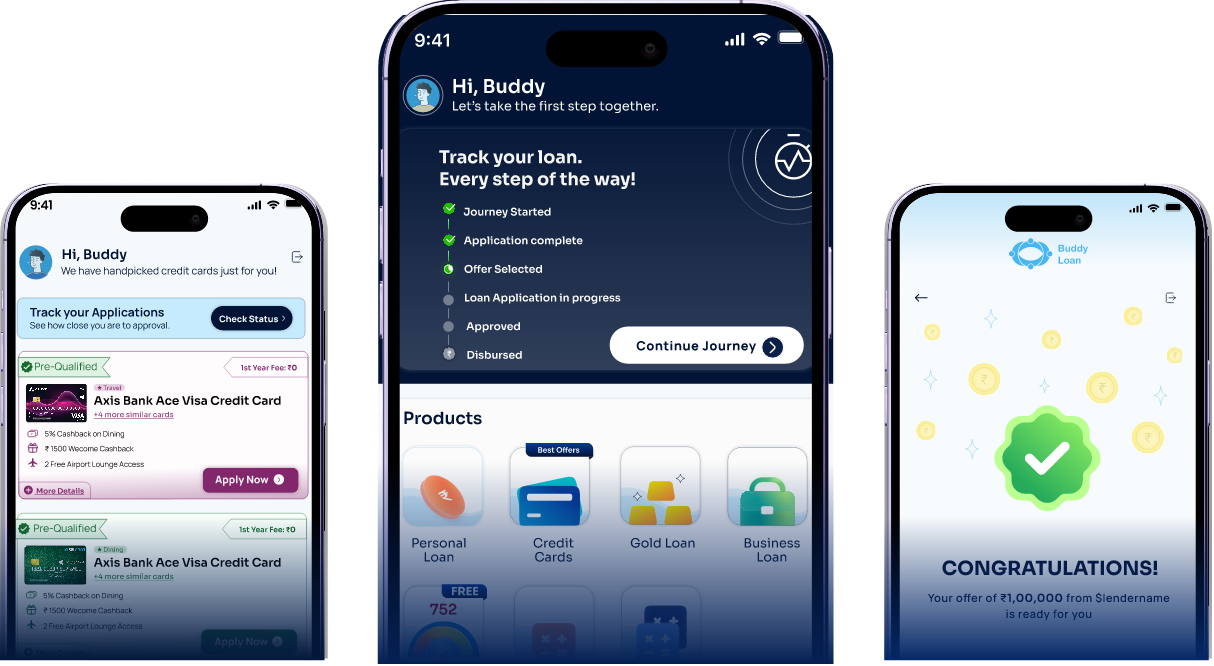
Download the Buddy Loan App Now!
One solution to each of your financial needs at your fingertip.

Scan to download now