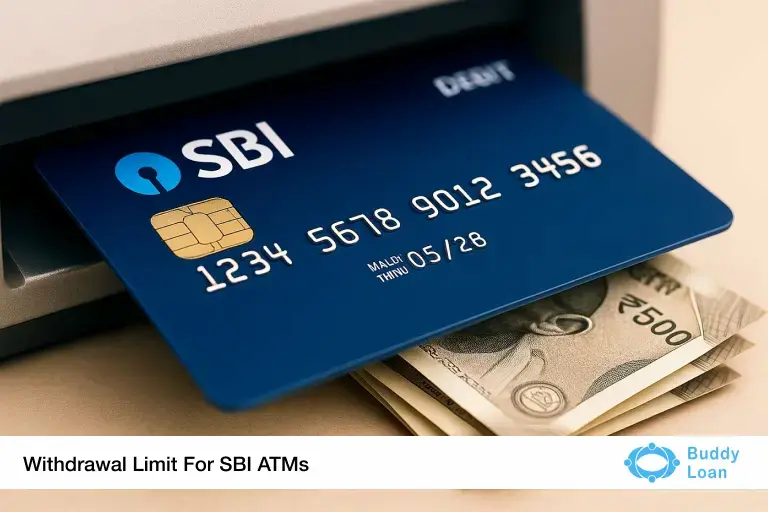
SBI debit cards come with specific withdrawal limits that determine how much cash can be withdrawn in a day or per transaction from ATMs. These limits vary depending on the type of debit card issued, the channel used (SBI or non-SBI ATM), and the withdrawal method — including cardless options like YONO Cash or UPI-ATM.
Understanding these limits is essential for managing daily transactions, planning high-value withdrawals, and avoiding failed transactions or penalties. This blog provides a detailed overview of SBI ATM withdrawal limits by card type, how they work, and how to check or modify them.
What Is SBI ATM Withdrawal Limit?
The SBI ATM withdrawal limit refers to the maximum amount of cash that can be withdrawn using an SBI debit card within a 24-hour cycle. These limits can change according to the card type you have. Here is how it varies:
| Bank Type/Location | ATM Withdrawal Limit (per day) | POS Limit (per day) |
| SBI ATM (Same Bank) | ₹20,000 to ₹1,00,000 | ₹40,000 to ₹1,00,000 |
| Non-SBI ATM (Different Bank) | ₹10,000 to ₹20,000 | ₹10,000 to ₹20,000 |
| Metro Cities (SBI ATM) | ₹20,000 to ₹1,00,000 | ₹40,000 to ₹1,00,000 |
| Non-Metro Cities (SBI ATM) | ₹20,000 to ₹50,000 | ₹40,000 to ₹60,000 |
- SBI ATM withdrawal limit is ₹40,000 for the debit card and for the international debit card is ₹1,00,000 (maximum)
- If the cardholder is from another bank, then they can withdraw ₹10,000 from SBI ATM bank
- If you are at another bank ATM, then the SBI debit cardholder can withdraw ₹ 10,000.
- SBI YONO Cash allows customers to withdraw up to ₹20,000 per day (in multiples of ₹500) without using a debit card.

SBI ATM Withdrawal Limits by Debit Card Type
Here is a breakdown of daily cash withdrawal limits based on popular SBI debit card variants:
| Debit Card Name | Cash Limit | Online Transaction Limit |
| SBI Nari Shakti Platinum | ₹100 – ₹1,00,000 | ₹5,00,000 |
| SBI Global International | ₹100 – ₹40,000 | ₹75,00,000 |
| SBI Gold International | ₹100 – ₹ 50,000 | ₹2,00,000 |
| SBI Platinum International | ₹100 – ₹1,00,000 | ₹2,00,000 |
| SBI My Card International | ₹100 – ₹40,000 | ₹75,00,000 |
| SBI Pride | ₹1,00,00 – ₹2,00,000 | ₹49,900 |
Note: These limits apply to withdrawals from SBI ATMs. At non-SBI ATMs, the per-transaction cap is ₹10,000, regardless of card type.
SBI ATM Withdrawal Limit Penalties for Non-Compliance
While understanding your withdrawal limits is essential, it’s equally important to be aware of the penalties that may apply if these limits are exceeded or if transactions violate SBI’s usage policies.
| Violation Type | Penalty/Charge |
| Exceeding Daily Withdrawal Limit | ₹15 + GST per transaction at SBI ATMs and ₹21 + GST per transaction at Other Bank ATMs (Savings account—after free limit is exceeded) |
| Using Non-SBI ATMs Excessively | ₹21 + GST per financial transaction and ₹10 + GST per non-financial transaction after the free limit (for Savings A/c holders) |
| Failed Transactions (Insufficient Balance) | ₹20 + GST per declined transaction due to insufficient funds |
| Incorrect PIN Attempts (Excessive) | No charges for failed transactions due to incorrect PIN. However, after 3 wrong attempts, the card may be temporarily blocked for security. |
| ATM Card Misuse (Fraudulent Activity) | Not specified in service charges. Actions and charges (e.g., replacement fees, investigations) depend on case-by-case fraud resolution policies by the bank. |
Limits Of Cardless Cash Withdrawals from SBI ATMs
SBI offers secure, cardless withdrawal options through its digital platforms like YONO and UPI-enabled apps. These services allow customers to withdraw cash from ATMs without using their physical debit card while maintaining strict daily limits to prevent misuse.
- YONO Cash (Cardless Withdrawal)
- Channel: SBI YONO or YONO Lite app
- Daily Withdrawal Limit: ₹20,000 per account
- Per Transaction Minimum: ₹500
- Transaction Multiples: ₹500
- Number of Transactions Allowed: Defined within daily ₹20,000 cap
- QR Code-Based Withdrawal (YONO Lite App Only)
- Fixed Withdrawal Options: ₹2,000 or ₹4,000
- Daily Limit: ₹4,000 (max 2 transactions)
- Availability: Only at select SBI ATMs and ADWMs
This method allows customers to scan a QR code using the YONO Lite app and complete the withdrawal without a card or PIN.
- UPI QR Cash / ICCW (Interoperable Cardless Cash Withdrawal)
- Platform: Any UPI app enabled for ICCW (e.g., Paytm, PhonePe)
- Daily Limit: ₹10,000 (max 2 transactions of ₹5,000 each)
- Availability: Select SBI ATMs and ADWMs only
UPI QR Cash is a secure, interoperable option that allows customers of SBI and other banks (that support ICCW) to withdraw money using UPI apps and OTP-free validation.

Understanding SBI ATM Withdrawal Timings and Limits
When it comes to withdrawing cash from your SBI ATM or debit card, it’s not just about how much — it’s also about when and how often. Let’s break down the timing and structure of withdrawal limits:
- The 24-Hour Cycle: Daily Withdrawal Limit
SBI’s daily withdrawal limit resets every 24 hours — but this isn’t based on the calendar day (midnight to midnight). Instead, it follows a rolling 24-hour window from the time of your first transaction.
For example:
If you withdraw ₹10,000 at 3 PM today, you can only withdraw more once the 24-hour cycle ends at 3 PM the next day, depending on your card’s daily cap.
- Single vs. Multiple Withdrawals: Per Transaction Limits
SBI ATM withdrawals are subject to both daily cumulative limits and per transaction limits, especially when using
- Other bank ATMs (₹10,000 per transaction)
- SBI ATMs (as per your debit card type, usually higher)
- UPI QR Cash (Interoperable Cardless Cash Withdrawal—ICCW)
- Limit: ₹5,000 per transaction, max ₹10,000 per day
- Access: Use any UPI-enabled app at select SBI ATMs
- Cash Deposits at SBI ADWMs
- Card-based deposits: Use your debit card to deposit into linked SBI accounts
- Card-less deposits: Also supported for SBI savings, current, SBI PPF account, loan, or RD accounts
- Fast Cash
- Purpose: One-tap withdrawal of predefined amounts (₹500–₹10,000)
The Reason Why SBI ATM Withdrawal Limits Exist
ATM withdrawal limits aren’t just random figures — they serve important purposes that help safeguard your account and ensure efficient banking services for all users. Here’s why these limits are in place:
Security and Fraud Prevention
Withdrawal limits act as a safety net in case your card is lost or stolen. With a cap on how much can be withdrawn in a day, potential misuse is minimized — giving you time to report the issue and block the card.
Regulatory Compliance
Banks, including SBI, must follow guidelines set by the Reserve Bank of India (RBI) and other financial regulators. These include transaction caps and authentication protocols (like OTP for withdrawals above ₹10,000) to ensure secure banking operations.
Customer Behaviour and Risk Management
Limits are also based on spending and usage patterns. SBI categorizes customers by the type of debit card and the risk profile, setting limits that align with typical usage to prevent excessive exposure.
Infrastructure Load Management
Daily limits help SBI manage ATM usage and ensure fair access across users, especially in high-demand urban areas or during peak times like holidays and month-end salary days.
Also read : SBI debit card customer care
Conclusion
Understanding your SBI ATM withdrawal limits empowers you to manage your cash needs efficiently and avoid transaction issues. Whether you hold a basic debit card or a premium variant like SBI Platinum or SBI Global, knowing your daily and per-transaction limits helps you plan ahead and stay in control of your finances.
Stay informed through official SBI channels, explore digital alternatives like YONO Cash or UPI-ATM for flexibility, and don’t hesitate to reach out to the bank if you need a temporary limit enhancement. With the right information, you can make the most of every ATM transaction — securely and conveniently.
Download the Buddy Loan App Now!
One solution to each of your financial needs at your fingertip.

Scan to download now


Frequently Asked Questions
Q: How many times is free withdrawal from an SBI ATM?
SBI allows 5 free ATM withdrawals per month from its own ATMs in non-metro areas and 3 in metro cities.
Q: What happens if the SBI ATM amount is debited but cash is not received?
SBI auto-reverses such transactions within 5 working days; if delayed, the bank is liable to compensate ₹100 per day.
Q: How many times can I withdraw money from an ATM in a day?
You can make multiple withdrawals daily, but the total amount must not exceed your daily withdrawal limit (₹20,000–₹1 lakh based on card type).
Q: Why am I not able to withdraw money from SBI ATM?
Reasons may include insufficient funds, exceeded withdrawal limit, card block, ATM downtime, or incorrect PIN entry.
Q: What are the rules for ATM machines in SBI?
Key rules include daily withdrawal limits, free transaction caps, and mandatory chip cards for added security.
Q: How to increase ATM withdrawal limit?
Log in to SBI Net Banking > ATM Card Services > Change the limit or visit your branch to request a higher limit based on your card type.
Q: What is the new ATM rule?
As per recent RBI guidelines, post-free limit ATM withdrawals are charged ₹23 per transaction, effective May 1, 2025.
Q: Why is my ATM withdrawal limit so low?
Your withdrawal limit depends on your card variant; you can upgrade your card or request a higher limit via the bank.
Q: What is the RBI rule on ATMs?
RBI mandates 5 free ATM transactions per month at own bank ATMs and 3 at others (in metros), plus ₹23 per extra transaction thereafter.