Personal loans are often the go-to solution for financial emergencies or large expenses. However, the cost of borrowing depends heavily on macro-economic policies, especially the repo rate set by the Reserve Bank of India (RBI). In this blog, we’ll explore in depth how RBI repo rate cuts affect personal loan interest rates, EMI amounts, and borrowing decisions, helping you understand the exact impact on your finances and how to benefit from it.
What Is the Repo Rate?
Before understanding how it impacts personal loans, it’s important to know what the repo rate actually is and why it matters.
The RBI’s Benchmark Lending Rate
The repo rate is the interest rate at which the RBI lends short-term funds to commercial banks against government securities. It is one of the most important tools in the RBI’s monetary policy arsenal to control liquidity, inflation, and economic growth.
When the RBI reduces the repo rate, it is essentially lowering the cost of funds for banks, encouraging them to lend more to businesses and consumers.
Latest Update: RBI Cuts Repo Rate to 5.25% in Dec 2025
What Happens During a Repo Rate Cut?
Understanding the broader implications of a repo rate cut helps you see why it’s relevant to individual borrowers like yourself. A repo rate cut occurs when the RBI decides to reduce the rate at which it lends money to commercial banks. The key objectives of such a move are:
- To make borrowing cheaper across the economy
- To boost consumer and business spending
- To support economic growth during a slowdown
- To make loans like personal loans more accessible and affordable
Lower repo rates typically lead to reductions in lending rates for various loan products, including personal loans.

How the RBI Repo Rate Cut Affects Personal Loan Rates
This section explains the step-by-step mechanism by which repo rate cuts eventually impact personal loan interest rates and EMIs.
Step-by-Step Impact
- Lower Borrowing Cost for Banks: A lower repo rate means banks can borrow money from the RBI at reduced costs.
- Reduction in Lending Rates: With cheaper capital, banks may lower their Marginal Cost of Funds-Based Lending Rate (MCLR) or External Benchmark Linked Lending Rate (EBLR), used to price personal loans.
- Lower Interest Rates for Borrowers: These adjustments translate to reduced interest rates for new borrowers and sometimes for existing borrowers on floating-rate loans.
- Reduced EMIs and Total Interest Outgo: A lower interest rate decreases your EMI. Alternatively, if you maintain the EMI, your loan tenure could be reduced, helping you save on overall interest paid.
Example:
On a ₹10 lakh personal loan over 5 years:
- At 12% interest: EMI = ₹22,244, Total Interest = ₹3,34,667
- At 11% interest: EMI = ₹21,742, Total Interest = ₹3,04,545
- Savings: ₹502/month, ₹30,122 total
Also Read: Difference Between Fixed and Reducing Interest Rates
Who Benefits the Most from Repo Rate Cuts?
To assess how much you benefit from repo cuts, you need to know the type of personal loan interest structure you’re under.
Floating-Rate Loan Borrowers
If your personal loan has a floating rate, often linked to the repo or an external benchmark, then you’re likely to benefit when the RBI cuts the repo rate. However, this benefit may reflect only after your next rate reset date, which typically occurs every 3 to 6 months.
Fixed-Rate Loan Borrowers
For loans with fixed interest rates, the EMI remains the same throughout the tenure. So, even if the repo rate is cut, these borrowers won’t see any change in interest rate or EMI unless they refinance the loan.
When Will My EMI Reflect the Repo Rate Cut?
It’s natural to expect immediate relief after a repo rate cut, but due to various factors, there’s usually a delay in actual EMI changes.
Understanding Transmission Lag
Even though the RBI acts immediately, banks may take 1 to 3 months to reflect these changes in loan products. This delay is due to internal policy reviews, cost of funds management, and technical processes like rate resets.
- Floating-rate loans: EMI reduction will occur on the next scheduled reset date.
- Fixed-rate loans: No impact unless the borrower initiates a refinance or balance transfer.
Also Read: Impact of Repo Rate Cut on Home Loans
Factors Besides Repo Rate That Influence Personal Loan Rates
Repo rate is important, but it’s just one part of the equation. Banks consider several other factors while determining the final personal loan rate offered to you.
Key Influencing Factors
- Credit Score: Higher score = lower risk = better rate
- Income & Employment: Stable, high income, and secure employment improve rates.
- Loan Amount & Tenure: Longer tenure or larger loans may influence rates differently.
- Debt-to-Income Ratio: A low DTI ratio is a green flag for lenders.
- Lender Policy: Each bank or NBFC may set its own spread or margin over the repo rate.

Practical Tips to Benefit from a Repo Rate Cut
Knowing the mechanics is good, but here’s what you can actually do to take advantage of a falling repo rate environment.
Borrower Checklist
- Choose Floating Rate Loans: These offer better alignment with RBI’s policies.
- Transfer Existing Loans: Use balance transfers to shift high-interest loans to banks offering better post-cut rates.
- Monitor Rate Reset Dates: Track your lender’s schedule so you can plan financial adjustments accordingly.
- Check Your Credit Score First: A strong credit profile helps you negotiate a better deal, especially after a repo cut.
- Use EMI Calculators: Estimate your savings under revised rates to plan better.
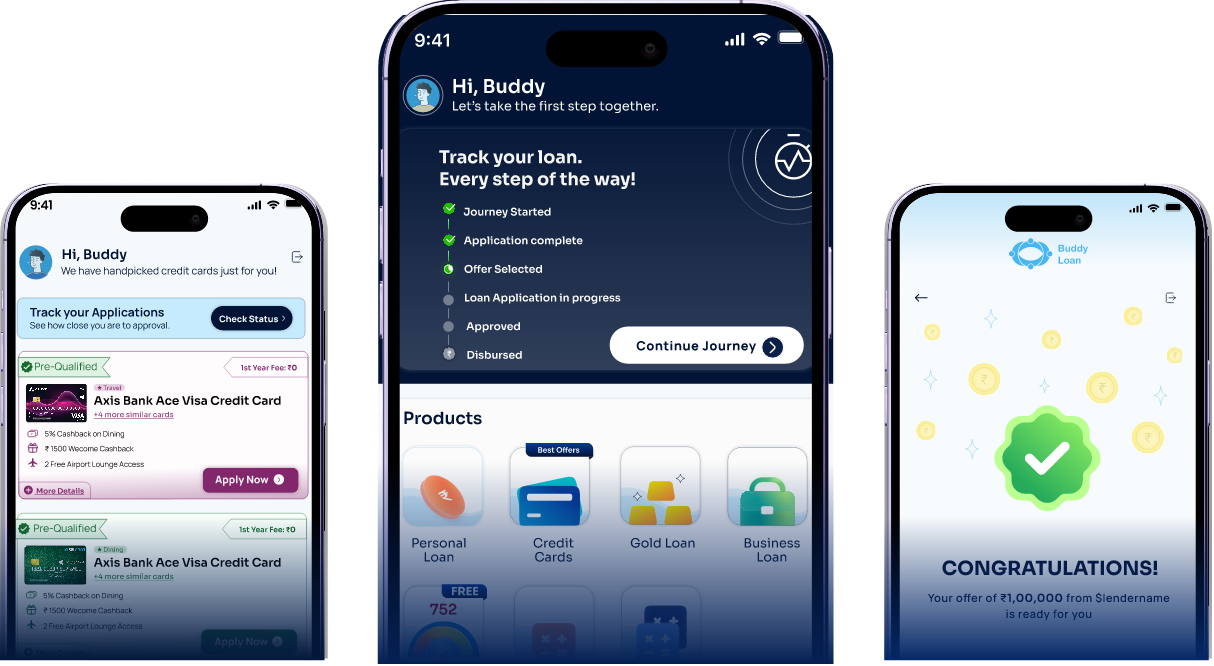
Explore Loans Easily with Buddy Loan
If you’re planning to apply for a personal loan, consider using the Buddy Loan app, a leading digital fintech marketplace that connects you with verified lenders across India.
Why Buddy Loan?
- Connects you to multiple lenders
- Personalized loan offers based on your credit profile
- Fast approvals with minimal documentation
- Loans up to ₹15 lakhs
Check your credit score for FREE and access better loan deals instantly.
Also Read: Impact of Repo Rate Cut on Personal Loans
Conclusion
A repo rate cut is not just an economic policy; it directly affects your personal loan EMI, especially if you have a floating-rate loan. While fixed-rate borrowers remain unaffected, they can still benefit by switching or refinancing. To make the most of RBI rate decisions, stay updated, understand your loan structure, and utilize platforms like Buddy Loan to secure the best available deals.
Download the Buddy Loan App Now!
One solution to each of your financial needs at your fingertip.

Scan to download now