Taking your first loan can feel empowering, a chance to fund your goals, whether it’s buying a laptop, renovating your home, or handling an emergency. But without a clear understanding of how loans work, even well-intentioned decisions can come at a cost.
Small mistakes made early on, like accepting high interest rates, skipping fine print, or choosing a tenure solely based on minimal EMI, can affect your credit health and cost you significantly in the long run.
This blog walks you through the most common mistakes first-time borrowers make and offers simple, practical solutions to avoid them. By following these steps, you can borrow not just for convenience but responsibly, protecting your financial future.
Not Checking or Understanding Your Credit Score
Borrowing without knowing your credit score is like setting off on a road trip without a map; it’s risky and can lead to unexpected detours.
Why It Matters
A credit score is a numeric representation of your repayment behavior and credit history. Banks use this figure to judge your reliability. Credit Scores and above typically unlock better interest rates and loan options. A low or unknown score often crashes applications or results in higher borrowing costs.
Why First-Time Borrowers Often Miss This Step
- They assume their first loan doesn’t need a high score
- They don’t check or correct errors in their credit report
- They miss the chance to build credit history in advance
Borrowing More Than You Can Comfortably Repay
It’s easy to get tempted by high loan eligibility figures offered by banks, but just because you’re eligible for a certain amount doesn’t mean you should borrow it.
Why It’s a Problem
Many first-time borrowers calculate affordability based on gross income, ignoring monthly expenses like rent, groceries, utilities, insurance, and lifestyle needs. As a result, they end up with an EMI that eats into essential spending, leading to financial stress or payment delays.
The 40-50% Rule
Experts recommend that your total EMIs should not exceed 40-50% of your monthly net income. This ensures you have enough left to manage daily expenses and emergencies without strain.
What Often Goes Wrong
- Borrowers take the highest eligible loan just because it’s offered
- They fail to plan for future obligations like medical expenses or job changes
- They assume income will rise, but don’t prepare for uncertainty.
Suggested Read: Choose Best Bank for a Personal Loan
Focusing Only on EMI and Not on Total Interest
For many first-time borrowers, a low EMI feels like the safest bet. But what’s often overlooked is the actual cost of that comfort.
Why It’s a Common Trap
Lower EMIs usually mean longer loan tenures, and longer tenures mean more interest paid overall. This may help with monthly affordability, but you could end up paying thousands, or even lakhs, more than necessary.
What Borrowers Often Miss
- They compare loans only by monthly EMI, not by total cost
- They overlook how tenure affects total interest outgo
- They assume a low EMI is always a good deal
Smart Tip: Use a Loan Calculator
Before finalizing your loan, compare two things:
- EMI amount
- Total interest payable over the entire tenure
Sometimes increasing your EMI slightly can significantly reduce the overall interest, especially on long-term loans like home or education loans.

Ignoring the Fine Print
Many first-time borrowers sign loan agreements quickly, trusting verbal promises or assuming all loans work the same. This oversight can lead to unpleasant surprises later.
Why It’s Risky
Loan documents include important terms that impact the cost and flexibility of your loan, such as
- Processing fees
- Late payment penalties
- Foreclosure or prepayment charges
- Lock-in periods
- Floating vs. fixed interest clauses
Missing or misreading these can lead to unexpected costs or restrictions when you try to repay early, miss a payment, or close the loan.
Common Mistakes
- Skipping the full terms and conditions
- Relying on what salespeople or agents say instead of reviewing written documents
- Not asking questions when clauses are unclear
Suggested Read: Choose the Right Personal Loan Tenure
Not Comparing Loan Lenders
When you’re approved for a loan, it’s easy to feel like the hard part is over. Many first-time borrowers accept the first offer they receive, often from their salary account bank or a pre-approved deal. But this can be a costly mistake.
Why Comparison Matters
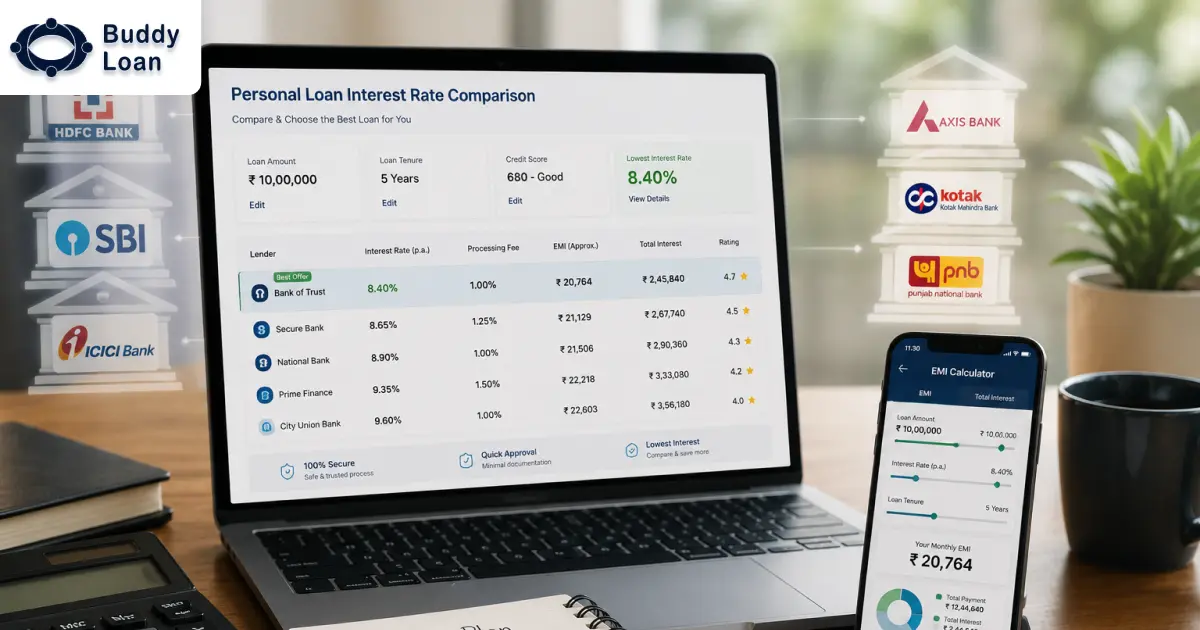
Loan terms vary widely across banks, NBFCs, and fintech lenders. Two offers with the same EMI may differ in:
- Interest rate
- Processing fees
- Tenure flexibility
- Customer service quality
- Prepayment policies
Even a 1-2% difference in interest rate can lead to a significantly higher or lower total cost.
Common Oversights
- Going with the bank you already have an account with
- Falling for “zero processing fee” or other promotional gimmicks
- Not checking loan comparison platforms or doing basic market research
Ignoring Loan Prepayment or Foreclosure Terms
First-time borrowers often assume they can repay their loan early without any extra cost. But depending on the loan type and lender policy, this could result in unexpected charges.
Why It’s Important
Prepayment refers to repaying part of your loan before the due term, while foreclosure means settling the entire loan early. Many lenders impose penalties, typically ranging from 2% to 5% of the outstanding amount, especially on fixed-rate loans.
Not knowing this in advance can cause frustration when you’re ready to close your loan ahead of schedule but are hit with fees that could’ve been avoided.
What’s Changed Recently
As per updated RBI guidelines (effective January 2026), floating-rate loans for individual borrowers should not carry any prepayment or foreclosure charges. But this doesn’t apply to:
- Fixed-rate loans
- Corporate borrowers
- Business loans
What to Check
- Your loan sanction letter or agreement under “prepayment” or “foreclosure” clauses
- Whether your loan is fixed or floating rate
- If there’s a lock-in period before prepayment is allowed
Also Read: Tips to Choose the Right Personal Loan for Yourself
Choosing the Wrong Loan Tenure
The loan tenure you choose doesn’t just determine how long you’ll be repaying; it also affects your EMI amount, total interest outgo, and financial flexibility. Unfortunately, many first-time borrowers make the wrong choice here.
Common Missteps
- Picking a very short tenure to “close the loan quickly,” which results in high EMIs that strain monthly budgets
- Opting for a long tenure to reduce EMI, without realizing that interest paid over time will be much higher
Why Balance Matters
A shorter tenure usually means:
- Higher EMIs
- Lower total interest
- Faster debt clearance
A longer tenure offers:
- Smaller EMIs
- Higher interest cost
- More breathing room monthly
But too short or too long, without considering your income, expenses, and future goals, can disrupt your financial stability.
Also Read: Right loan tenure for first-time borrowers
Not Keeping Backup for EMIs
Life is unpredictable. While your current income may comfortably support your EMI today, unforeseen circumstances, like job loss, medical emergencies, or sudden expenses, can disrupt your repayment routine.
Many first-time borrowers fail to prepare for such scenarios, putting themselves at risk of defaulting on payments.
Why This Is Risky
- A single missed EMI can attract late fees and penal interest
- Repeated delays hurt your credit score
- Recovery action or legal notices may follow if the default continues
The Smart Approach
Build a simple EMI buffer fund; set aside enough to cover at least 2 to 3 months of EMIs. This fund acts as a cushion during tough times and ensures your loan remains in good standing.
Applying for Multiple Loans at Once
It might seem smart to apply with multiple lenders to “see who approves you first,” but doing so within a short span can actually hurt your chances of approval.
Why This Hurts Your Credit Profile
Every time you apply for a loan, the lender initiates a hard inquiry on your credit report. Too many such inquiries in a short time signal risk to other lenders, even if you don’t end up taking all those loans.
This can:
- Lower your credit score
- Make you appear financially desperate
- Reduce your chances of approval with stricter lenders
What First-Time Borrowers Often Miss
- They believe more applications mean better chances
- They don’t realize these applications leave a trail on credit reports
- They assume lenders can’t see other applications (they can)
Suggested Read: Personal Loan to Buy Gold
Relying on Verbal Promises, Not Written Terms
First-time borrowers often trust what a bank representative or agent tells them during the loan process. While most are helpful, verbal assurances aren’t legally binding; only written terms are enforceable.
Why This Is a Problem
You might be promised:
- “Lowest interest rates”
- “Zero processing fees”
But if these promises don’t appear in your sanction letter or loan agreement, they won’t be honored. Disputes become difficult once the loan is disbursed.
Where This Happens Most
- During promotional campaigns or festive offers
- When applying through third-party agents or marketplaces
- In conversations over phone or in-person without documentation
Suggested Read: Personal Loan Vs Overdraft
Conclusion
Taking a loan for the first time isn’t just a financial step; it’s a long-term commitment. While loans can help you achieve goals and manage urgent needs, careless borrowing can lead to long-lasting financial strain.
The common mistakes outlined above, like ignoring your credit score, misjudging EMI capacity, or skipping fine print, are easily avoidable with a bit of planning and awareness. As a borrower, your job isn’t just to get approved; it’s to choose the loan that works best for you today and in the future.
Approach loans with clarity, caution, and control. Take time to compare, ask questions, and read documents carefully. Build a repayment plan that matches your lifestyle, not just your eligibility.
Download the Buddy Loan App Now!
One solution to each of your financial needs at your fingertip.

Scan to download now