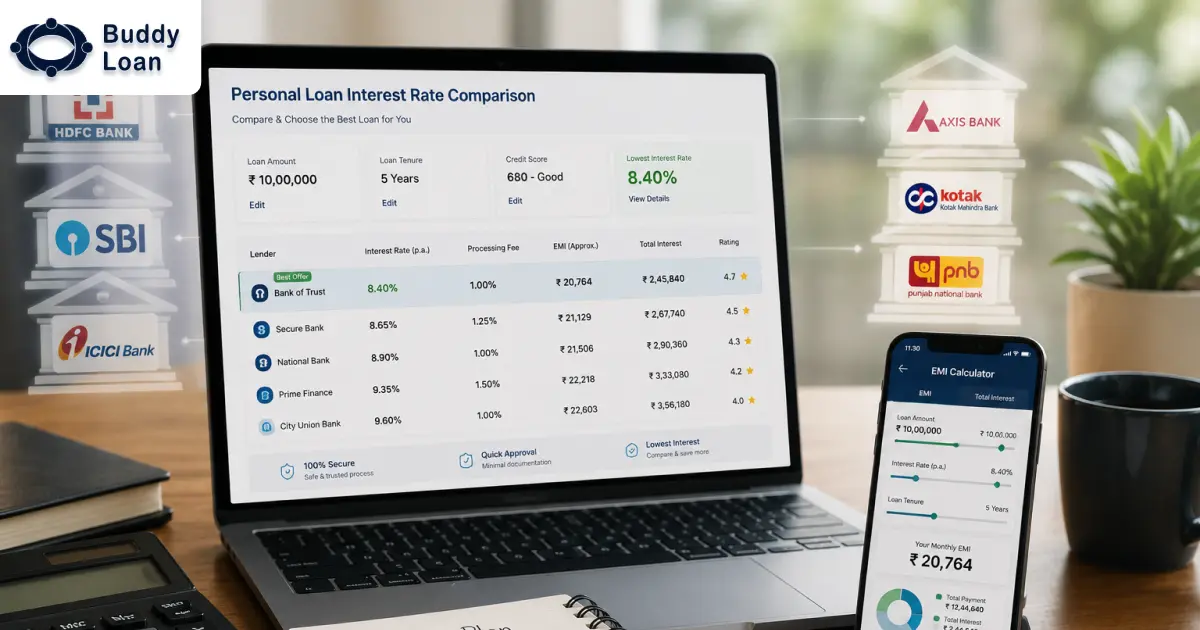
If you’re applying for a loan for the first time, one term you’ll often hear lenders mention is “loan tenure.” Simply put, it’s the repayment period you agree to from start to finish when you take a loan.
This blog helps first-time borrowers choose the right loan tenure, whether for a personal, home or auto loan, by explaining how EMI, interest and financial planning are all connected
What Is Loan Tenure? (And Why It Matters)
Loan tenure refers to the number of years or months over which you agree to repay a loan. Each loan type typically comes with a range of tenure options:
- Personal loans: Usually 1-5 years
- Car loans: Typically 1-7 years
- Home loans: Often 5-30 years
Your chosen tenure, along with the interest rate and principal amount, directly determines your monthly EMI and the total interest you pay over the life of the loan.
Loan Tenure Influences Your Costs and Payments
- EMI Impact
With a longer repayment period, your EMI becomes smaller since the principal is stretched across more months. Conversely, a shorter tenure increases your EMI. - Total Interest Cost
Longer loans incur more interest because interest is calculated on the outstanding principal each month. Short tenures reduce the repayment period and therefore lower interest outgo over time. - Strategic Flexibility
Some lenders permit prepayment or tenure reduction. Knowing tenure flexibility helps you make informed choices like paying low EMI early and accelerating later if income rises.

Short vs. Long Loan Tenure Difference
Short tenures lead to higher EMIs but significantly lower total interest, while longer tenures reduce monthly burden at the cost of higher overall interest.
Side-by-Side Comparison
|
Factor |
Short Tenure |
Long Tenure |
|
EMI (monthly) |
High |
Low |
|
Total Interest Paid |
Low (lower overall cost) |
High (increased cumulative interest) |
|
Loan Cost |
Lower overall |
Higher overall |
|
Approval Likelihood |
More scrutiny required (higher EMI) |
Easier to qualify (lower monthly EMI) |
|
Typical Range (Loan Type) |
1-3 yrs for small loans; up to 10 yrs for home loans |
5-30 years depending on purpose |
Key Trade-Offs
- Short Tenure = Pay More Now, Save More Over Time
- Long Tenure = Lower EMI, Higher Total Interes
Difference Matters for First-Time Borrowers
- High EMIs from shorter tenures may challenge your monthly budgeting, especially when income isn’t fixed.
- Longer tenures reduce EMI stress, but if not aligned with your savings goals, they can lead to avoidable extra costs.
- A clear understanding of this balance helps you make intentional, informed tenure choices.

Step-by-Step Guide to Choose the Right Tenure
Choosing a tenure can feel confusing, but here’s a simple 5-step method to help first-time borrowers make the right choice.
Step 1: Assess Monthly Income & Fixed Expenses
- Calculate your net monthly income after taxes and essential expenses.
- Use the rule of thumb: EMIs should stay within 40-50% of net income to avoid stress.
- Prioritize needs such as rent, utilities, insurance and savings before setting aside EMI.
Step 2: Define Your Loan Purpose & Goals
- Start by defining why you need the loan such as for education, housing or personal expenses.
- If your aim is minimizing EMIs, a longer tenure may help reduce monthly pressure.
- If your priority is saving on interest, shorter tenures often translate to lower overall cost.
Step 3: Try different tenure options using an EMI calculator to compare outcomes.
- Enter the loan amount, expected interest rate and test multiple tenure options.
- Observe how monthly EMI and total interest change:
- Longer tenure lowers EMI but increases interest.
- Shorter tenure raises EMI but significantly lowers interest.
- Example: For a ₹5 lakh personal loan at 12% annual interest:
- 2-year tenure: EMI around ₹23,500 → lower total interest
- 5-year tenure: EMI around ₹11,100 → much higher total interest
This helps you choose a tenure aligned with your cash flow and savings goals.
Step 4: Understand Lender Policies on Tenure & Prepayment
- Some lenders allow prepayment or tenure reduction without penalties, which is useful if your income may rise.
- Some lenders offer limited tenure flexibility or impose penalties for early repayment.
- Compare lender policies to ensure flexibility, especially if you plan to prepay or refinance later.
Step 5: Factor in Your Life Stage & Financial Goals
- Young professionals with predictable income may opt for shorter tenures to finish debt early.
- Early-career borrowers balancing multiple expenses may choose longer tenure for immediate relief.
- If you expect a salary increase or bonuses, plan to accelerate payments later once surplus income arrives.
Mistakes to Avoid while Choosing Loan Tenure
First-time applicants often make choices that seem convenient but cost more in the long run. Avoiding these common traps helps select a smarter tenure.
- Focusing Only on EMI Without Considering Total Interest Cost
Opting for the lowest possible monthly payment may ease your current budget but can result in significantly higher total interest. Always compare the total loan cost, not just the monthly affordability. - Ignoring Future Financial Changes or Emergencies
Choosing a tenure based only on current income and expenses can backfire if your financial situation changes. Situations like job loss, decreased income or major expenses should be factored into your decision. - Overextending Based on Expected Salary Increase
It’s risky to plan a shorter tenure assuming future salary hikes. If raises don’t materialize, higher EMIs may strain your budget. Be cautious and realistic when projecting future income. - Assuming Tenure Can Be Easily Changed Later
While some lenders offer tenure modification or prepayment flexibility, others may restrict changes or charge penalties. Never assume you can refinance or shorten your repayment term later; confirm the terms upfront. - Ignoring Prepayment and Foreclosure Terms
Many loans include fees for prepayment or foreclosure, especially fixed-rate ones. These fees may negate interest savings if you repay early. Check for these charges before finalizing tenure.
How Tenure Affects EMI and Interest
Different loan tenures can dramatically change both your monthly EMI and the total interest you end up paying. Below is a clear illustration using a ₹5,00,000 personal loan at 12% annual interest.
Quick Comparison Table
|
Loan Tenure |
Monthly EMI |
Total Interest Paid |
Total Amount Repaid |
|
2 years |
~₹23,540 |
₹63,960 |
₹5,63,960 |
|
5 years |
~₹11,120 |
₹1,67,200 |
₹6,67,200 |
Estimates are based on standard EMI formulas and industry practices.
- On a 2-year plan, your EMI is nearly double, but you save over ₹1 lakh in interest.
- On a 5-year plan, your EMI is low and manageable, but the interest component grows substantially.
Conclusion
Choosing the right loan tenure is crucial, especially for first-time borrowers. It directly affects your monthly EMI and total interest cost, influencing both your short-term cash flow and long-term financial health. Shorter tenures lead to higher monthly EMI but significantly reduce total interest and duration. Longer tenures ease monthly budgets but result in substantially more interest over time.
Download the Buddy Loan App Now!
One solution to each of your financial needs at your fingertip.

Scan to download now