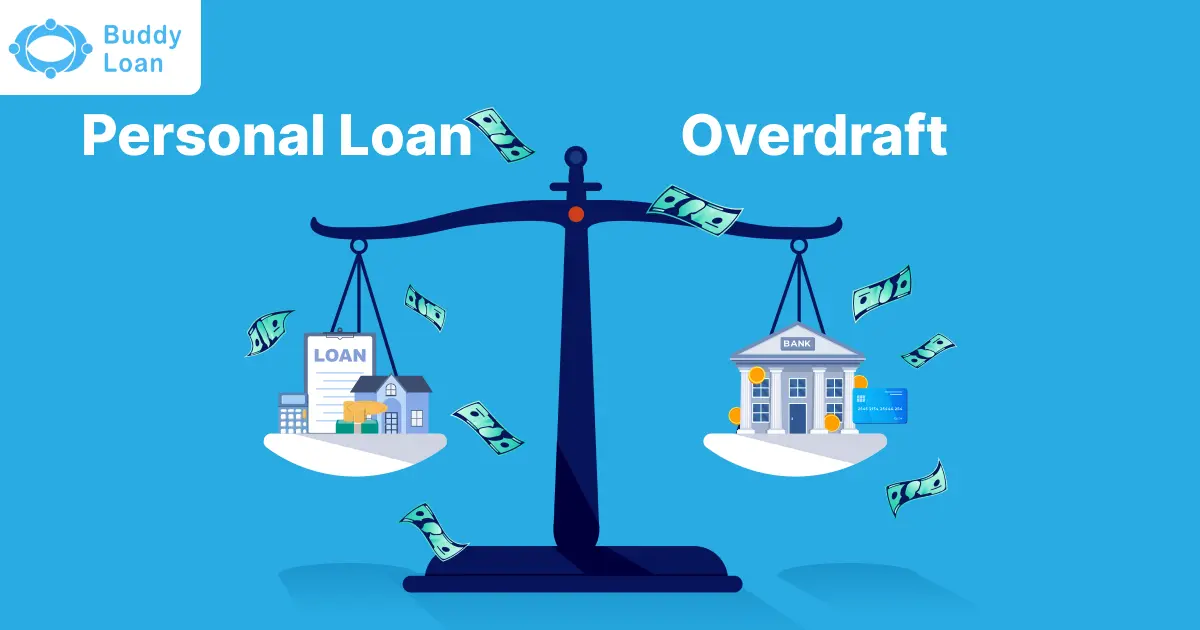
Life often brings unexpected financial challenges, from sudden medical emergencies and car repairs to managing business cash flow or seizing a promising investment opportunity. In such moments, choosing the right credit option becomes critical.
Two of the most popular solutions in India are the Personal Loan and the Overdraft Facility (OD). While both allow quick access to funds, their functionality, cost, and repayment structures differ significantly. Understanding these distinctions can help you select the one that best fits your financial goals, borrowing habits, and repayment capacity.
What Is a Personal Loan?
Now that we’ve explored the concept of overdrafts, let’s look at personal loans, one of the most widely used unsecured lending options in India. A personal loan provides structured borrowing with fixed EMIs and longer repayment periods, suitable for planned financial goals.
A personal loan is an unsecured borrowing option that provides a fixed lump sum amount upfront. It is repaid through fixed EMIs (Equated Monthly Instalments) over a set tenure, usually ranging from 12 to 60 months.
Suggested Read: Pros & Cons of Personal Loan
What Is an Overdraft Facility?
Before deciding between a personal loan and an overdraft, it’s important to understand what an overdraft facility actually is and how it works. This credit option offers flexible access to funds when you need them the most, making it ideal for short-term or recurring financial requirements.
An overdraft facility is a short-term line of credit linked to your savings or current account. It allows you to withdraw money beyond your available balance, up to a pre-approved limit, giving you financial flexibility when immediate liquidity is required.
Personal Loan vs. Overdraft Facility
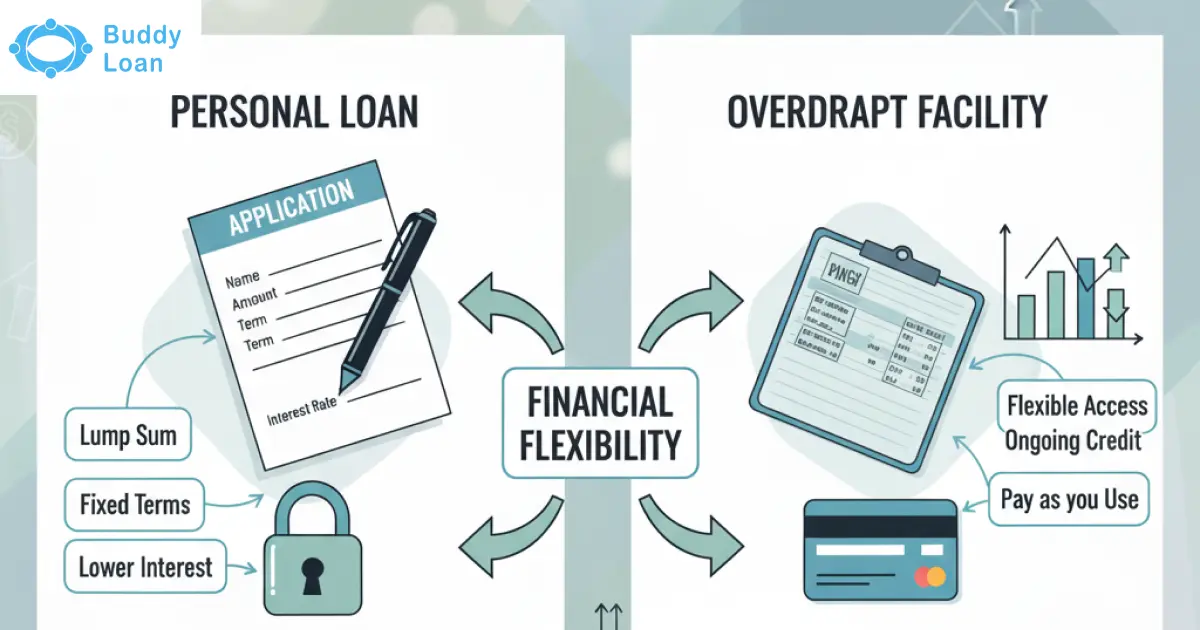
Understanding the differences between these two financial products helps you make a smart borrowing decision. Here’s a detailed comparison highlighting how they differ in terms of purpose, structure, interest rates, repayment, and flexibility.
| Feature | Personal Loan | Overdraft Facility |
| Purpose | Planned, large expenses like weddings, education, or debt consolidation | Short-term cash needs, working capital, or emergencies |
| Nature of Credit | One-time lump sum disbursal | Revolving credit line; reusable once repaid |
| Interest Calculation | Charged on the entire loan amount from day one | Charged only on the amount withdrawn (daily basis) |
| Interest Rate Type | Usually fixed (10%–25%) | Usually variable (11%–24%) |
| Repayment Structure | Fixed EMIs over a defined tenure | Flexible; repay anytime |
| Tenure | Medium to long-term (1–7 years) | Short-term (6–12 months, renewable annually) |
| Collateral Requirement | Unsecured | Optional (secured OD against FD/property) |
| Processing Speed | 24 hours to 3 days (varies by lender) | Instant for existing customers |
| Prepayment Charges | May apply (1%–4%) | None |
| Best For | Salaried individuals with fixed income & planned expenses | Variable income earners, short-term fund needs |
Suggested Read: Loan Against Property Vs. Personal Loan
Compare Loan & OD Eligibility, Documentation & Approvals
When applying for any type of credit, understanding the eligibility criteria and documentation requirements is key. This section explains how overdrafts and personal loans differ in approval speed, paperwork, and renewal needs.
| Criteria | Personal Loan | Overdraft Facility |
| Eligibility | Based on income, employment stability, and credit score | Often linked to existing bank accounts, a high credit score is preferred |
| Documentation | KYC, income proof, salary slips, ITR | Minimal for existing customers (FD, salary, or current account) |
| Approval Time | 24 hours to 7 days (can be instant via fintech) | Instant for pre-approved accounts |
| Renewal Requirement | Not applicable | Annual review and renewal |
| Flexibility | Low — fixed loan and schedule | High — borrow as needed |

Personal Loan or Overdraft Facility: When to Choose
Choosing between a personal loan and an overdraft depends on your financial goals, cash flow, and repayment comfort. Here’s when each option makes the most sense.
Choose a Personal Loan When:
- You need a large, lump-sum amount upfront.
- You want a structured repayment schedule with fixed EMIs.
- You are salaried or have a stable income and prefer predictability.
- You are financing planned, long-term goals (education, wedding, home repair).
- You want to build or improve credit through consistent EMI payments.
Choose an Overdraft Facility When:
- You need short-term financial support or working capital.
- Your income is variable, such as in freelancing or business.
- You prefer repayment flexibility and want to save on interest.
- You require instant funds without formal loan processing.
- You can repay quickly within months.
Suggested Read: Overdraft Against FD
| Real-Life Example:
To understand how each option works in practice, let’s look at a real-life example that illustrates when to choose a personal loan versus an overdraft. Suresh and Meena Suresh runs a small printing business in Pune, while his wife Meena works as an IT professional.
Suresh’s Choice: Meena’s Choice: Result: |
Personal Loan vs. Overdraft Facility Cost Comparison Example
A side-by-side cost comparison can help visualize how these products differ in real-world scenarios. Here’s an example showing the total interest cost based on different borrowing patterns.
| Parameter | Personal Loan | Overdraft Facility |
| Limit/Loan Amount | ₹5,00,000 | ₹5,00,000 |
| Interest Rate | 11.5% fixed | 12% variable |
| Usage | Full ₹5,00,000 for 3 years | ₹1,50,000 for 3 months |
| Total Interest Paid | ₹90,000 (approx.) | ₹4,500 (approx.) |
| Repayment | Fixed EMIs | Flexible |
Insight: If you borrow only a small portion for a short time, an overdraft is cheaper. For long-term structured borrowing, a personal loan provides stability and peace of mind.
Quick Tip: For ease of calculation, an EMI Calculator and Overdraft Calculator can be used.
Conclusion
Both the Personal Loan and the Overdraft facility offer fast financial support, but they serve distinct purposes.
The Personal Loan delivers structure and predictability: perfect for long-term, large expenses with fixed EMIs.
The Overdraft Facility delivers flexibility: best for short-term, fluctuating needs where you pay interest only on what you use.
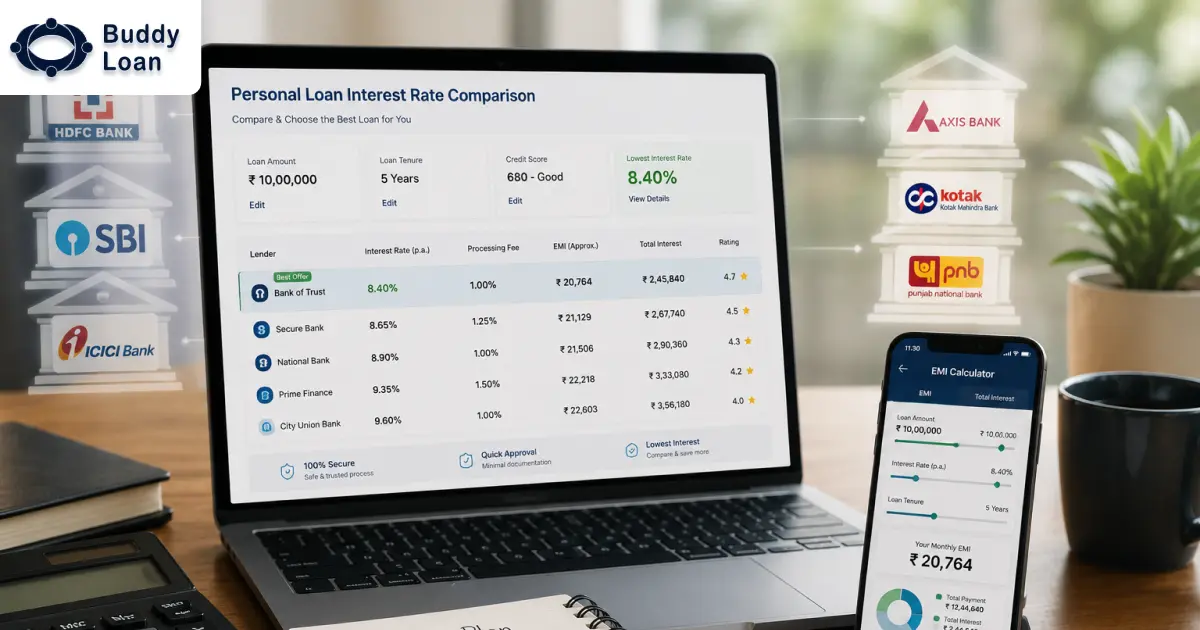
If you’re exploring a reliable way to compare multiple lenders and get the best offer, you can use the Buddy Loan app. It is a digital fintech marketplace that connects borrowers with verified lenders, helping you find the best personal loan products based on your credit profile, without hidden costs.
In short:
- Choose a personal loan for structured, long-term borrowing.
- Choose an overdraft for short-term flexibility and immediate liquidity.
Make the choice that aligns best with your financial lifestyle.
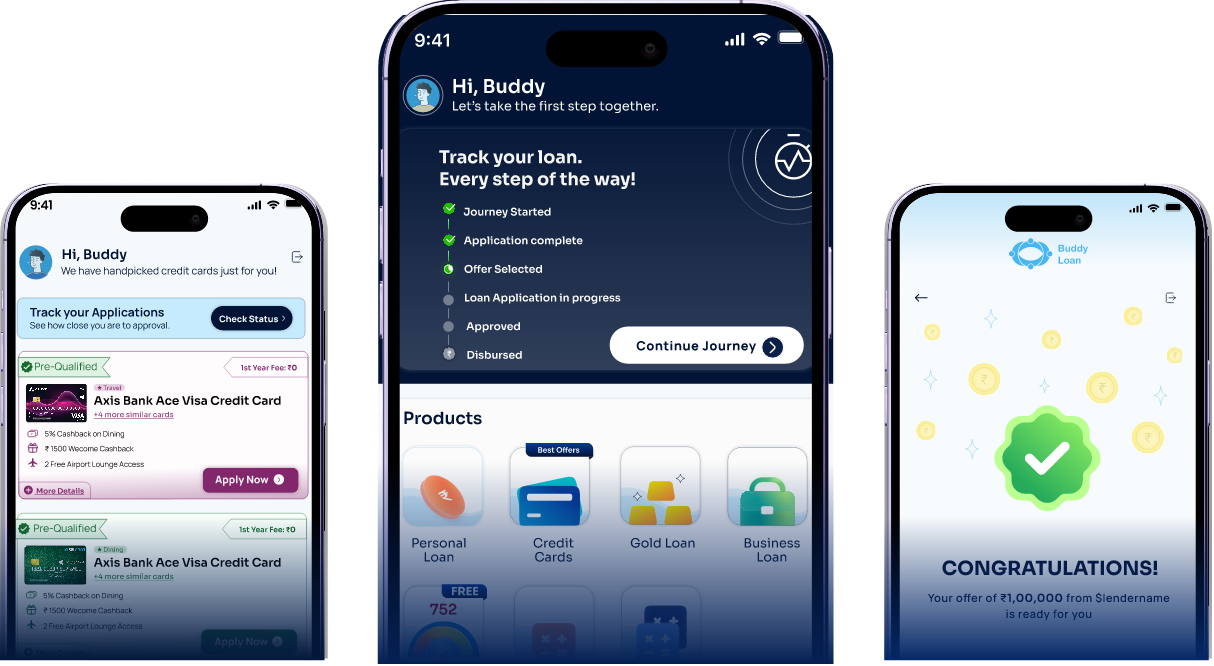
Download the Buddy Loan App Now!
One solution to each of your financial needs at your fingertip.

Scan to download now