Commission-based employees such as sales agents, real estate brokers, and insurance professionals earn primarily through variable commissions instead of a fixed salary. This income structure often leads to questions: Can lenders consider such applicants for personal loans? And if yes, under what conditions?
This blog answers whether commission-based employees can qualify for personal loans, with expert insights, lender criteria, and actionable tips to help you apply with confidence.
Understanding Commission-Based Income
Commission-based income is variable and irregular in contrast to a steady salary, which leads lenders to view it as higher risk and require stronger proof and consistency. It is also known as earnings that depend on sales performance or targets, typically earned by professionals such as
- Real estate agents
- Insurance agents and brokers
- Sales executives working on commission
- Freelance or contract-based promoters
This income differs from fixed monthly salaries: it fluctuates depending on sales volume, seasonality, and business cycles.
Why Lenders Treat This Income as “Non-Standard”
- Variability: Commission earnings often fluctuate widely month to month, unlike a fixed monthly salary.
- Less Predictable: Income may drop in lean sales months, making repayment capacity harder to predict.
- Higher perceived default risk: Inconsistent earnings signal potential difficulty in meeting regular EMIs, prompting stricter scrutiny.
Lenders Approve Personal Loans for Commission-Based
Yes, most lenders will consider applications from commission-based employees, but they come with stricter conditions, tighter scrutiny, and often fewer pre-approved offers.
Many private lenders, including HDFC Bank, Axis Bank, and NBFCs, may approve such loans, provided applicants meet documentation and credit score criteria:
- Consistent income evidence over multiple years
- High credit score (typically 750+)
- Proven track record in commission roles
Why Lenders Are Cautious About Commission-Based Income
- Irregular monthly income makes it harder to assess EMI affordability consistently.
- Profit volatility is dependent on seasonal or product-specific sales cycles.
- Lack of salary slips means lenders rely on bank statements and ITRs, which require deeper validation.
Commission-based applicants tend to fall into higher-risk profiles unless they counterbalance with impeccable financial behavior and documentary proof.
Key Considerations for Commission-Based Loan Approval
- Application volume: Fewer pre-approved offers are extended to commission earners than to salaried borrowers.
- Disbursement speed: Verification and processing may take longer due to more thorough checks.
- Credit limit: Approved amounts may be lower unless income is predictable and consistent.
Eligibility Criteria for Commission‑Based Employees
Commission earners may qualify for personal loans if they demonstrate consistent income, a good credit score, and transparent financial records.
Key Eligibility Requirements
- Stable Income History: Minimum 2–3 years in commission-based work, preferably with income consistency across that period.
- Strong Credit Profile: A CIBIL score of 720+ is ideal. Higher scores offset concerns over variable income.

Documents Required for Personal Loans by Most Lenders
Commission-based employees are required to submit standard personal loan documents such as KYC, income proof, and bank statements along with additional documents that demonstrate consistent commission income and continuity in commission-based work.
Commission-Based Income Documents
Commission earners need to present stronger income evidence compared to salaried applicants:
- Bank Statements (6–12 months): Should reflect regular commission credits and cash flow consistency.
- Income Tax Returns (ITR): Filed for at least the last 2–3 years, clearly reflecting commission income.
- Sales/Commission Invoices or Contracts: Helps demonstrate continuity in commission-based work and client engagement.
Basic Documents Required by Most Lenders
All personal loan applicants, including commission earners, must provide standard documentation:
- KYC (Identity & Address Proof): PAN card plus an officially valid document like Aadhaar, passport, voter ID, or driving license.
- Signature Proof: Either a PAN card or a passport where required.
- Photographs & Signed Application Form: As per each lender’s guidelines.
Additional Supporting Documents
While variable per lender, some institutions may ask for:
- Experience Proof: Such as a letter from your employer or commission agreement in the field, showing at least 2-3 years of income stability.
- Business/Work Continuity Proof: Sales ledger entries, client contracts, or purchase orders demonstrating ongoing activities.
These documents help offset the variable nature of income and reinforce credibility.
Challenges Faced by Commission-Based Applicants
Commission-based earners often face loan approval challenges due to fluctuating income, higher perceived risk, and more complex documentation requirements.
Key Challenges:
- Income varies monthly, reducing perceived EMI stability.
- Documentation is more complex due to the absence of salary slips.
- Fewer pre-approved offers and smaller loan amounts.
- Lenders require longer histories and stronger credit profiles.
Improve Approval Chances for Commission-Based Applicants
Commission-based earners can significantly boost their chances of loan approval by maintaining strong credit, documenting consistent income, and using smart application strategies.
- Maintain a High Credit Score (720+)
- Aim for a credit score of 720 or higher to offset concerns about variable income and build lender trust.
- Avoid missed payments and unnecessary credit inquiries to keep your score strong.
- File Consistent ITRs (Last 2-3 Years)
- Stable or growing commission income in ITRs reassures lenders about your repayment ability.
- Present Clean, Commission-Focused Bank Statements
- Avoid unexplained cash deposits or withdrawals. Transparent statements build lender confidence.
- Demonstrate Work Continuity
- Show you’ve been in the commission role for at least 2-3 years, preferably with one year in your current path.
- Include employment or commission contracts, client invoices, or sales ledgers to showcase ongoing business or client relationships.
- Use a Co-Applicant or Guarantor (if possible)
- Adding a salaried co-applicant, like a spouse, can strengthen your application, which is especially helpful in cautious banks.
- A guarantor with a strong credit profile can help access higher loan amounts or better terms.
- Consider NBFCs and Fintech Lenders
- Some fintech firms and NBFCs actively approve loans for commission profiles using alternative data rather than salary slips.
- Examples include lenders who accept commission invoices or client performance data alongside ITRs and bank statements.
- Apply With Realistic Loan Amounts & Appropriate Tenure
- Requesting modest amounts (e.g., up to 30-40% of average monthly commission) increases approval likelihood.
- Moderate tenures (12-48 months for personal loans) strike a balance between EMI affordability and credibility.
Conclusion
It is entirely possible, but lender conditions are stricter due to variable income. Those with steady commission earnings over multiple years, a strong credit score, clean bank statements, and proper tax filings boost their odds significantly.
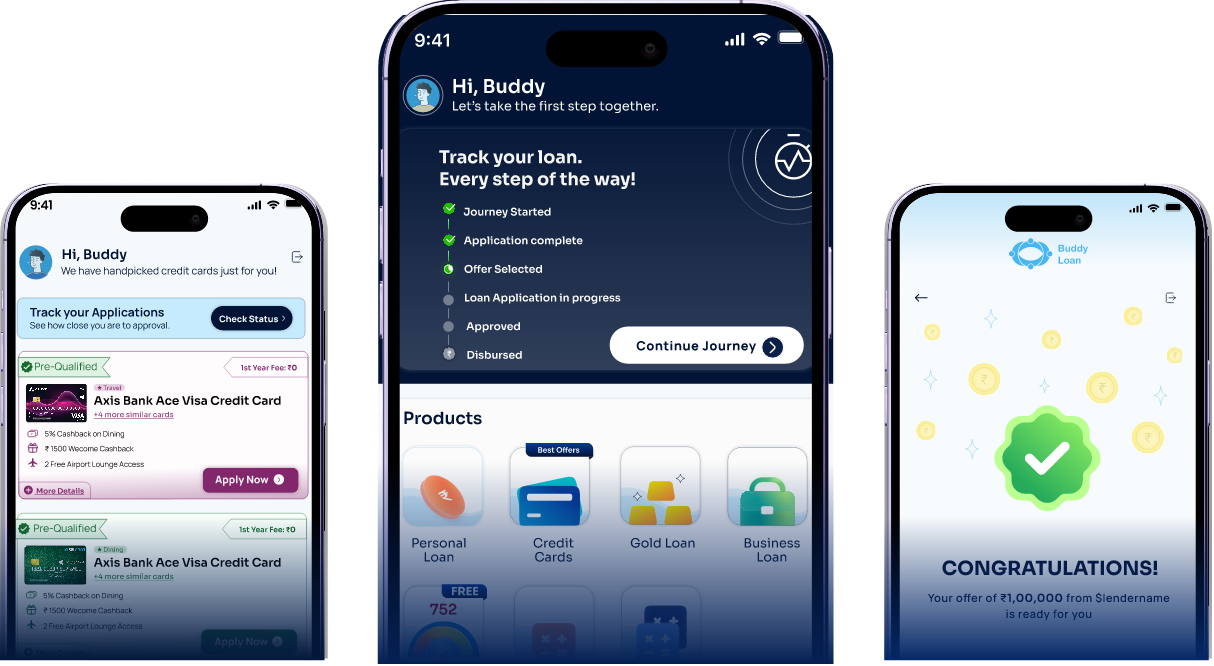
Download the Buddy Loan App Now!
One solution to each of your financial needs at your fingertip.

Scan to download now