Ever heard of a boy lifting a mountain not with strength, but with sheer faith and purpose? That’s the heart of Govardhan Puja, a festival that’s not just rich in legend but layered with meaning. Celebrated the day after Diwali, this sacred tradition goes beyond fireworks and festivities. It’s about the power of belief, the beauty of nature, and the timeless bond between the divine and the devotee.
In this blog, we’ll uncover everything from the 2025 Govardhan Puja date and holiday status to the deeper meanings, rituals, and how it continues to inspire millions across generations.
Key Highlights of Govardhan Puja
- Govardhan Puja isn’t just another date on the Hindu calendar; it’s a celebration with deep roots in mythology, nature, and community values. Here are the essentials that make this festival stand out:
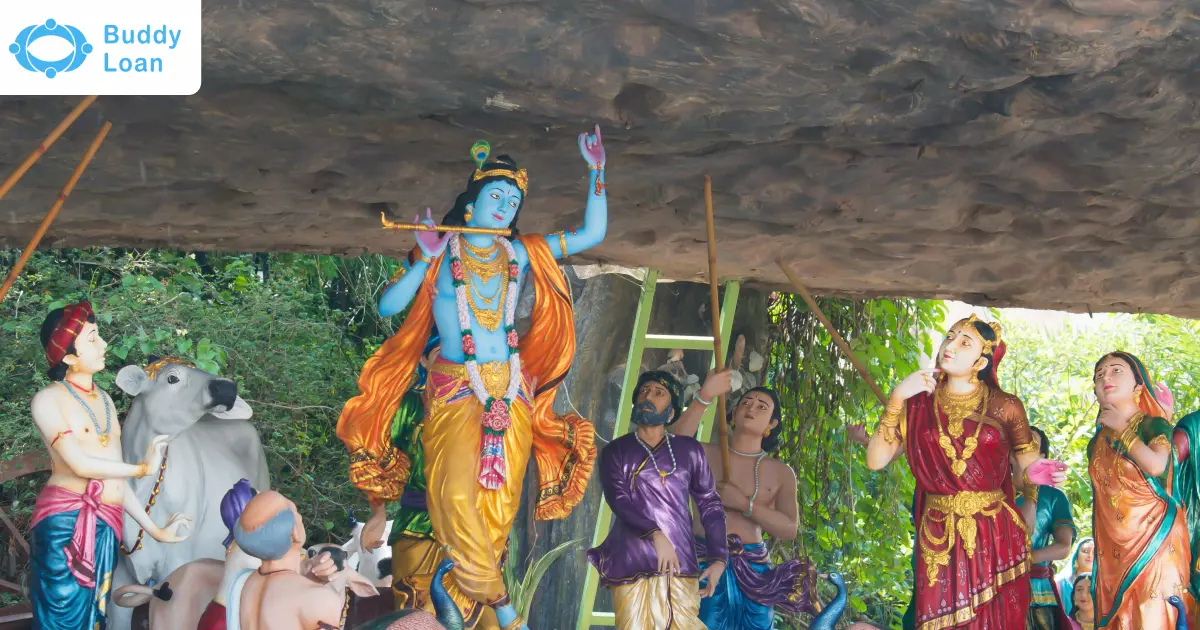
- Govardhan Puja commemorates the legendary act of Shree Krishna lifting the Govardhan Hill to protect the people of Gokul from torrential rains sent by Indra, the god of thunder.
- It falls a day after Diwali, on the first lunar day (Pratipada) of the Shukla Paksha in the Kartik month.
- Especially grand in Braj, Mathura, Vrindavan, and parts of Gujarat, Maharashtra, and Rajasthan.
- ISKCON temples and Swaminarayan mandirs across India and abroad host elaborate Annakut feasts and celebrations.
- Govardhan Puja Holiday Date
Govardhan Puja isn’t tied to a fixed day in the Gregorian calendar; it follows the Hindu lunar calendar, falling on the first day of the Shukla Paksha in Kartik month, which is the day after Diwali.
| Occasion | Date |
| Govardhan Puja Day | Wednesday, Oct 22 |
| Pratipada Tithi Begins | Oct 21, 2025 |
| Pratipada Tithi Ends | Oct 22, 2025 |
| Pratahkala Puja Muhurat | Oct 22, 2025 |
| Sayankala Muhurat | Oct 22, 2025 |
| Dyuta Krida Observance | Oct 22, 2025 |
Note : Govardhan Puja is closely connected with Annakut celebrations and the fourth day of the Diwali festival, often making it part of an extended holiday period in many Indian regions.

Govardhan Puja Bank Holiday
While Govardhan Puja is a widely celebrated festival across India, its status as an official holiday, especially in banks, varies by state and institution.
Here’s how it generally plays out:
• In Uttar Pradesh, Madhya Pradesh, and some parts of Rajasthan, Govardhan Puja is typically marked as a public and bank holiday, given the strong cultural and spiritual significance of Krishna worship in these regions.
• In states like Maharashtra, Delhi, Bihar, and Gujarat, banks may remain open, but government offices and educational institutions might observe a restricted holiday depending on local customs and the Diwali schedule.
• Nationalized banks and RBI-approved holidays often mark Vijaya Dashami and Diwali (Lakshmi Puja) as gazetted holidays. However, Govardhan Puja often falls under the restricted holiday list, making it optional based on internal calendars.
Suggested Read: October Holidays
Importance of Govardhan Puja
Govardhan Puja isn’t just a ritual; it’s a powerful reminder of humility, faith, and the deep bond between nature and the divine. At its core, this festival celebrates the moment when Lord Krishna lifted the Govardhan Hill to protect the people of Braj from Lord Indra’s wrath. But what makes this celebration truly timeless?
A Lesson in Divine Protection
The story teaches us that true shelter comes from unwavering devotion. Krishna’s act wasn’t just a miracle; it was a message: when you surrender with faith, the divine takes care of you.
Reverence for Nature
Govardhan Hill wasn’t just a backdrop; it became a deity itself. By honoring the mountain, the cows, and the land, Govardhan Puja reinforces the importance of living in harmony with the natural world.
Humbling the Ego
|The festival also carries a philosophical punch. Lord Indra, in his pride, brought down storms, and Krishna responded with calm strength. It’s a story of pride versus humility, showing that arrogance, even divine, has its limits.
A Cultural Anchor
From the elaborate food offerings to the sacred walk around Govardhan Hill, the rituals of this day have rooted generations in a shared spiritual memory. It’s a time for families to come together, for communities to reconnect, and for spiritual energy to rise through bhajans, aartis, and shared meals.

History of Govardhan Puja
If you’ve ever wondered why a mountain made of cow dung is worshipped or why a feast of 56 dishes (Chappan Bhog) is laid out with so much devotion, well, the roots go way back, deep into one of Hinduism’s most cherished legends.
A Village, a Storm, and a Mountain
Long ago in the pastoral land of Braj, nestled near present-day Mathura, villagers would pray annually to Lord Indra, the rain god, thanking him for the downpours that nurtured their crops. This was an agrarian society; rain wasn’t just weather, it was a lifeline.
But everything changed when a young Krishna, barely a teen, questioned this ritual. He told the people of Gokul: “Why worship Indra? Why not show gratitude to the Govardhan Hill, which gives us grass for our cows, trees for shade, and water from its streams?”
Indra’s Wrath and Krishna’s Grace
Unhappy with this challenge to his authority, Indra retaliated with a storm so fierce, it threatened to wash away the entire village. But Krishna had a plan. With the effortless lift of his little finger, he raised the mighty Govardhan Hill and held it aloft like an umbrella, offering shelter to all the villagers and their cattle.
This wasn’t just a divine show of strength; it was a spiritual statement. The protector wasn’t a far-off god to be feared but one among them who led with love and lived among them.
Victory of Humility over Ego
After seven days of relentless rain, Indra finally saw the light, literally and figuratively. Realizing Krishna’s divinity and his own misplaced pride, he bowed down, marking a victory of humility over arrogance.
Suggested Read: November Holidays
Different Types of Govardhan Puja
While the heart of Govardhan Puja remains the same—offering gratitude to Lord Krishna and Govardhan Hill, how people observe it can look pretty different depending on where you are. Yes, the essence is shared, but the expressions? They’re as diverse as India’s spiritual traditions.
Let’s take a look at the different ways this festival is practiced across communities and sects:
Traditional Govardhan Puja in Braj (Vrindavan & Mathura)
This is where it all began. The original celebrations in Krishna’s homeland are deeply rooted in Vraj Bhumi traditions. People here:
• Create cow dung replicas of Govardhan Hill
• Decorate it with flowers, food, and toy cows
• Perform Govardhan Parikrama, an 11-mile circumambulation
• Offer Chappan Bhog (56 food items) to the deity
Annakut Utsav in Swaminarayan Temples
In Swaminarayan sects, especially BAPS temples, Govardhan Puja is celebrated as Annakut , which literally means “mountain of food.” What’s unique here?
• Hundreds to thousands of dishes are offered, sometimes even breaking world records
• Temples display beautifully tiered food arrangements
• Devotees sing thaals (devotional songs describing the food)
• It’s a full-day event drawing large community participation, especially in India, the UK, and the U.S
ISKCON Celebrations Worldwide
The International Society for Krishna Consciousness (ISKCON) brings Govardhan Puja to cities across the globe, giving it a mix of traditional devotion and global accessibility:
• Worship of Govardhan Shilas (sacred stones from Govardhan Hill)
• Drama and reenactments of Krishna’s lifting of the hill
• Parikrama around temple complexes with chanting and kirtans
• Huge Chappan Bhog feasts followed by prasad distribution
Rural Village Style Celebrations in North India
In small towns and villages across Uttar Pradesh, Bihar, Rajasthan, and Haryana, Govardhan Puja is more rustic and community-driven:
• Families gather in courtyards to mold Govardhan hills with cow dung and twigs
• Local community elders or cowherds lead the puja
• Kids go from house to house singing traditional folk songs
• Villagers share homemade sweets and food as prasad
Govardhan Puja Rituals & Traditions
If there’s one thing Govardhan Puja does right, it’s the heartwarming blend of spiritual devotion and earthly celebration. Steeped in symbolism and age-old customs, the rituals practiced during this day are more than just religious duties. They’re reminders. Reminders of humility, nature’s grace, and divine shelter.
Crafting the Govardhan Hill
In many regions, especially rural North India, families wake up early to create a symbolic Govardhan Hill using cow dung, a substance considered sacred in Hindu tradition.
• The hill is decorated with flowers, grass, twigs, and miniatures of cows and trees.
• It’s not just about replicating the mountain. It’s about honoring the land that sustains life.
Govardhan Parikrama: A Walk of Faith
In Braj (especially Govardhan town), the day begins with Govardhan Parikrama, a sacred 23-km walk around the actual hill.
• Devotees walk barefoot, often stopping to chant, offer flowers, or light diyas.
• It’s believed that even a single step taken with devotion purifies the soul.
Offering the Chappan Bhog (56 Dishes)
Arguably the most awaited ritual, the Annakut or Chappan Bhog offering brings families and temples alive with color and aroma.
Why 56 dishes? Well, it’s said Krishna didn’t eat for 7 days while holding up the mountain. 8 meals a day × 7 = 56.
• Sweets, savories, fruits, snacks, grains, and drinks are carefully arranged in front of the deity.
• The food is placed in tiers, with milk-based sweets closest to the Lord, symbolizing purity and nourishment.
• After the puja, this food is distributed as prasad, a sacred blessing in every bite.
Special Aarti and Bhajans
Throughout the day, temples and homes ring with bhajans (devotional songs) and aartis (rituals of light).
• In Swaminarayan and ISKCON traditions, devotees perform Thaal Kirtan, singing names of each dish prepared for the deity.
• In Vrindavan, evening aartis around the Govardhan Hill are accompanied by lamp offerings and group chanting.
Dyuta Krida – The Game Ritual
Not widely known, but in certain traditions, Dyuta Krida, a symbolic game of dice, is played to recreate a pastime of Lord Krishna. This happens in some parts of Gujarat and among Vaishnava followers.
Gau Puja (Worship of Cows)
Since Krishna was a cowherd and Govardhan symbolizes natural prosperity, cow worship is integral to the festival.
• Devotees bathe and decorate cows with garlands and colors.
• In some regions, they’re even part of the parikrama ritual.
• The cow is not just sacred; it’s seen as a symbol of selfless giving, like nature itself.
Ways to Celebrate Govardhan Puja
Govardhan Puja isn’t just a day on the calendar; it’s an experience. And like most great experiences in India, it’s loud with colors, warm with devotion, and full of unique traditions that blend ancient values with modern flair.
Set Up Your Own Govardhan Hill at Home
Can’t visit Braj? No worries. You can bring the spirit home by creating your own Govardhan Hill using eco-friendly clay or traditional materials. Decorate it with flowers, diya lights, and sugar trees, then offer your prayers just as they do in Vrindavan.
Offer Chappan Bhog (56 Dishes)
If you’ve already read about Chappan Bhog above, you know it’s more than a meal—it’s a mountain of devotion. Many families cook a smaller version of the 56-dish offering at home and arrange it in front of Krishna or a symbolic Govardhan Hill. The emphasis isn’t on quantity, but love and purity.
Join Govardhan Parikrama
If you’re lucky enough to be in Braj during this time, joining the Parikrama around the sacred Govardhan Hill is something you’ll never forget. It’s not just a walk—it’s a spiritual journey.
• Devotees walk barefoot, chanting Krishna’s name, singing bhajans, and stopping at small shrines along the way.
• The route is peppered with history, devotion, and divine energy.
Visit Temples for Annakut Darshan
Cities like Vrindavan, Mathura, Mumbai, Delhi, Ahmedabad, and London’s BAPS temples turn into devotion-filled zones with massive Annakut displays.
• Hundreds of food items are arranged in steps: sweets near the deity and savory items below.
• Visitors line up for darshan (holy viewing), sing bhajans, and take home prasad.
Host Kirtan Evenings and Storytelling Sessions
Devotees gather in homes or temples to sing Krishna bhajans, read the Govardhan Leela from scriptures, and retell the story of how Krishna lifted the mountain to protect his people.
• Kids dress up as Krishna, Radha, and gopas to perform mini-plays or dance dramas.
• It’s not just religiousit’s festive, creative, and joyful.
Famous Destinations for Govardhan Puja Celebration
If there’s one festival that turns devotion into a full-fledged spectacle of food, faith, and festivity, it’s Govardhan Puja. While it’s celebrated in homes across India, certain places take things to a whole new level, drawing pilgrims, tourists, and Krishna devotees from every corner of the globe. Here are some of the most iconic destinations where Govardhan Puja is celebrated in its most vibrant and sacred form.
Govardhan Hill, Braj (Near Mathura, Uttar Pradesh)
This is the most sacred spot for Govardhan Puja. Thousands of devotees throng the 23-km parikrama path around Govardhan Hill, often barefoot, to retrace the steps of Krishna’s divine leela.
Mathura and Vrindavan, Uttar Pradesh
⇒ Enormous Annakut displays at temples like Banke Bihari, ISKCON, and Radha Raman
⇒ Traditional rituals including milk baths for deities, floral decorations, and prasad distribution
⇒ Large-scale cultural events, bhajan evenings, and live kirtans
Nathdwara, Rajasthan
⇒ Shrinathji, a child form of Krishna lifting Govardhan, is the main deity here
⇒ A grand annakut is prepared with hundreds of sweets, savories, and dairy delicacies
⇒ Devotees from Gujarat, Maharashtra, and Madhya Pradesh travel here just for the darshan
ISKCON Temples Worldwide
⇒ Chappan Bhog offerings arranged in steps before Krishna deities
⇒ Govardhan Hill replicas made of sweets and snacks
⇒ Devotional dances, bhajan sessions, and plays depicting Krishna lifting the mountain
⇒ Thousands of devotees participate, followed by free prasadam distribution
Ahmedabad, Gujarat (Swaminarayan Mandirs)
⇒ Massive annakut displays sometimes featuring over 2,000 dishes
⇒ Devotees dress in traditional attire and gather for thaal singing and aarti
⇒ The temple décor and arrangements reflect both artistic excellence and spiritual intent
Mumbai, Maharashtra
In Mumbai, the festival is celebrated with urban enthusiasm and devotional creativity.
⇒ Swaminarayan Mandirs and ISKCON Juhu host massive annakuts
⇒ Devotees visit temples, perform aarti, and take part in community seva
⇒ Cow shelters and gaushalas also see high footfall as people offer food and seek blessings
London (Neasden Temple), United Kingdom
⇒ Hundreds of volunteers arrange over 1,000 dishes in a decorative format
⇒ Visitors witness cultural exhibitions, take part in devotional singing, and share communal meals
⇒ The temple draws thousands of devotees and tourists, making it the biggest Hindu celebration in the UK
Suggested Read: Kartik Purnima
Upcoming Govardhan Puja Bank Holiday Dates
Planning your Govardhan Puja celebration or wondering when you’ll get a day off for this spiritually rich festival in the coming years? Whether you’re marking your calendar for temple visits, preparing Chappan Bhog, or arranging a family get-together, here’s a neatly curated table with the most accurate Govardhan Puja dates, Pratipada tithi timings, and key muhurats from 2024 to 2030.
| Year | Govardhan Puja Date |
| 2024 | Sunday, November 2 |
| 2025 | Wednesday, October 22 |
| 2026 | Monday, November 10 |
| 2027 | Thursday, October 30 |
| 2028 | Saturday, October 18 |
| 2029 | Thursday, November 6 |
| 2030 | Monday, October 27 |
Final Thoughts
Every ritual, from creating a miniature Govardhan with cow dung to offering a feast of 56 dishes, is steeped in layers of devotion, community bonding, and spiritual symbolism. It teaches us that even the mightiest of forces must bow before humility and faith.
In today’s world, where storms might not come from angry gods but from environmental challenges and emotional upheavals, the message of Govardhan Puja remains timeless: protect what nourishes you, stay grounded in gratitude, and trust that divine strength will always shelter sincere hearts.

Download the Buddy Loan App Now!
One solution to each of your financial needs at your fingertip.

Scan to download now