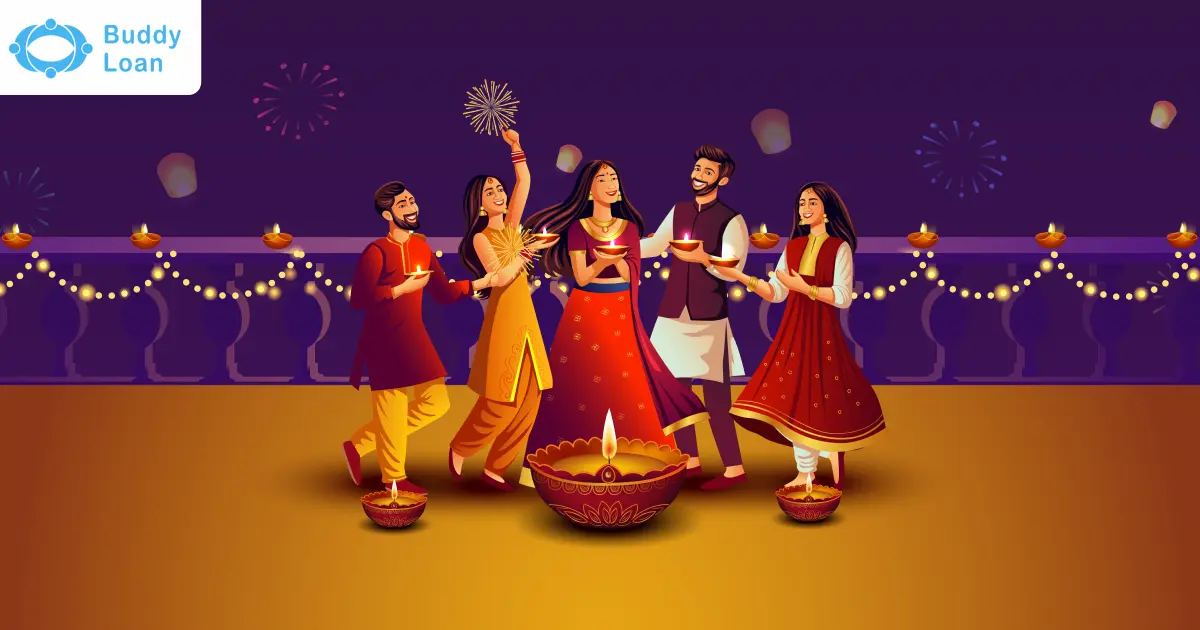
Diwali, also known as Deepawali, is one of the most significant and widely celebrated festivals in India. Marked by lights, rituals, and joyous gatherings, Diwali is observed with immense cultural, religious, and social significance. In 2025, Lakshmi Puja, the main day of Diwali, will fall on Monday, 20 October 2025.
Diwali is not a single-day event. It spans five days, beginning with Dhanteras and ending with Bhai Dooj, each day carrying its own traditional and spiritual relevance. During this period, public and bank holidays are observed across several Indian states, especially on Lakshmi Puja (20 Oct) and Govardhan Puja (22 Oct), depending on the region.
This blog provides a complete breakdown of the Diwali Holiday 2025, covering the accurate festival calendar, public and bank holiday status, cultural significance, historical background, traditional observances, and the best places to witness Diwali celebrations in India.
Key Highlights of Diwali 2025
Here’s a verified and accurate snapshot of the Diwali 2025 festival calendar, including each day’s date, significance, and expected holiday observance across states.
| Festival Day | Date | Day | Significance | Holiday Observance |
| Dhanteras | 18 October | Saturday | Marks the beginning of Diwali; associated with health and wealth | Optional/Regional |
| Naraka Chaturdashi / Choti Diwali | 19 October | Sunday | Symbolizes the victory of good over evil; Krishna’s slaying of Narakasura | Limited/Regional |
| Diwali / Lakshmi Puja | 20 October | Monday | Main Diwali day dedicated to Goddess Lakshmi and involves puja and lighting of diyas | Public & Bank Holiday in most states |
| Govardhan Puja | 22 October | Wednesday | Celebrates Krishna lifting Govardhan Hill to protect villagers | Holiday in North/Central states |
| Bhai Dooj | 23 October | Thursday | Celebrates the bond between brothers and sisters | Public holiday in selected states |
Additional Notes:
- Lakshmi Puja (Monday, 20 Oct.) is the most widely recognized public and bank holiday across India.
- Some states may also grant official holidays on Govardhan Puja or Bhai Dooj, depending on local traditions.
- Dhanteras and Choti Diwali are important but typically do not lead to official closures, except in select business sectors or regions.

Public & Bank Holiday on Diwali
Diwali is observed as a public holiday and a bank holiday across much of India. However, the specific days that are officially declared holidays can vary depending on the state and local customs. Below is a factual, state-wise overview of Diwali-related holidays in 2025, with a focus on Lakshmi Puja (20 October 2025), the main holiday across most regions.
| Date | Day | Occasion | Holiday Type | States Observing Public/Bank Holiday |
| 18 Oct | Saturday | Dhanteras | Optional Holiday | Some commercial establishments close early; not an official holiday |
| 19 Oct | Sunday | Naraka Chaturdashi / Choti Diwali | Sunday (no extra leave) | Usually not declared separately as a holiday |
| 20 Oct | Monday | Diwali / Lakshmi Puja | Public & Bank Holiday | Delhi, Uttar Pradesh, Maharashtra, Gujarat, Rajasthan, Bihar, MP, Chhattisgarh, Haryana, Punjab, Uttarakhand, Jharkhand, Telangana, and others |
| 22 Oct | Wednesday | Govardhan Puja | State-Specific Holiday | Uttar Pradesh, Gujarat, and some parts of North India |
| 23 Oct | Thursday | Bhai Dooj | Regional Holiday | Bihar, Uttar Pradesh, Haryana, Chhattisgarh, parts of Maharashtra |
Bank Holiday Notes:
- RBI will release its official 2025 holiday calendar, and it expects to list 20 October (Diwali) as a full bank holiday in most states.
- Some states may additionally observe bank closures on 22 Oct. (Govardhan Puja) or 23 Oct. (Bhai Dooj), subject to local banking regulations.
- Core banking services like ATMs and digital banking remain operational.
Also Read: October Holidays
Importance of Diwali
Diwali is more than just a festival of lights it is a profound celebration that holds religious, cultural, and social significance across various communities in India and beyond.
Religious Significance
- In Hinduism, Diwali marks the return of Lord Rama to Ayodhya after defeating Ravana, symbolizing the triumph of good over evil.
- It is also the day when Goddess Lakshmi, the deity of wealth and prosperity, is worshipped during Lakshmi Puja, which is the focal point of the festival.
- For Jains, Diwali commemorates the nirvana (liberation) of Lord Mahavira.
- In Sikhism, it marks the release of Guru Hargobind Ji from imprisonment, celebrated as Bandi Chhor Divas.
Cultural & Social Relevance
- Diwali promotes the values of family unity, social harmony, and generosity. It’s a time when families come together, settle disputes, and start new beginnings.
- The festival involves cleaning homes, buying new clothes, sharing sweets, and exchanging gifts, all of which symbolize renewal, gratitude, and goodwill.
Economic Impact
- Diwali fuels major economic activity across sectors like retail, gold & jewelry, real estate, electronics, and FMCG.
- Shoppers and retailers consider it the peak season for sales and shopping, making it a critical period for India’s consumer-driven markets.

History of Diwali
The origins of Diwali are deeply rooted in ancient Indian mythology and religious traditions. While the festival is now widely known as the Festival of Lights, its historical and scriptural background varies by region and faith, each attributing unique stories to the celebration.
Hindu Mythological Origins of Diwali
♦ Return of Lord Rama to Ayodhya
⇒ One of the most popular narratives comes from the Ramayana.
⇒ After defeating Ravana and completing 14 years in exile, Lord Rama, along with Sita and Lakshmana, returned to Ayodhya.
⇒ The people of Ayodhya lit oil lamps (diyas) throughout the city to welcome them, symbolizing light over darkness and the return of righteousness.
♦ Lakshmi’s Emergence
⇒ According to the Puranas, on this day, Goddess Lakshmi emerged during the Samudra Manthan (cosmic ocean churning), bringing wealth and fortune.
⇒ As a result, Diwali became strongly associated with Lakshmi Puja, especially among merchants and traders.
♦ Krishna and Narakasura
⇒ In parts of South India, the festival is linked to Lord Krishna’s victory over the demon Narakasura, marking the triumph of virtue.
Jain Significance of Diwali
⇒ For Jains, Diwali commemorates the day Lord Mahavira, the 24th Tirthankara, attained moksha (liberation) at Pavapuri in 527 BCE.
⇒ Jain temples are lit with lamps, and special prayers are offered.
Sikh Significance of Diwali
⇒ Bandi Chhor Divas coincides with Diwali and celebrates the release of Guru Hargobind Ji along with 52 kings from Mughal captivity in 1619.
⇒ Sikhs light lamps in Gurdwaras, most notably the Golden Temple in Amritsar.
Historical Evidence
⇒ Diwali has been mentioned in ancient Sanskrit texts like the Padma Purana and Skanda Purana.
⇒ Archaeological evidence also suggests the use of diyas and festive gatherings during harvest seasons in early Indian civilizations.
Also Read: November Holidays
Different Types of Diwali
People commonly use the term Diwali to refer to the main day of Lakshmi Puja, but families traditionally celebrate the festival over five days, and each day carries its own rituals, meaning, and often regional observance styles. Here’s a breakdown of the different Diwali days and how people celebrate them across India.
Dhanteras (Day 1: Saturday, 18 October 2025)
- Marks the beginning of Diwali.
- Devotees worship Lord Dhanvantari, the god of health and Ayurveda.
- People buy gold, silver, and new utensils, a sign of welcoming prosperity.
- In businesses, it’s considered an auspicious day to start new ledgers.
Naraka Chaturdashi / Choti Diwali (Day 2: Sunday, 19 October 2025)
- Celebrated as the day Lord Krishna destroyed the demon Narakasura.
- People clean their homes, take oil baths, and light small lamps in the evening.
- Known as Choti Diwali in North India and observed more prominently in South India.
Diwali/Lakshmi Puja (Day 3: Monday, 20 October 2025)
- The main day of the festival.
- Devotees perform Lakshmi Puja in the evening, offering prayers to Goddess Lakshmi for wealth, peace, and prosperity.
- Houses are decorated with diyas, rangoli, flowers, and lights.
- Fireworks and sweet exchanges mark the celebration.
Govardhan Puja/Annakut (Day 4: Wednesday, 22 October 2025)
- Celebrates Lord Krishna’s act of lifting Govardhan Hill to protect villagers from torrential rains.
- Devotees prepare Annakut, a mountain of food offered to the deity.
- Prominent in Uttar Pradesh, Gujarat, and parts of Rajasthan.
Bhai Dooj / Bhau Beej / Bhai Tika (Day 5: Thursday, 23 October 2025)
- A celebration of the bond between brothers and sisters, similar to Raksha Bandhan.
- Sisters perform aarti and apply tilak on their brothers’ foreheads.
- Brothers give gifts and promise protection in return.
- Known as Bhai Dooj in North India and Bhau Beej in Maharashtra.
Regional Notes:
- In West Bengal, Kali Puja coincides with Diwali and is dedicated to Goddess Kali.
- In Tamil Nadu, Naraka Chaturdashi is observed more prominently than Lakshmi Puja.
- Jain and Sikh communities observe the festival with their own unique traditions (as covered earlier).
Diwali Rituals & Traditions
Diwali is marked by a wide range of rituals and customs, many of which have been passed down through generations. These traditions reflect devotion, joy, prosperity, and community bonding, all centered around the symbolic victory of light over darkness.
Cleaning and Decorating the Home
- Before Diwali, homes are thoroughly cleaned, renovated, or repainted to invite positivity and wealth.
- Doors and windows are decorated with mango leaves, marigold garlands, and torans (hangings).
- Intricate rangoli designs made from colored powders, rice, or flower petals are drawn at entrances to welcome guests and deities.
Lighting of Diyas and Lamps
- One of the most iconic traditions is lighting earthen diyas, candles, and decorative lamps throughout the home and surroundings.
- It signifies the removal of spiritual darkness and ignorance.
- In urban areas, this extends to fairy lights, lanterns, and LED decorations on balconies and rooftops.
Lakshmi Puja
On Diwali evening (20 October 2025), families perform Lakshmi Puja to invoke blessings from Goddess Lakshmi (wealth) and Lord Ganesha (auspicious beginnings).
A typical puja includes:
⇒ Offering sweets, coins, and flowers.
⇒ Lighting incense and diyas.
⇒ Reciting mantras and performing aarti.
Many also place business account books before the deities to start the new financial year on a sacred note.
Sharing Sweets and Gifts
- Diwali is synonymous with exchanging homemade sweets (mithai) like laddoos, barfi, and gujiya.
- Dry fruits, chocolates, and gift hampers are also popular modern alternatives.
- Families and friends exchange thoughtful gifts to express love and good wishes.
Fireworks and Crackers
- Fireworks are traditionally used to celebrate joy and ward off evil spirits.
- While once a central part of celebrations, many people now opt for eco-friendly alternatives or limit their use due to environmental concerns and health safety.
Charity and Kindness
- Diwali is also a time of giving, many people donate clothes, food, or money to those in need.
- People consider acts of kindness highly auspicious during this festival of prosperity.
Ways to Celebrate Diwali
- Diwali’s joy lies in its ability to bring together tradition and innovation. While the core rituals remain rooted in ancient customs, the ways people celebrate have evolved with time, lifestyle, and awareness. • Here’s how Diwali is commonly celebrated across homes and communities today.
Traditional Home Celebrations
- Family members gather in the evening to perform Lakshmi Puja.
- Families illuminate homes with diyas and candles and draw elaborate rangolis at entrances.
- People wear new clothes, often in vibrant colors that symbolize prosperity and festivity.
Festive Shopping & Gifting
- Diwali triggers one of the largest shopping periods in India, for clothes, electronics, jewelry, home décor, and more.
- People buy new items as a sign of fresh beginnings, often guided by the belief that purchasing during Diwali brings luck.
- Exchanging sweets and gift boxes remains a cherished tradition among friends, neighbors, and colleagues.
Eco-Friendly Celebrations
- Many families now consciously avoid loud or polluting crackers, opting for green fireworks, LED lights, or no-cracker Diwali.
The use of natural colors in rangoli, biodegradable décor, and organic sweets has also grown in popularity.
Virtual Diwali
- With families often spread across geographies, virtual Diwali celebrations via video calls, online gift deliveries, and e-greetings are increasingly common.
- Digital platforms also host Diwali-themed games, puja livestreams, and virtual events.
Office & Community Events
- Workplaces host pre-Diwali events with dress codes, potlucks, and diya-lighting ceremonies.
- Housing societies often organize community pujas, dance competitions, and food fests, bringing neighbors together.
Spiritual & Minimalist Observance
- Some individuals prefer a quiet and reflective Diwali, focusing on meditation, chanting, and introspection.
- It’s also common for people to use this time to disconnect from digital distractions and focus on relationships and self-care.
Suggested Read: December Holidays
Famous Destinations for Diwali Celebration
While Diwali is celebrated throughout India, some cities and regions stand out for their grand decorations, spiritual ambiance, and cultural richness. These destinations offer a unique way to experience the festival, often blending ancient traditions with modern spectacle.
Varanasi, Uttar Pradesh
- Known for its Ganga Mahotsav during Diwali, Varanasi lights up with thousands of floating diyas on the Ganges.
- The Dev Deepawali celebration (15 days after Diwali) attracts visitors from across the world.
- Earthen lamps decorate the ghats and fireworks light up the sky, creating a spiritual and visual marvel.
Jaipur, Rajasthan
- Jaipur transforms into a city of lights, with markets, homes, and even public buildings covered in dazzling decorations.
- The Johari Bazaar and Bapu Bazaar are known for vibrant Diwali shopping and displays.
- The city’s annual Diwali lighting competition makes it a must-see during the festive season.
Amritsar, Punjab
- Diwali coincides with Bandi Chhor Divas, making it a major celebration for the Sikh community.
- The Golden Temple is illuminated with thousands of lights and fireworks, creating an ethereal glow.
- The combination of religious significance and visual beauty makes it a standout destination.
Ayodhya, Uttar Pradesh
- Associated with Lord Rama’s return, Ayodhya has become a symbolic center of Diwali celebrations.
- In recent years, the city has set Guinness World Records for the largest number of diyas lit simultaneously.
- The Ram Ki Paidi ghats and Ram Leela performances add to the grandeur.
Kolkata, West Bengal
- While Diwali is celebrated, it coincides with Kali Puja, a major event here.
- Devotees worship Goddess Kali, and pandals are set up across the city.
- Fireworks, sweets, and pujas take place throughout the night.
Mumbai, Maharashtra
- Mumbai’s Diwali is a mix of spiritual and cosmopolitan, with homes, high-rises, and seafronts glowing with fairy lights.
- Marine Drive becomes a hotspot for fireworks, while localities host lavish community gatherings.
Conclusion
Diwali Holiday 2025, observed on Monday, 20 October 2025, will be the central day of a five-day festival that holds cultural, spiritual, and national significance across India. With official public and bank holidays declared in many states for Lakshmi Puja and additional observances like Govardhan Puja and Bhai Dooj, it is a period marked by collective celebration and regional diversity.
The festival’s customs, from Lakshmi Puja, lighting diyas, and sharing sweets to its modern expressions through eco-conscious practices and digital connectivity, reflect its evolving yet timeless relevance. The distinct celebrations in cities like Varanasi, Jaipur, Amritsar, and Ayodhya further enrich the Diwali experience.
Download the Buddy Loan App Now!
One solution to each of your financial needs at your fingertip.

Scan to download now