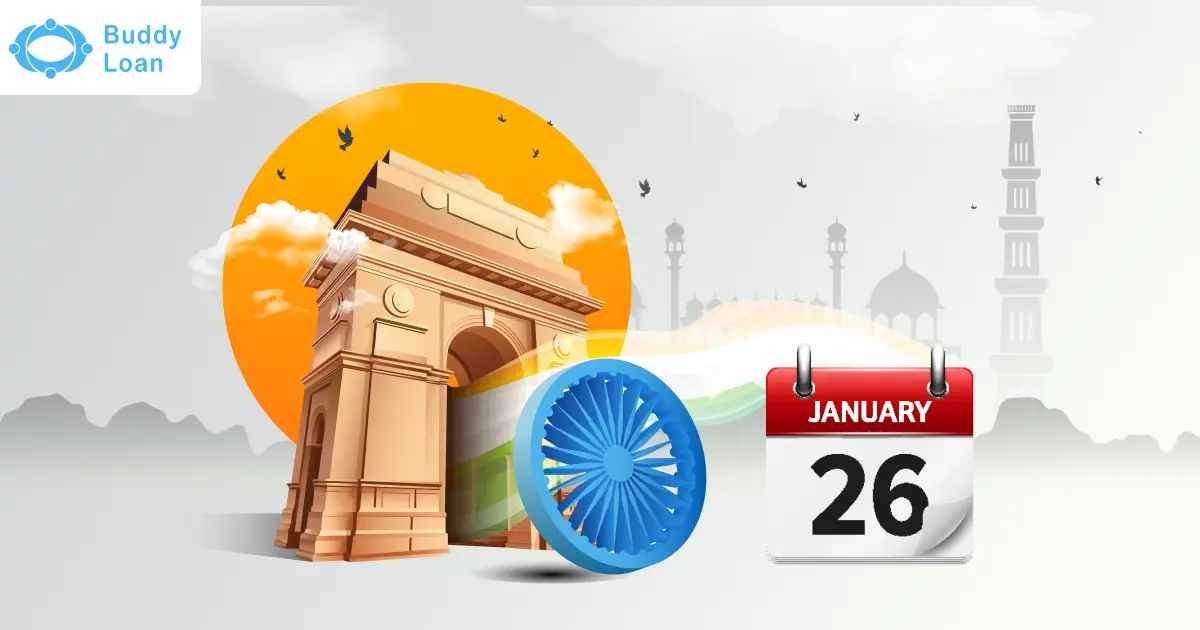
The transition of India from a Dominion to a sovereign Republic is a pivotal moment in global history. It marks the adoption of the Constitution, the framework that guides our economic and social democracy. This day is not merely about a parade; it is about the establishment of the rule of law.
For the financial sector, the Republic Day Holiday represents a pause in market activities but a celebration of the stability required for economic growth. We observe this day to honour the document that guarantees our fundamental rights. It is a day of national pride, diplomatic showcasing, and cultural unity.
Republic Day will be celebrated on: Sunday, January 26, 2026
Key Highlights of Republic Day 2026
The 76th Republic Day in 2026 promises to be a spectacle of military might and cultural softness. The celebrations evolve every year to reflect the current geopolitical and economic standing of the nation.
This year, the focus remains on ‘Viksit Bharat’ (Developed India) and ‘Bharat – Loktantra Ki Matruka’ (India – The Mother of Democracy).
The following table details the specific attractions expected at the national level compared to local festivities.
| Feature | National Level (Kartavya Path, Delhi) | Local Level (States & Residencies) |
| Primary Event | The Grand Parade featuring the three wings of the Indian Armed Forces. | Flag-hoisting ceremonies by Governors, Chief Ministers, or RWA Presidents. |
| Chief Guest | A Head of State from a strategic ally nation (Diplomatic significance). | Local dignitaries, veterans, or senior citizens of the housing society. |
| Cultural Display | Elaborate Tableaux from selected States and Union Territories showcasing specific themes. | Cultural programs involving children, traditional dances, and patriotic songs. |
| Military Assets | Flypast by the Indian Air Force (IAF) featuring Rafale, Sukhoi, and Tejas jets. | No heavy military display; often police bands or NCC cadet marches. |
| Awards | Presentation of Gallantry Awards (Param Vir Chakra, Ashok Chakra) by the President. | Distribution of academic awards, sports trophies, or community service recognition. |
| Public Access | Ticketed entry with strict security protocols and designated seating. | Open access for residents, typically followed by a community lunch or tea. |
| Broadcast | Live telecast on Doordarshan and global streams reaching millions. | Local cable coverage or social media live streams for community groups. |

History, Importance & Relevance of Republic Day
Understanding the India Republic Day requires a deep dive into the legal and political history of the mid-20th century. It is distinct from Independence Day, August 15, 1947, which marked freedom from British Rule, but India remained a constitutional monarchy with King George VI as Head of State. January 26, 1950, severed that last link.
The Historical Context of Purna Swaraj
The date January 26 was not chosen randomly. It holds historical significance dating back to the freedom struggle.
- 1929 Lahore Session: The Indian National Congress passed the resolution for ‘Purna Swaraj’ (Total Independence).
- January 26, 1930: This date was observed as the first Independence Day of India by freedom fighters.
- Symbolism: When the Constitution was ready, the leaders waited two months to enforce it on this specific date to honour the pledge of 1930.
The Drafting of the Constitution
The document that governs the Republic of India is the longest written constitution in the world.
- Drafting Committee: Headed by Dr B.R. Ambedkar, the committee took 2 years, 11 months, and 18 days to finalise the draft.
- Adoption vs. Enforcement: The Constituent Assembly adopted the Constitution on November 26, 1949 (Constitution Day).
- Enforcement: It legally came into effect on January 26, 1950, at 10:18 AM.
- First President: Dr Rajendra Prasad took the oath as the first President of India at the Durbar Hall of the Government House.
Economic Relevance
The economical impact of this day is high as well.
- Sovereign Guarantee: The Constitution established the Consolidated Fund of India. This is the bedrock of sovereign guarantees that back government bonds and securities.
- RBI Nationalisation: The framework for nationalising the Reserve Bank of India (which happened in 1949) was solidified by the Republic status, giving the state control over monetary policy.
- Rights to Property and Trade: Articles within the Constitution guarantee the freedom to practice any profession and trade, forming the basis of our free-market economy.
Suggested Read: January Holidays
How Republic Day is Celebrated In 2026
The Republic Day 2026 celebrations are not limited to a single day. It is a week-long festival that begins on January 23 (Parakram Diwas) and concludes on January 29 (Beating Retreat). The orchestration of these events requires massive logistical coordination and funding, contributing significantly to the local economy of New Delhi.
1. The Grand Parade
The centrepiece is the parade on Kartavya Path (formerly Rajpath).
- The Salute: The President of India unfurls the National Flag, followed by the National Anthem and a 21-gun salute.
- The 21-Gun Salute: Interestingly, this is not fired by actual guns but by 7 cannons of the 2281 Field Regiment.
- Regiments: Different infantry, cavalry, and mechanised columns march in perfect synchronization.
- Daredevils: The motorcycle display by the Corps of Signals is a major attraction.
Official Ticket Prices:
| Category | Price per Ticket | Details |
| Reserved Seats | ₹100 | These provide a designated seat with a better view of the Kartavya Path. |
| Unreserved Seats | ₹20 | These are general entry tickets; seating is on a first-come, first-served basis. |
Important Booking Details
- Platform: Tickets are sold exclusively through the Ministry of Defence’s Aamantran Portal (aamantran.mod.gov.in) and the Aamantran Mobile App.
- Booking Limit: A maximum of 4 tickets can be booked from one registered mobile number.
- Identity Proof: You must have a valid government ID (Aadhaar, PAN, Voter ID, etc.) to book and enter the venue.[5]
- Digital First: While limited offline counters exist (at Sena Bhawan, Jantar Mantar, etc.), the government highly encourages online booking to avoid long queues.
2. The Beating Retreat Ceremony
Held on January 29, this marks the official end of the festivities.
- Location: Vijay Chowk.
- Bands: Massed bands of the Indian Army, Indian Navy, and Indian Air Force perform.
- Tunes: Traditional Indian tunes like ‘Sare Jahan Se Acha’ have replaced colonial tunes in recent years.
- Lighting: The Raisina Hill complex, including Rashtrapati Bhavan, is illuminated in national colors.
3. The Padma Awards
On the eve of 26 January, the President announces the Padma Awards.
- Categories: Padma Vibhushan, Padma Bhushan, and Padma Shri.
- Significance: These recognise exceptional service in various fields, including trade and industry, which is vital for the corporate sector.

Republic Day Bank Holiday
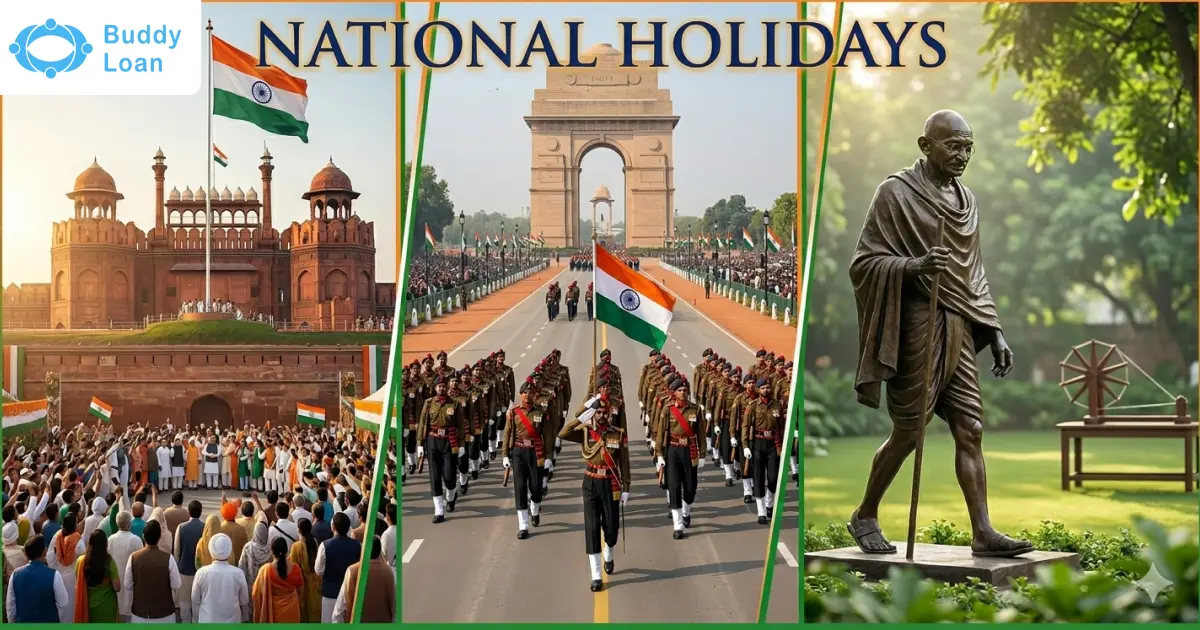
For professionals and the banking sector, understanding the holiday schedule is crucial for operational planning. Republic Day is one of the three National Holidays in India, alongside Independence Day and Gandhi Jayanti.
Bank Holiday Status
26 January, Republic Day, is a mandatory holiday under the Negotiable Instruments Act, 1881.
- Applicability: This applies to all public sector banks, private sector banks, foreign banks, cooperative banks, and regional rural banks.
- RBI Classification: It falls under the category of “Holidays Under Negotiable Instruments Act”.
- Stock Markets: The Bombay Stock Exchange (BSE) and National Stock Exchange (NSE) remain closed. There is no trading in equity, derivatives, or currency segments.
- Forex Markets: The interbank forex market is closed. No spot trading occurs for INR pairs.
Impact on Banking Services
While physical branches are closed, the finance revolution ensures that banking never truly stops.
| Service Channel | Status on Republic Day | Notes for Users |
| Physical Branches | Closed | No cash deposits, locker access, or in-person queries. |
| ATMs / CDMs | Open | Cash withdrawals and deposits function normally. |
| Internet Banking | Open | Fund transfers, statement generation, and bill payments work. |
| UPI (Unified Payments Interface) | Open | Real-time settlements continue without interruption. |
| IMPS | Open | Immediate Payment Service works 24/7. |
| NEFT / RTGS | Conditional | Since 2020, these operate 24×7, 365 days. However, settlement cycles may be batched differently on holidays. |
| Cheque Clearing | Closed | Cheques deposited on Jan 25 or Jan 26 will clear on the next working day. |
Operational Insight
For businesses, it is vital to plan high-value transactions before the holiday. Since the forex market is closed, businesses with international remittances should book rates in advance to avoid volatility upon market reopening.
Suggested Read: February Holidays
Republic Day Activities in School and Localised Conventions
The spirit of Happy Republic Day is most vibrant in educational institutions and residential colonies. These grassroots celebrations instil the values of the Constitution in the younger generation.
School Celebrations
Schools typically organise events a day prior if the 26th falls on a Sunday, or on the day itself.
- Flag Hoisting: The Principal or a senior guest hoists the tricolour.
- March Past: Students perform a march past, emulating the grand parade.
- Cultural Competitions: Debates on the Constitution, painting competitions, and essay writing.
- Sweet Distribution: The distribution of ladoos or chocolates is a non-negotiable tradition in Indian schools.
Localised Conventions (RWAs and Offices)
- Residential Welfare Associations (RWAs) and corporate offices have their own set of rituals.
- Community Gathering: Residents gather in parks. This promotes social cohesion.
- Sports Events: Friendly cricket matches or badminton tournaments are common.
- Dry Day: It is important to note that Republic Day is a ‘Dry Day’ across India. The sale of alcohol is prohibited in retail shops and bars. This is strictly enforced.
- Patriotic Songs: Loudspeakers playing ‘Vande Mataram’ and other patriotic tracks are a staple soundscape of the morning.
Conclusion
The Republic Day Holiday is a reaffirmation of our identity as a sovereign, socialist, secular, and democratic republic. From the grand display of military power on Kartavya Path to the quiet flag hoisting in a village school, the emotion remains uniform.
For the financial ecosystem, it serves as a reminder of the strong legal frameworks that allow our markets to flourish. As we approach Republic Day 2026, we celebrate not just the past but the potential of India’s future. Regardless of who you are: a banker, a student, or a soldier, 26 January belongs to you and every Indian.
Happy Republic Day.
Download the Buddy Loan App Now!
One solution to each of your financial needs at your fingertip.

Scan to download now