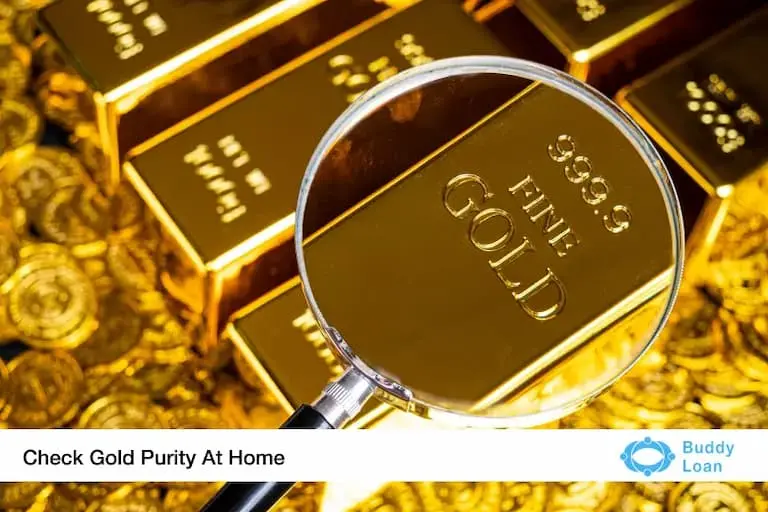
Gold has always symbolized prosperity, elegance, and value. Yet, with the increase in counterfeit products and gold-plated replicas in circulation, many are left wondering—how do you check gold purity at home? Whether you’re safeguarding a family heirloom or buying secondhand jewelry, knowing the truth behind the metal matters.
Fortunately, you don’t need to be a jeweler or own fancy lab equipment to find answers. You can check gold purity at home using easy, practical tests. This comprehensive blog will walk you through each method step-by-step, ensuring that you’re well-equipped to separate real gold from clever fakes.
Basic Tools for Testing Gold at Home
Here’s what you need to start:
- ⇒ A strong magnet (preferably neodymium)
- ⇒ A ceramic plate (unglazed)
- ⇒ White vinegar or lemon juice
- ⇒ Glass of water
- ⇒ Microfiber cloth
- ⇒ Magnifying glass or loupe
- ⇒ Optional: Gold testing acid kit
Now, let’s explore each test in detail.

1. The Magnet Test: Gold’s Reaction to Magnets
Why this works: Gold is not magnetic. If a piece is attracted to a magnet, it’s likely fake or alloyed with iron or nickel.
How to perform:
- ♦ Hold a strong magnet next to your jewelry.
- ♦ Watch for movement or magnetic pull.
Interpretation:
- ⇒ No movement? Good sign.
- ⇒ Sticks or jumps? Likely fake.
Limitations: Some base metals used in fake gold aren’t magnetic either. This test is just a start.
Suggested Read: One Gram Gold Jewellery
2. The Float Test: Use Water to Check Gold’s Density
Why this works: Gold is dense and will always sink in water.
Steps:
- ♦ Fill a clear cup with water.
- ♦ Gently drop the gold item in.
- ♦ Observe the reaction.
Real gold:
- ⇒ Sinks instantly
- ⇒ No movement or float
Fake gold:
- ⇒ May hover or float
- ⇒ Lightweight and less dense
Pro tip: Use distilled water for cleaner observation.
3. The Skin Test: Watch Your Skin’s Reaction
Why this works:
Pure gold is hypoallergenic. Impurities may cause reactions.
Steps:
- ♦ Wear the item for several hours.
- ♦ Sweat, exercise, or sleep with it on.
- ♦ Check your skin.
Results:
- ⇒ Green or black stain? Not pure.
- ⇒ No stain? Possibly real gold.
Note: Body chemistry varies. Some people react even to real gold alloys.

4. The Vinegar Test: Simple Acid Reaction
Why this works: Gold is resistant to corrosion, even from acid.
Steps:
- ♦ Place the item on a flat surface.
- ♦ Drop white vinegar directly on it.
- ♦ Wait 15 minutes.
If it changes color? It’s fake.
If it stays the same? Good news!
Safety tip: Avoid vinegar on delicate settings—it can damage pearls or stones.
Also Read: Custom Duty on Gold in India
5. The Ceramic Scratch Test
Why this works: Gold leaves a golden-yellow streak, unlike other metals.
Steps:
- ♦ Use an unglazed ceramic plate.
- ♦ Gently drag the gold across the surface.
Outcome:
- ⇒ Gold streak = real
- ⇒ Black/gray/green streak = not gold
Warning: This may scratch the jewelry. Only use on scrap or suspected fakes.
6. Nitric Acid Test (Advanced & Precise)
Why this works:
Gold is noble and resists oxidation, even with strong acid.
What you need:
- • Gold testing kit
- • Gloves and safety glasses
Steps:
- ♦ Scratch item on the test stone.
- ♦ Apply acid for the suspected karat level.
- ♦ Observe the reaction.
Result interpretation:
- ⇒ No change = real gold of that karat
- ⇒ Green fizz = base metal underneath
- ⇒ Milky/cloudy = gold plating
Use this only in a well-ventilated area!

7. Visual Inspection & Feel Test
Checklist:
- ♦ Does it feel heavy for its size?
- ♦ Is the color uniform throughout?
- ♦ Are there flaking or greenish spots near the edges?
Pure gold doesn’t:
- • Tarnish
- • Peel
- • Rust
Even 14K gold resists most environmental wear.
Suggested Read: Ways to Identify Real & Fake Gold
8. Using a Gold Testing Kit at Home
What’s included:
- ⇒ Testing stone
- ⇒ Acid for 10K, 14K, 18K, 22K
- ⇒ Instructions
Steps:
- ♦ Rub item on test stone.
- ♦ Apply each acid.
- ♦ Watch for reactions.
Accuracy: Most kits are 95% accurate when used properly.
Buy from trusted sellers and follow the manual carefully.
Common Myths About Gold Testing
| Myth | Truth |
| “Bite the gold to test it.” | Fake gold can be soft, too. Don’t ruin your teeth. |
| “All real gold is bright yellow.” | Some real gold is alloyed and appears pale or rose-colored. |
| “If it’s stamped, it’s real.” | Stamps can be faked easily. |
| “Real gold doesn’t tarnish.” | Low-karat gold can tarnish slightly. |
Conclusion
Knowing how to check gold purity at home saves you money, prevents scams, and empowers you as a buyer or owner. These DIY tests are reliable, beginner-friendly, and eye-opening. Whether you suspect a fake or want to validate a treasure, trust the science—and your instincts.
Download Personal Loan App
Get a loan instantly! Best Personal Loan App for your needs!!
Looking for an instant loan? Buddy Loan helps you get an instant loan from the best-verified lenders. Download the Buddy Loan App from the Play Store or App Store and apply for a loan now!
Download the Buddy Loan App Now! One solution to each of your financial needs at your fingertip. Scan to download now



Frequently Asked Questions
How do you test gold purity at home?
Use simple tests like the magnet test, float test in water, vinegar acid test, scratch test on ceramic, or a home gold testing kit to check for purity.
How can you tell if gold is 22K or 24K?
Look for stamps like “916” (22K) or “999” (24K), or use a gold testing acid kit to determine the exact karat.
Can a magnet detect fake gold?
Yes. Real gold is non-magnetic. If your item is attracted to a magnet, it likely contains other metals.
How do you test gold instantly?
The fastest test is the magnet test—just bring a strong magnet near the item and check for attraction.
How do I test if I have gold?
Try a combination of tests: visual inspection, magnet test, vinegar drop test, and if available, a testing kit.
What are the signs of fake gold?
Common signs include flaking, discoloration, rust, green/black stains on skin, and lightweight feel.
What is the easiest way to detect gold?
The water test is the easiest—real gold sinks immediately in water, while fakes might float or hover.
How can I test gold without a gold tester?
Use a magnet, vinegar, ceramic plate, or water—all are safe and effective home methods.
How to check gold with toothpaste?
Toothpaste is not a reliable test. It can scratch gold and doesn’t give accurate results. Avoid this method.
How to find gold at home without tools?
Look for hallmark stamps (like 916 or 999), check the weight and color, and try a basic magnet or water test.
What is the fastest way to test gold?
The magnet test or water float test—both take under 10 seconds and provide quick clues.
How to tell if gold is real with water?
Drop the item in water. Real gold sinks quickly and doesn’t tarnish or float.
How is gold tested in four ways?
The top four methods: magnet test, float test, acid test, and ceramic scratch test.