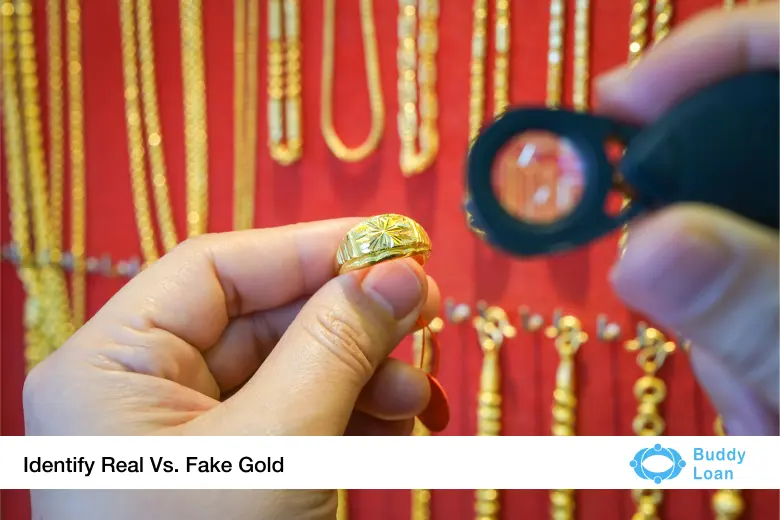
Gold has been a symbol of wealth, beauty, and status for centuries. However, with the increase in counterfeit products in the market, knowing how to distinguish between real and fake gold is crucial. This detailed guide will equip you with the knowledge and techniques necessary to identify authentic gold, ensuring that your investments and purchases are safe.
Understanding Gold Purity
Gold purity is measured in karats (K), with 24K being pure gold. Here’s a breakdown of the different karat values:
- ⇒ 24K: 99.9% pure gold, the highest quality.
- ⇒ 22K: 91.6% pure gold, commonly used in high-end jewelry.
- ⇒ 18K: 75% pure gold, offers a good balance of durability and value.
- ⇒ 14K: 58.3% pure gold, popular in the U.S. for affordable jewelry.
- ⇒ 10K: 41.7% pure gold, the minimum karat value to be legally considered gold in the U.S.
Understanding these values is essential when assessing the quality and value of gold items.
Suggested Read: One Gram Gold Jewellery

Identifying Real Gold
Let’s go through some ways to identify real gold and understand the difference between real & fake gold below:
1. Check for Hallmarks
Real gold jewelry typically features a hallmark that indicates its purity. Common markings include:
- ⇒ 24K, 18K, 14K, or 10K
- ⇒ Manufacturer’s mark or logo
If the item lacks these markings or has unclear stamps, it may not be genuine. Always look for hallmarks in less visible areas, such as the inside of rings or clasps on necklaces.
2. Magnet Test
Gold is a non-magnetic metal. To perform this test:
- ⇒ Use a strong magnet and bring it close to the gold item.
- ⇒ If the item is attracted to the magnet, it is likely not real gold.
However, keep in mind that some counterfeit items may use non-magnetic metals, so this test should be combined with others for accuracy.
Also Read: Ways to Check Purity of Gold at Home
3. Acid Test
The acid test is a reliable method for testing gold purity. Here’s how to do it:
- ⇒ Purchase a gold testing kit that includes nitric acid.
- ⇒ Scratch the gold item on a testing stone to leave a mark.
- ⇒ Apply a drop of nitric acid to the mark.
Results:
- ⇒ If the mark disappears, it’s not real gold.
- ⇒ If it remains, you can further test with different acid concentrations to determine the karat.
Caution: This test can damage the item, so use it sparingly and only on less valuable pieces.
4. Water Test
Gold is non-porous and does not corrode. To perform this test:
- ⇒ Fill a glass with water.
- ⇒ Drop the gold item into the water.
Results:
- ⇒ If it sinks, it is likely real gold.
- ⇒ If it floats, it may not be genuine.
Suggested Read: Will Gold Rate Decrease

Identifying Fake Gold
Fake gold can be made from various materials, including gold-plated metals or other alloys. Here are some ways to spot them:
1. Visual Inspection
Examine the color and shine of the gold item. Real gold has a distinct luster that is warm and rich. Fake gold often appears dull or has an artificial yellow tint. Look for:
- ⇒ Color inconsistencies
- ⇒ Signs of discoloration or tarnishing
2. Check for Wear
Inspect the item for signs of wear. If the gold item shows scratches or wear that reveals a different metal underneath, it is likely not solid gold. Real gold can scratch, but it will not reveal a different color underneath because it is solid throughout.
3. Price Check
If the price seems too good to be true, it probably is. Genuine gold items usually come with a price that reflects their purity and craftsmanship. Be cautious of deals that seem unusually low for the item’s quality.
4. Professional Appraisal
When in doubt, consider taking your gold item to a reputable jeweler for appraisal. They can provide a definitive answer regarding its authenticity. Professional appraisers have the tools and expertise to accurately assess the item.
Also Read: Custom Duty on Gold
Additional Tips for Buying Gold
- ⇒ Buy from Reputable Dealers: Always purchase gold from established and trustworthy jewelers or dealers.
- ⇒ Ask for Certificates: When buying significant pieces, request a certificate of authenticity that verifies the gold’s purity.
Research: Familiarize yourself with common gold prices and trends to better understand the market.
Conclusion
Identifying real and fake gold is essential for protecting your investments and ensuring you make informed purchases. By employing the techniques outlined in this guide, you can confidently assess the authenticity of gold jewelry or investments. Always remember to stay vigilant and informed, as knowledge is your best defense against counterfeit products.

Download the Buddy Loan App Now!
One solution to each of your financial needs at your fingertip.

Scan to download now


Frequently Asked Questions
1. How to Identify Fake Gold?
- ⇒ Visual Inspection: Check for discoloration, dullness, or inconsistencies in color.
- ⇒ Magnet Test: Real gold is non-magnetic. If it sticks to a magnet, it’s likely fake.
- ⇒ Hallmarks: Look for purity markings (e.g., 10K, 14K, 18K, 22K, 24K).
- ⇒ Acid Test: Apply nitric acid to see if it reacts.
2. Does Fake Gold Stick to a Magnet?
Yes, fake gold can stick to a magnet if it contains ferromagnetic materials. Real gold is not magnetic.
3. How to Tell if Gold is Real or Fake?
Use the magnet test, check for hallmarks, perform an acid test, and examine the item’s weight and density.
4. Is 22K Gold Real or Fake?
22K gold is real gold, containing 91.6% pure gold. It is commonly used in jewelry.
5. How to Check Pure Gold?
Use an acid test, density test, or consult a professional jeweler for appraisal.
6. Does Fake Gold Shine?
Fake gold may shine, but it often lacks the warm, rich luster of real gold and may appear overly shiny or artificial.
7. What is KDM Gold?
KDM gold refers to gold that has been alloyed with cadmium. The term is often used in India and indicates a specific gold quality, typically 22K.
8. How Do Jewelers Test Gold?
Jewelers use various methods, including acid tests, electronic testers, and professional scales to assess the purity and authenticity of gold.
9. What Are Signs of Fake Gold?
Signs include discoloration, lack of hallmarks, magnetism, and a lighter weight compared to genuine gold.
10. Does Real Gold Turn Dark?
Real gold does not tarnish or turn dark. However, gold alloys (like 14K or 18K) may tarnish over time due to other metals in the mix.
11. How Can You Test Gold at Home?
Use the magnet test, perform an acid test, check for hallmarks, or do a water displacement test to assess density.