Buying a car is one of the biggest financial decisions for most individuals. While the excitement of driving your dream vehicle is unmatched, the process of funding it often raises a key question: Should you take a car loan vs a personal loan?
Both options can help you purchase a car, but they differ significantly in interest rates, eligibility, collateral, flexibility, and overall cost. Choosing the right one depends on your income, credit score, and personal preferences. Let’s explore both options in detail, compare them side by side, and help you make an informed decision.
What is a Personal Loan?
A personal loan is an unsecured loan. Unlike a car loan, you don’t need to pledge your vehicle or any other asset as collateral. The lender approves your application primarily based on your credit score, income level, employment status, and repayment capacity.
The best part? You’re free to use the money for any purpose, such as a car purchase, insurance, accessories, registration, or even unrelated expenses like travel or education.
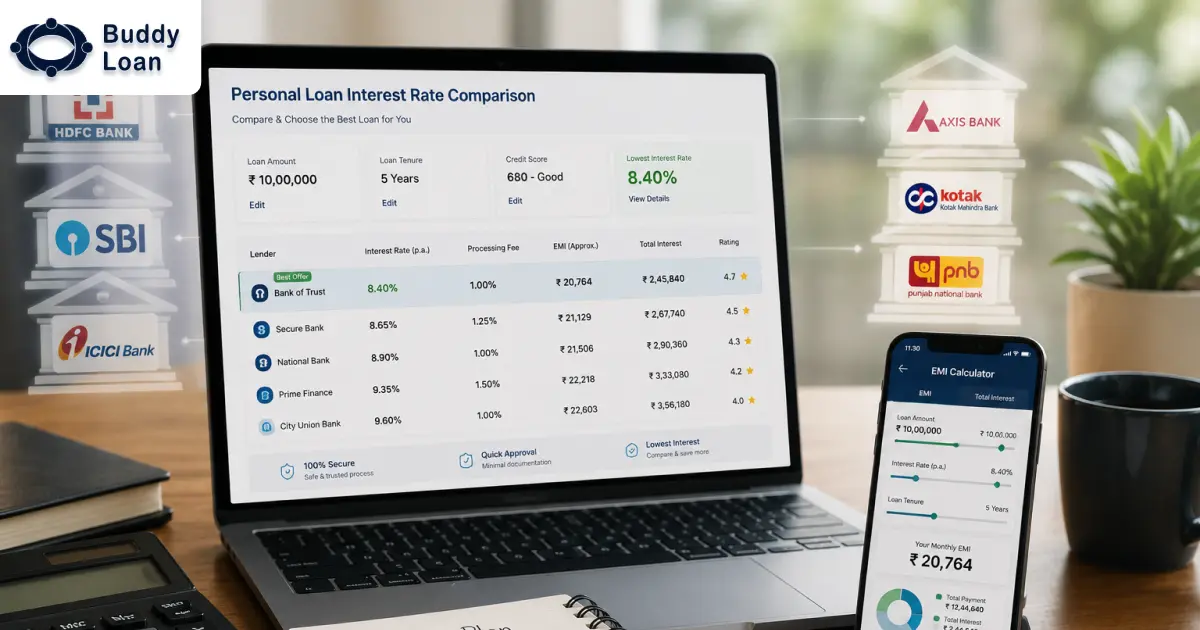
To make smart choices, it’s a good idea to compare your first personal loan offer effectively and check different lenders before finalizing.
Key features of personal loans:
- No collateral required
- Quick approval and disbursal
- Shorter tenures (1 to 5 years)
- Higher interest rates compared to secured loans
- Flexible usage of funds
And if you’re looking for smaller amounts, you can get a personal loan of ₹50,000 on your Aadhaar Card with Buddy Loan, fast and with minimal documentation.
What is a Car Loan?
A car loan is a secured loan you can use to buy a new or used car. Since the vehicle serves as collateral, it stays pledged to the bank or NBFC until you finish repaying the loan.
This gives lenders security, which is why interest rates on car loans are usually lower than those on personal loans.
Key features of car loans:
- Restricted usage (only for vehicle purchase)
- Lower interest rates compared to personal loans
- Longer repayment tenure (up to 7 years)
- The car remains under hypothecation until repayment
Personal Loan vs Car Loan: Quick Comparison
The table below shows a comparison of personal loans and car loans.
| Factor | Personal Loan | Car Loan |
|---|---|---|
| Type of Loan | Unsecured (no collateral) | Secured (car is collateral) |
| Usage | Flexible – can be used for any purpose | Only for purchasing a vehicle |
| Interest Rate | Higher (10% – 24%) | Lower (8% – 14%) |
| Loan Tenure | 1 – 5 years | 1 – 7 years |
| Loan Amount | Based on income & credit score | Based on the car’s value (up to 90–100% of cost) |
| Ownership | The car is fully yours from day one | The car is hypothecated until repayment |
| Approval Time | Quick, minimal paperwork | Requires more checks with the car details & documents |
| Tax Benefits | None | Possible for business use (loan interest deductible) |
Real-Life Example: Ravi’s DilemmaConsider Ravi, a salaried professional who wants to buy a hatchback priced at ₹7 lakh (on-road).
For Ravi, the car loan saves money, but the personal loan offers flexibility, especially if he needs to fund car insurance, accessories, or other personal expenses alongside the purchase. |

Cost Comparison with EMI Calculations
To put things into perspective, here’s a direct comparison of costs for a ₹7 lakh loan over 5 years under both options:
| Loan Type | Interest Rate | Monthly EMI (approx.) | Total Interest Paid | Total Repayment |
|---|---|---|---|---|
| Car Loan | 9% | ₹11,600 | ₹2.96 lakh | ₹9.96 lakh |
| Personal Loan | 13% | ₹15,900 | ₹4.46 lakh | ₹11.46 lakh |
Insight: Choosing a car loan over a personal loan could save you around ₹1.5 lakh over 5 years for the same loan amount.
Want to calculate your own EMI? Try the personal loan EMI calculator to see how different interest rates and tenures impact your monthly payments.
If you’re applying for the first time, you can also learn the easy steps to plan your first personal loan EMIs.
Hidden Costs and Charges personal vs Car Loan
Many borrowers only look at interest rates, but loans come with additional charges that impact overall cost.
- Processing Fees: 1-3% of the loan amount, deducted upfront
- Prepayment or Foreclosure Charges: Penalties if you repay early (varies by lender)
- Late Payment Fees: Penalties for missed EMIs
- Insurance and RTO Fees: Often bundled into car loans, but need to be separately managed with personal loans
Always check the effective cost of borrowing before finalizing a loan.
Choosing the Right Loan for You
Here’s a simple way to decide which loan suits your profile:
| Borrower Profile | Best Loan Type | Why? |
|---|---|---|
| Salaried professional buying a new car | Car Loan | Lower interest rates, higher financing |
| Buyer of a used car from an individual | Personal Loan | Car loans may not be available |
| Business owner | Car Loan | Interest may qualify for tax deductions |
| Buyer needing funds for car + insurance + accessories | Personal Loan | Flexibility of usage |
| Someone with a weak credit score | Car Loan | Easier approval due to collateral |
Tip for Easy Access to Loans
If you’re considering a personal loan, the Buddy Loan app is a great place to start. Buddy Loan is a digital fintech marketplace that connects you with a network of verified lenders to help you find the right personal loan based on your financial profile.
Before applying, check your credit score for FREE with Buddy Score. A healthy score increases your chances of approval and helps you negotiate better interest rates.
Conclusion
Both personal loans and car loans can help you finance a car, but the right choice depends on your priorities. If you want lower EMIs, longer repayment periods, and cost savings, a car loan makes more sense. If you prefer flexibility and no restrictions on how to use the money, a personal loan could be better. Always compare not just interest rates, but also hidden charges, ownership terms, and total repayment costs before deciding.
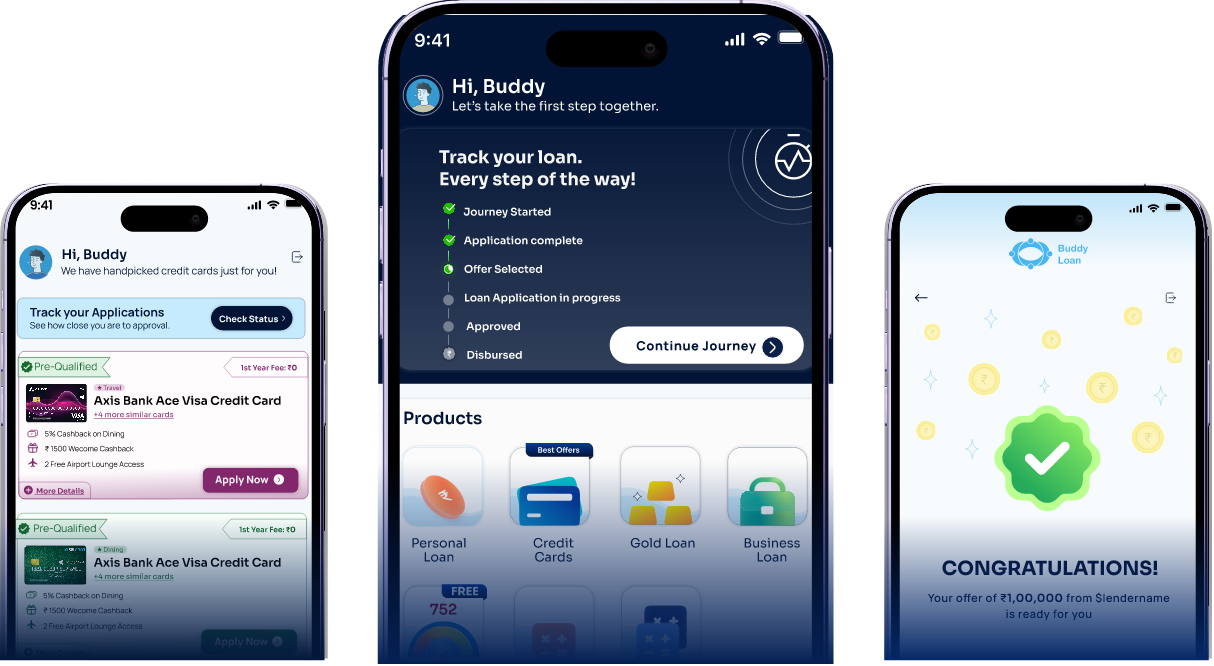
Download the Buddy Loan App Now!
One solution to each of your financial needs at your fingertip.

Scan to download now