The Goods and Services Tax (GST), launched in July 2017, created a single tax system across India. Its goal was to simplify compliance, remove cascading taxes, and make goods/services more affordable.
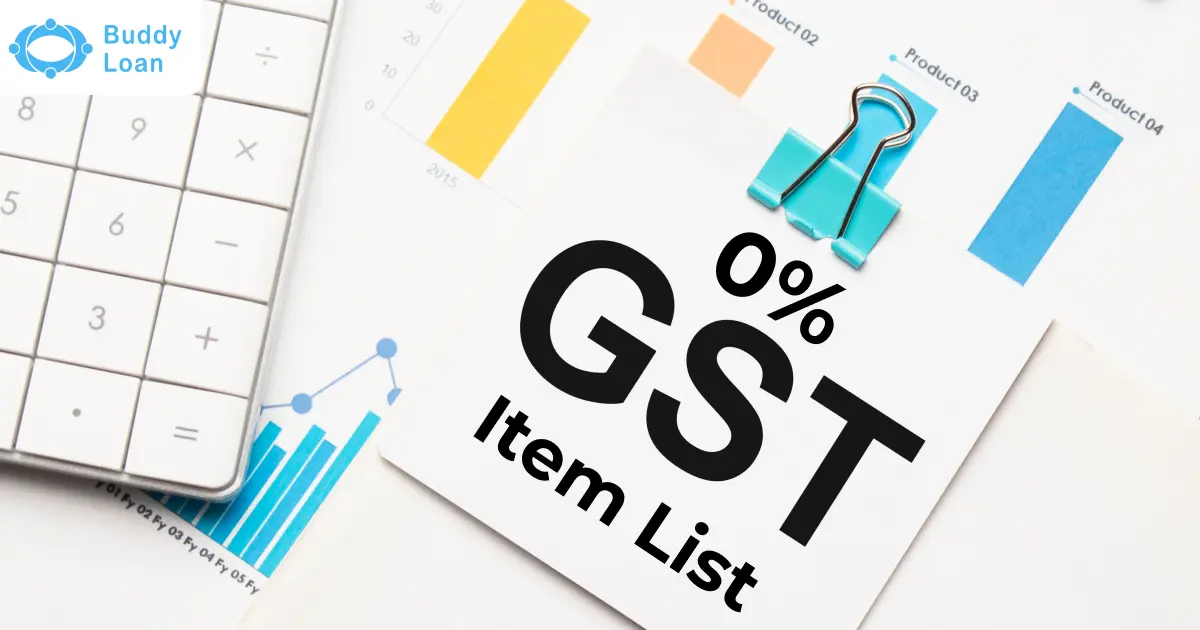
To protect essentials like food, education, and healthcare, the government applies 0% GST on certain goods and services. This ensures these items remain affordable while also reducing the administrative burden for businesses.
The September 2025 GST 2.0 reforms were a turning point:
- Slabs were rationalized into 0%, 5%, 18%, and 40%.
- Several essentials were moved to the 0% GST list.
- Relief was extended to households, students, and patients.
This blog breaks down the complete list of 0% GST items in India, including goods, services, and recent updates.
Understanding 0% GST, Nil-Rated & Exempt
Before diving into the lists, it’s crucial to understand the difference between nil-rated, exempt, and non-GST items.
| Term | Meaning | ITC (Input Tax Credit) | Examples |
| Nil-Rated (0% GST) | Taxable under GST but charged at 0% | Yes, ITC may be claimed | Paneer, breads, stationery, exports |
| Exempt Supplies | Excluded from GST entirely | No ITC | Fresh fruits, education services |
| Non-GST Items | Outside the GST law altogether | Not applicable | Petrol, alcohol for human consumption, and electricity |
Key takeaway: Nil-rated = taxable at zero rate, Exempt = outside GST completely.
List of 0% GST Goods in India After GST Reforms
The list of goods at 0% GST (nil-rated or exempt) focuses on food staples, agricultural products, educational materials, medicines, and cultural essentials.
| Category | Goods at 0% GST | Previous Rate | Notes |
| Food & Dairy Staples | Paneer (pre-packaged & labelled), UHT milk, Indian breads (roti, chapati, paratha, pizza bread, khakhra, parotta) | 5% | Shifted to 0% in Sept 2025 |
| Agriculture & Natural Products | Fresh milk, eggs, curd, lassi, honey, cheese, live animals (cows, goats, sheep, poultry), fresh fruits & vegetables (tomatoes, onions, bananas, grapes), plants, roots, flowers | Exempt earlier | Remain at 0% |
| Grains & Milling Products | Wheat, rice, oats, barley, flour, atta, besan, maida (when unbranded/unpacked) | Exempt | Continue at 0% |
| Processed Foods & Bakery | Bread, puffed rice, pastries, pizza base | 5% | Revised to 0% |
| Beverages & Sweeteners | Tea leaves, coffee beans, turmeric, ginger, black pepper, tender coconut water, jaggery, sugar | Exempt | Continue at 0% |
| Stationery & Education | Notebooks, pencils, erasers, sharpeners, crayons, globes, maps, charts, printed books & newspapers | 5% / 12% | Revised to 0% |
| Healthcare & Medicines | Human blood, contraceptives, vaccines, 33 life-saving drugs (including cancer drug Keytruda), biotech drugs, and medical oxygen | 5% / 12% | Revised to 0% |
| Miscellaneous Essentials | Electrical energy, organic manure, compost, plastic/glass bangles, judicial stamp papers, rupee notes, envelopes, earthen pots, raw silk, khadi, Indo-Bangladesh haat goods | Various | Now 0% |
Suggested Read: New GST Rates on Daily Essentials
List of 0% GST Services
Along with goods, several public welfare services remain exempt from GST.
| Sector | Services at 0% GST | Conditions |
| Education | Admissions, examinations, school transport, mid-day meal catering, IIM courses (except executive programs) | Applies to recognized institutions |
| Healthcare | Hospital, clinic, veterinary, ambulance, charitable services, hospital rooms ≤ ₹5,000/day (non-ICU), gene therapy | ICU charges taxable |
| Transport | Road transport (except couriers), flights in NE states & Bagdogra, inland waterways, essential goods transport (milk, grains, newspapers, salt) | Couriers excluded |
| Government & Legal | Legal aid to non-business entities, arbitral tribunal services, RBI/diplomatic services, Indian Railways (platform tickets, cloakrooms) | Applies to non-commercial use |
| Utilities & Rentals | Electricity transmission/distribution, public toilets, residential rentals, hostel stays ≤ ₹20,000/month for ≥90 days | For residential purposes only |

Key Revisions in GST 2.0 (September 2025)
The reforms brought big relief to households, patients, and students by expanding the 0% GST list.
| Item/Service | Old GST Rate | New GST Rate | Impact |
| Individual Life & Health Insurance | 18% | 0% | Major relief for policyholders |
| Cancer drugs (e.g., Keytruda) | 12% / 5% | 0% | Cheaper life-saving medicines |
| Stationery (pencils, notebooks, crayons) | 5% / 12% | 0% | Reduced education costs |
| Paneer (pre-packaged) | 5% | 0% | Staple food is made tax-free |
| NSDC-approved skill training | 18% | 0% | Boost to skill development |
| Indo-Bangladesh border haat goods | N/A | 0% | Encourages cross-border trade |
Benefits of 0% GST
The introduction of 0% GST on key goods and services brings advantages to multiple stakeholders across the economy. Here’s how it helps:
- For Consumers: Retail prices of essentials like food, medicines, stationery, and insurance premiums become more affordable.
- For Businesses: Compliance is simplified, and Input Tax Credit (ITC) remains claimable on nil-rated items in certain cases.
- For the Economy: Wider access to education, healthcare, and skill development is encouraged, supporting long-term growth and inclusivity.
Also Read: New GST Rate List 2025
How to Verify if an Item is 0% GST
Here is how you can verify if an item has 0% GST:
- Check product labels: Many items mention “0% GST” or “Nil”.
- Refer to official CBIC notifications and GST Council updates.
- Ask retailers for a GST invoice showing tax details.
- Stay updated with news from GST Council meetings.
Conclusion
The list of 0% GST items in India (2025) reflects the government’s focus on affordability and social welfare. Essentials like paneer, milk, stationery, medicines, and even insurance policies are now tax-free.
For consumers, this means lower expenses on daily needs. For businesses, the challenge is to distinguish between nil-rated (with ITC) and exempt (no ITC) supplies for compliance.
As the GST Council reviews tax slabs frequently, staying informed through official updates ensures that businesses and households benefit fully from GST reforms.
Download the Buddy Loan App Now!
One solution to each of your financial needs at your fingertip.

Scan to download now