
On August 19, 2025, the Indian rupee became stronger, gaining 19 paise to reach ₹87.20 against the U.S. dollar. At first glance, that may not seem like much, but in the world of currency, this kind of movement signals something bigger.
Throughout August, the rupee had been struggling. It touched ₹87.74 per dollar just a few days earlier and even closed at ₹87.57 on August 14. This sudden turnaround is a welcome change, especially considering the currency had been under pressure for most of the year.
But what caused this improvement? It wasn’t just random market activity. A mix of strong government policies, investor confidence, and favorable global trends have come together to lift the rupee. And this movement matters; it affects everything from what we pay for petrol and gold to how investors feel about India.
In this blog, we’ll break down what’s driving the rupee’s strength, what it means for you, and whether this trend might continue.
| Did You Know?
When you hear “the rupee rose by 19 paise to ₹87.20,” it means the rupee got stronger, not weaker. Here’s why:
So even though the number went down, the rupee’s value went up. Simple rule: |
What’s Fueling the Rupee’s Strength?
India’s currency didn’t just randomly get stronger. It’s rising because of several key factors , most of them driven by positive moves within the country itself. Let’s look at the biggest reasons:
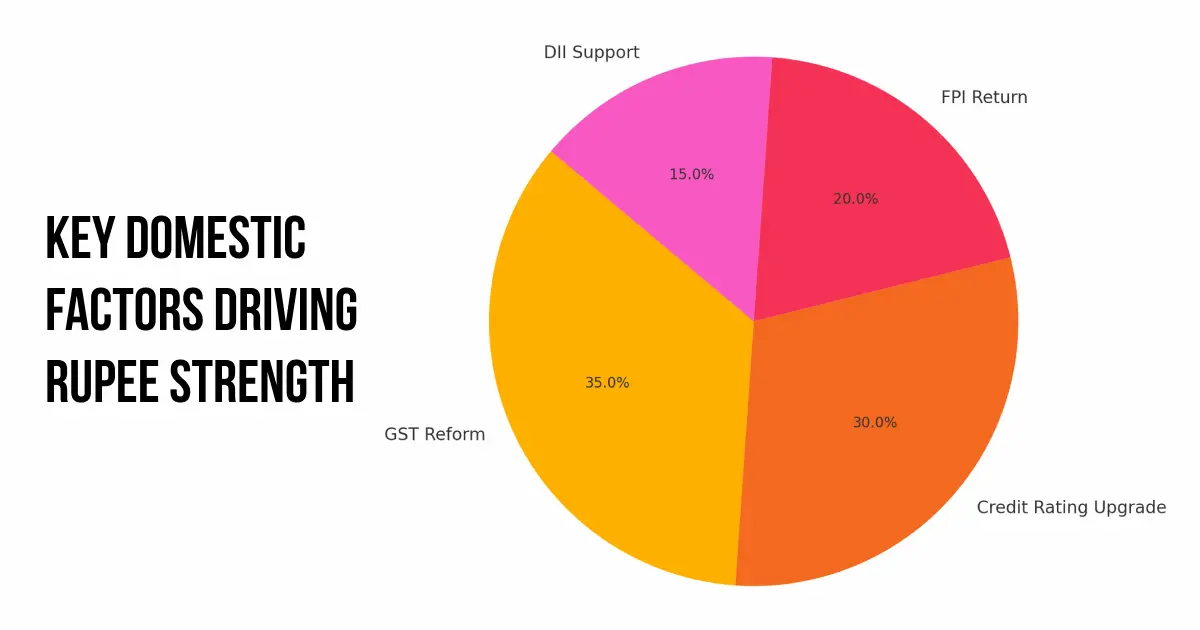
1. Big Tax Reform: GST Gets Simpler
The government recently announced a major change to the Goods and Services Tax (GST) system. Instead of many confusing tax slabs, most goods will now fall under just two main categories: 5% and 18%.
This change helps in two big ways:
- It reduces the cost of everyday items, which means people can buy more.
- It gives a boost to businesses, especially those selling consumer goods.
When people buy more, companies earn more , and this creates a chain reaction that helps the entire economy, including the rupee.
2. India’s Credit Rating Goes Up
S&P Global Ratings recently gave India a credit rating upgrade , the first one in 18 years.
Why does this matter?
- A higher credit rating means more trust in India’s economy.
- It tells the world, “India is a safe and strong place to invest.”
This makes foreign investors more confident and more likely to put money into Indian markets. More investment means more demand for rupees, which helps strengthen the currency.
3. Foreign Investors Are Coming Back
Foreign Portfolio Investors (FPIs), who had been selling Indian stocks for months, suddenly changed their minds.
Why?
- The GST reform and credit rating upgrade made India look like a better bet.
- Domestic investors (DIIs) were already investing steadily, giving markets strong support.
So when FPIs started buying Indian stocks again, they needed to convert their dollars into rupees, increasing demand for the rupee and helping it rise.

Global Factors Helping India’s Currency
While India’s internal reforms have played a big role, global events have also helped the rupee strengthen. Let’s look at the main external factors:
1. Crude Oil Prices Are Dropping
India imports a lot of oil, so when oil prices go down, it’s great news for the Indian economy.
- On August 19, Brent crude oil was priced at $66.31 per barrel, down from $69.70 at the start of the month.
- Lower oil prices mean India pays less for imports, which helps reduce the current account deficit (how much more we import than export).
This puts less pressure on the rupee, helping it stay strong or even appreciate.
2. The U.S. Dollar Is Losing Strength
The U.S. dollar index, which tracks the dollar’s value against other major currencies, has been falling recently.
- A weaker dollar generally means that other currencies (like the rupee) get stronger in comparison.
- Even though the dollar showed a small recovery on August 19, its overall trend has been weak.
This global trend gives currencies like the rupee room to rise , especially when backed by strong domestic factors like in India.
3. Global Tensions Are Easing
There’s also been some progress in calming global tensions , like recent talks between the U.S. and Russia.
- When geopolitical risks go down, investors feel more confident taking risks in emerging markets like India.
- This kind of “risk-on” mood helps bring more capital into the country, which again supports the rupee.
So, it’s not just about what India is doing; what’s happening around the world also matters, and right now, things are working in India’s favour.

The RBI’s Role in All This
Behind the scenes, the Reserve Bank of India (RBI) plays a major role in keeping the rupee stable.
You might wonder, does the RBI directly control the rupee’s value?
Not exactly. But it steps in when things get too bumpy.
1. RBI Doesn’t Set the Price, But It Keeps Things Calm
The RBI’s job is not to fix the rupee at a specific level but to make sure there’s no wild up-and-down movement. This helps:
- Protect importers and exporters from sudden shocks
- Keep markets stable and predictable
On August 18, traders suspected that the RBI stepped in quietly to support the rupee as it was gaining. Such actions help prevent too much volatility.
2. India Has Strong Forex Reserves
One of the biggest strengths the RBI has is its foreign exchange reserves, a kind of emergency fund.
- As of August 8, India’s reserves hit $693.62 billion.
- This jump came from both actual inflows and revaluation gains (like gold and currency value changes).
Having such a large reserve gives the RBI power to act when needed, buying or selling dollars to calm down the currency market.
So even though the rupee is rising due to reforms and global trends, the RBI ensures that the ride is smooth, not shaky. That builds trust among investors and the public.
What This Means for You and India
A stronger rupee might sound like a technical win, but it actually affects real people, businesses and markets in several ways. Here’s how:
1. Everyday Prices May Go Down
When the rupee gets stronger, imported goods become cheaper. That means:
- Electronics like smartphones, laptops and TVs may see price cuts
- Fuel costs (like petrol and diesel) might stabilize or even dip
- Businesses can import machinery and raw materials at lower costs, which can reduce the price of finished goods
This can be a relief for consumers already feeling the pinch of inflation.
2. Stock Markets Get a Boost
The recent rise in the rupee happened alongside a surge in stock markets:
- The Sensex rose 203 points and the Nifty gained over 53 points on August 19
- Sectors like auto, finance and housing led the rally
Why this matters:
- Foreign investors often prefer countries with a strong currency; it gives them better returns
- More investment leads to more growth, which in turn creates jobs and boosts the economy
3. What About Gold?
Normally, a stronger rupee means cheaper gold, since gold is priced in U.S. dollars.
But in India, the story is a bit different:
- Despite the stronger rupee, gold prices are still high (over ₹1 lakh per 10 grams on the MCX)
- This is due to strong domestic demand and ongoing global uncertainties
So if you’re hoping for a big drop in gold prices, it may not happen right away , but the rupee’s strength could slow down further price increases.
Risks to Watch Out For
While the rupee’s recent rise is encouraging, it’s important to know that things could still change. Here are some of the risks that could impact the rupee in the near future:
1. U.S.-India Trade Tensions
Recently, the U.S. imposed new tariffs on some Indian goods, which could strain trade relations.
- If tensions escalate, it might hurt India’s exports
- A dip in exports can reduce foreign currency inflows, affecting the rupee’s strength
How this plays out will depend on upcoming trade talks and negotiations.
2. Global Rate Decisions: All Eyes on the U.S. Fed
Investors are waiting to hear what U.S. Federal Reserve Chair Jerome Powell says at the Jackson Hole Symposium on August 22.
- If he hints at interest rate hikes or delays in cuts, the U.S. dollar could get stronger
- A stronger dollar typically leads to a weaker rupee
So, the global interest rate environment will be a key factor to watch.
3. Sudden Global Shocks
Any unexpected global event, like
- Geopolitical conflicts
- Natural disasters
- Financial crises can quickly push investors toward “safe haven” assets like the U.S. dollar and gold. In such cases, the rupee could come under pressure again.
Final Thoughts
The 19-paise rise in the rupee may look small, but it signals something much bigger. For the first time in a while, the rupee is strengthening due to real economic progress, including GST reforms, a credit rating upgrade, renewed foreign investor confidence and a steadier global environment.
The RBI’s careful management of reserves has also boosted market trust. While risks like trade tensions and global uncertainty remain, the rupee appears to be entering a more stable and confident phase, not just bouncing back but standing tall on solid ground.

Download the Buddy Loan App Now!
One solution to each of your financial needs at your fingertip.

Scan to download now