
Current Situation: The Connection Between the Continents Has Broken Up
Remember, the temporary shutdown of production due to the coronavirus at the pandemic’s beginning still impacts the global economy. In the first half of 2020, China’s demand for raw materials and goods declined considerably. It led to less port congestion. However, in the third quarter of 2021, lockdowns ended or softened significantly. The demand for goods and services began to grow again. But it is not so easy to restore the operation of sea lines. Before covid-19, cargo flows from China to Europe and the United States were high, but almost no containers returned to China (due to the introduction of lockdowns).
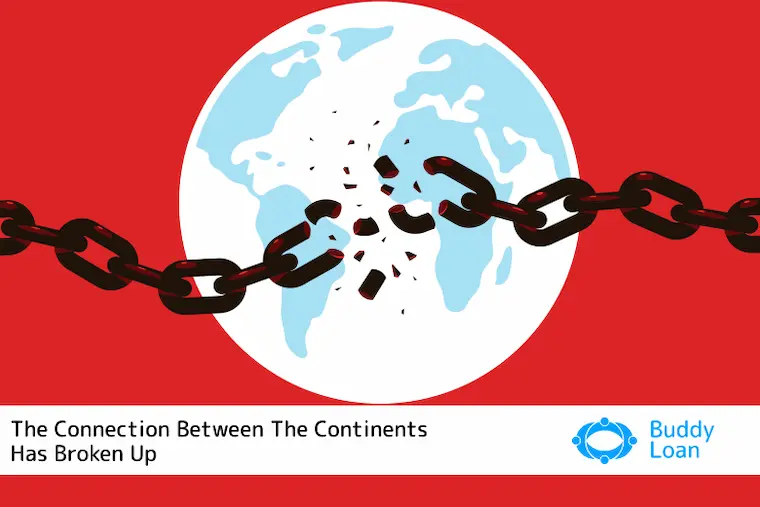
So, the global supply chain is disturbed a lot. Previously, China purchased goods from the United States in smaller volumes. Now, purchases have declined significantly due to the trade war between the US and China. Some leaders in the USA talked about decoupling the economy (from China). This has created a great disturbance in the global supply chain.
Worldwide Retail and Wholesale Inflation:
| Country | Inflation Rate |
| The USA | 2% |
| The UK | 4% |
| European Union | 5.1% |
| Russia | 4.83% |
| China | 1.82% |
| India | 4.88% |
| Brazil | 5.03% |
| South Africa | 4.6% |
| Japan | 0.54% |
| Singapore | 2.0%-3.0% |
| Malaysia | 2% |
| Pakistan | 8.5% |
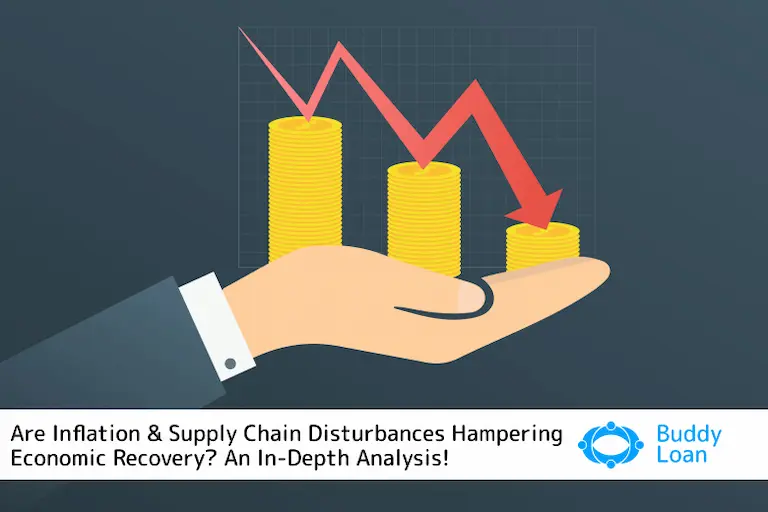
It’s a question of million-dollar importance- the global economy is recovering, but everything is getting more expensive. But why? Remember, the rapid introduction of the coronavirus vaccine did not save the global economy from the imbalances caused by lockdowns and restrictive measures. The recovery from the worst crisis in a century is uneven, forcing companies worldwide to panic and hysterically restock. Rapidly increasing demand for goods and services and emerging shortages drive prices to peak levels for everything from food to semiconductors and metals. Economists argue that the prospects for a return to the usual economic track are not yet visible.
Also Read: Latest Fintech Trends: What To Expect In 2022? Expert Predictions!
Now, it is more expensive to carry cargo worldwide: shipping containers between America and Asia across the Pacific Ocean have tripled in price during the pandemic, and prices on transatlantic routes have almost doubled. Furthermore, Europe lags behind Asia, and America when it comes to returning to the previous production and consumption rates. Due to the global trade crisis caused by Covid-19, many containers were not in the right place, ships were idle in ports for several months and not unloaded as quickly as at regular times.
In addition, the shortage of containers is compounded by the consequences of the accident in the Suez Canal, which was blocked for almost a week by the container ship Ever Given. As a result, thousands of its containers were not delivered on time to their destinations, and hundreds of other cargo ships were caught in traffic jams on both sides of this channel — the most critical waterway of world trade. The Suez Canal accounts for 10-12 percent of the world’s maritime cargo turnover.

Expensive Food
Several factors are responsible for a sharp increase in food prices, including the weather. If you analyze carefully, food prices have been rising for the longest time. The Food and Agriculture Organisation of the United Nations (FAO) estimated that food prices had reached their highest level since 2014. The prices of sugar, butter, meat, dairy products, and cereals have increased a lot. World wheat prices are more than 17 percent higher than in April 2020. Following grain, meat prices rose for the seventh month in a row — by 1.7 percent in April and 5.1 percent in annual terms.
Sugar prices rose by 60 percent over the year: this increase was explained by high demand against the background of a possible reduction in supply in the new season. Brazil, a major sugar exporter, is making slow progress in harvesting. In addition, there are losses from frost in France. Prices of corn, beans, and other crops have increased even against the backdrop of a boom in vegetable fuel. With the development of programs to combat climate change, energy companies increase the power obtained from vegetable and animal fats processing. Moreover, the demand for renewable energy worldwide increases so that products can become even more expensive.
Shortage of Labour
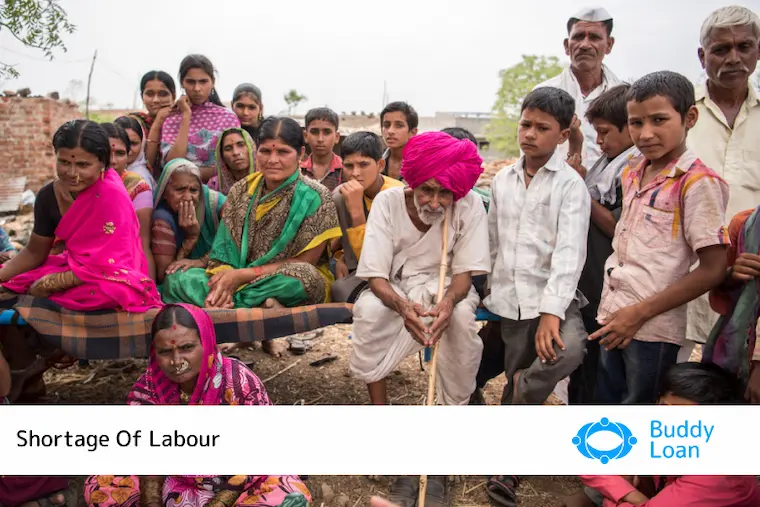
Another factor for rising food prices is a labour shortage. Because of this, the cost of palm oil for the year jumped by 120 percent and reached record levels. Now a ton is worth more than $ 1,090 (₹81774.80). Malaysia and Indonesia are the leading palm oil suppliers, accounting for approximately 84 percent of the global market.
The coronavirus pandemic has caused a shortage of workers in these countries and reduced production. At the same time, the leading importers, the United States and China, on the contrary, are increasing their consumption. The rise in the price of raw materials will inevitably affect the prices of all products used, from chocolate to lipstick.
Also Read: 6 Financial Habits To Better Manage Business Growth
Sky-high Inflation In India
Against the background of the COVID-19 outbreak in India, Indian tea will also rise in price. As a result, the country’s authorities opened vaccination centers specifically for tea plantation workers. In addition, the new crop was severely affected by the drought, which involved the central tea regions — the state of Assam and neighboring West Bengal. As a result, by the beginning of the season, 13 million kilograms of tea were produced less (47 million kilograms) than in previous seasons.
-
The Shortage of Semiconductors

Currently, there is a shortage of semiconductors globally. It started in 2021 when the demand for equipment grew simultaneously in the context of a pandemic and closing production facilities. The chips are used for computer equipment. In 2021, many countries purchased semiconductors in great numbers. This crisis is also related to the fact that chips are needed for increasing number of devices — from the Internet of Things gadgets to cars.
-
Uncontrolled Growth
The uneven economic recovery has led to an unchecked increase in inflation worldwide. Since the early 1990s, the world economy has experienced only three similar spikes in food prices. The last time this happened was in 2010-2011 and was accompanied by a series of uprisings and protests in the Middle East, dubbed the “Arab Spring.”
The rapid acceleration of inflation in food markets promises a wave of social upheaval to the world, especially in weak economies, Deutsche Bank warned. The most significant inflation risk is observed in the United States due to its rapid recovery.
Industries Suffered Losses Due to Covid-19
- Foreign trade,
- Transportation services (Aeroplanes, cars),
- Tourism, hotels, restaurants,
- Offline services & entertainment centres (hairdressers, fitness, sports, theatre, cinema, etc.).
Industries That Profited From Coronavirus Pandemic
- Local E-commerce, especially groceries and ready-made food,
- Online entertainment centres,
- Medical products,
- Remote medicine,
- Production and sale of essential products.
Also Read: Importance of Financial Literacy During Covid-19 Pandemic
New Ways to Reboot And Recover From The Covid-19 Pandemic
The crisis of the COVID-19 pandemic and the resulting political, economic, and social upheavals have exposed the shortcomings of the current financial system. As a result, the elites of countries worldwide find themselves at a historic crossroads that will determine the process of economic recovery. They have a task to return the economy to a sustainable growth trajectory.
However, as the world economy enters a period of recovery and uncertainty about the spread of the virus continues, economic policy options are becoming more diverse. There are three critical vectors for future economic development:
- Implementing economic policies to reduce inequality and improve social mobility,
- Identifying new sources of economic growth, and,
- Setting new targets for financial performance.
Rethinking Economic Policies to Reduce Inequality And Improve Social Mobility
Social inequality has increased over the past few years, partly because technological progress has divided highly skilled and low-skilled workers. In addition, the widespread adoption of digital technologies and globalization also increases inequality between poor and rich countries. In such a situation, the pandemic provides a unique opportunity for long-term systemic changes to stop the increase in social inequality and focus on measures designed to improve social mobility. Equally important will be raising social protection to ensure guarantees against future shocks and support the development of socio-economic mobility in the new economy.
-
Finding New Sources of Economic Growth
Globalization has been one of the most critical drivers of the convergence of international economic systems in recent decades. However, by the time the COVID-19 pandemic crisis began, international trade relations were already strained by a series of political upheavals — such as the US-China trade dispute. And the COVID-19 problem only made this situation worse.
The crisis can also lead to long-term damage to the trade relations between rich and developing countries. Large companies that enter the international market will return value chains to their countries. As a result, it will become more difficult for emerging countries to attract financing. This threatens global integration between countries with high and low GDP levels.
-
Finding New Goals for Economic Indicators
The severity of the crisis has forced world leaders to rethink their values. As public and private sector leaders chart the transition to a greener, more inclusive economic system, a clear and consistent definition of goals will be crucial for assessing progress by both the state and private firms. In recent years, attempts have been made to identify relevant environmental, social, and managerial business indicators to evaluate aspects of well-being (other than GDP), and these new indicators are essential for effective business performance.
Each company has a role in transitioning to the new economic system. This will require taking a specific holistic view of the company’s performance and efficiency. Recent experience shows that firms that have considered the well-being of their employees, suppliers, and customers as much as the interests of their shareholders have a better chance of surviving the crisis than others.
Conclusion
Despite the ongoing coronavirus pandemic globally and the emergence of new strains in 2021, the world economy is recovering. But the growth rate is prolonged. High inflation and disturbance in the supply chain are hampering growth initiatives. The total debt of the world economy reached $300 trillion (₹22,48,32,00,00,00,00,000.00). CEOs of the world’s largest companies are optimistic about the future of the global economy in 2022 and give the most positive outlook in the last ten years.
Download Personal Loan App
Get a loan instantly! Best Personal Loan App for your needs!!
Looking for an instant loan? Buddy Loan helps you get an instant loan from the best verified lenders. Download the Buddy Loan App from the Play Store or App Store and apply for a loan now!
Download the Buddy Loan App Now! One solution to each of your financial needs at your fingertip. Scan to download now