Goods and Services Tax (GST) is a basic tax system levied on the supply of goods and services within India. It was passed in the Indian Parliament on March 29th, 2017, and came into force on July 1st, 2017. With the introduction of GST, many indirect taxes such as excise duty, service tax, and value-added tax (VAT) were replaced/subsumed. It stands as a transformative reform in the Indian tax system, uniting the nation into a single common market. In this blog, let’s break down the different types of GST, taxes replaced by GST, and its features.
Types Of GST In India
GST has streamlined and improved the efficiency of various taxes, each serving its distinct purpose.
Majorly, there are four GST types in India:
- CGST- Central Goods and Services Tax
- SGST- State Goods and Services Tax
- IGST- Integrated Goods and Services Tax
- UTGST- Union Territory Goods and Services Tax

Central Goods and Services Tax (CGST)
The CGST is levied by the central government on the intra-state (within the state) supply of goods and services. It is a counterpart of SCST at the central level. The revenue collected via CGST is shared between the state and the central. For CGST, the rate is fixed by the central government and is the same for all states.

State Goods and Services Tax (SGST)
The SGST is levied by the state government on the intra-state (within the state) supply of goods and services. Every state has its SGST laws and rates specific to its jurisdiction. These state-specific rates will differ due to its varying economic and social conditions, allowing some flexibility within the GST framework. This decentralised approach to SGST empowers individual states while contributing to the overall success of the GST system in India.
Integrated Goods and Services Tax (IGST)
The IGST is levied by the central government on the inter-state (between two or more states or a state and a Union Territory) supply of goods and services. Under IGST, the tax is collected by the central government and then distributed to that particular state. This guarantees smooth cross-border trade in terms of goods and services, avoiding excessive tax burden. The IGST rate is fixed by the central government and is the same for all states.
Union Territory Goods and Services Tax (UTGST)
The UTGST/UGST is imposed by the union territory government on goods and services supplied within a union territory. It is the same as SGST, and the revenue collected stays in the UT. There is no fixed rate for UTGST and the tax is set by the government of the union territory. Depending on the union territory, the UTGST rates may vary.
Difference Between Types Of GST In India
The following tabular column describes the differences between types of GST, its benefitting and collecting authorities, tax credit usage, and where the transactions are applicable.
| GST Types | Collecting authority | Benefitting authority | Priority of Tax Credit use | Applicable transactions |
| CGST | Central Government | Central Government | CGST, IGST | Intra-state i.e. within a single state |
| SGST | State Government | State Government | SGST, IGST | Intra-state i.e. within a single state |
| IGST | Central Government | State & Central Government | IGST, CGST & SGST | Inter-state i.e. between two different states or a state and a Union Territory (UT) |
| UTGST/UGST | Union Territory Government | Union Territory Government | UTGST, IGST | Within a single Union Territory (UT) |

Taxes Replaced by GST in India
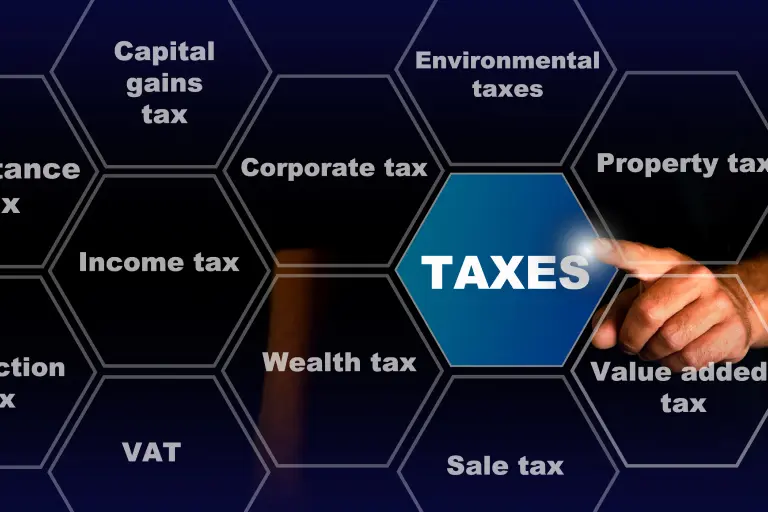
India’s taxation was simplified by the groundbreaking GST tax system, which combined several state and central levies, such as:
- Value Added Tax (VAT)
- Central Sales Tax (CST)
- Additional Customs Duty
- Purchase Tax
- Luxury Tax
- Service Tax
- Entry Tax
- Tax on Lottery/Betting/Gambling
- Octri
- Central Excise Duty
- Entertainment Tax, and more.
Benefits of GST
The main motto of GST is ‘One Nation, One Tax’, meaning to create a unified national market by eliminating state-level barriers and taxes.
The following are some of the benefits of GST:
- Streamlining & simplification of the tax system
- Reduced tax evasion & corruption
- Increased transparency
- Digital transition
- Lower tax burden
- Reduction in Logistics Costs
- Increased tax collection
- Boosted economic growth
- Consumption-based tax
Conclusion
India’s tax framework has unquestionably changed as a result of GST. Individuals and businesses need to be aware of the various types of GST to effectively navigate India’s tax system. This reform has brought major changes like improved economic growth and a simplified taxation process. However, it also poses challenges including transactional issues and a high compliance burden.
Despite all of this, the GST system continues to evolve and adapt, aiming to create a more efficient and unified tax structure for the entire nation.

Download the Buddy Loan App Now!
One solution to each of your financial needs at your fingertip.

Scan to download now