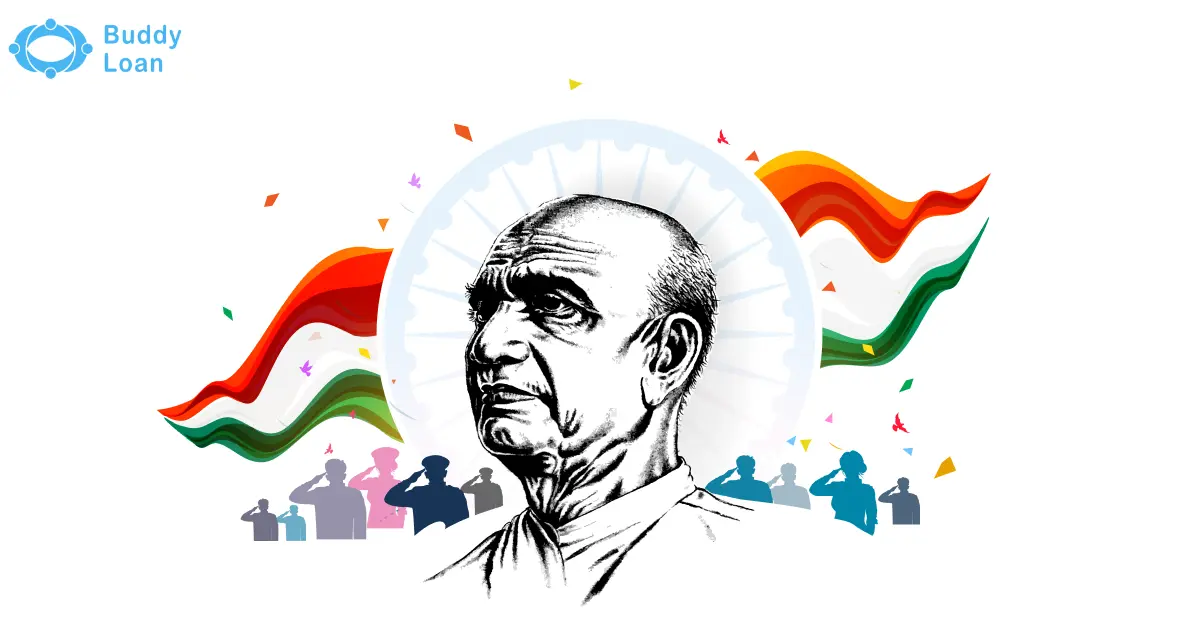
Every year on 31 October, India pauses to celebrate Sardar Vallabhbhai Patel Jayanti, a day that transcends mere remembrance. It is both a tribute to a statesman and an introspection into what binds the country together.
It is considered an ‘observed’ day throughout the country and not a public holiday per se.
But for patriots, it is more than just a national holiday; it has evolved into a reflection point on how India’s systems, institutions, and citizens uphold the values Patel stood for: unity, integrity, and disciplined governance.
Read on to learn more about Sardar Vallabhbhai Patel and the holiday related to him.
Sardar Vallabhbhai Patel Jayanti Date
Sardar Vallabhbhai Patel Jayanti will be observed on Friday, October 31, 2025. The day marks the birth anniversary of Sardar Vallabhbhai Jhaverbhai Patel, India’s first Deputy Prime Minister and a key leader in the nation’s freedom struggle.
Birth anniversary of Sardar Patel, honoring his contribution to India’s unity and freedom movement
Celebrated In
Gujarat and several other states across India
Sardar Vallabhbhai Patel Jayanti Holiday
Sardar Vallabhbhai Patel’s birth anniversary falls on Friday, 31 October 2025. It is a gazetted / state public holiday in Gujarat (banks in Gujarat/Ahmedabad are closed per the RBI/state calendar). Several other states include the day in their restricted / optional holiday lists (examples: Uttar Pradesh, Haryana).
Details
Holiday 2025
Date
31 October 2025 (Friday).
Event
Birth anniversary of Sardar Vallabhbhai Patel,
also observed nationally as Rashtriya Ekta Diwas (National Unity Day).
States with a gazetted or public holiday
Gujarat (state public / gazetted holiday).
Banks in Gujarat (Ahmedabad center) are closed on this date per RBI/state calendar.
Banks will be closed in Gujarat. In other states, banks will be open unless the state center is listed in the RBI holiday list for that date. Check the RBI/state branch holiday list for your city.
Even where branches are closed, ATMs, UPI, mobile & internet banking typically remain available. For HR/leave planning, check your state government’s final gazette or the official India.gov.in State & UT holiday calendar.
Get Your Free Credit Score Here!
Understanding Sardar Vallabhbhai Patel Jayanti
Sardar Patel Jayanti marks the birth anniversary of one of India’s most decisive nation-builders, born in 1875 in Nadiad, Gujarat. The day is observed as Rashtriya Ekta Diwas or National Unity Day across the country. Schools, offices, and civic institutions hold unity runs, oath ceremonies, and seminars reinforcing the spirit of collective strength.
The day is a reminder for India that unity is not an inherited state but an ongoing responsibility. Patel’s vision of administrative cohesion through the All India Services continues to anchor the nation’s governance structure today. Every time government officers or civil servants act in the national interest over regional biases, they quietly carry forward Patel’s framework of disciplined public service.
Seen through this lens, Patel Jayanti serves as an annual audit of India’s civic health. It asks a simple but essential question—how united are we in purpose, and how resilient are the institutions that hold this unity together?
Calendar Relevance and Broader Holiday Context
The Sardar Patel Jayanti holiday consistently aligns with a time of high public attention, occurring at the intersection of India’s festive and administrative calendars. It typically follows Diwali or coincides with year-end civic observances, giving it both symbolic and practical significance.
For public institutions, this proximity offers a unique opportunity to pair celebration with engagement. Many organisations launch outreach or education drives around this date, positioning their initiatives within the spirit of national service and integration that Patel represented. Fintech firms, for instance, sometimes use the day to emphasise digital inclusion and trust-based systems, values that mirror Patel’s approach to administrative unification.
The timing also challenges institutions to stand out in a crowded season filled with consumer-driven festivals. When government departments, educational bodies, and businesses align their messaging with the themes of unity and accountability during Patel Jayanti, they reclaim public attention for civic values amid commercial noise.
History of Sardar Vallabhbhai Patel Jayanti
Patel’s life forms the cornerstone of modern India’s federal identity.
He was also known as the ‘Iron Man of India’ and was instrumental in integrating more than 560 princely states into one unified nation after independence. His leadership during this transition was both diplomatic and pragmatic, balancing firmness with foresight.
The formal observance of his birth anniversary as National Unity Day began in 2014, long after his passing in 1950. By institutionalising the holiday, the government placed national cohesion at the centre of public consciousness. It moved the commemoration from personal admiration to civic participation, encouraging citizens to see unity as a daily practice rather than an abstract ideal.
Year
Event
Significance
1875
Birth of Sardar Vallabhbhai Patel in Nadiad, Gujarat
Marks the date of observance
1947–1950
Integration of princely states, establishment of All India Services
Defines his legacy as a nation-builder
2014
Declaration of National Unity Day
Elevates the observance into a civic and cultural institution
The holiday thus represents a shift from memory to mission. Just as Patel turned political fragmentation into administrative strength, the day encourages citizens to turn remembrance into renewal of trust, cooperation, and institutional integrity.
Get Personal Loan Online Up to ₹35 Lakhs
Significance of Sardar Vallabhbhai Patel Jayanti
At its heart, Sardar Patel Jayanti celebrates the architecture of unity that underpins the Indian state. Patel believed that strong governance was not about dominance but about cohesion, bringing diverse entities under a common framework without erasing their individuality. His role in creating the All India Services established a merit-driven system that remains the spine of Indian administration.
Today, National Unity Day ceremonies, unity runs, and public pledges are outward symbols of this philosophy. But their deeper value lies in reminding citizens that integration isn’t just territorial, it is institutional, digital, and ethical. When fintech platforms build transparent systems that allow rural users to access financial services safely, they echo Patel’s ethos of connecting fragmented entities into a single functioning whole.
In a time when technology often outpaces policy, Patel Jayanti becomes a metaphorical checkpoint. It urges policymakers and citizens to assess whether modern systems still carry the balance Patel championed, efficiency grounded in accountability, speed tempered by ethics, and innovation bound by unity of purpose.
Conclusion
On 31 October every year, Sardar Vallabhbhai Patel Jayanti is remembered by many Indians, and it becomes more than a national holiday; it’s a reminder of how India’s unity was engineered through vision, courage, and meticulous institution-building.
Each 31 October, as the nation remembers Patel’s legacy, it is also called to measure itself against his standards.
His life taught that true unity comes not from forced conformity but from shared purpose. The administrative spine he built continues to hold India upright, even as its limbs grow more diverse and dynamic. Observing this day with awareness and reflection strengthens that backbone, not just in memory of the man who built it, but in service of the ideals that still define it.
Download the Buddy Loan App Now!
One solution to each of your financial needs at your fingertip.
Ganesh Chaturthi begins on the fourth day of the Bhadrapada month and is celebrated for ten days, ending with Ganesh Visarjan on Anant Chaturdashi. The festival honours Lord Ganesha and is marked by decorated pandals, eco-friendly idols, modaks, devotional songs, and cultural programmes....
The Government of India recognizes exactly three national holidays: Republic Day, Independence Day, and Gandhi Jayanti. These dates carry heavy legal weight, mandating strict commercial closures and double-wage rules for attending staff. This guide details the 2026 schedule, explaining how these specific days disrupt physical banking, supply chains, and hospitality revenues....
The 2026 financial year includes a specific set of optional leaves known as restricted holidays. Unlike gazetted holidays, these dates allow employees to choose two days based on cultural or regional preferences. Understanding the "use it or lose it" rule is essential for effective leave management. This guide details the consolidated master list across all Indian states, highlighting the operational impact on banking and payroll systems for the upcoming year. ...
The 2026 calendar year presents a complex grid of national and regional public holidays that directly impact market liquidity and banking operations. From the "Clearing Grid" effect to the "Sunday Factor" in fintech planning, this exhaustive guide provides 36 distinct tables covering all states and union territories. Synchronize your professional deadlines, manage corporate liquidity, and optimize your annual leave with our official state-wise and UT holiday roadmap. ...