If you’ve ever thought about clearing your home loan or any term loan ahead of schedule, you probably hesitated because of the dreaded foreclosure or prepayment penalty. Well, there is some great news for you.
The Reserve Bank of India (RBI) has introduced a sweeping new directive that strengthens borrower rights, transparency, and flexibility. This rule has been passed as a consolidation of previous circulars, making a clearer disclosure.
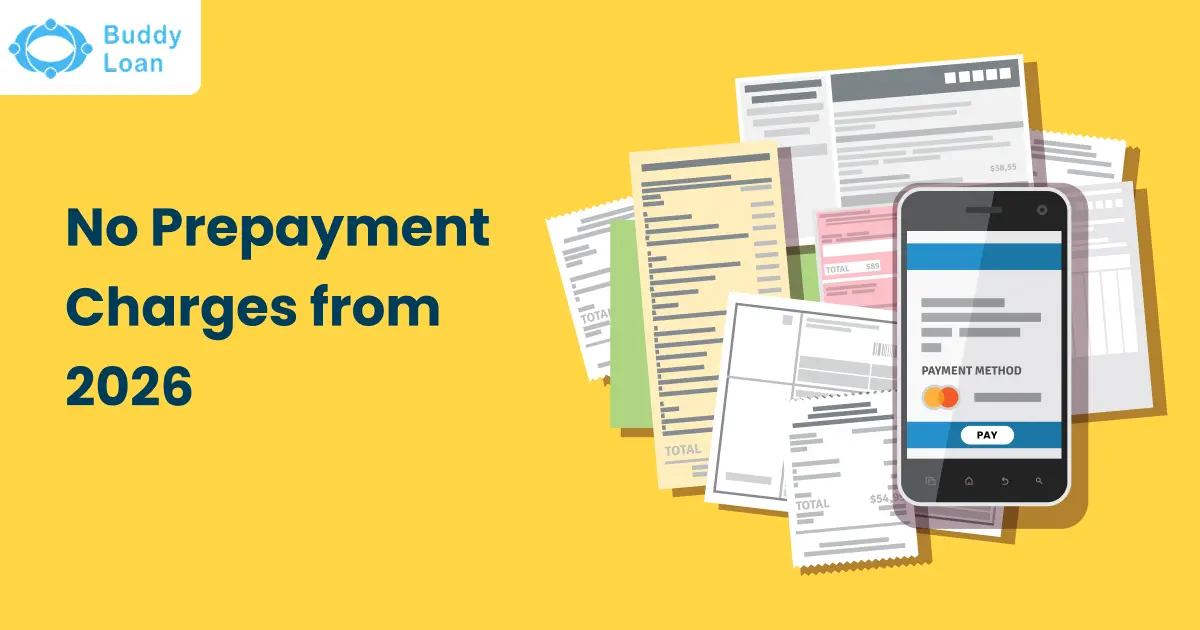
This change will be effective starting January 1, 2026; banks and regulated lenders can’t impose these charges on a large category of loans. This shift marks a milestone in how borrower-friendly Indian lending is becoming, according to news agency ANI. Read on to learn in detail about this change and how it can affect you, as a borrower.
No Prepayment Penalties on Floating-Rate Loans Rule Explained
The heart of the directive is simple yet powerful: lenders are barred from charging prepayment or foreclosure penalties on floating-rate term loans issued to individuals for non-business purposes.
Key clarifications of the RBI’s prepayment charge bar update include:
- It applies to individual borrowers only.
- It covers loans for personal and non-business purposes.
- It applies whether you repay fully or partially.
- It holds true no matter where your repayment funds come from.
- It remains valid even if your loan has co-obligants.
- There will be no lock-in period, and you can prepay anytime without restrictions.

Timeline & Coverage of RBI’s Update on Prepayment Charges
For anyone who has been hearing this news for the first time, they would be happy. However, it is not some idea that rose with the sun but a consolidation of all the efforts that have been going on for over a decade.
- 2012 & 2014: Early circulars banned foreclosure charges on home and floating-rate term loans.
- July 2014: NBFCs were brought under the same framework.
- Now (2025): The RBI has consolidated all previous directions into a single set of rules—called the Reserve Bank of India (Pre-payment Charges on Loans) Directions, 2025.
Here are some details regarding the latest update on prepayment charges:
- The new regime is spelt out in the Reserve Bank of India (Pre-payment Charges on Loans) Directions, 2025.
- It takes effect for loans sanctioned or renewed on or after January 1, 2026.
- It covers commercial banks (excluding payment banks), co-operative banks, NBFCs, and all-India financial institutions.
- For floating rate loans given to individuals for personal use, no prepayment charge is allowed.
- For business purposes or loans to Micro & Small Enterprises (MSEs), the rule is more nuanced:
- For many large lenders (commercial banks, NBFC upper layer, etc.), there is no prepayment charge even for business loans.
- Some smaller lenders (NBFC-ML, small finance banks, regional rural banks, and cooperative banks) are exempted from business loans up to ₹50 lakh in sanctioned amount.
- For hybrid or dual-rate loans (fixed + floating), the exemption applies only when the loan is floating at the time of prepayment.
Also Read: Know Why Early Repayment is a Smart Choice
How It Matters to You as a Borrower
The RBI’s move is designed to benefit borrowers like you in several ways:
- Uniformity Across Lenders: Earlier, different lenders followed different practices. Now, all regulated lenders must follow the same rules, ensuring fairness.
- Greater Borrower Flexibility: You can now repay your loan early without worrying about penalties, empowering you to manage debt on your own terms.
- Ending Restrictive Practices: Some lenders inserted clauses to discourage switching to competitors with better rates. By banning foreclosure charges, RBI ensures a more open and competitive lending market.

When the Rule Doesn’t Apply and What Happens Then
The latest rule is applicable starting in 2026, but its applicability can change based on the interest type: Fixed or floating interest rates.
This new rule is specifically focused on floating-rate loans for personal purposes. If your loan is a fixed-rate loan or was taken for business purposes, foreclosure charges might still apply.
However, the RBI has tightened rules for transparency:
- Any applicable prepayment charges must be disclosed upfront in your sanction letter and loan agreement.
- If your loan requires a Key Facts Statement (KFS), charges must also be clearly mentioned there.
- Lenders cannot add hidden or retrospective charges under any circumstances.
Suggested Read: Prepayment Penalty on Personal Loan
Steps for Borrowers to Take Now
Even with these laws in action, you must be cautious of the steps you take when applying for loans. Here are some guidelines:
- Check your loan type: Is it a floating or fixed rate loan?
- Look at your sanction letter/agreement for any disclosed prepayment charges.
- If your loan qualifies under the new rules, ask your lender to confirm that you won’t be charged a penalty after January 1, 2026.
- If you hold a loan still outside the exemption, ensure the charges are properly disclosed and don’t accept hidden fees.
- Always go for credit options only after doing a credit score check, so that you have an idea of what your interest rate probabilities are.
- If you are having trouble finding the best loan options, opt for a digital lending platform like Buddy Loan, where you can find the best loan options suited to your credit profile.
Also Read: Impact of Prepayment Penalty on Personal Loan
The Bottom Line
From January 1, 2026, borrowers with floating-rate loans for personal use will have complete freedom to prepay without penalty.
This financial reform is a step toward a fairer, borrower-first lending system, where your right to repay debt responsibly is fully protected. It is India’s step towards ensuring a people-first economy.
So, if you’ve got a floating rate loan, the countdown to a penalty-free prepayment future has already begun. If you are planning for a loan, don’t jump in blindly. Check your credit score, ask questions, and have an idea of repayments using an EMI calculator.
Download the Buddy Loan App Now!
One solution to each of your financial needs at your fingertip.

Scan to download now