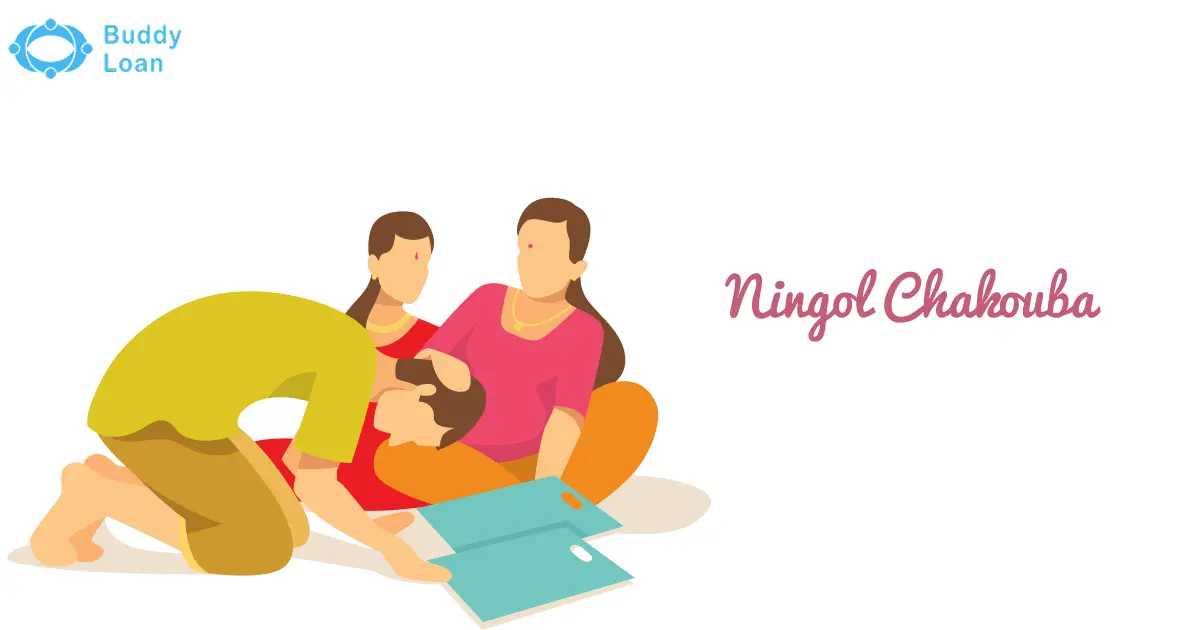
The festival of Ningol Chakkouba deserves sharp attention, as it is more than a mere ritual; it manifests as a socio‑economic touchpoint in the state of Manipur, bridging tradition with consumption and sentiment with opportunity.
Suppose you’re navigating the intersections of culture, finance and jewellery spending this season. In that case, read on to learn more about the festival’s meaning, its backstory, celebration styles, gold‑buying dynamics and how modern personal‑loan options factor into it.
Ningol Chakkouba Festival Date
Ningol Chakkouba is celebrated on the second day of the Meitei lunar month of Hiyangei. In 2025, the festival falls on October 27, 2025.
| Festival | Month (Meitei Calendar) | Gregorian Date (2025) | Day | Celebrated In |
|---|---|---|---|---|
| Ningol Chakkouba | Hiyangei – 2nd Day | October 23, 2025 | Thursday | Manipur |
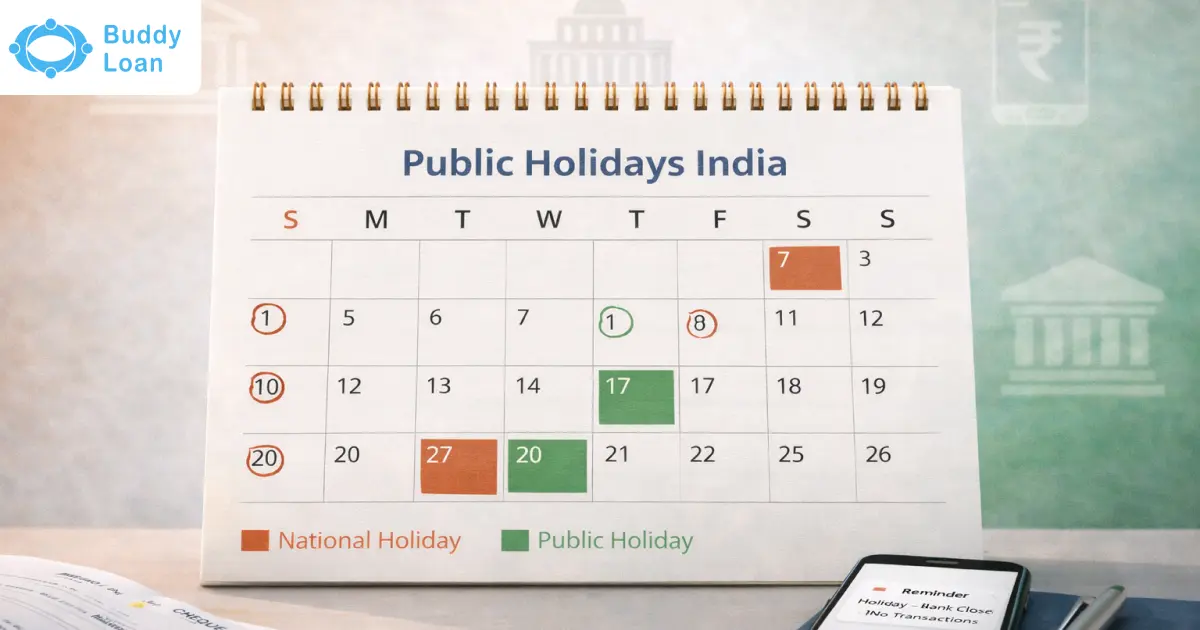
Ningol Chakkouba Bank Holiday
Banks will remain closed on Thursday, October 23, 2025, in Manipur for the celebration of Ningol Chakkouba.
| Details | Information |
|---|---|
| Date | October 23, 2025 (Thursday) |
| Occasion / Festivals | Ningol Chakkouba |
| State | Manipur |
| Banking Services | Physical branches closed; ATMs, online, and mobile banking remain operational |
| Next Working Day | Friday, October 24, 2025 |
While bank branches will not operate on this day, customers can continue using ATMs, mobile apps, and online banking for all essential transactions.
Note: The same day is also observed as a bank holiday in Gujarat, Sikkim, Uttar Pradesh, West Bengal, and Himachal Pradesh for related regional festivals such as Bhai Dooj and Chitragupt Jayanti.
Understanding Ningol Chakkouba Festival
Ningol Chakkouba is a traditional festival of the Meitei community (primarily in Manipur) where married women, also known as ningols, are invited back to their paternal homes for a grand feast and celebration with their siblings and parents. The word divides naturally: “ningol” (daughter/sister) + “chakkouba” (to dine together).
It typically falls on the second lunar day of the Meitei month of Hiyangkei (around late October or November).
Social significance of the Ningol Chakkouba
From the outside, it is a simple feast and family visit, but layered within:
- It actively reinforces the bond between the paternal home and married daughters—something that, in many patrilineal societies, may fade after marriage.
- It serves as a ritual of acknowledgement: the ningol is celebrated, offered gifts, and brought back into the family fold, even if she lives elsewhere.
- It fosters community cohesion: although rooted in Meitei tradition, neighbouring communities and diaspora groups also observe it.
Socio‑economic dimensions of the Ningol Chakkouba
The scheduling around late October/November means the festival dovetails with the broader Indian festive season—triggering increased retail activity, particularly in textiles, jewellery and consumables.
Retailers in Manipur report specific stock-ups and promotional campaigns timed to Ningol Chakkouba. For example: “New stock has arrived for the Manipur festival Ningol Chakkouba” from jewellery retailers in 2025.
Regulatory observations: The local body National Identity Protection Council (NIPCO) in Imphal has issued advisories ahead of the festival, urging traders not to raise prices excessively and reminding households of the tradition’s cultural core, signalling the festival’s growing economic magnitude.
Timing & practical planning for households
Since Ningol Chakkouba is tied to a lunar calendar, the exact Gregorian date changes.
For families planning gifts, travel or significant spends (like gold jewellery), it is wise to mark the date early and budget accordingly—both for cultural respect and financial readiness.
Ningol Chakkouba Holiday’s Backstory
According to historical notes, Ningol Chakkouba is embedded in Meitei culture and specifically designed to strengthen the bond between married women and their paternal families—a gesture of reunion and celebration.
Over time, as Manipuri people migrated to other Indian states and abroad, the celebration travelled with them (e.g., Delhi, Bengaluru, Kolkata, Mumbai).
Early versions likely emphasised simple feasting and gifts; contemporary versions include elaborate apparel, community events and market‑driven activity.
Here are some fun facts:
- In Meitei (the language of the Meitei people), the term “Ningol” indicates a married daughter, while “Chakkouba” translates approximately to “invited to dine together” or “feast at parents’ place”. This naming is purposeful—not simply a holiday but a familial ritual.
- The festival is recognised as a public holiday in Manipur, reflecting governmental acknowledgement of its social importance.
Ningol Chakkouba Holiday Celebrations
The festival unfolds in vibrant visuals, as ningols in traditional phanek and innaphi attire, arriving with their children, are welcomed with songs and memory-laced conversations. A meticulously prepared meal follows, showcasing dishes like Nga-Thongba, Chamfut, and Eromba.
In Manipuri society, this feast isn’t just about food but more about performance, memory, and cultural affirmation. Each dish served is an edible chronicle of identity, and every shared meal repairs the emotional economics of distance.
Retailers, quick to respond, launch Ningol Chakkouba festival-themed sales in jewellery and textiles, with banners that blend commerce and culture.
Buying Gold on Ningol Chakkouba
In India, generally, festival periods are major gold‑buying windows: households view gold as both a gift and a store of value. For example, during Dhanteras in 2025, estimates for gold purchases were around ₹20,000 crore.
While specific national‑level data for Ningol Chakkouba is not abundant, anecdotal marketing and stock‑holding by jewellers in Manipur show gold is a key item of purchase during the festival.
- Jewellery involves making charges, GST on jewellery, design premium, etc. An article highlights that during Diwali, many buyers opt for gold coins/bars (lower additional cost) instead of heavy jewellery.
- For a married daughter’s gift—which is partly symbolic and partly investment—households may prefer simpler/light jewellery designs with higher liquid value rather than expensive ornate pieces.
- Because of rising gold prices (e.g., record highs near ₹1,20,000 per 10 g in 2025), volume bought tends to decrease, but value may remain high.
Strategy for Gold buyers for Ningol Chakkouba
Financing Gold Purchase Using a Personal Loan
Buying gold for Ningol Chakkouba is emotionally meaningful, yet when done via credit or loan, it must be done strategically to avoid financial pitfalls.
Why personal loans or festive loans matter now
- According to recent fintech industry data, quick‑credit demand during festivals rose up to 50 % compared with previous years, with BNPL (buy‑now‑pay‑later) and checkout financing gaining traction.
- Banks and NBFCs have tied gold‑loan portfolios soaring: e.g., one report noted a 122 % rise in gold‑backed lending (to ₹2.94 lakh crore) by July 2025.
- For households eyeing a gold purchase tied to Ningol Chakkouba, understanding financing options can help align budget, avoid cash‑flow stress and keep the celebration joyful rather than burdensome.

Financing a Personal Loan for the Gold Purchase strategy
Here are some of the tips that you can use to get the maximum out of a personal loan for gold purchase.
- Budget a realistic amount: Estimate gold/jewellery cost plus associated charges (making, GST). Do not treat a loan as free money.
- Compare loan options: Interest rate, processing fee, pre‑payment option, and tenure.
- Align tenure with repayment capacity: A loan of ₹50,000 over 12 months with EMI may be manageable; stretching over 3–4 years increases risk.
- Use gold purchase as a strategic part of the portfolio, not only a ritual: Given high gold prices, think whether you are buying purely for the tradition (gift) or also as an investment. If both, ensure you treat it like an investment: know resale value, storage, and documentation.
- Avoid simultaneous high‑cost credit commitments: If you are using BNPL, credit card, and personal loan all together, your cash‑flow burden may increase.
- Have an exit strategy: If you pledged gold for a loan or used credit, plan how you will repay and how this fits into your wider financial goals (emergency fund, portfolio diversification).
- Use a digital lending platform like Buddy Loan to check and compare multiple loan options at once.
Insight for the festival‑season buyer
Utilising a personal loan for jewellery tied to Ningol Chakkouba is both culturally meaningful and financially significant. However, most household decision‑makers underestimate the combined effect of high gold prices, making charges, and loan interest.
Suppose gold is priced at ₹1,20,000 per 10 g (approx. for late 2025) and you buy 50 g for ₹6 lakh: add 10 % making charges and 3 % GST, and you incur ₹6.73 lakh in cost.
If you choose a 24‑month personal loan at 14% interest, your EMI is ~₹31,800. Over two years, you pay ~₹7.64 lakh total — meaning financing cost adds ~₹0.91 lakh.
If the piece remains purely for aesthetic/gift value (not investment return), the cost of funds matters. Hence, marrying emotional and financial value is critical.
Conclusion
For households in Manipur and the broader Manipuri diaspora, Ningol Chakkouba is far more than a festival. It’s a cultural institution and, increasingly, a financial event.
It can be highlighted that the ritual of inviting married daughters back, the feasting, the gifting, and the gold purchase all tie into behavioural finance, retail economics and credit cycles.
If you plan to buy gold or jewellery this season for the festival, treat the decision not just as emotional but as strategic: check pricing, design, financing, repayment, and tax/estate implications. Check your credit score to know your loan options and what to expect.
With that approach, you transform a lovely tradition into a sound investment of values and wealth.
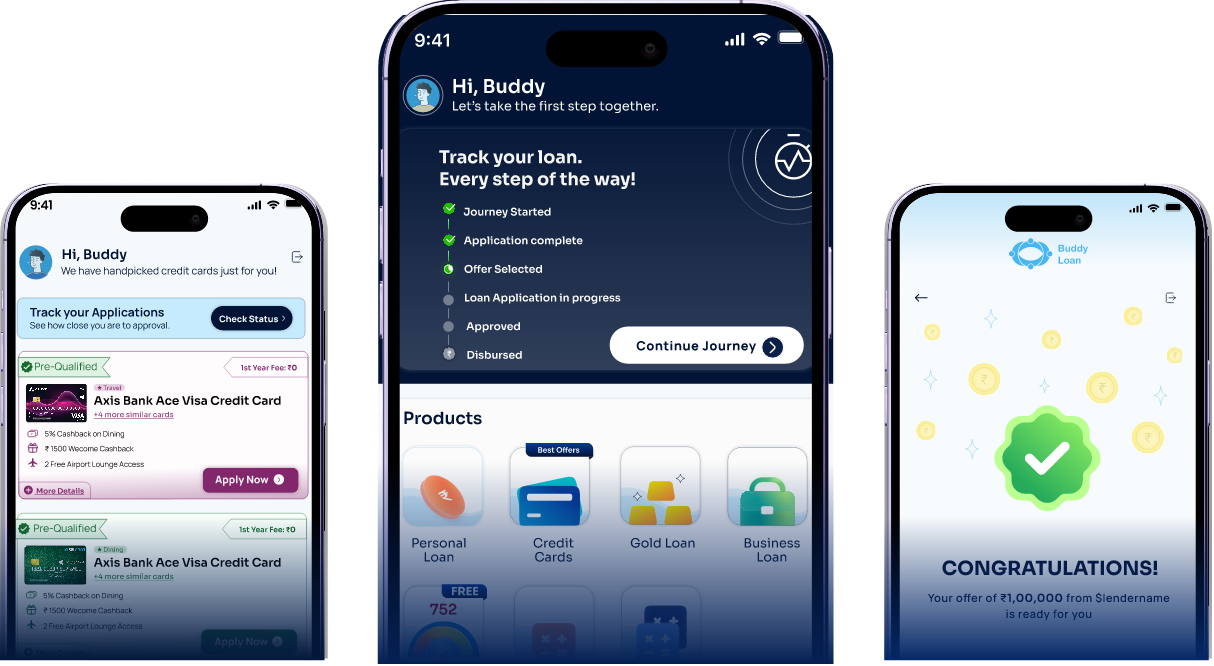
Download the Buddy Loan App Now!
One solution to each of your financial needs at your fingertip.

Scan to download now