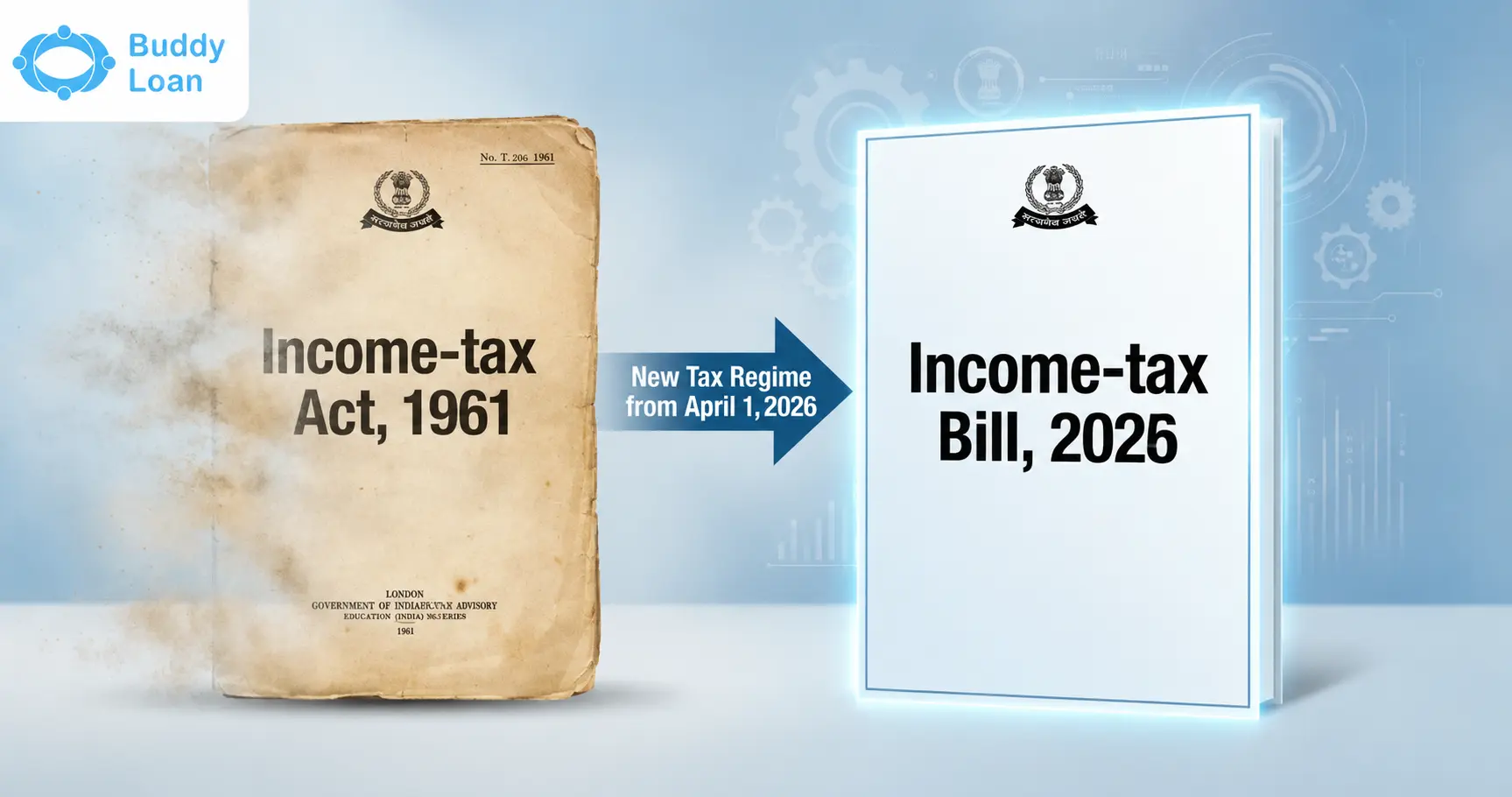
The Income-tax (No. 2) Bill, 2025, marks a significant shift in India’s tax laws in over six decades. Passed by the Lok Sabha on August 11, 2025, it replaces the old Income-tax Act, 1961, and is set to take effect from April 1, 2026.
This isn’t just about changing rates, but it’s a full makeover of how India handles direct taxes, with a strong focus on clarity, fairness, and reducing legal disputes.
Want to understand all the changes, new slabs, and how they affect you? Read on to find out more.
Why India Needed a New Tax Law
For over 60 years, India’s tax system was governed by the Income-tax Act, 1961, a law that had been patched, amended and complicated by decades of changes. Over time, it became a maze of 819 sections, 1,200 provisos, and nearly 900 explanations, making it hard for even seasoned taxpayers to navigate.
This complexity came with real problems:
- Too many legal fights: Vague and unclear tax rules often led to a lot of court cases between taxpayers and the government.
- Complicated paperwork: Filing taxes meant going through endless exemptions, deductions and confusing rules, making it stressful and time-consuming.
- Old-fashioned language: The wording and structure of the law hadn’t kept up with the requirements of today’s modern, digital economy.
The Income Tax (No. 2) Bill, 2025, is the government’s answer to these challenges. It reduces the number of sections from 819 to 536, removes redundant clauses and rewrites the code in simpler terms. The goal: make tax filing clearer, faster and less stressful.
Importantly, this reform is also part of the “Viksit Bharat” vision, building a tax system that supports economic growth, attracts investment and matches global best practices. The government aims to simplify the tax system and integrate digital tools to widen the tax net while ensuring easier compliance for taxpayers.

Legislative Journey: From Draft To Final Bill
Let’s trace the income tax bill’s journey from its initial draft in February 2025 to the final version passed on August 11, 2025 and see what changed in the process.
Timeline at a glance
- Feb 13, 2025: The first draft of the Income Tax Bill, 2025, is introduced in Lok Sabha and sent to a Select Committee for detailed review.
- July 2025: The Select Committee, chaired by Baijayant Panda, submits a report with 285 recommendations focused on clarity, simplification and better administration.
- Aug 8, 2025: The government formally withdraws the original draft to fix drafting gaps and alignment issues flagged by the Committee.
- Aug 11, 2025: A refined income tax (No. 2) bill, 2025, is tabled and passed in the Lok Sabha, with the finance minister Nirmala Sitharaman noting that most committee suggestions were incorporated.
- According to the latest news : On Aug 11, 2025, Lok Sabha passed both the Income-tax (No. 2) Bill, 2025, and the Taxation Laws (Amendment) Bill, 2025, without debate amid protests; the bills then moved to Rajya Sabha
Top Highlights for Individuals
If you are salaried, self-employed, or a pensioner, these are the updates that will impact your take-home pay and filing.
1. Unified “Tax Year”
The old distinction between “Previous Year” and “Assessment Year” is gone. The new tax year concept aligns income reporting and assessment into one simple period, making filing easier, especially for first-time taxpayers and entrepreneurs.
2. New Tax Slabs & Higher Tax-Free Limit
Under the default new tax regime for FY 2025-26 (AY 2026-27):
| Income Range (₹) | Tax Rate |
| Up to 4,00,000 | Nil |
| 4,00,001 – 8,00,000 | 5% |
| 8,00,001 – 12,00,000 | 10% |
| 12,00,001 – 16,00,000 | 15% |
| 16,00,001 – 20,00,000 | 20% |
| 20,00,001 – 24,00,000 | 25% |
| Above 24,00,000 | 30% |
Section 87A rebate: Increased to ₹60,000 → zero tax on income up to ₹12 L. For salaried taxpayers, the ₹75,000 standard deduction pushes this to ₹12.75 Lakhs tax-free.
3. Option to Choose Old Regime
Individuals without income from business or profession are allowed to change between the old and new tax regimes annually. The old regime still offers more deductions (like 80C and 80D), which may benefit those with high eligible investments.
4. Property Income Clarity
- The 30% standard deduction is now explicitly calculated after deducting municipal taxes from annual value.
- Pre-construction interest deduction was allowed for both self-occupied and let-out properties.
5. Pension Benefits
Full tax deduction on commuted pension from specified funds applies to employees, non-employees and nominees.

Benefits for Businesses & MSMEs
See how the new rules help companies, LLPs, and MSMEs save tax and cut compliance effort.
1. Corporate Tax Relief
- Section 80M is back; now, if a company in India gets dividends from another Indian company, it can deduct that amount from its taxable income, as long as it passes on the same or more as dividends to its own shareholders before the tax filing deadline. This change helps avoid double taxation on company-to-company dividends and improves cash flow for businesses.
2. Relief for LLPs
- The proposal to impose Alternate Minimum Tax (AMT) on Limited Liability Partnerships has been dropped. This keeps LLP taxation in line with existing provisions and removes an extra compliance burden.
3. MSME Growth Boost
- MSME classification thresholds raised:
- Investment limit increased by 2.5x.
- Turnover limit increased by 2x.
- These higher limits let MSMEs expand operations, invest in technology and hire more staff without losing access to government benefits.
- Additional measures:
- ₹5 lakh credit card facility for micro-enterprises.
- A ₹10,000 crore pooled investment fund has been introduced to fuel the growth of promising startups.
4. Digital Economy Compliance
- Virtual digital assets, such as cryptocurrencies, are now included under the broadened scope of what qualifies as undisclosed income.
- Tax authorities can now access digital spaces (email servers, online trading accounts) during search operations, even if they’re password-protected, but only under due process.
Improved Taxpayer Experience
Here is what gets easier when you file, correct, or dispute your income tax.
1. More Time to File Corrections
The window for updated returns has been extended from 2 years to 4 years after the end of the relevant tax year. This gives individuals and businesses more breathing room to fix errors or omissions without heavy penalties.
2. Simpler Compliance
- Nil TDS certificates can now be issued more easily for eligible taxpayers.
- Refunds are allowed for late ITR submissions in certain cases.
- Discretionary penalty waivers for unintentional non-compliance, making the system more trust-based.
3. Transparent Dispute Resolution
- The Dispute Resolution Panel will now have to provide a detailed explanation for its decisions.
- Clearer rules for charitable and religious trusts ensure anonymous contributions don’t affect tax-exempt status.
Quick Compare: Old vs New Regime
A short comparison that shows when the new regime wins and when the old one still helps.
| Feature | New Regime (Default) | Old Regime |
| Basic Exemption Limit | ₹4,00,000 | ₹2,50,000 (₹3,00,000 for seniors, ₹5,00,000 for super seniors) |
| Rebate (Section 87A) | ₹60,000 to Zero tax up to ₹12 L (₹12.75 L salaried) | ₹12,500 → Zero tax up to ₹5 L |
| Tax Slabs | 6 slabs from 5% to 30%, with lower middle-income rates | 3 tax bracket from 5% to 30%, higher rates kick in earlier |
| Standard Deduction | ₹75,000 (salaried/pensioners) | ₹50,000 (salaried/pensioners) |
| Deductions & Exemptions | Limited (e.g., employer’s NPS contribution, Agniveer Corpus) | Broad (80C, 80D, HRA, etc.) |
| Best For | Those with minimal deductions, higher middle-income bracket | Those with significant eligible investments/savings |
Bottom line:
If you claim few deductions, the new regime offers lower tax rates and higher take-home pay. If you use many tax-saving investments, the old regime could still be better.
Conclusion
The Income-tax (No. 2) Bill, 2025, is not just a rate change; it’s a complete redesign of India’s tax framework after six decades. By simplifying rules, introducing a single Tax Year, raising the tax-free threshold and digitizing processes, it aims to make compliance easier, reduce disputes, and put more money in taxpayers’ hands.
For individuals, it means clearer slabs, higher rebates and faster filing. For businesses and MSMEs, it offers tax relief, better growth opportunities and modern compliance tools.
With the law set to take effect on April 1, 2026, taxpayers have one full financial year to plan. Comparing both regimes early and adjusting investments or salary structures now will help maximise benefits under the new system.
Download the Buddy Loan App Now! One solution to each of your financial needs at your fingertip. Scan to download now