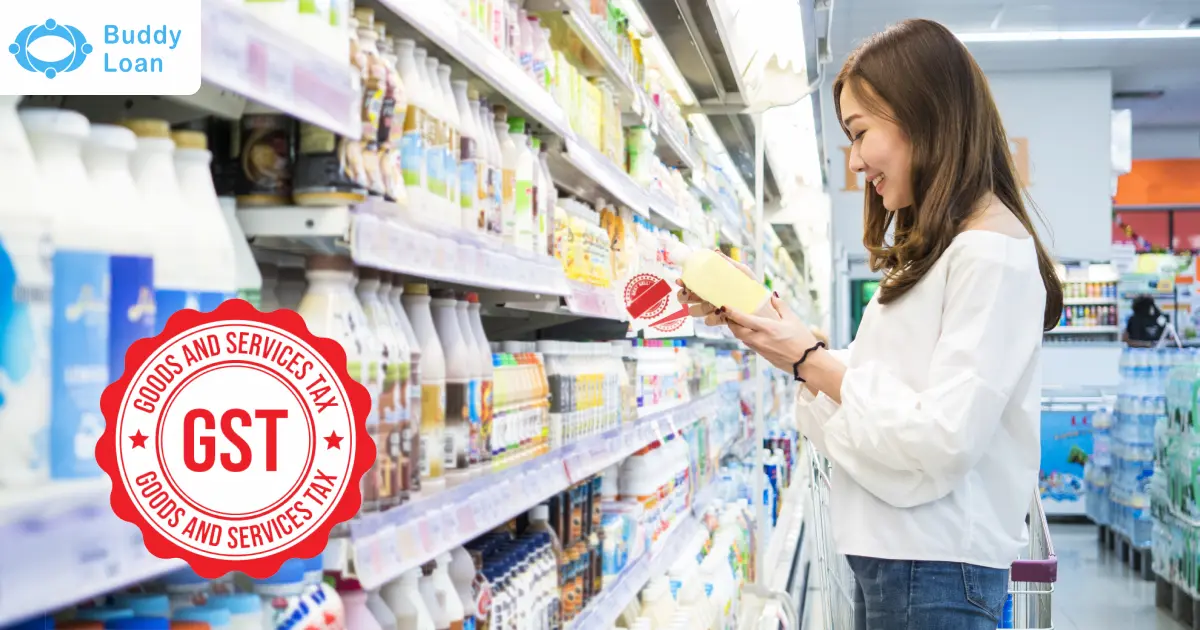
On September 22, 2025, the Indian government brought GST 2.0 into action, one of the most sweeping reforms that simplifies GST slabs and reworks tax rates across many everyday goods like dairy products.
Among the most impacted changes are those on dairy and its products, such as butter, ghee, cheese, and spreads. The GST on these has seen its tax burden trimmed significantly under the new regime.
In this blog, we’ll explore how the revised GST rates transform the pricing of dairy items, why those changes matter, and what consumers and dairy businesses should expect going forward. Read on to find out how these can impact your lifestyle, more than just prices.
Major GST Cuts on Dairy Products
One of the most notable reforms is the shift of Ultra-High Temperature (UHT) milk from a 5% concessional tax rate to a Nil GST rate, making it entirely tax-free. Similarly, pre-packaged and labelled paneer (chena), which previously carried a 5% GST, has now been exempted along with many other products.
This is expected to benefit not only consumers but also farmers, cooperatives, and food processing industries by encouraging higher production volumes and lowering overall costs.
GST Rate Comparison on Dairy Items
Here is the detailed comparison of dairy products between the old GST and the new GST:
| Item | Old GST | New GST | Change |
| UHT Milk | 5% | Nil | 5% |
| Paneer/Chena (packaged) | 5% | Nil | 5% |
| Butter, Ghee, Butter Oil | 12% | 5% | 7% |
| Cheese | 12% | 5% | 7% |
| Ice Cream | 18% | 5% | 13% |
| Flavoured Milk | 12% | 5% | 7% |
| Plant-Based Milk (Almond, Oat) | 18% | 5% | 13% |
| Soya Milk Drinks | 12% | 5% | 7% |
| Condensed Milk | 12% | 5% | 7% |
(Note: Nil GST applies only to dairy UHT milk, not to plant-based alternatives.)

Immediate Price Drops by Brands Like Amul
Soon after the announcement, leading dairy brand Amul reduced prices on over 700 products to reflect the new GST rates. This ensures the benefit of lower taxes reaches consumers directly.
Here is the reduced GST in action:
- Butter (100g) dropped from ₹62 to ₹58.
- Ghee (1 litre) was cut from ₹650 to ₹610.
- Cheese block (1 kg) reduced from ₹575 to ₹545.
- Paneer (200g) fell from ₹99 to ₹95.
- Ice cream prices were reduced across the range, from small cups to family packs.
- Amul Protein products also saw meaningful reductions.
Meanwhile, the prices of basic pouches and packaged milk remained unchanged since they were already tax-free before the reforms.
Comparison Before vs After GST Cut on Dairy Products
With the rollout of GST 2.0, dairy essentials have become noticeably more affordable.
The table below shows how consumer prices have changed before and after the tax revision, along with the approximate savings on everyday dairy products:
| Items | Price With GST, Before GST 2.0 | Price With GST, After GST 2.0 | Total Savings |
| UHT Milk (1 litre) | ₹55 | ₹52 | ₹3 |
| Paneer (200 gm, packaged) | ₹100 | ₹95 | ₹5 |
| Butter (100 gm) | ₹65 | ₹60 | ₹5 |
| Ghee (1 litre) | ₹700 | ₹650 | ₹50 |
| Cheese (500 gm block) | ₹300 | ₹280 | ₹20 |
| Flavoured Milk (200 ml bottle) | ₹30 | ₹28 | ₹2 |
| Ice Cream (500 ml family pack) | ₹120 | ₹100 | ₹20 |
| Plant-Based Milk (1 litre, almond/oat) | ₹200 | ₹170 | ₹30 |
| Condensed Milk (400 gm tin) | ₹140 | ₹130 | ₹10 |

Broader Impact on the Food Sector
Indeed, you won’t see a big difference if you are buying, say, UHT milk once a week. However, if you are someone who makes a bulk grocery purchase, you will definitely see savings on your monthly grocery budget.
The GST cuts on dairy products form part of a larger strategy to make essentials more affordable while stimulating the food and agriculture value chain. Farmers, cooperatives, MSMEs, and retailers all stand to gain from lower costs and stronger demand.
By bringing staple food under the Nil or 5% tax bracket, the government is not only easing household budgets but also supporting greater consumption in rural and semi-urban markets.
These reforms align with India’s long-term goals of improving nutrition, promoting ease of living, and encouraging greater participation in the food and dairy industries.
Final word
The implementation of GST 2.0 on September 22, 2025, will bring relief to households by lowering taxes on everyday dairy essentials, especially on dairy products like paneer, ghee, butter, cheese, and ice cream.
For families, the changes translate into visible savings on monthly grocery bills.
For the dairy sector, the reduced rates create a more competitive environment, encouraging higher production and wider accessibility.
These reforms also strengthen the value chain, benefiting farmers, cooperatives, and retailers alike. In the bigger picture, GST 2.0 supports affordability, improves nutrition, and reflects the government’s vision of inclusive economic growth.
If you are having a cash crunch at the end of the month, and taking advantage of this festive season or a GST-protected bulk purchase is out of the question, consider applying for a small personal loan to help you out. Make sure to check your credit score before applying anywhere.

Download the Buddy Loan App Now!
One solution to each of your financial needs at your fingertip.

Scan to download now