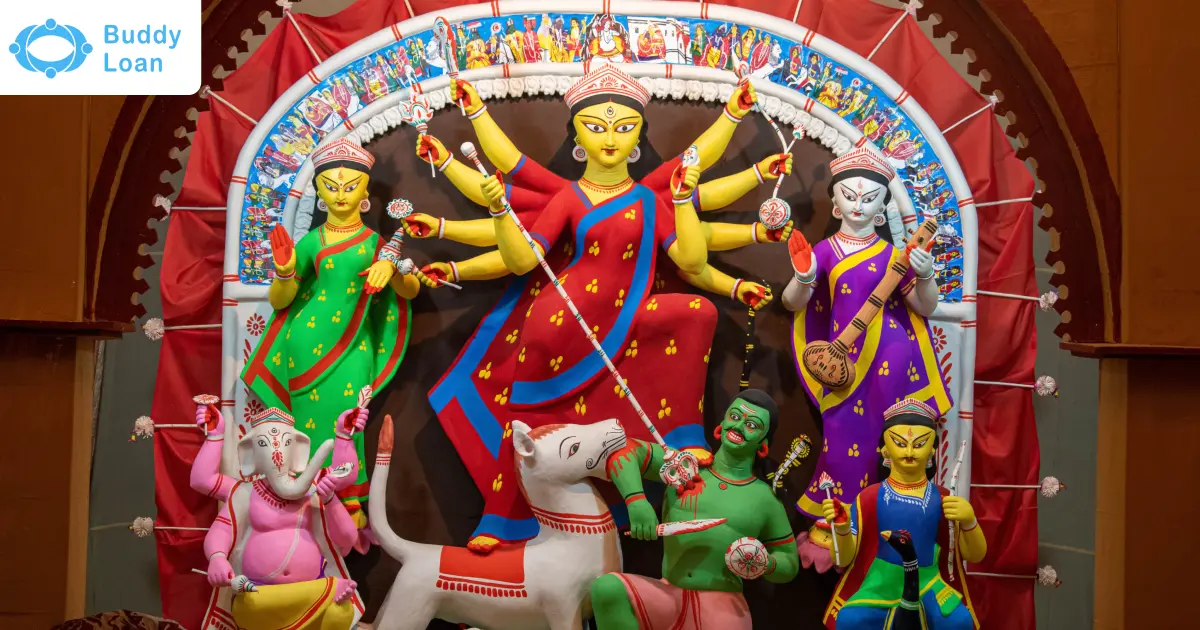
Maha Navami, also known as Durga Navami, is one of the most important days of the Navratri festival. It marks the ninth day of worship dedicated to Goddess Durga and is celebrated across India with devotion and grandeur.
In 2025, Maha Navami will be observed on Wednesday, October 1, 2025. This sacred day commemorates the near-completion of Goddess Durga’s battle with the demon Mahishasura and is followed by Vijayadashami (Dussehra), which symbolizes her ultimate victory.
Celebrations include Navami Homa (holy fire ritual), Durga Puja, Sandhi Puja, and Kanya Puja. In many states, Maha Navami is both a public and bank holiday, allowing devotees to participate in rituals, temple visits, and community festivities.
Maha Navami 2025 Date & Time
Maha Navami, the ninth and final day of Navratri dedicated to Maa Siddhidatri, will be celebrated on October 1, 2025. The Navami Tithi begins on September 30 at 6:06 PM and ends on October 1 at 7:01 PM. On this day, devotees also perform Kanya Pujan, honoring young girls as embodiments of the goddess.
Key Highlights of Maha Navami Holiday 2025
Maha Navami is the peak of Navratri celebrations, combining devotion, rituals, and cultural events.
| Event | Date | Description |
| Maha Ashtami | 30 September 2025 | Preceding day; Sandhi Puja rituals |
| Maha Navami | 1 October 2025 | Ninth day of Navratri; rituals & celebrations |
| Vijayadashami (Dussehra) | 2 October 2025 | Marks Goddess Durga’s final victory over Mahishasura |
Maha Navami Holiday 2025 Across States
Maha Navami is a regional holiday, observed with different traditions across India. It is a public and bank holiday in many eastern and northeastern states, while in southern India, it coincides with Ayudha Puja / Saraswati Puja.
| State | Type of Holiday | Key Attractions |
| West Bengal | Public & Bank Holiday | Grand Durga Puja Pandals |
| Assam | Public & Bank Holiday | Community Rituals and Feasts |
| Odisha | Public & Bank Holiday | Special Pujas in Temples |
| Tripura | Public & Bank Holiday | Durga Puja Pandals & Celebrations |
| Jharkhand | Public & Bank Holiday | Regional Importance |
| Bihar | Public & Bank Holiday | Linked with Durga Puja Festivities |
| Karnataka | Public & Bank Holiday | Observed as Ayudha Puja |
| Kerala | Public & Bank Holiday | Observed as Saraswati Puja |
| Meghalaya | Public & Bank Holiday | Celebrated with traditional rituals |
| Tamil Nadu, Andhra Pradesh, Telangana | Restricted/Optional Holiday | Celebrated as Ayudha Puja |
| Delhi, Maharashtra, Gujarat, Rajasthan | Restricted/Community Holiday | Observed as part of Navratri |
History of Maha Navami
The origins of Maha Navami lie in Hindu mythology, where it represents the penultimate stage of Goddess Durga’s battle against Mahishasura.
- Mythological Battle: By Navami, most of Mahishasura’s forces were destroyed. Goddess Durga prepared for the final strike, which is celebrated on Vijayadashami.
- Chamunda’s Role: According to scriptures, Chamunda, a fierce form of Durga, emerged to destroy demons Chanda, Munda, and Raktabija during this phase.
- Ramayana Link: In some traditions, Lord Rama performed Navami Puja before fighting Ravana, linking the festival to the Ramayana.
Thus, Maha Navami stands as a symbolic day of courage, determination, and divine power before the climactic victory of good over evil.
Significance of Maha Navami
Maha Navami is a day of both spiritual depth and cultural richness:
- Victory of Good Over Evil: Marks the near-completion of Goddess Durga’s battle against Mahishasura.
- Ritual Importance: Havan, Kanya Puja, and Astra Puja are performed for protection, prosperity, and blessings.
- Ayudha Puja in South India: Worship of weapons, vehicles, and tools represents respect for livelihood and divine power.
- Community & Culture: Strengthens social unity through festivals, processions, dances, and community feasts.
Maha Navami Celebrations
Maha Navami is marked by devotion, rituals, and cultural festivities that vary across regions in India. From sacred pujas and fire rituals to community feasts and vibrant processions, the day brings together traditional practices that honor Goddess Durga and celebrate the spirit of Navratri.
1. Rituals & Worship
- Navami Homa (Havan): A sacred fire ritual performed to purify the environment and invoke divine blessings.
- Maha Navami Puja: Devotees offer prayers, fruits, sweets, and flowers to Goddess Durga.
2. Kanya Puja
- Young girls, considered incarnations of Goddess Durga, are worshipped. Their feet are washed, prayers are offered, and they are served traditional meals like halwa, puri, and kheer.
3. Astra Puja (Ayudha Puja)
- In southern states, Maha Navami coincides with Ayudha Puja, where weapons, tools, vehicles, and instruments are decorated and worshipped.
4. Regional Celebrations
- West Bengal & Assam: Pandal hopping, Sandhi Puja, and cultural programs.
- Odisha & Bihar: Temple pujas and community gatherings.
- Karnataka, Tamil Nadu, Kerala: Ayudha Puja and Saraswati Puja, where books, tools, and musical instruments are worshipped.
- Gujarat & Rajasthan: Maha Navami is part of Navratri’s Garba and Dandiya celebrations.
Conclusion