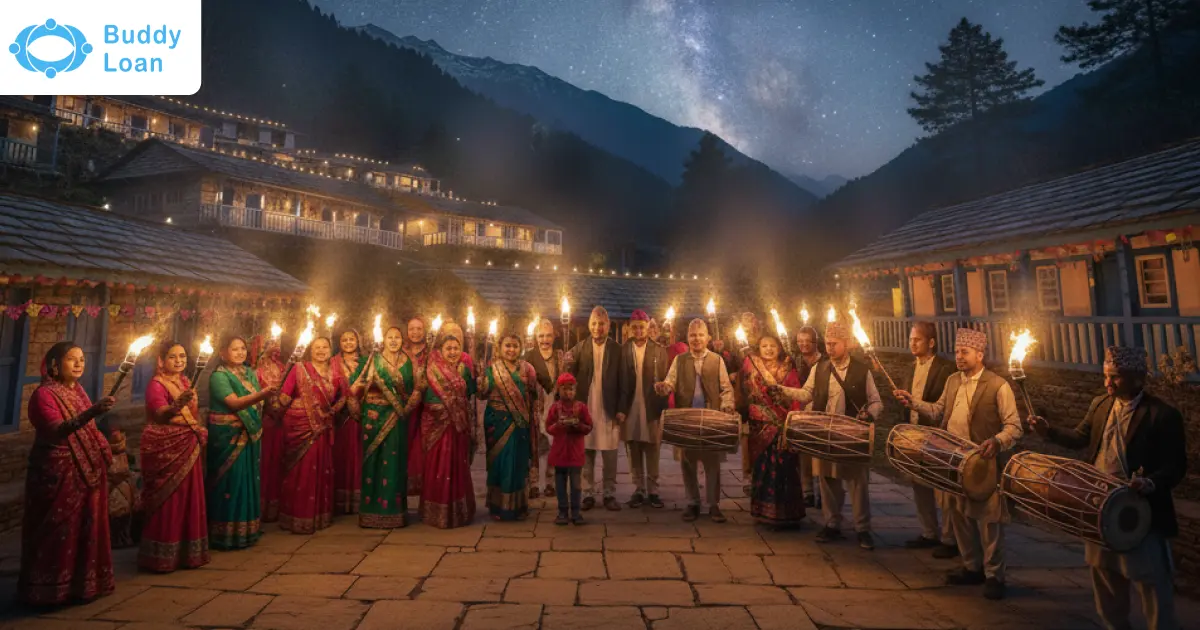
Igas-Bagwal, lovingly called Budhi Diwali (Old Diwali), is Uttarakhand’s unique, mountain-rooted continuation of the festival of lights. While the plains wind down, the hill communities of Garhwal and Kumaon keep the glow alive, marking their “second Diwali” eleven days after the main one, on Kartik Shukla Ekadashi. In 2025, Igas-Bagwal falls on Saturday, November 1. The month-long spirit around Igas blends folklore, agrarian rituals, valorous legends, and village camaraderie: flaming Bhailo torches, dhol-damaun rhythms, livestock veneration, and shared feasts. It’s less spectacle and more roots, reviving memory, honoring nature, and stitching generations together across the Himalayan valleys.
Igas-Bagwal 2025 Holiday
Observed as a regional public holiday in Uttarakhand and commonly treated as a state or bank holiday locally.
| Date | Day | Public / Bank Holiday (Uttarakhand) |
|---|---|---|
| November 1, 2025 | Saturday | Regional public holiday (banks typically observe state holiday) |
Key Highlights of Igas-Bagwal 2025
Let’s explore the major cultural and community activities that define Igas-Bagwal and make it one of Uttarakhand’s most distinctive festivals. The festival is primarily celebrated across the hill districts of Uttarakhand, with smaller observances in parts of Himachal Pradesh and by the Uttarakhandi diaspora across India and abroad.
| Highlight | Description |
|---|---|
| Bhailo (Torch) Ritual | Villagers spin flaming torches made from pine, deodar, or bhimal wood. It is an exhilarating rite to banish darkness and summon prosperity. |
| Traditional Music & Dance | Jhummelon, Tandi, Chholiya (sword dance), and Pandava-lila performances fill the evening air to the beat of dhol-damaun. |
| Veneration of Livestock | Cattle are bathed, adorned, and offered bhog (flattened rice, milk, ghee), reflecting the festival’s agrarian heart and gratitude to nature. |
| Regional Delicacies | Homes prepare arsa, singal, puri, and pakoras from local grains, jaggery, and ghee, flavors unique to Uttarakhand’s cuisine. |
| Cultural Stewardship | Social groups, schools, and the Uttarakhand diaspora promote Igas as a cherished part of Himalayan heritage, also celebrated in some regions of Himachal Pradesh. |
| States & Regions Observed | Primarily celebrated in Uttarakhand (Garhwal, Kumaon, and Jaunsar-Bawar), with smaller observances in Himachal Pradesh’s border villages and Uttarakhandi communities in Delhi, Mumbai, and abroad. |

History of Igas-Bagwal
The origins of Igas-Bagwal are a blend of mythology, legend, and mountain history, tracing how this unique “Old Diwali” came to be celebrated in Uttarakhand.
Two narrative streams shape Budhi Diwali’s lore.
- Ramayana connection (the “late news” Diwali): In the era before highways and phones, news of Lord Rama’s return to Ayodhya reached the high ranges late. The hills then lit lamps eleven days after the plains. This custom crystallized as Igas (Īgās/Egaas), aligned with Kartik Shukla Ekadashi or, in some areas, the month of Mangseer.
- Veer Madho Singh Bhandari legend: About four centuries ago, Garhwali commander Madhav (Madho) Singh Bhandari returned victorious from a campaign after Diwali. Villages that had withheld festivities out of worry celebrated his safe return eleven days later, and the tradition continued as Igas.
Across time, the festival absorbed agrarian practices such as cattle worship and communal feasts and fire rituals like Bhailo, becoming a distinctive hill Diwali rather than a mere echo of the plains.
Also Read: November Holidays
Significance of Igas-Bagwal 2025
Beyond lamps and rituals, Igas-Bagwal carries deep cultural, social, and environmental meanings for the people of Uttarakhand.
-
Heritage and Identity: Igas preserves folk songs, dialects, dances, attire, cuisine, and the hill ethos itself, handing these to the next generation.
-
Social Unity: From elders to students, villages move as one. Bhailo circles, shared cooking, and open courtyards function as cultural glue.
-
Agrarian Connection: Rituals thank livestock and the land, acknowledging mountain livelihoods and seasonal rhythms.
-
Valor and Remembrance: Legends like Madho Singh’s valor are retold, shaping local pride and moral memory.
-
Month-long Continuum: Reporting this year highlights Uttarakhand’s month-long Diwali arc, with Igas keeping ancient mountain traditions alive.

How is Igas-Bagwal 2025 Celebrated
The heart of Igas-Bagwal lies in its vibrant performances, glowing torches, and heartfelt rituals shared among families and villages.
- Bhailo at Dusk: Villagers bind pine or deodar sticks into torches called Bhailo or Andhaya and swing them in fiery arcs while singing. The ritual symbolizes courage, cleansing, and fortune.
- Music and Dance: Dhol-damaun leads circle dances such as Jhummelon, Tandi, and the thrilling Chholiya. In some places, Pandava-lila dramatizes Mahabharata episodes.
- Livestock Veneration: Bulls’ horns are oiled and cows garlanded. Animals receive bhog of flattened rice, milk, and ghee, honoring their role in mountain life.
- Homes and Feasts: Courtyards are swept, lamps maintained, and menus feature arsa, singal, puri, pakoras, and millet-based dishes.
- Attire and Aesthetics: Women wear ghagras and pichhoris with silver jewelry. Men wear warm coats or kurta-pyjamas, standing out brightly against the firelit night.
Also Read: December Holiday
Conclusion
Igas-Bagwal on November 1, 2025 keeps Uttarakhand’s mountain memory vivid. Whether one believes in the Ramayana “late news” tale or the Madho Singh Bhandari legend, the present-day festival is unmistakably about community, courage, and gratitude. Bhailo torches whirl, dhol-damaun calls dancers to the circle, cattle are honored, and kitchens glow with ghee and jaggery. As cultural groups and the media spotlight Igas as living heritage, the hills model a slower, steadier celebration that binds neighbors, dignifies labor, and lets an older light keep shining after the plains go dark.

Download the Buddy Loan App Now!
One solution to each of your financial needs at your fingertip.

Scan to download now