When it comes to online banking in India, the IFSC Code (Indian Financial System Code) plays an essential role. Each bank branch has a unique IFSC code that helps in accurately routing electronic transactions, ensuring they reach the intended destination quickly and securely. This code is mandatory for common transactions like NEFT(National Electronic Fund Transfer), RTGS(Real-Time Gross Settlement), and IMPS(Immediate Payment Service), which are widely used for transferring funds across banks. In this blog, we’ll dive into the full form of IFSC, explore its structure, understand its significance in banking, and see how it fits into the future of digital payments. Whether you’re new to online banking or looking to deepen your knowledge, this guide covers everything you need to know about IFSC codes.
More About IFSC Code
An IFSC Code (Indian Financial System Code) is an 11-character unique code that helps identify specific bank branches in India. These codes play a crucial role in online banking transactions like NEFT, RTGS, and IMPS, enabling smooth and error-free transfers between banks.
Importance Of IFSC Code
The IFSC code is essential for safe, quick, and accurate online banking transactions in India. Here’s why the IFSC Code is important:
- Accurate Fund Transfers: It ensures that money reaches the correct bank branch during online transfers.
- Enables Digital Payments: Needed for NEFT, RTGS, and IMPS transactions, making online banking possible.
- Unique Branch Identification: Each IFSC code is unique to a branch, avoiding confusion between branches.
- Security: Helps keep transactions secure by ensuring funds go to the right place.
- Speeds Up Transactions: Automates the process, making fund transfers faster and more efficient.

Structure of an IFSC Code
The IFSC code is an 11-character code with a unique structure that helps identify specific bank branches. Here’s how it breaks down:
| Characters | Purpose | Example |
| First 4 Characters | Bank code (identifies the bank) | “SBIN” for State Bank of India |
| 5th Character | Always “0” (reserved for future use) | “0” |
| Last 6 Characters | Branch code (unique to each branch) | “001234” |
For example, an IFSC code like SBIN0012345 identifies a unique SBI branch. This breakdown of the code structure ensures that every branch has a unique identifier, crucial for electronic fund transfers.
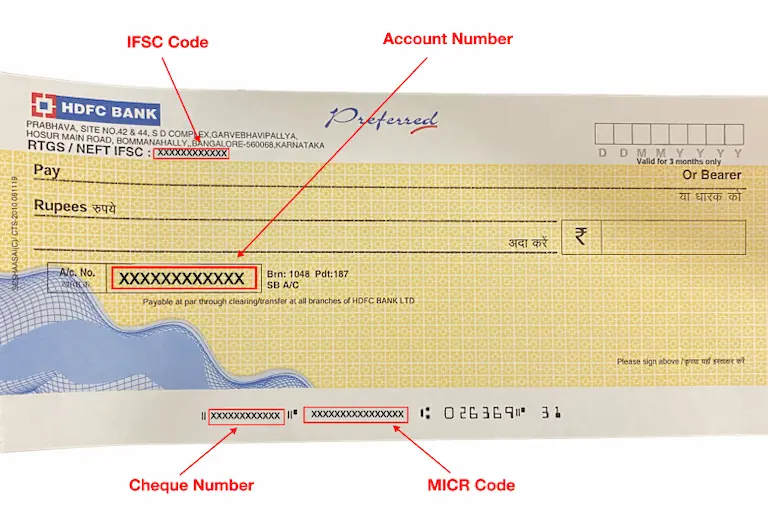
Steps To Find Your Bank’s IFSC Code
Each of these methods provides accurate information, ensuring that you have the correct code for your banking needs. There are several easy ways to locate your bank’s IFSC code:
Chequebook: Look for the IFSC code printed on the top portion of your chequebook.
Bank Website: Most banks display their branch IFSC codes on their official websites under branch locator sections.
Online Banking Portals: IFSC codes are also available on online banking sites and apps when you initiate a transfer.
RBI’s Official Website: You can visit the Reserve Bank of India’s website, which maintains an official list of all bank IFSC codes.
Importance of IFSC Codes in Online Transactions
Without an IFSC code, banks cannot complete these transactions, as it identifies the specific bank branch for accurate fund transfers. The code not only speeds up the process but also adds a layer of security, ensuring the transaction reaches the intended account. The IFSC code is crucial for three major types of electronic banking transactions:
1. NEFT (National Electronic Funds Transfer): Uses IFSC codes to facilitate bank-to-bank transfers within India.
2. RTGS (Real Time Gross Settlement): Often used for high-value transfers, with the IFSC code ensuring immediate and accurate routing.
3. IMPS (Immediate Payment Service): Allows instant transfers between banks, using the IFSC code to validate branch details.

More About MICR Code
The MICR Code (Magnetic Ink Character Recognition Code) is a 9-digit code used to identify bank branches in India, especially for processing cheques quickly and securely. Each bank branch has a unique MICR code, printed on the bottom of cheques, allowing fast verification and reducing errors in transactions.
Breakdown of MICR Code
First 3 Digits: Represent the city (usually aligned with the postal code).
Next 3 Digits: Identify the bank.
Last 3 Digits: Represent the specific bank branch.
MICR codes are primarily used by banks to process cheques more efficiently, as they can be read by machines, speeding up the clearing process.
Conclusion
In summary, the Indian Financial System Code (IFSC) is a vital part of India’s banking infrastructure, enabling accurate and secure electronic transactions. With its unique structure, the IFSC code is essential for NEFT, RTGS, and IMPS transactions, making it crucial for anyone engaged in online banking. By knowing your bank’s IFSC code, you can ensure that your transactions are secure, smooth, and hassle-free.
Download the Buddy Loan App Now! One solution to each of your financial needs at your fingertip. Scan to download now



Frequently Asked Questions
Q. What is the full form of IFSC?
A. IFSC stands for Indian Financial System Code.
Q. How is the IFSC code structured?
A. An IFSC code has 11 characters: the first 4 characters represent the bank, the fifth is always ‘0’, and the last 6 identify the branch.
Q. Why is the IFSC code important for banking transactions?
A. The IFSC code is crucial for identifying the bank and branch in electronic fund transfers within India.
Q. Where can I find the IFSC code for my bank branch?
A. The IFSC code is available on your cheque book, passbook, bank’s website, or RBI’s website.
Q. Can I use the IFSC code for international transactions?
A. No, the IFSC code is used only for domestic transactions within India. SWIFT codes are used for international transfers.
Q. What happens if I enter the wrong IFSC code during a transaction?
A. Entering a wrong IFSC code may result in transaction failure or funds being transferred to an incorrect branch.
Q. How can I verify the IFSC code of a bank branch?
A. You can verify an IFSC code on the bank’s website, RBI’s official website, or through reliable banking apps.
Q. Are IFSC codes the same for all branches of a bank?
A. No, each branch of a bank has a unique IFSC code to ensure accurate identification in transactions.