If you are afraid of taking risk during investment, Fixed Deposit is the best and safest option. The interest rate is accumulated on the deposited amount for a fixed time period. If you deposit an amount lesser than Rs.2 crore for less than a year, the interest rates will start from 3.00% p.a. And if you deposit the same amount up to 10 years, the interest rates will start from 9.54% p.a. However, the interest rates vary depending on the type of financial institutions such as public sector, private sector, or small finance banks. And the tenure period starts from 7 days to 10 years. Moreover, senior citizens are offered higher interest rates than the existing rates starting from 0.25% to 0.65%.
Also Read: How To Get Rid of Financial Problems With Standard Chartered Loans?

How Does a FD Account Work?
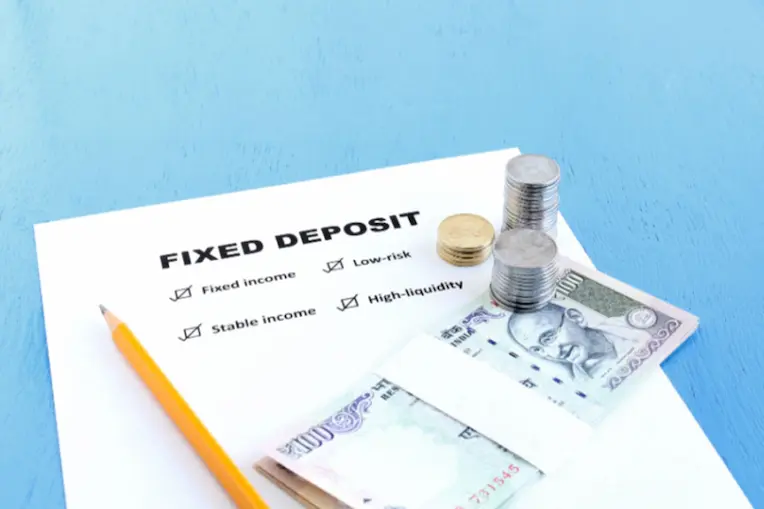
When you deposit a certain amount in your FD account, the money is locked for a fixed tenure period. And the interest that you earn on your principal amount gets accumulated throughout your tenure. This interest amount then gets added to your principal amount that you deposited after every specific interval.
As the tenure period starts from 7 days to 10 years, you have the freedom to choose the tenure and you can also open multiple FD accounts spread across different tenure periods. That way, you can earn more money on your investments. The best part is that senior citizens are eligible for additional rates which are usually 0.25% to 0.65% more than the existing rate. So they can also earn money even after retirement. Moreover, even NRIs (Non-resident Indians) can open Fixed Deposit accounts in India in the form of NRE (Non-resident External) and NRO (Non-resident Ordinary) FDs.
So if you are planning to open an FD account, you can open a deposit account in the bank where you already have a savings account. You can also open an FD account in banks where you don’t have a savings account. But, you have to go through the KYC process and provide relevant documents, including ID proof, address proof, passport size photographs, among others.

Types of Fixed Deposits
There are 6 types of Fixed Deposits. Here is a brief about each type.
Normal Fixed Deposits:
- Here, you will deposit money for a fixed tenure period.
- The tenure ranges from 7 days to 10 years.
- The interest rates for nominal fixed deposits are higher than a normal savings account.
Tax-Saving Fixed Deposits
- Here, you will get a tax exemption on the principal amount of up to Rs.1.5 lakh in a calendar year.
- The lock-in period for tax-saving fixed deposits is 5 years and you cannot withdraw the amount.
- You can only have one-time lump sum deposit.
Senior Citizen Fixed Deposits
- This type of fixed deposit is applicable only for individuals above 60 years of age.
- Senior citizens are eligible for special interest rates which are usually 0.25% to 0.65% more than the existing rate.
- The tenure period is flexible.
Cumulative Fixed Deposits
- Here, the interest rate is added every quarter or year and is paid at the time of maturity.
- Cumulative fixed deposits help to grow your savings substantially.
Non-Cumulative Fixed Deposits
- Here, the interest will be paid monthly, quarterly, half-yearly, or annually, as per your choice.
- It is a better option for pensioners looking for a regular source of income.
Flexi Fixed Deposits
- Here, the fixed deposit is linked to your bank account.
- Money juggles between your FD and savings account.
Features of a Fixed Deposit Account
- It is much safer than other investment options.
- It lets you earn an interest amount over a fixed period of time.
- The tenure is flexible and ranges from 7 days to 10 years.
- There is no cap on maximum deposit.
- There are additional rates for senior citizens ranging from 0.25% to 0.65% more than the existing rate.
Eligibility Criteria For FD Investment
Here are the following criterias to be eligible to open an FD account in India:
- Indian resident
- NRI
- Minors
- Senior citizens
- Companies
- Partnership firms
- Individuals or joint investors
- Societies or clubs
- Sole proprietorship
Documents Required for opening an FD account
The documents required to submit when opening an FD account are as given below:
- Proof of identity: Voter ID, PAN card, Aadhaar card, driving license, photo ration card, senior citizen ID card, etc.
- Proof of address: Utility bills, bank statement with cheque, Post-office issued identification card or certificate, etc.
Fixed Deposit Application Form
You can get the application form to open a fixed deposit in two options:
- Offline: Visit the bank that you wish to open your FD in.
- Online: Download the application from the official website of the bank that you wish to open an FD account in.
Fixed Deposits for NRIs
There are two types of fixed deposit accounts for Non-Resident Indians —Non-Resident External account (NRE) and Non-Resident Ordinary account (NRO).
-
NRE Fixed Deposit
Here the interest earned is free of tax and both the principal amount and interest are completely repatriable. The only drawback is that the money you deposit can get affected due to fluctuations in the currency rate.
-
NRO Fixed Deposit
Here, the interest earned is taxable based on the income tax category. However, you can avail the reduced tax benefit under the Double Taxation Avoidance Agreement (DTAA). And there is no risk of exchange rate fluctuation.
How to Choose the Right Fixed Deposit?
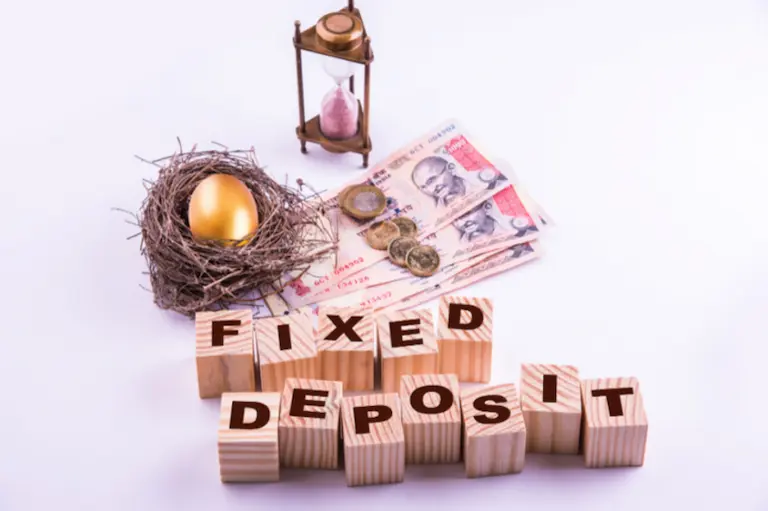
You have to consider the following factors before choosing a fixed deposit:
- Compare the interest rates of fixed deposits offered by different banks.
- Check if the lender is legit by examining the FD’s safety rating as given by ICRA or CRISIL.
- Select whether you want a non-cumulative or cumulative fixed deposit.
- Choose a bank that offers best customer service and has a simple process for opening an FD.
Advantages
Fixed deposits have several benefits, some of which are:
- Low risk: Fixed deposits have a low risk comparatively because your returns will not affect the market risks.
- Insurance: Your fixed deposits are insured for up to Rs.1 lakh by the RBI.
- Loan against FD: You can apply for loans of up to 90% of your FD amount at low interest rates. But the rates will be 2% more than the FD interest rate.
- Easy liquidity: Whenever you have an emergency, you can immediately liquidate your FD account and release the money.
- Regular income: You can earn from the interest amount which will be credited as per your choice be it on a monthly, quarterly, or annual basis.
- Tax benefits: Investing in fixed deposits which are tax-free will help you get tax deductions of up to Rs.1.5 lakh in a financial year.
- Senior citizens: Senior citizens are offered a higher interest rate compared to regular customers ranging from 0.25% to 0.65%.
- You can easily earn interest on your deposits and grow your wealth.
- The tenure for fixed deposits is flexible and starts from 7 days up to 10 years.
Who Should Invest In Fixed Deposits?
Fixed deposits offer protection for the fixed amount and give you a regular flow of income. So it is ideal for people who have a large sum of money that they want to keep safe for some time. It is also the right financial investment for those who don’t want to take risks, as the returns do not affect market risks and offer a fixed interest rate throughout the tenure.
How To Open A Fixed Deposit?
You can open a Fixed deposit account in two ways: online mode and offline mode.
Online: You can easily open a FD account with the bank where you already have an account. And you don’t have to submit any KYC as the bank will already have your account details. All you have to do is use net banking, fill up the online application form for opening an FD, and submit it.
Offline: Visit your bank and fill the application form for opening an FD account. Then submit it with all the required documents. Now deposit the required amount to your FD account and receive the FD receipt.
Also Read: Here’s What You Need To Know About Equifax And Crif Highmark Credit Scores:
Tax Benefits
- Individuals, Hindu Undivided Family (HUFs), and minors (investing jointly with adults) can invest.
- This investment has tax deduction according to Section 80C of the Income Tax Act.
- According to the income tax bracket, the Tax Deduction at Source (TDS) applies to the interest earnings. However, you can avoid this by submitting Form 15G (for senior citizens, it is Form 15H).
- According to the income tax bracket, the Tax Deduction at Source (TDS) applies to the interest earnings. However, you can avoid this by submitting Form 15G (for senior citizens, it is Form 15H).
- Senior citizens can claim tax deduction of up to Rs.50,000 on interest earned under Section 80 TTB.
- You can avail nomination facility except if it is on behalf of minors.
- For senior citizens, higher interest rates are offerings are available.
- You can transfer fixed deposit accounts from one post office to another.
How Is Interest Calculation Made For A Fixed Deposit?
FD Calculator – FD interest calculation is on the basis of various factors, which include the interest compounding frequency depending on the bank. The interest can be monthly, quarterly, half-yearly, or annual basis.
Also Read: Latest Updates On Fixed Deposit Interest Rates
How FD Interest Rates Vary With Central Bank Policy?
The Reserve Bank of India (RBI) provides banks with interest rates based on the current economic conditions. And when RBI updates the interest rates, So banks also change the interest rates offerings on their fixed deposits.
Download the Buddy Loan App Now! One solution to each of your financial needs at your fingertip. Scan to download now