When you need funds, choosing the right type of loan makes a meaningful difference to your financial well-being. Personal loans and mortgage loans often appear similar because both offer lump-sum financing, structured EMIs and fixed repayment schedules. However, the difference between them is significant. A personal loan is unsecured, so the bank lends money purely based on your creditworthiness, income stability and repayment history. A mortgage loan, on the other hand, requires you to pledge property as collateral, which dramatically influences everything from interest rates to loan size and repayment duration.
Understanding how each loan works, not just today, but over the entire repayment period, helps you make a decision that aligns with your financial goals, risk comfort and long-term commitments.
Personal Loan
Definition and Purpose
A personal loan is an unsecured, collateral-free loan that banks and NBFCs offer based on your income, credit score and repayment capacity. Since there is no requirement to pledge property or assets, approval depends heavily on your creditworthiness.
Personal loans are extremely flexible. Most lenders place no restrictions on end use, meaning you can use the funds for almost any lawful purpose, including:
- Medical emergencies
- Wedding expenses
- Home renovation
- Education
- Travel
- Debt consolidation
- Buying electronics or big-ticket items
Core Features
- Loan Amount: ₹50,000 to ₹40 lakh (some banks offer up to ₹75 lakh for eligible customers).
- Tenure: Typically 1 to 5 years, extendable up to 7 years.
- Interest Rate: Higher due to unsecured nature; usually 10%–24% p.a.
- Processing Time: Very fast; some banks offer instant disbursal for pre-approved users.
- Documentation: Minimal: ID proof, address proof and income proof.
When Personal Loans Are Most Suitable
Personal loans are ideal when you want quick funds without pledging property, especially for short-term financial needs or emergencies.
Mortgage Loan
Definition and Purpose
A mortgage loan (Loan Against Property) is a secured loan where you pledge your residential, commercial or industrial property as collateral. Because the lender has a legal claim over the property until the loan is repaid, the interest rates are significantly lower.
Mortgage loans are typically taken for long-term, high-value needs such as:
- Buying property
- Business expansion
- Funding higher education
- Debt refinancing
- Major medical expenses
Core Features
- Security: Mandatory; property must be owned by the borrower.
- Loan Amount: High, usually 60%–80% of the property’s market value.
- Tenure: Long-term; up to 15–30 years.
- Interest Rate: Lower due to collateral; often starts from 6.75%–9% p.a.
- Tax Benefits: Available under Sections 80C and 24 (for home mortgage loans).
- Processing Time: Long because of property valuation and legal checks.
When Mortgage Loans Are Most Suitable
Mortgage loans are ideal for large funding needs, especially when you want lower EMIs and long repayment periods.
Differences Between Personal Loan and Mortgage Loan
The key distinction is that personal loans are unsecured and mortgage loans are secured. This difference influences cost, eligibility, risk and documentation requirements.
| Aspect | Personal Loan | Mortgage Loan |
| Loan Type | Unsecured | Secured by property |
| Loan Amount | Up to ~₹40 lakh | Based on 60–80% of property value (can be crores) |
| Tenure | 1–7 years | 10–30 years |
| Interest Rate | Higher (10%–24%) | Lower (6.75%–14%) |
| Processing Time | Very fast | Longer; requires property checks |
| Usage | No restriction | Typically for large-value goals |
| Documentation | Minimal | Extensive + property documents |
| Risk | No asset risk | Property risk in case of default |
| Tax Benefits | None | Available on mortgage/home loans |
Which Is Better, Personal Loan or Mortgage Loan
No single loan is “better” universally. The right choice depends on what you are trying to achieve:
How to Choose the Correct Loan for Your Situation
| Criteria | Personal Loan | Mortgage Loan (LAP) |
| Purpose | Short-term personal expenses | Large, long-term funding |
| Urgency | Very fast approval | Slow process |
| Cost | Higher interest | Lower interest |
| EMI | High | Manageable due to long tenure |
| Loan Size | Moderate | Very large |
| Documentation | Light | Heavy |
| Risk Level | Zero collateral | High (property pledged) |
| Who Should Choose | Someone who needs quick funds without hassle | Someone comfortable pledging property for lower costs |
This makes the decision easier, use a personal loan for short-term needs and a mortgage loan for long-term, high-value requirements.
Eligibility & Documentation of Personal Loan vs Mortgage Loan
Before approving any loan, banks carefully evaluate your financial profile, repayment ability and the documents you provide. Since personal loans are unsecured and mortgage loans are backed by property, the eligibility criteria and paperwork differ significantly for each. Understanding these requirements helps you prepare in advance and ensures a smoother loan approval process.
Personal Loan Eligibility
- Age 21–60
- Monthly income threshold (e.g., HDFC: ₹25,000 minimum)
- Strong credit score (720+ ideal)
- Stable job or business
Personal Loan Documentation
- Aadhaar / PAN
- Address proof
- Salary slips or ITRs
- Bank statements
Mortgage Loan Eligibility
- Salaried or self-employed individuals
- Ownership of mortgageable property
- Credit score ideally 750+
- Sufficient income for long-term EMI repayment
Mortgage Loan Documentation
- KYC documents
- Income proof
- Property title deed, tax receipts, NOC
- Legal and technical evaluation reports
Mortgage documentation is significantly more detailed due to the collateral involved.
Benefits vs Risks of Personal and Mortgage Loans
Every loan option comes with its own advantages and trade-offs. Comparing the benefits and risks of personal loans and mortgage loans helps you understand the financial impact, long-term obligations and potential risks before committing to either type of borrowing.
Personal Loan Benefits & Risks
| Benefits | Risks |
| No collateral required | Higher interest rates |
| Quick approval | High EMI burden |
| Flexible end-use | Affects credit score if EMIs are missed |
| Minimal paperwork | Lower loan amounts |
Mortgage Loan Benefits & Risks
| Benefits | Risks |
| Lower interest rate | Property at risk if repayment fails |
| Very high loan amounts | Lengthy processing and valuation |
| Long tenure = low EMI | Requires heavy documentation |
| Tax benefits applicable | Higher cumulative interest over long term |
Popular Banks Offering Personal Loans
Here are a few top banks offering personal loan:
| Personal by Bank | Interest Rate (p.a.) | Loan Amount | Tenure |
| HDFC Bank Personal Loan | 9.99%–24% | Up to ₹40–75 lakh | Up to 6 years |
| SBI Personal Loan | 10.05% – 15.05% | Up to ₹35 lakh | Up to 6 years |
| ICICI Bank Personal Loan | 10.60% | ₹50k–₹50 lakh | Up to 6 years |
| Axis Bank Personal Loan | 9.99% | ₹50k–₹40 lakh | Up to 7 years |
| Kotak Bank Personal Loan | 10.99% | Up to ₹35 lakh | Up to 5 years |
| IndusInd Bank Personal Loan | 10.35% | Up to ₹50 lakh | Up to 5 years |
| Bank of Baroda Personal Loan | 11% | ₹50k–₹20 lakh | Up to 5 years |
| IDFC First Bank Personal Loan | 9.99% | Up to ₹10 lakh | Up to 5 years |
| Yes Bank Personal Loan | 11.25% to 21% | Up to ₹50 lakh | Up to 6 years |
Note: The interest rates are subject to change as per lenders discretion
Popular Banks Offering Mortgage Loans (Loan Against Property)
Here are a few top banks offering mortgage loan:
| Bank | Interest Rate (p.a.) | Loan Amount | Tenure |
| SBI LAP | From 7.50% | Up to ₹7.5 crore | Up to 15 years |
| HDFC | Competitive | 65% of property value | Up to 15 years |
| ICICI Bank | 10.60%-11.25% | Above ₹ 100 lakhs | Up to 15 years |
| Axis Bank | 10.50% to 10.95% | Starting from ₹5 lakhs | Up to 20 years |
| Bank of Baroda | Competitive | Up to ₹5 crore | Up to 30 years |
| Kotak Bank | 8.65% | Up to ₹5 crore | Up to 15 years |
| Union Bank | 9.55% | Based on valuation | Up to 15 years |
| IndusInd Bank | 8.49% | High-value loans | Up to 20 years |
| IDFC First Bank | 9.5% | High-Up to ₹15 Crore | Up to 25 years |
Note: The interest rates are subject to change as per lenders discretion
Summary and Key Insights
- Personal loans are best for quick, short-term, collateral-free needs.
- Mortgage loans are ideal for large, long-term, low-cost borrowing.
- Personal loans charge higher interest but offer speed and simplicity.
- Mortgage loans offer lower rates and higher loan amounts, but require property and detailed verification.
- Both loans affect your credit score, so timely repayment is essential.
The best loan is the one that aligns with your requirements, repayment capacity and risk appetite.
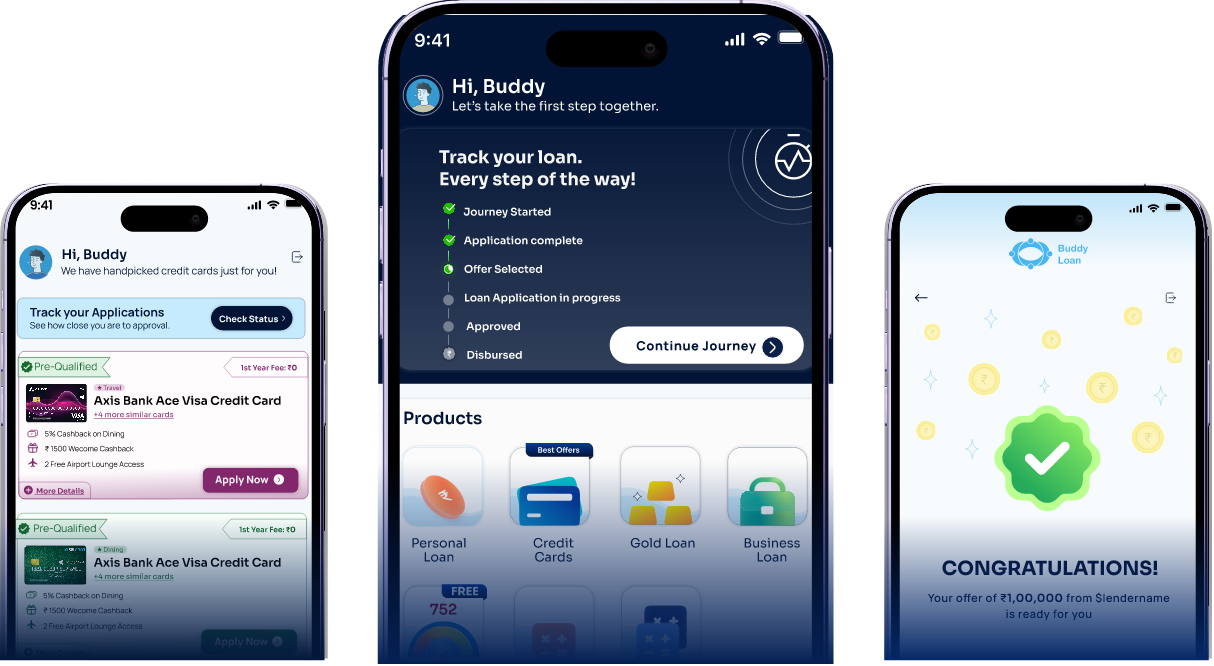
Download the Buddy Loan App Now!
One solution to each of your financial needs at your fingertip.

Scan to download now