India’s digital payments landscape is entering a new era. After transforming how millions transact daily, the Unified Payments Interface (UPI) is now undergoing its biggest technological leap yet: payments authenticated using fingerprints or Face ID instead of UPI PINs. This landmark upgrade was formally unveiled at the Global Fintech Fest (GFF) 2025, where Shri M. Nagaraju, IAS, Secretary, Department of Financial Services, announced a suite of innovations to enhance UPI’s accessibility and security.
The nationwide rollout officially started on October 8, 2025, marking India’s decisive move toward a PIN-free, frictionless digital payment ecosystem through biometric authentication.
UPI Biometrics Highlights
Here is an overview of the UPI biometric update:
| Feature / Detail | Description |
|---|---|
| New Authentication Method | Fingerprint authentication and Face ID for approving UPI Payments |
| Traditional PIN Requirement | Removed for most transactions once biometric mode is enabled |
| Launch Announcement | Global Fintech Fest (GFF) 2025 |
| Rollout Timeline | From October 8, 2025 |
| Supported Devices | Android and iOS devices with secure biometric hardware |
| Regulatory Authority | National Payments Corporation of India (NPCI) |
| Additional Features | Aadhaar-based Face Authentication for UPI PIN setup |
| Daily Limit (Proposed) | Up to ₹5,000 for biometric-approved transactions |
| User Consent | Mandatory opt-in; biometric use is optional |
| Extra Benefits | Digital inclusion, faster transactions, improved accessibility |

Understanding UPI With Biometric Authentication
- Fingerprint recognition
- Face ID (facial authentication)
Why UPI Is Moving Toward Fingerprints and Face ID
The shift to biometrics is driven by three major priorities: better security, faster transactions, and greater digital inclusion across India.
Enhanced Security
Improved Convenience
Typing a PIN for every transaction may feel cumbersome, especially during high-volume or time-sensitive payments. Biometrics simplify this process by allowing instant approval through a fingerprint or face scan.
Promoting Financial Inclusion
Millions struggle with typing PINs due to literacy challenges, unfamiliarity with digital systems, or physical limitations. Biometrics help these groups by simplifying payment approval.
This upgrade is especially beneficial for:
- New digital users
- Senior citizens
- Less tech-savvy individuals
- Rural and remote populations
- Users without debit cards
Aadhaar-Based Face Authentication for Setting or Resetting UPI PIN
- Debit card details
- Aadhaar OTP

How UPI Fingerprint Payments Work: A Step-by-Step Guide
- Update your UPI app (Paytm, PhonePe, Google Pay, BHIM, or bank apps).
- Open the “Settings” or “Security” section of the app.
- Enable “Biometric Authentication” or “Fingerprint / Face ID for UPI Payments.”
- Provide consent to use biometrics.
- Enter your UPI PIN once to confirm activation.
- Open your UPI app.
- Initiate the payment (scan a QR code, select a contact, or enter a UPI ID).
- When asked for authentication, choose the biometric option.
- Place your finger on the sensor or use Face ID.
- The payment is approved instantly: no PIN required.
Security Architecture Behind Biometric UPI Payments
Biometric UPI payments offer heightened security due to robust underlying technologies.
On-Device Processing
Biometric data remains on the device. Neither UPI apps nor NPCI receives or stores fingerprint or facial data.
Secure Hardware Integration
Modern smartphones use secure environments such as:
- Trusted Execution Environment (TEE) for Android
- Secure Enclave for iOS
This ensures biometric information cannot be tampered with.
Two-Factor Authentication Integrity
Biometrics serve as an additional factor for authentication, not a replacement. The system continues to maintain the principles of two-factor authentication.
Regulations and Transaction Limitations for Biometric Payments
NPCI mandates several safeguards for biometric UPI transactions:
- Fresh Consent Requirement: Users must give fresh consent after changing devices or re-binding accounts.
- Mandatory Biometric Disablement After PIN Reset: If the UPI PIN is reset on any linked app, biometric authentication is disabled across all UPI apps on that device. Users must manually re-enable it.
- Transaction Limit: A daily transaction limit of up to ₹5,000 may be applied for biometric-authenticated UPI payments to balance convenience with controlled risk.
These rules ensure that security is not compromised even as convenience increases.
UPI Cash Withdrawals Through Biometrics at Micro ATMs
UPI biometrics are not limited to digital transactions. They extend to cash withdrawals as well.
Users can withdraw cash via UPI Cash Points (Business Correspondent Micro ATMs) by:
- Scanning a QR code displayed on the terminal.
- Approving the withdrawal using biometric authentication.
This provides an alternative to:
- Card-based ATM withdrawals
- Aadhaar-enabled payments (AePS)
This service is especially useful in rural areas where traditional ATMs may not be available.
Benefits of Fingerprint and Face ID UPI Authentication
Users and merchants gain several advantages from this new system:
For Users
- Faster than entering a PIN
- Greater security through biometric verification
- Improved accessibility for those unable to enter PINs
- More convenient payments at stores and public places
- Reduced queue times
- Fewer payment failures
- Enhanced customer experience
- Faster transaction turnaround
This upgrade strengthens UPI’s position as the world’s most efficient and inclusive digital payments system.
Previous Update: UPI Fingerprint & Face ID Payment
Conclusion
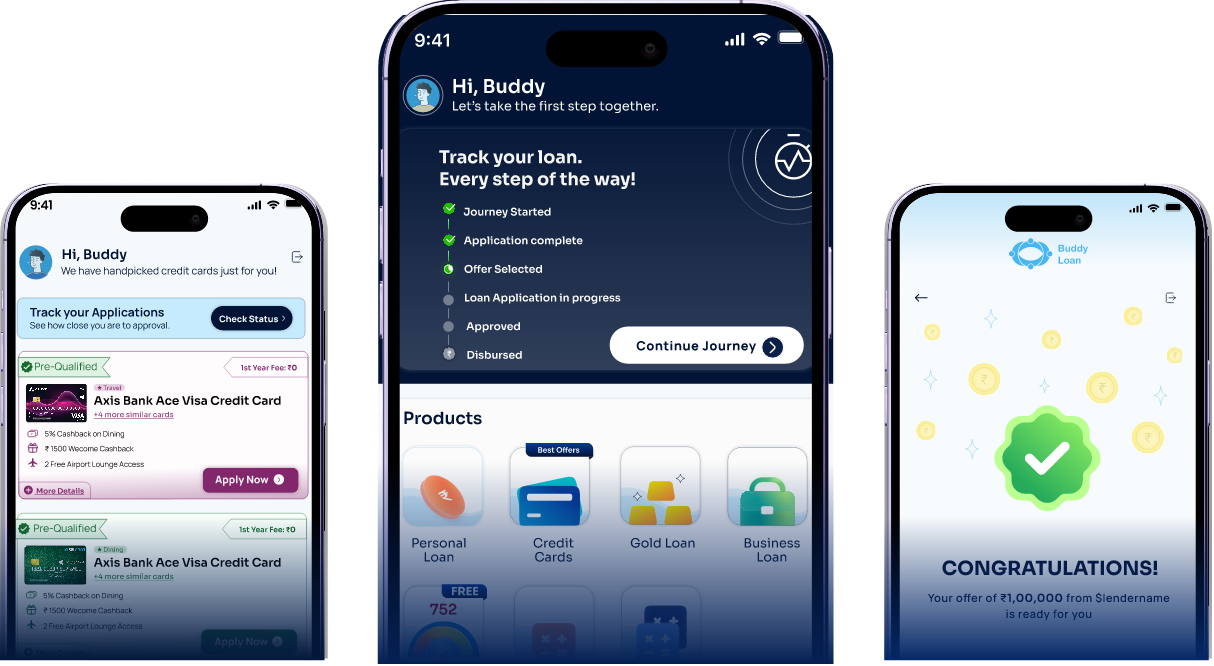
Download the Buddy Loan App Now!
One solution to each of your financial needs at your fingertip.

Scan to download now