Ram Navami 2026 will be celebrated on March 26 or 27, depending on Tithi (lunar date) and sunrise timing. This sacred festival marks the birth of Lord Rama, the seventh avatar of Lord Vishnu, and symbolizes the triumph of dharma over adharma (righteousness over evil).
Falling in the Chaitra month during the Madhyahna Muhurat , Ram Navami is both a religious and public holiday in many Indian states. Devotees observe the day with fasting, Ramayana readings, bhajans, and processions, especially in places like Ayodhya and Bhadrachalam.
With evolving traditions, many also participate in online pujas, spiritual reflections, and meditation with the 16 Mukhi Rudraksha, believed to channel Lord Rama’s blessings.
This blog covers everything you need to know about Ram Navami 2026—from dates and rituals to its deep cultural significance.
Key Highlights of Ram Navami 2026
- Ram Navami 2026 will be celebrated on Thursday, March 26, or Friday, March 27, depending on Tithi (Navami) and sunrise timing.
- It marks the birth of Lord Rama, the seventh avatar of Vishnu, observed on the Navami Tithi of Shukla Paksha in Chaitra month (March–April).
- Madhyahna Muhurat, the most auspicious time for rituals, is expected between 11:08 AM and 1:39 PM on March 27, 2026.
- The day is a public and bank holiday in several Indian states, recognized under the government and RBI holiday calendars.
- Celebrations include fasting, Ramayana recitations, devotional singing, community feasts, and Rath yatras (processions), especially in Ayodhya, Bhadrachalam, Sitamarhi, and other sacred cities.
- Devotees also engage in pujas, havans, and online spiritual gatherings, with many meditating using the 16 Mukhi Rudraksha, symbolizing divine protection and Lord Rama’s blessings.

Ram Navami Holiday 2026
- Ram Navami 2026, observed on March 26 or 27, will be a gazetted public holiday in many Indian states.
| Ram Navami 2026 Date | March 27, 2026 (Thursday) |
- It is listed as a government holiday, meaning central and state government offices, as well as public sector institutions, will remain closed.
- As per the RBI holiday calendar, banks in states where Ram Navami is officially observed will also remain closed on the festival day.
- Schools, colleges, and other educational institutions in states like Uttar Pradesh, Bihar, Madhya Pradesh, Karnataka, Telangana, and others generally declare a day off.
- Since the date may vary slightly depending on regional Panchang (Hindu calendar calculations), some states may observe it on March 26, while others may follow March 27.
Suggested Read: March Holidays
Importance of Ram Navami
- Ram Navami is more than just a religious celebration it’s a symbolic reminder of truth, virtue, and the triumph of good over evil.
- It commemorates the birth of Lord Rama, the 7th avatar of Lord Vishnu, who is revered for his righteousness (dharma), ideal kingship, and moral character.
- The festival inspires millions to reflect on values like humility, duty, sacrifice, and justice as exemplified in the epic Ramayana.
- Rama’s life is seen as a blueprint for ideal living—his unwavering commitment to truth, respect for elders, and courage in the face of adversity are upheld across generations.
- On a spiritual level, Ram Navami encourages self-discipline, fasting, and devotional practices that help align one’s inner self with divine virtues.
- Communities use this day to foster unity, engage in charitable acts, and come together in collective worship and cultural expression.

History of Ram Navami
- The story of Ram Navami originates from the ancient epic Ramayana, written by sage Valmiki, and is also referenced in the Mahabharata.
- According to the scriptures, King Dasharatha of Ayodhya had no children and performed the sacred Putrakameshti Yagna. As a divine result, his wives gave birth to four sons: Rama (Kausalya), Bharata (Kaikeyi), and Lakshmana & Shatrughna (Sumitra).
- Lord Rama was born on the Navami Tithi (ninth lunar day) of the Shukla Paksha (waxing phase) in the month of Chaitra, around midday (Madhyahna)—thus the name Rama Navami.
- Rama is believed to be the incarnation of Lord Vishnu, born to restore dharma (righteousness) by defeating adharma (evil), most notably symbolized by the defeat of Ravana, the demon king of Lanka.
- This day has been observed for centuries with devotion in Ayodhya, Rama’s birthplace, and is closely linked with springtime festivities and Chaitra Navratri.
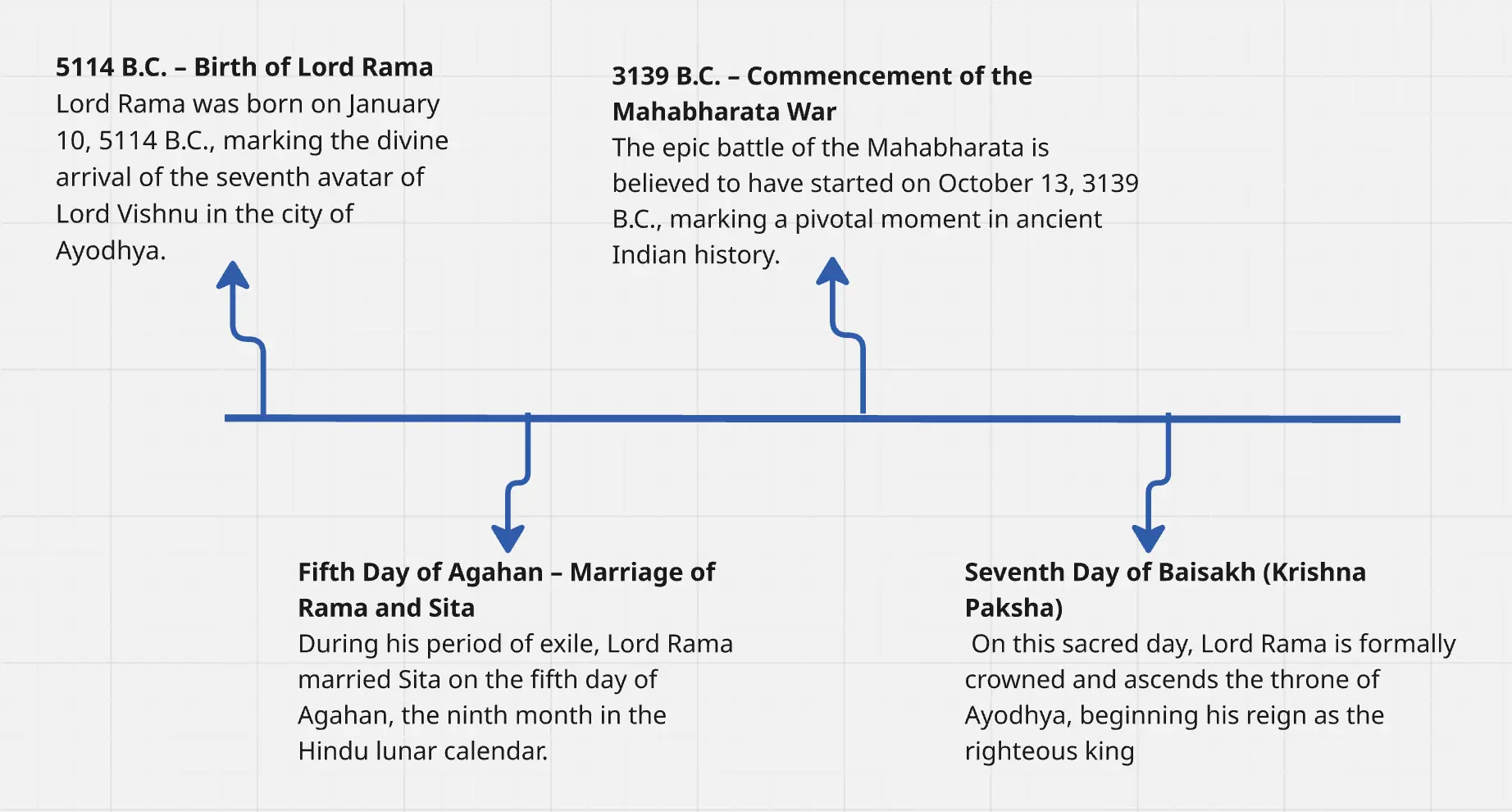
Timeline of Ram Navami
Suggested Read: May Holidays
Different Types of Ram Navami Observances
Ram Navami is celebrated with regional and cultural diversity across India and the Hindu diaspora. Here’s how it’s uniquely observed:
- Ayodhya (Uttar Pradesh): The epicenter of celebrations—devotees take holy dips in the Sarayu River, visit the Ram Mandir, and participate in grand processions with idols of Rama, Sita, Lakshmana, and Hanuman.
- Bhadrachalam (Telangana): Known for the celestial wedding (Kalyanotsavam) of Lord Rama and Sita held at the Sree Sita Ramachandra Swamy Temple.
- Rameswaram (Tamil Nadu) and Sitamarhi (Bihar): Cities associated with Rama’s life host spiritual gatherings, recitations of the Ramayana, and bhajans.
- Karnataka (especially Bengaluru): Streets and temples distribute Panakam (jaggery drink) and other offerings. The Sree Ramaseva Mandali hosts a renowned Indian classical music festival during this time.
- ISKCON temples worldwide: Fasting, Harikatha (spiritual discourses), bhajan performances, and Ratha Yatra are conducted, especially by devotees in Dubai. the U.S., and the U.K.
- Nepal (Janakpur): Home to Janaki Temple, Ram Navami is celebrated with traditional Mithila art, ritual bathing, and cultural performances.
- The Indian diaspora in Mauritius, Trinidad, South Africa, and Fiji continues the tradition with Ramayana recitations, temple programs, and cultural functions.
Rama Navami Rituals & Traditions
Ram Navami is rich in devotional customs that honor the birth and ideals of Lord Rama. These rituals vary by region but reflect deep spiritual meaning:
- Fasting: Many devotees observe a strict fast or consume only fruits, milk, or light satvik food to purify body and mind.
- Madhyahna Puja: Since Lord Rama was born during midday (Madhyahna), special pujas and aarti are performed between 11:00 AM and 1:00 PM, the most auspicious window.
- Reading of Ramayana: Devotees read or listen to Valmiki’s Ramayana or Tulsidas’s Ramcharitmanas—both recount the life and virtues of Lord Rama.
- Processions (Rath Yatra): Temples and communities organize chariot processions with beautifully adorned idols of Rama, Sita, Lakshmana, and Hanuman.
- Bhajans and Kirtans: Spiritual songs in praise of Lord Rama are sung in temples, homes, and cultural gatherings.
- Charitable Acts: Inspired by Rama’s life of compassion, many people engage in charity, free food distribution (Annadaan), and community service.
- Decorating Home Altars: Homes are cleaned and decorated, and small idols or cradles symbolizing Rama’s birth are placed and worshipped.
- Panakam & Naivedyam: Special offerings such as panakam (sweet jaggery drink), kosambari, and kheer are made to the deity and distributed as prasad.
- Lighting Diyas: Oil lamps and incense sticks are lit to sanctify the space and invite divine blessings.
Suggested Read: Ambedkar Jayanti Bank Holiday
Ways to Celebrate Ram Navami in 2026
Here’s how devotees across India and the world can meaningfully celebrate Ram Navami on March 26 or 27, 2026 (depending on Tithi timing):
⇒ Observe a Devotional Fast: Fast from sunrise to sunset with fruits or satvik food. It’s seen as a way to cleanse the body and focus the mind on Lord Rama.
⇒ Participate in Temple Rituals: Visit a local Rama temple to attend Madhyahna Aarti, Ramayana recitals, or Kalyanotsavam (symbolic marriage) of Rama and Sita.
⇒ Watch or Join Ramlila: Attend or view Ramlila performances—dramatic reenactments of Lord Rama’s life story, especially his battle with Ravana.
⇒ Engage in Bhajan Sessions: Host or join community bhajan evenings featuring devotional songs, kirtans, and stories from the Ramayana.
⇒ Recite Ram Nama: Chanting Lord Rama’s name—especially the 108 or 1008 names—is a powerful meditative practice on this day.
⇒ Donate and Serve Others: Follow Lord Rama’s ideals by donating food, supporting local charities, or participating in community service.
⇒ Digital Devotion: For those unable to visit temples, attend online pujas, stream Ramayana videos, or join virtual satsangs and discourses.
⇒ Wear or Meditate with Rudraksha: Use the 16 Mukhi Rudraksha—believed to carry the energy of Lord Rama—for deeper spiritual focus and protection during puja.
⇒ Celebrate with Family: Share the day with your loved ones by decorating the home altar, preparing prasad together, and discussing the values Lord Rama embodied.
Famous Destinations for Ram Navami Celebration
Certain cities and regions come alive with exceptional devotion and cultural vibrancy during Ram Navami. Here are some of the most iconic places where celebrations reach their peak:
Ayodhya, Uttar Pradesh
The birthplace of Lord Rama. Huge gatherings at Ram Janmabhoomi Mandir, holy dips in the Sarayu River and grand Rath Yatras mark the day.
Bhadrachalam, Telangana
Known for the Sri Sitarama Temple, this town hosts a celestial wedding (Sitarama Kalyanam) and attracts thousands of devotees every year.
Rameswaram, Tamil Nadu
A spiritual hotspot connected to Lord Rama’s journey to Lanka. Special pujas and temple rituals are conducted here during Ram Navami.
Sitamarhi, Bihar
Believed to be the birthplace of Sita, Sitamarhi holds cultural and religious events that honor both Lord Rama and Sita.
Chitrakoot, Madhya Pradesh
Associated with Rama’s exile, this pilgrimage site sees large-scale celebrations with devotional singing and community feasts.
Bengaluru, Karnataka
The famous Sree Ramaseva Mandali organizes one of India’s biggest classical music festivals in honor of Lord Rama, blending devotion with art.
Jagannath Temples—Odisha, West Bengal, Jharkhand
Devotees here begin preparations for the Ratha Yatra in summer, and Ram Navami is celebrated with Vaishnavite rituals and kirtans.
Janakpur, Nepal
The birthplace of Sita. The Janaki Temple hosts grand week-long celebrations, including sacred baths of Rama’s idol and Mithila art displays.
Global Celebrations
Countries like Trinidad & Tobago, Fiji, Mauritius, South Africa, Guyana, and the UK celebrate Ram Navami with Ramayana readings, bhajans, and temple festivities by the Indian diaspora.
Final Thoughts
Ram Navami 2026, observed on March 26 or 27 (depending on the Tithi and regional tradition), is more than a religious holiday, it’s a celebration of truth, righteousness, and divine purpose. Rooted in ancient scriptures and revered across generations, this day reminds us of Lord Rama’s legacy as the ideal king, son, and human being.
Whether you’re observing the Madhyahna Muhurat puja, reading the Ramayana, or attending a community procession, Ram Navami offers a chance to pause, reflect, and realign with values of compassion, duty, and honor.
As millions across India and the world celebrate—at temples in Ayodhya, Bhadrachalam, Rameswaram, and beyond—the festival reinforces the universal message that good ultimately triumphs over evil.

Download the Buddy Loan App Now!
One solution to each of your financial needs at your fingertip.

Scan to download now