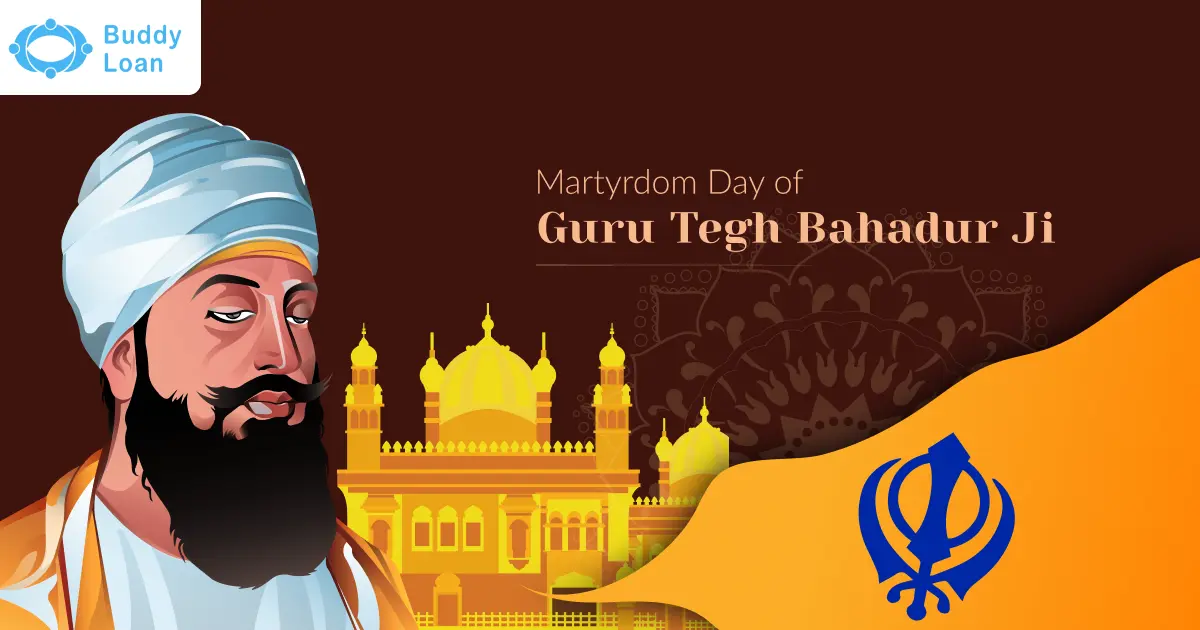
Guru Teg Bahadur’s Martyrdom Day is an essential event in Sikh history. It marks the ultimate sacrifice made by the Ninth Guru. His death stands as a powerful symbol of religious freedom and resistance to oppression.
On this day, Sikhs worldwide gather to honour his unwavering dedication to safeguarding human rights. Guru Teg Bahadur’s martyrdom serves as a reminder of the enduring values of courage, justice, and faith.
Read on to learn more about the significance of this day, its backstory, and how it’s commemorated today.
Guru Teg Bahadur’s Martyrdom Day Date
Guru Teg Bahadur’s Martyrdom Day (Shaheedi Divas) commemorates the sacrifice of the ninth Sikh Guru. In 2025, it is observed on Monday, 24 November 2025. The day is widely observed with prayers, kirtans, langar, and Nagar Kirtans, and is generally treated as a restricted/optional (R) holiday in many official calendars. Some states/centers may treat it as a gazetted/public holiday depending on the year.
Guru Teg Bahadur’s Martyrdom Day Holiday
Several banks’ 2025 holiday schedules list “Martyrdom Day of Sri Guru Tegh Bahadur Ji” on 24 Nov 2025; when a bank centre is marked the branch will be closed in that centre. Check the RBI holiday list for your banking centre (e.g., Chandigarh, Amritsar, Delhi, Ludhiana, etc.) or your bank’s official holiday PDF
Understanding Guru Teg Bahadur’s Martyrdom Day
Guru Teg Bahadur’s Martyrdom Day is observed on November 24th each year. It marks the day in 1675 when Guru Teg Bahadur was executed by Mughal Emperor Aurangzeb. Guru Teg Bahadur’s refusal to convert to Islam and his sacrifice for the protection of religious freedom have made this day one of great importance.
The Martyrdom Day honours his role in standing up for the rights of religious minorities. This especially includes Hindus during a period of intense persecution.
Also Read: Punjab Holidays
The Significance of Guru Teg Bahadur’s Martyrdom
Guru Teg Bahadur’s martyrdom is a powerful testament to his courage and unwavering commitment to the cause of religious freedom. At that time, Emperor Aurangzeb was enforcing forced conversions of Hindus to Islam. Guru Teg Bahadur became a symbol of resistance.
He sacrificed his life, refusing to embrace Islam in order to protect the religious rights of those who were being persecuted. His act of supreme bravery is recognised as a pivotal moment in Sikh history.
Moreover, Guru Teg Bahadur’s martyrdom also holds a broader significance for humanity. His sacrifice transcended religious boundaries, symbolising the fight for freedom of belief and expression. It stands as a global reminder of the need to protect religious and cultural freedoms for all people, regardless of their faith.

Guru Teg Bahadur’s Martyrdom Day Backstory
To understand the depth of Guru Teg Bahadur’s Martyrdom, one must examine the context of the time.
Guru Teg Bahadur was born in 1621 in Amritsar, India. He was the youngest son of Guru Hargobind, the sixth Guru. From a young age, he exhibited extraordinary spiritual and martial qualities, eventually becoming a key figure in Sikhism.
The Conflict with Mughal Rule
In the mid-1600s, under the Emperor Aurangzeb, harsh religious policies were imposed on the Sikh community and other religious groups. Sikhs were persecuted, and non-Muslim places of worship were destroyed. In response, Guru Teg Bahadur became a prominent figure in opposing these oppressive measures.
Guru Teg Bahadur’s decision to stand against forced conversions stemmed from his belief in religious liberty. When Aurangzeb demanded that all Hindus embrace Islam, the Guru intervened on behalf of those who were being coerced. He courageously offered to sacrifice his life rather than allow religious intolerance to take root. Guru Teg Bahadur’s stance was not merely a fight for the Sikh community but also a defence of universal religious freedom for all.
The Martyrdom of Guru Teg Bahadur
In 1675, after Guru Teg Bahadur’s refusal to convert, he was arrested by the Mughal authorities. He was tortured and beheaded in Delhi. His martyrdom has since become an emblem of sacrifice for the greater good. This symbolises the ultimate act of resistance against tyranny and injustice.
The Guru’s sacrifice is remembered not only for his bravery but also for his steadfast adherence to the principles of faith, justice, and religious freedom.
Also Read: December Holidays
Guru Teg Bahadur’s Martyrdom Day Celebrations
Guru Teg Bahadur’s Martyrdom Day is observed across the world, particularly in Gurdwaras, where Sikhs gather to pay homage to his courage and sacrifice. The day is marked by various activities that reflect his teachings and values.
Gurdwara Observances
On this day, Gurdwaras (Sikh places of worship) hold special prayers and services. The Akhand Path, a continuous reading of the Guru Granth Sahib, is conducted to honour Guru Teg Bahadur’s life and legacy. This reading is an important ritual. It ensures that his teachings are not only remembered but also passed down to future generations.
Kirtan and Reflections
Kirtan, the singing of hymns from the Guru Granth Sahib, is a significant part of Guru Teg Bahadur’s Martyrdom Day observances.
The hymns reflect the themes of sacrifice, courage, and faith. These serve as a spiritual reminder of Guru Teg Bahadur’s commitment to justice and truth. These prayers help the community connect with the Guru’s values and reinforce the need for social justice.
Langar and Community Service
Langar (community kitchens) plays a crucial role in the celebration of Guru Teg Bahadur’s Martyrdom Day.
Sikhs, regardless of their background, are invited to partake in free meals, reflecting the Guru’s teachings of equality, service, and selflessness. The tradition of Langar emphasises Guru Teg Bahadur’s belief that true service is rooted in humility and kindness.
Global Observance
Guru Teg Bahadur’s Martyrdom Day is most widely observed in India, particularly in Punjab. It is also commemorated globally in countries with significant Sikh populations, such as the UK, Canada, and the United States.
Sikhs gather in Gurdwaras, hold processions, and conduct prayer services. This reaffirms the universal message of religious freedom and human dignity that Guru Teg Bahadur championed.

The Enduring Legacy of Guru Teg Bahadur’s Martyrdom
Guru Teg Bahadur’s Martyrdom Day is not only a day of reflection. However, it is also a reminder of the importance of standing up for one’s beliefs and the rights of others.
His life and sacrifice have left an indelible mark on the Sikh faith. It still continues to inspire individuals around the world who fight for justice and freedom.
His unwavering dedication to protecting religious freedom, especially for marginalised communities, serves as a universal call to action.
Teg Bahadur’s martyrdom remains a strong reminder of the need to protect human rights for all. His legacy urges us to stand firm in our convictions, no matter the cost. He reminds us to never compromise on our fundamental beliefs of justice, equality, and freedom.
Conclusion
Guru Teg Bahadur’s Martyrdom Day is a testament to his bravery and commitment to truth and justice. His ultimate sacrifice serves as an enduring reminder of the importance of religious freedom and the need to defend the rights of others.
By honouring this day, Sikhs and people of all faiths can reflect on the values of courage, sacrifice, and service that Guru Teg Bahadur embodied. His legacy continues to inspire those who fight for a more just and equitable world.

Download the Buddy Loan App Now!
One solution to each of your financial needs at your fingertip.

Scan to download now