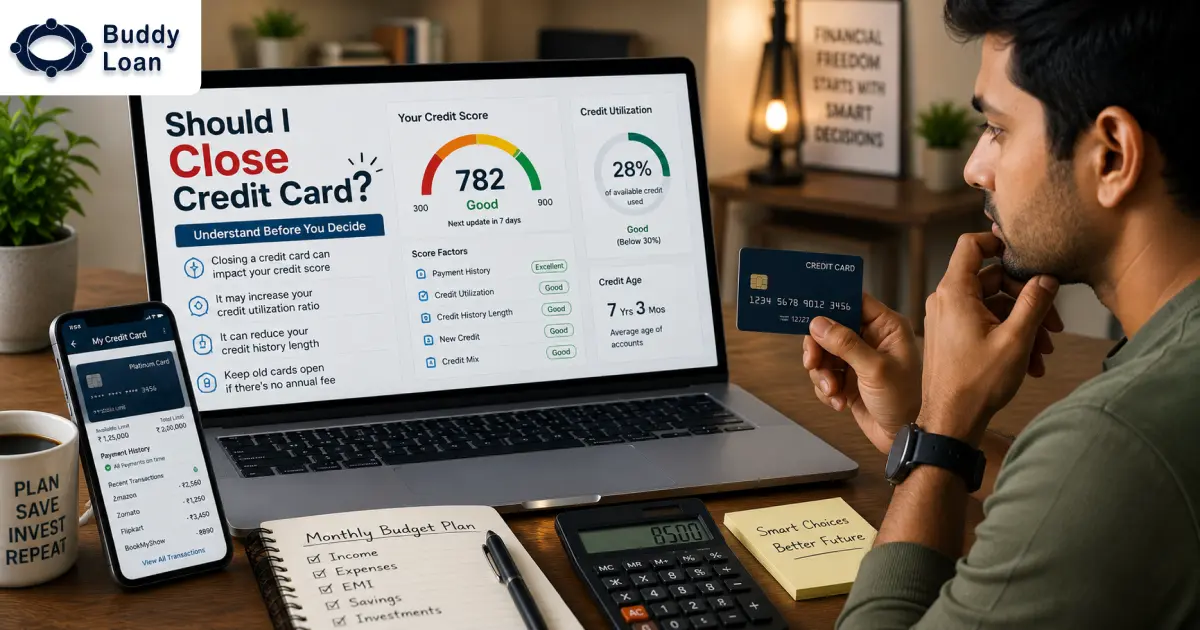
Ever felt tempted to cut up that old credit card and just be done with it?
We’ve all been there, especially if you’ve felt like you’ve messed up your credit card usage or have an old credit card that you no longer use, sitting idle in your wallet, draining those annual maintenance fees.
The idea of closing it can feel like a win. But hold on, before you make that call to customer care, before you cut off the card, it’s worth understanding how that decision might affect you and your future financial stability.
| In simple words, if you are not careful, closing your credit card can lower your credit score. |
Let’s unpack how closing a credit card affects your credit score, when it actually makes sense to close one, and how to do it the right way, without hurting your financial health.
Plus, we’ll share tips on improving your credit score and why your credit behaviour matters more than you think.
What Really Happens to Your Credit Score When You Close a Card?
Anyone who has been struggling for financial breathing room knows how hard managing a credit card can be.
The sad but unhinged truth is, it is not your card, it’s your usage.
But many feel removing their credit card makes things better. And get rid of that unwanted annual payment for maintenance. But here is the catch: closing a credit card doesn’t always help your credit score. In fact, it can lower it.
Why? Because of how your credit utilisation ratio works.
| Let’s say you have two credit cards, each with a limit of ₹50,000, a combined credit limit of ₹1,00,000 and you usually spend around ₹20,000 per month.
That puts your utilisation at 20%, a healthy number. Now, if you close one card with a ₹50,000 limit, your total limit drops. Suddenly, ₹20,000 of spending is 40% of your new total limit and that looks riskier to credit bureaus. |
That is not just it.
There’s also the age of credit history to consider. Older cards help build a longer credit history, which contributes positively to your credit score. So, closing your oldest card could shrink that history and dent your score.
If you are feeling lost, take a look at the major factors that affect your credit score:
| Factors | Impact on Credit Score (%) |
| Repayment History | 35% |
| Credit Utilisation Ratio | 30% |
| Length of Credit History | 15% |
| Credit Mix | 10% |
| Number of Hard Inquiries | 10% |
Out of these, the three, or even four factors, can have a direct impact when you close your credit card.
To sum it up, closing a credit card can impact your Credit Utilisation Ratio, Length of Credit History and Credit Mix.
So, what should you do if you really want to close your credit card?
When Should You Consider Closing a Credit Card?
Closing a credit card isn’t always a bad move. In some cases, it’s even the right one. But if you wish to close your credit card, you must be aware of the timings.
Here’s when it might make sense:
- High fees with little benefit: If the card’s annual charges outweigh the rewards or cashback you get from it.
- Fraud or misuse risk: If the card has been compromised or you’re worried about security.
- Too many cards and it’s causing financial instability: If managing multiple due dates is leading to missed payments.
- Temptation to overspend: If a card encourages financial habits you’re trying to avoid.
The key is to close it strategically, not emotionally.
But how?
How to Close Your Credit Card Without Hurting Your Score
Most banks and NBFCs offer flexible methods to close credit cards, including turn-off options in the app, net banking and even customer support.
But here is the tricky part, if you are thinking of pulling the plug on a card, how to do it the smart way?
- Clear all dues: Make sure the outstanding balance is zero.
- Take a cool-off period: It is wise to take a cool-off period between your last repayment and card closure. It will give enough time for the credit score changes to be updated, giving you a better picture of where your score will be once you close it.
- Check your credit report: After 30-45 days, make sure the closure is reflected correctly.
- Redeem your reward points: Once you close the card, they usually vanish.
- Request a closure confirmation: Ask your bank for a written statement that the card is closed with no pending balance.
- Don’t Close Multiple Cards at Once: Closing several cards in one go can lower your total available credit and hurt your credit utilisation ratio.
And here’s a pro tip: If it’s your only card or your oldest account, think twice. You might be better off keeping it active with small spends and paying in full each month.
Also, look out that if you’re closing one card, make sure you’re not maxing out the rest. Try to keep your overall credit utilisation below 30%, this helps cushion any score dip.
So, What Else Affects Your Credit Score?
We talked about the factors that are responsible for your credit score. Your credit score isn’t just about whether you have a credit card or not. Here is some additional information:
- Payment history: Timely payments build trust.
- Credit utilisation: Keep it under 30% of your limit.
- Length of credit history: Older accounts show consistency.
- Types of credit: A mix of credit cards, loans, etc., helps.
- New credit enquiries: Too many in a short time are interpreted as risky behaviour.
Even closing a single card can indirectly shake up these areas. That’s why it’s important to manage credit actively and not just reactively.
Want to Improve Your Credit Score? Try This.
If you’re aiming for a better score, don’t just focus on what to avoid. Here’s what you can do:
- Use a secured credit card: It’s one of the best tools to build or rebuild your score if used wisely. It works just like a regular card but is backed by a deposit.
- Make timely EMI payments: Whether it’s a personal loan or a credit card bill, consistency pays.
- Limit hard enquiries: Don’t apply for too many credit products all at once.
- Monitor your score regularly: Spot errors early and track your progress. Keep in mind that you should monitor your credit score, not your credit report.
You can check your credit score for free, which helps you stay in the know without impacting your score.
Final Thoughts on Should You Close Credit Card?
Closing a credit card isn’t a one-size-fits-all decision. While it might seem like an easy fix, it can have long-term effects on your credit health. It’s about understanding why you want to close it, how it fits into your financial goals and what impact it may have on your overall credit profile.
Even if you close your credit card and if you’re focused on maintaining a strong credit score or improving one, there are often smarter alternatives, like using a secured card or taking out a small personal loan and repaying it on time.
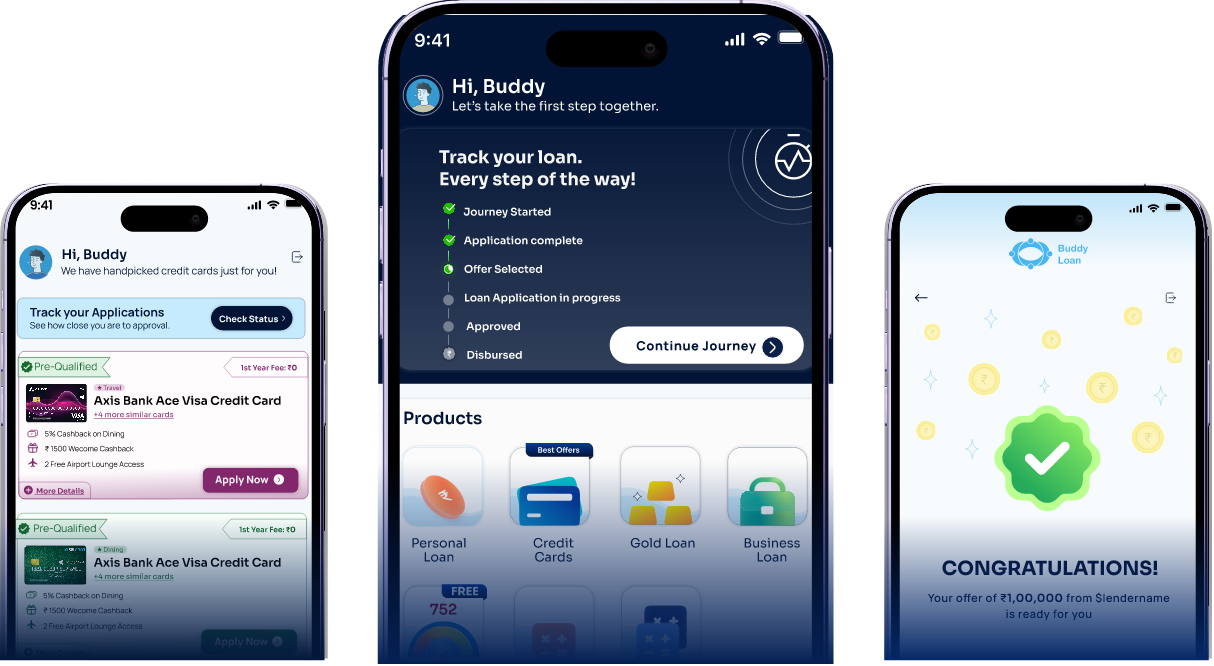
If you ever need help navigating that, visit Buddy Loan and explore loan options tailored to your financial situation. As a digital marketplace, Buddy Loan connects you with trusted lenders, and you can apply for a personal loan easily and download the Buddy Loan App to manage it all on the go.
A credit score isn’t just a number, it’s a reflection of how you manage your finances. Make each move count.
Download the Buddy Loan App Now!
One solution to each of your financial needs at your fingertip.

Scan to download now