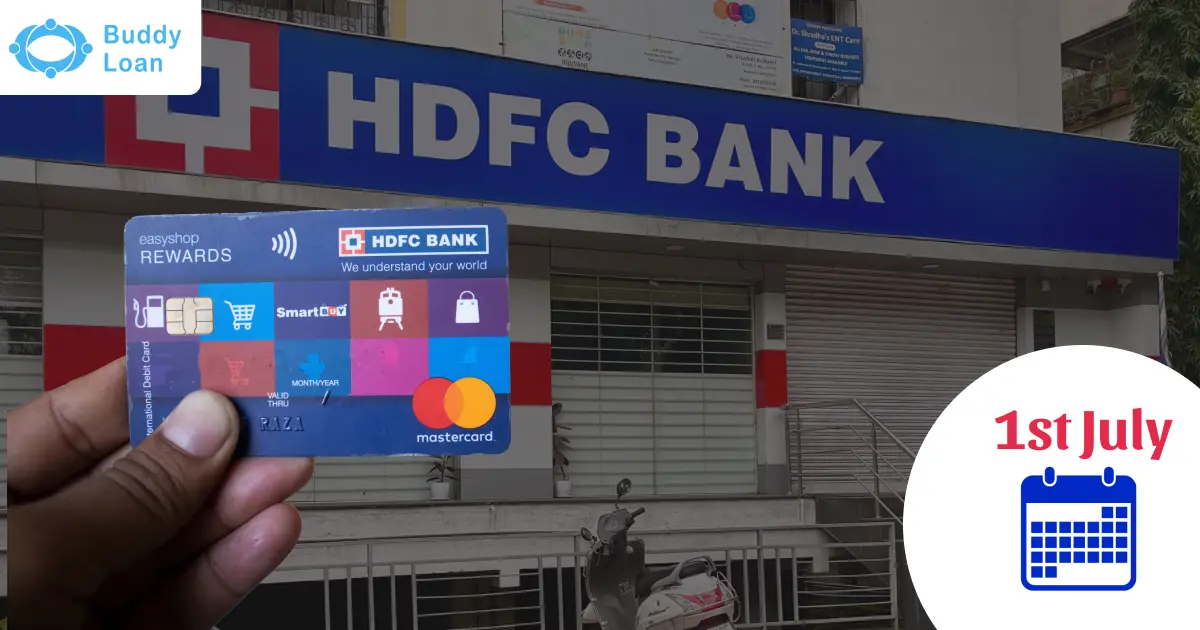
Suppose you’re someone who swipes, taps, or auto-pays with your HDFC credit card. Then July’s about to bring a few surprises. Starting July 1, 2025, HDFC Bank is tweaking how certain transactions are charged, and yes, even how your reward points stack up too.
These changes aren’t sweeping across all accounts or cards, but they do affect some popular spends like online gaming, wallet loads, and even your rent. If your card is part of your monthly routine (and let’s face it, whose isn’t?), you’ll want to be in the know before the bills start looking unfamiliar.
A Quick Glance at the New Charges
HDFC Bank is rolling out new charges on select high-usage transactions. The big one: a 1% fee (capped at ₹4,999) will now apply to the following spends if they cross set limits:
- Online Gaming : If you spend over ₹10,000/month on skill-based games (think Dream11, MPL, etc.), a 1% charge kicks in, plus, no reward points here anymore.
- Wallet Loads : Loading digital wallets like PhonePe or Google Pay (except PayZapp) above ₹10,000/month? That’ll also get a 1% fee.
- Utility Bills : Pay more than ₹50,000/month (₹75,000 for business cards) on utilities? That’s another 1% fee.
(Insurance premiums are safe, they don’t count as utilities here.) - Rent Payments : From now on, all rent payments through your credit card attract a 1% charge, no matter the amount.
- Fuel & Education : For fuel spends over ₹15,000 (or ₹30,000, based on your card) and educational payments made via third-party platforms (like Cred or NoBroker), you’ll also see the 1% charge. Direct payments to schools or colleges? Still fee-free.
These changes aren’t random, they’re meant to encourage more direct, intentional usage and help the bank manage transaction loads more sustainably.
Your Reward Points Are Getting a Cap Too
Let’s talk perks, after all, many choose to use credit cards specifically because of the perks. Specifically, reward points. If you’ve been racking up points on insurance premium payments, there’s a small shift to keep in mind:
- Infinia / Infinia Metal : Capped at 10,000 points/month
- Diners Black / Black Metal : Capped at 5,000 points/month
- All Other Cards : Capped at 2,000 points/month
This cap only applies to insurance payments. If your card sees a lot of insurance action, plan accordingly.
Why Is This Happening Now?
Banks, like HDFC, periodically refresh policies to balance customer benefits with operational sustainability. High-value spending on third-party apps, bulk payments, and certain categories tends to strain reward systems, and that’s what these updates aim to manage.
So no, it’s not a punishment. It’s more like a financial tune-up, aligning how credit cards are used with how rewards and charges are distributed.

How to Adapt Without Feeling the Pinch
If this all feels like a shake-up, don’t worry. It’s just about adjusting a few habits:
- Track your monthly usage to see if you’re crossing the new limits.
- Use direct payments for schools, colleges, or utilities when possible.
- Re-evaluate your rewards strategy , especially if you rely on them for major spending.
If you’re not sure where your credit health stands, you can check your credit score for free with Buddy Score – a quick way to get your financial footing right.
If you are in need of emergency funds, here is a small trick, A personal loan might make more sense than maxing out your card. With Buddy Loan , a digital fintech marketplace, you can explore loan options matched to your profile, backed by trusted lenders. No hidden drama, just straight-up clarity.
In Conclusion, Stay Smart, Spend Smarter
HDFC Bank’s July updates are surely worth paying attention to. A few minor changes now can help you avoid hundreds (or thousands) of charges later. Knowing how your card works is just as important as using it.
And keep in your mind: personal finance is personal. So whether you’re cutting down on wallet loads or planning for a future purchase, you’ve got tools, and help, within reach.