
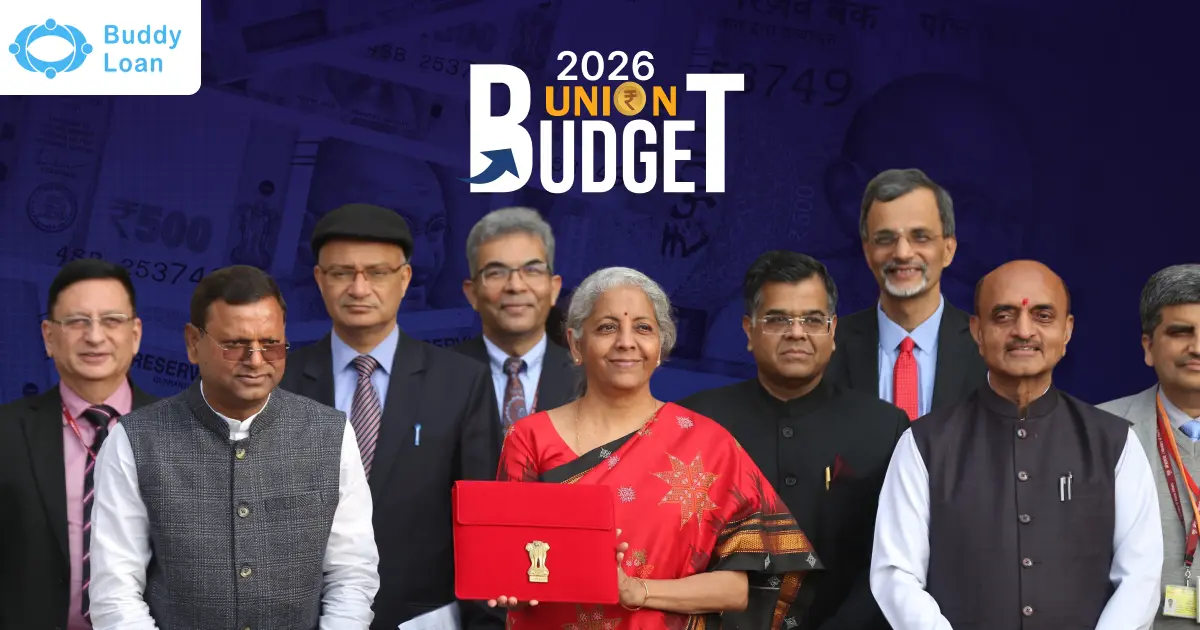
On February 1, 2026, Finance Minister Nirmala Sitharaman presented the Union Budget for the fiscal year 2026-27. Framed against the ambitious backdrop of a “Viksit Bharat” (Developed India), this budget is distinct in its approach. Rather than populism, it focuses on structural simplification, digital robustness, and inclusive growth.
The government has anchored this budget on the concept of “Yuva Shakti” (Youth Power) and three core “Kartavyas” (duties):
- Expanding the economy,
- Fulfilling aspirations, and
- Ensuring no citizen is left behind.
These are the numbers that can change your daily life, your tax returns, your investment portfolio, and your purchasing power. While headlines often scream about big infrastructure spending, the real impact lies in the finer details, and for everyday citizens, those details are found in the finance bill.
Here is the summary of the personal budget impact as outlined in the Union Budget 2026 document:
| Category | Change | Impact on You |
| Income Tax | New Act in 2026; No slab changes | Easier filing, but same tax amount. |
| Travel | TCS on foreign tours cut from 5/20% to 2% | Cheaper international holidays. |
| Education | TCS on overseas study cut from 5% to 2% | Lower cost for foreign degrees. |
| Medical | Tax removed on 17 cancer drugs | Critical medicines become more affordable. |
| Shopping | Tax on personal imports cut from 20% to 10% | Importing personal items is cheaper. |
| Investment | STT increased on F&O trades | Riskier trading becomes more expensive. |
| Buybacks | Now taxed as Capital Gains | Share buybacks are taxed like normal sales. |

1. Taxation & New Income Tax Act, 2025
The most significant announcement in the personal finance space is the operationalisation of the New Income Tax Act, 2025, which comes into effect on April 1, 2026. For years, taxpayers have complained about complex jargon and endless paperwork. This Act aims to fix the process, even if it doesn’t drastically change the payment.
The Tax Slabs Changes
For the middle class waiting with bated breath from the Union Budget 2026, the news is neutral: There are no changes to the actual income tax slabs. The tax structure you followed in the previous financial year remains the norm for the 2026-27 assessment year.
While some may feel disappointed by the lack of rate cuts, the stability allows for better long-term financial planning without the volatility of shifting rates every year.
Compliance 2.0 Staggered Deadlines
The government addressed the perennial issue of the tax portal crashing on July 31st. Every Chartered Accountant and DIY taxpayer is expected to welcome this update.
The authorities have staggered the filing deadlines:
- Individuals (ITR-1 and ITR-2): Your deadline remains July 31st.
- Non-audit businesses and Trusts: You now have until August 31st.
Extended Revision Time
Previously, if you forget to declare savings interest, the window to revise a return closed on December 31st. Recognising that financial data consolidation takes time, you can now revise your tax return until March 31st by paying a small nominal fee. This reduces the fear of scrutiny for genuine errors.
Compassion in Taxation
In a noteworthy humanitarian move, interest money awarded by the Motor Accident Claims Tribunal to accident victims is now completely exempt from income tax. Furthermore, banks will no longer deduct TDS on these amounts, ensuring victims receive their full compensation without bureaucratic hurdles.
2. Travel and Education to go Cheaper in Budget 2026-27
For the aspirational Indian family, the previous high rates of Tax Collected at Source (TCS) on foreign remittances were a major pain point. The 2026 Budget has aggressively rolled these back, acknowledging that global exposure is a necessity, not just a luxury.
Holiday Trips
If you are planning a holiday to Europe or Southeast Asia, there is good news. Your upfront costs just dropped. Previously, booking foreign tour packages attracted a TCS of up to 20%. This locked up your capital until you filed your returns.
The Change: TCS on foreign tour packages is slashed to a flat 2%, regardless of the package cost. This applies to travel, hotel stays, and bundled tours.
Studying Abroad
The government has eased the financial burden for parents sending money to children studying overseas under the Liberalized Remittance Scheme (LRS).
The Change: The government has reduced TCS from 5% to 2% on remittances exceeding ₹10 lakh for education and medical treatment, significantly lowering the immediate cash outflow for tuition fees and hospital bills abroad.

3. The Asset Disclosure (FAST-DS 2026)
With the rise of tech employees receiving ESOPs from US companies and students working gig jobs abroad, many Indians inadvertently hold undeclared foreign assets. The government has introduced the Foreign Assets of Small Taxpayers Disclosure Scheme (FAST – DS) in Union Budget 2026 as a remedy.
This is a 6-month window designed to let you come clean without facing harsh prosecution.
- Small Asset Immunity: If you hold non-immovable foreign assets (like a bank account with a small balance or a few foreign stocks) worth less than ₹20 lakh, you are protected from prosecution retrospectively from October 2024. This is a massive relief for young professionals who may have forgotten to close a bank account after returning to India.
- The Disclosure Window: For larger assets (up to ₹5 crore), there is a structured penalty system (30% tax + 30% additional tax for non-disclosure) that grants immunity from prosecution. It is essentially a chance to clean up your books before the automated exchange of information tightens the net.
4. The Investor’s Ledger in Union Budget 2026
For the fintech community and retail investors, the 2026 union budget offers a mix of caution and continuity. The message that long-term wealth creation is encouraged, but speculative trading will cost you more.
Curbing the F&O Frenzy
The government has noted the explosion in retail participation in the Futures and Options (F&O) segment. To discourage excessive speculation, the Securities Transaction Tax (STT) has been hiked:
- Futures: Increased from 0.02% to 0.05%.
- Options: Increased to 0.15%.
Implication: This increases the break-even point for traders. Scalpers and high-frequency traders will see their transaction costs rise significantly.
Share Buybacks as Capital Gains
A major structural change involves Share Buybacks. Previously, the tax treatment on buybacks was different from dividends. Now, buybacks will be treated as Capital Gains in the hands of the shareholder. This aligns the tax treatment with selling shares in the open market, closing a tax arbitrage loophole.
Mutual Fund Financing
A niche but important change: you can no longer claim a tax deduction for interest paid on money borrowed to invest in mutual funds or earn dividend income. This prevents leveraging to generate tax-efficient income.
5. Consumer Economics – Making Living Cheaper
Customs Duty is often the government’s tool to control the “Cost of Living”. This budget utilizes it effectively to support healthcare and modernize households.
The Shopping Basket
- Personal Imports: If you order items from abroad for personal use (via courier/post), the customs duty is cut in half, from 20% to 10%. This is great news for those who buy niche electronics or fashion from international websites.
- Kitchen Tech: Components for manufacturing microwave ovens are now exempt from customs duty, which should lead to a price drop in home appliances.
- Green Mobility: To boost the EV ecosystem, taxes on goods used to make lithium-ion batteries (for cars and phones) have been extended, keeping these devices affordable.
Critical Healthcare
In a move that prioritizes life over revenue, the basic customs duty on 17 specific cancer drugs has been completely removed. Additionally, seven rare diseases have been added to the tax-free import list for life-saving drugs and special foods. This will directly reduce the financial toxicity associated with critical illnesses.
6. Civil Infrastructure in Budget 2026
While personal finance takes center stage for individuals, the economy relies on infrastructure. The government has allocated a massive ₹12.2 lakh crore for capital expenditure under Union Budget 2026.
High-Speed Connectivity
The budget proposes seven new High-Speed Rail Corridors. These are not just trains; they are economic “growth connectors” linking major urban hubs:
- Mumbai-Pune
- Pune-Hyderabad
- Hyderabad-Bengaluru
- Hyderabad-Chennai
- Chennai-Bengaluru
- Delhi-Varanasi
- Varanasi-Siliguri
Logistics and Transport
A new dedicated freight corridor from Dankuni (East) to Surat (West) aims to speed up the movement of minerals and industrial goods. Furthermore, the “Purvodaya” initiative for Eastern India includes the deployment of 4,000 electric buses, modernising public transport in states that have historically lagged in infrastructure.
7. Cooperative Federalism & Strengthening States
The central government collects taxes, but the states do the heavy lifting on the ground. Following the 16th Finance Commission’s recommendations, under the union budget 2026 the Centre will devolve 41% of the tax pool to states, amounting to ₹15.26 lakh crore.
Additionally, ₹1.85 lakh crore has been set aside as interest-free loans for states to fund their own infrastructure projects. This ensures that development isn’t centralised but happens concurrently across regions.
Special focus has been given to:
- Buddhist Circuits: Tourism development in Sikkim, Arunachal Pradesh, and Assam.
- Industrial Corridors: A major hub planned at Durgapur to revitalize the East Coast.
8. A Youth Focused Budget Plan – Union Budget 2026
A budget is incomplete without addressing the social fabric. This year, the government has called this a “Yuva Shakti” (Youth Power) driven budget.
These are the main focus of this union budget 2026:
- Education & STEM: To encourage women in Science, Technology, Engineering, and Math, the government will construct a Girls’ Hostel in every district of India.
- Future Skills: For the “Yuva Shakti”, 15,000 secondary schools will be equipped with AVGC (Animation, Visual Effects, Gaming, and Comics) labs, recognizing the creative economy as a major employer.
- Rural Economy: New SHE-Marts (Self-Help Entrepreneur Marts) will be established to give rural women a direct retail outlet for their products.
- Mental Health: Recognising the silent pandemic, new national institutes (including a NIMHANS-2) will be established to democratize access to mental healthcare.
Tax Changes for SGBs in Budget 2026
- From 1 April 2026 (Assessment Year 2026–27), capital gains tax exemption at maturity will only apply if the SGB was bought at original issue from the Reserve Bank of India and held continuously until redemption.
- If SGBs are bought in the secondary market or sold before maturity, capital gains tax will apply on redemption.
- The fixed 2.5 % annual interest on SGBs continues to be taxable as income under existing rules.
Conclusion
While most consider the Union Budget 2026 is a mature financial statement, admittingly, there are certain downsides to it. However, it resists the urge to tinker with tax slabs for short-term applause and instead focuses on the ease of doing finance.
For the investor, the hike in STT on F&O is a clear signal to move towards long-term value investing rather than short-term speculation. For the global Indian, the reduction in TCS is a welcome correction. And for the taxpayer, the New Income Tax Act 2025 promises a future where filing returns is a process of minutes, not days.
As we move toward the fiscal year 2026-27, the focus for every citizen should be on leveraging these structural simplifications to build a robust, compliant, and diversified financial portfolio.
Download the Buddy Loan App Now!
One solution to each of your financial needs at your fingertip.

Scan to download now


Frequently Asked Questions
Find answers to common questions about this topic